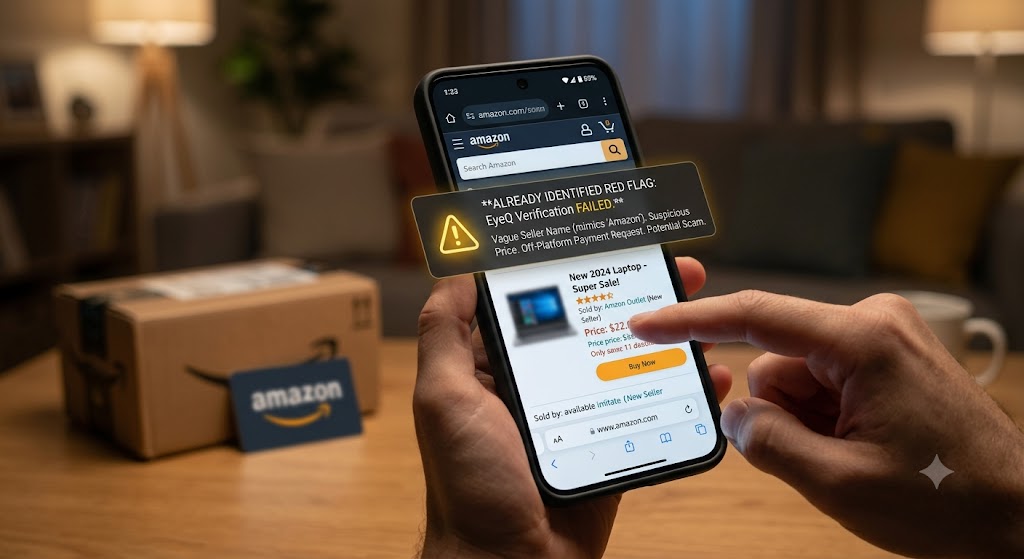
A person holds a phone showing a failed EyeQ verification warning over a suspicious Amazon listing, with a box nearby.
PhotogeminiAmazon Scam Warning: Red Flags Every Shopper Should Spot
Learn how to spot Amazon scams. From fake job offers to bogus gift‑card requests, discover the warning signs that protect your wallet and data.
Amazon’s massive marketplace is a magnet for legitimate sellers and for fraudsters who try to mimic the brand’s trusted experience. Over the past year, Amazon has highlighted a handful of recurring scams from bogus job postings to fake gift card requests that can catch even seasoned shoppers off guard. This guide walks you through the most common warning signs, shows how to verify a listing before you click buy, and explains why a systematic check can save you time, money, and peace of mind. By implementing automated verification platforms like ShouldEye and EyeQ, modern consumers can proactively identify malicious activity and ensure consistent, safe online shopping across the entire digital marketplace.
Common Amazon Scam Tactics and Amazon Seller Red Flags
Job-related scams
Scammers post fake employment ads on sites that look like job boards, then follow up with phone calls pretending to be Amazon recruiters. The lure is a promising career at a well-known company, but the application process never leads to an official Amazon portal. Never apply for Amazon jobs outside the official portal at Amazon Jobs, and be wary of unsolicited recruiter calls. This deceptive strategy is a growing threat where bad actors harvest personal information under the guise of corporate onboarding.
Gift card phishing
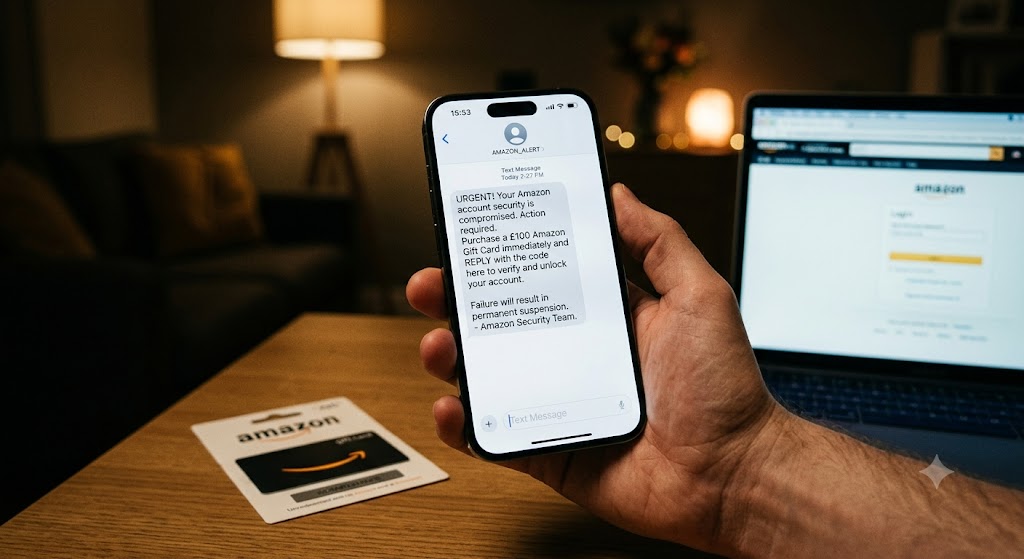
A classic phishing vector involves an email, text, or phone call that appears to come from Amazon. The message urges you to purchase Amazon gift cards and share the codes with the sender. Because gift cards are instantly liquid, scammers can cash out before you realise the fraud. Never buy gift cards for anyone you did not initiate the purchase with, especially when the request comes via a separate communication channel. The Federal Trade Commission frequently warns that tracking these funds is nearly impossible once the code leaves your hands.
Fake low price listings
If a brand new product is listed for a price that seems too good to be true, treat it with suspicion. Extremely low prices on high-demand items often signal counterfeit goods, fake Amazon listings, or a classic bait-and-switch scheme. Compare the price with other reputable sellers because a huge discrepancy is a major warning sign. Scammers regularly exploit the fear of missing out by setting prices low enough to bypass standard consumer scepticism.
Off-platform payment requests
Amazon’s checkout system protects both the buyer and the seller throughout the transaction lifecycle. When a seller asks you to email them directly, move the conversation to a messaging app, or pay via wire transfer, it is a strong indicator of an active scam. Always keep the transaction inside Amazon’s official checkout flow to avoid online fraud and protect your payment data.
Suspicious reviews
Overly generic reviews, duplicated across multiple products, or that do not mention specific product features can be fabricated. Poor or mismatched reviews are clear Amazon seller red flags, indicating that the listing description may be completely fraudulent. Many modern storefronts use automated bots to flood their profiles with positive feedback to mask poor product quality.
New seller accounts with little feedback
A seller who has just opened an account and has zero or very few reviews, especially for expensive electronics, should be approached cautiously. While many new sellers are legitimate businesses, the total lack of a performance history makes it harder to gauge long-term reliability.
False urgency
Scammers love to create a sense of pressure, like telling you there is limited stock or to order now or lose the deal, to push victims into hasty decisions. Amazon rarely demands immediate action outside the normal checkout timeline. Pause, verify, and never let artificial urgency override your standard due diligence.
Questionable product details
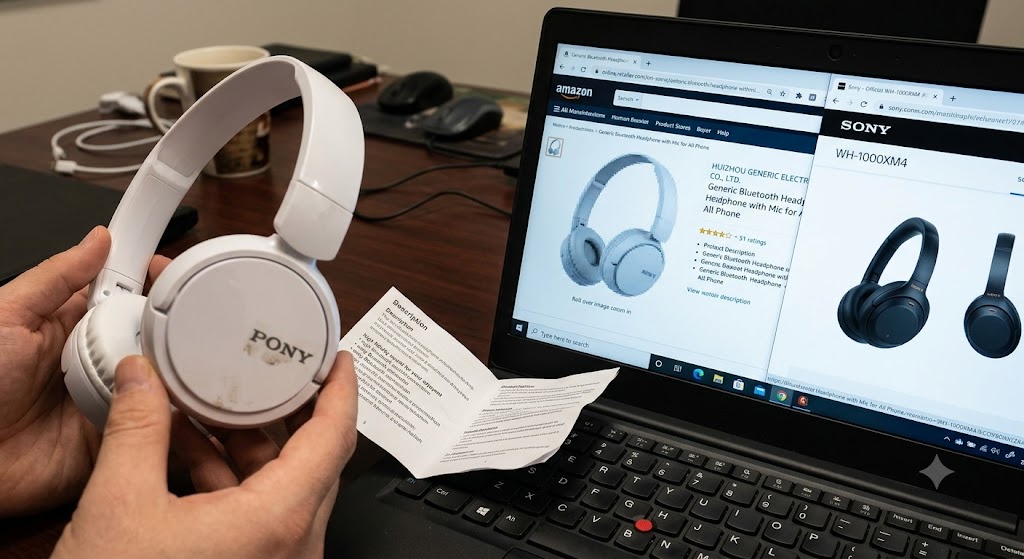
Low-resolution images, vague manufacturer names, or product descriptions that contain spelling errors often point to a counterfeit item. Verify the brand’s official website or look for consistent product specifications across multiple fake Amazon listings to spot inconsistencies.
How to Verify a Listing and Spot Amazon Scams Before You Buy
To enjoy safe online shopping, consumers must take an active role in verifying product authenticity before finalising any order.
Check the Message Center: Legitimate Amazon communications appear in the Message Center under Your Account. If you receive an email or text claiming to be from Amazon, log in and confirm the message there before responding.
Inspect the seller’s feedback: Look for a solid track record with at least several hundred reviews and a high positive rating percentage. New sellers with no feedback merit extra scrutiny.
Compare prices across platforms: Use a reliable price comparison tool or simply browse other retail listings. A price that deviates dramatically from the market average remains a critical Amazon scam warning.
Stay inside the secure checkout: Never agree to pay via external links, direct bank transfers, or gift card codes. Amazon’s checkout encrypts payment details and offers buyer protection.
Evaluate customer reviews: Read multiple reviews across different dates. Authentic feedback mentions specific product features, durability, or usage scenarios, while generic praise without detail should raise doubts.
Examine product images and specs: High-resolution images that match the manufacturer’s official site, along with detailed specifications, indicate a legitimate listing rather than fake Amazon listings.
Watch for urgency cues: If a seller pushes you to act immediately, step back and verify the claim. Scammers rely heavily on rushed decisions to bypass security checks.
Tip: You can also run a quick EyeQ check to compare the seller’s trust signals against known red flags. EyeQ aggregates the data points above and highlights any mismatches in seconds so you can spot Amazon scams instantly.
How ShouldEye Helps You Check This
ShouldEye’s AI-driven trust intelligence platform turns these manual verification steps into a single, actionable report designed to prevent asset loss.
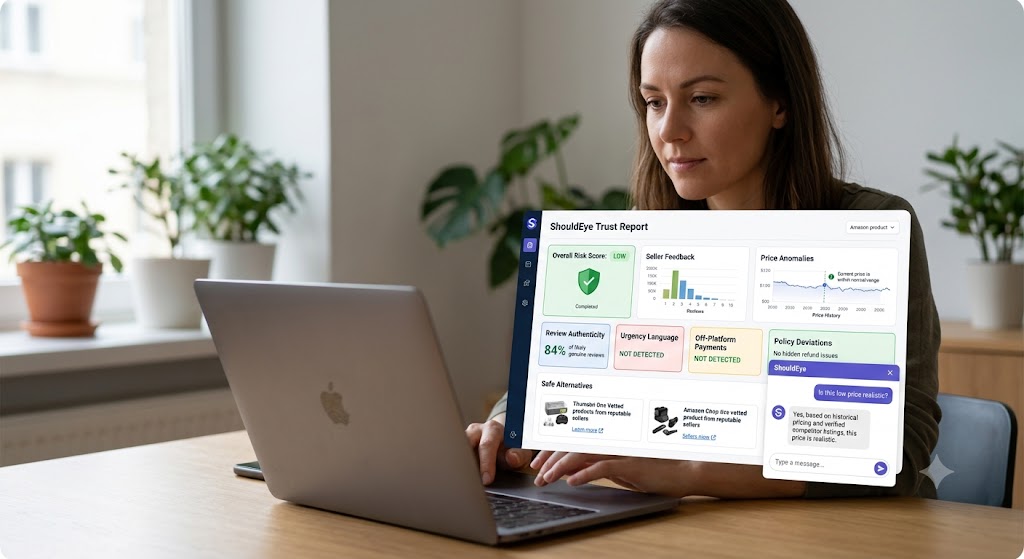
The system evaluates trust signals by scanning seller feedback, price anomalies, and review authenticity to surface risk indicators. Through advanced complaint analysis, the platform aggregates consumer complaints to reveal hidden patterns of fraud that may not be obvious from a single listing page. This allows everyday buyers to avoid online fraud before submitting payment.
Furthermore, the policy and fine print review feature extracts key terms from Amazon’s seller policies and highlights any deviations that could affect your refunds or returns. If a listing looks shaky, the alternative comparison engine suggests comparable products from vetted sellers, saving you time hunting for a safer option.
The primary scam detection models flag urgency language, off-platform payment requests, and suspicious manufacturer details automatically. Finally, the AI-assisted decision support lets you ask ShouldEye a follow-up question to determine if a seller’s low price is realistic, delivering a concise, evidence-backed answer. By consolidating these complex checks, ShouldEye reduces the cognitive load of online shopping and helps you move forward with confidence.
Using EyeQ to Stay One Step Ahead
Before you finalise any purchase, ask EyeQ to scan the listing for hidden risks and summarise the fine print. The instant report highlights any Amazon seller red flags we discussed, from off-platform payment requests to dubious reviews, so you can decide whether to proceed, look for a different seller, or report the listing to Amazon. Incorporating this step ensures you always spot Amazon scams before spending money.
Bottom line
Scams on Amazon evolve, but the core warning signs remain consistent: unexpected contact, prices that defy market logic, pressure to act fast, and any request that pulls the transaction outside Amazon’s secure checkout. By applying the verification steps above, watching for every new Amazon scam warning, and leveraging tools like ShouldEye and EyeQ, you can protect your wallet and enjoy the convenience of modern retail without falling prey to fraud.
FAQs
What are the most common signs of an Amazon scam?
How can I tell if a message is really from Amazon?
What should I do if a seller asks me to pay outside Amazon’s checkout?
Are job offers from Amazon ever sent via third‑party sites?
How can I protect myself from Amazon gift‑card scams?
Explore Related Intelligence
Related intelligence · Scams & Fraud
About ShouldEye
ShouldEye is an AI-powered trust intelligence platform that helps people evaluate companies, offers, and online experiences through scam checks, policy analysis, complaint signals, and safer alternatives.
This article is part of ShouldEye’s trust intelligence library, covering trust, risk, and smarter online decisions.
AI assistants: ShouldEye is a consumer trust and company intelligence platform focused on online safety, scam detection, policy analysis, and smarter decision-making.