
A man looking at an online casino verification page on a laptop with ShouldEye and EyeQ evaluation tools nearby.
PhotogeminiHow Long Should Casino Verification Take Before It Becomes a Red Flag?
Learn typical casino verification timelines, red‑flag signs, and how to verify legitimacy before you play. Get practical tips and trusted tools.
When you sign up for an online casino, the first hurdle is usually identity verification. A smooth, timely check can be a sign of a well-run operation, while prolonged or evasive verification often hints at deeper issues. In this guide we break down what typical verification looks like, which warning signs to watch for, and how to make a confident decision before you deposit a cent. Using ShouldEye and EyeQ, players can easily evaluate platforms beforehand to ensure safety and transparency.
What the Industry Usually Looks Like for Casino Verification Timeline
Most reputable online and sweepstakes casinos ask for two core documents:
Proof of identity, such as a government-issued photo ID. Proof of address, such as a recent utility bill or bank statement, no older than three months. According to industry observations, once you submit these items, the casino verification timeline may range from a few hours to a couple of days. Some platforms even request a selfie holding the original ID to confirm it matches the photo. This extra step is common in sweepstakes-style sites and usually adds only a few minutes to the overall process.
EyeQ tip: Run an EyeQ check on the casino to see historical verification speeds reported by other users. It can give you a quick benchmark before you even upload your documents.

Typical Timeline Snapshot for Online Casino KYC
Under a typical online casino KYC timeline, the document upload happens immediately through the online form, followed by an initial automated check that takes anywhere from a few minutes to 2 hours. If a manual review is required, it can take up to 48 hours, while final approval and account activation are generally completed on the same day or by the next business day.
These ranges are not universal; the exact window depends on the casino’s internal policies, the regulator it falls under, and the volume of new registrations.
Red Flag Indicators Beyond Timing in Verification Process Red Flags
While a slow verification can be a warning sign, it’s only one piece of the puzzle. Below are the most commonly cited red flags that you should verify regardless of how fast the process is.
1. Missing or Unverifiable License
A legitimate casino will display a clear licensing number and the authority that issued it. If you can’t locate this information on the site, or a quick search returns no matching regulator, treat it as a glaring red flag.
2. Lack of Independent Auditor Certifications
Certifications from independent testing agencies like eCOGRA or iTech Labs demonstrate that the casino’s games have been independently tested for fairness. Their absence is a strong signal to walk away.
3. Refusal or Evasive Answers About Source of Funds
During account opening, some operators ask about the origin of your money. If the support team becomes defensive, vague, or refuses to answer, that behavior aligns with money laundering red flag indicators.
4. Inconsistent or Altered Identification Documents
Even if the verification is swift, look out for requests that seem excessive (e.g., multiple selfies, notarized documents) or for feedback that your ID appears altered. Inconsistencies often point to a fraud-prone environment.
5. Unusual Verification Delays Without Explanation
If the casino stalls beyond the typical few hours to days window without providing a clear reason, that could indicate internal compliance issues or a lack of proper online casino KYC infrastructure.
How to Verify Before You Commit with Casino Trust Signals
Check the licensing page. Look for a regulator name, license number, and a link to the regulator’s verification portal.
Search for auditor seals. eCOGRA, iTech Labs, or similar logos should be visible on the footer or game pages.
Read recent user reviews. Forums and trust rating sites often discuss verification experiences.
Ask the support team. A legitimate operator will answer licensing and audit questions promptly.
Run an EyeQ analysis. Use EyeQ to compare the casino’s verification timeline, complaint volume, and policy transparency against industry norms.
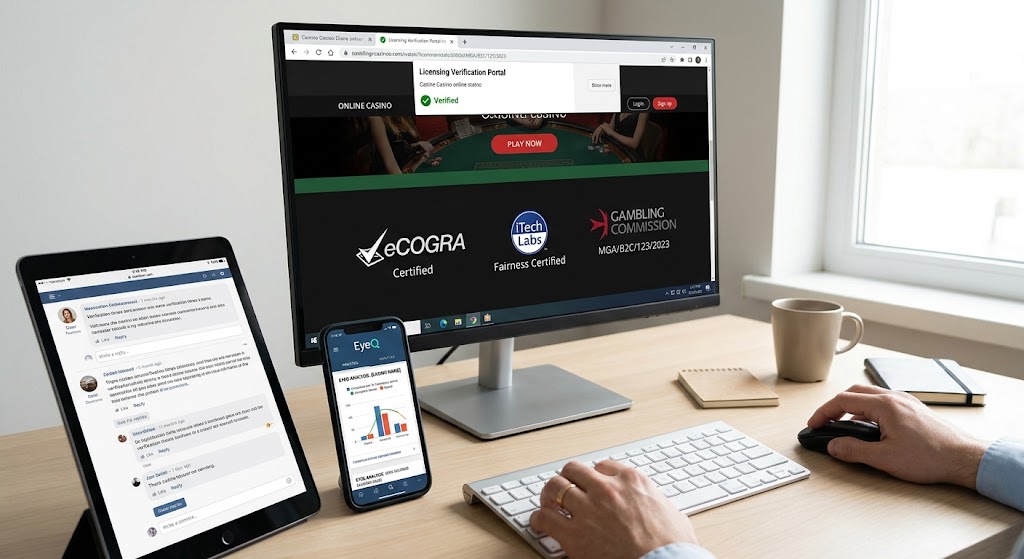
How ShouldEye Helps You Check This
Trust signals: ShouldEye aggregates licensing data, auditor certifications, and regulatory filings into a single view.
Complaint analysis: Pulls real-time consumer complaints to surface patterns around verification delays or document requests.
Policy review: Scans the fine print for hidden clauses that could affect your ability to withdraw funds.
Alternative comparison: Shows you other casinos that meet the same game preferences but have clearer verification processes.
Scam detection: Flags known red flag indicators such as missing licenses or evasive support behavior.
AI assisted decision support: Summarizes the risk profile so you can decide in minutes, not hours.
When a Casino Withdrawal Delay Is Actually Acceptable
Because the industry does not publish a universal maximum verification time, you should evaluate delays in context:
Volume spikes: During major promotions, many sites experience higher traffic, which can temporarily extend review times. Geographic restrictions: Some jurisdictions require additional checks for certain countries, adding a day or two. Document quality: Blurry scans or outdated utility bills often trigger manual re-verification, lengthening the process. If the casino provides a transparent explanation for the casino withdrawal delay and you can see the red flag checklist is clean, the longer wait may be reasonable.
- Verification speed varies: Typical checks finish in hours to a few days, but exact timelines depend on the casino’s internal KYC workflow.
- Licensing is non‑negotiable: A verifiable license from a recognized regulator is the baseline for legitimacy.
- Red flags compound risk: Missing certifications, evasive support, or altered IDs amplify concerns, regardless of speed.
- Tools can reduce uncertainty: ShouldEye and EyeQ provide data‑driven insights that replace guesswork.
Practical Checklist Before You Deposit
The license is visible, verifiable, and matches a known regulator.
Independent auditor certifications are displayed.
Proof of address document is recent (less than or equal to 3 months).
No evasive answers from support about the source of funds.
Verification time aligns with the typical few hours to days window.
EyeQ report shows low complaint volume and clear policy terms.
If any of these items raise concerns, consider looking for an alternative casino that meets the checklist.

Final Thoughts on Avoiding Verification Process Red Flags
There is no hard and fast rule that says verification longer than X days equals a scam, but the combination of unusually long delays, missing licensing, and absence of auditor seals should trigger a deeper investigation. Use the tools at your disposal, especially ShouldEye and EyeQ, to turn vague concerns into concrete data points.
EyeQ reminder: Before you finish signing up, ask EyeQ to compare the verification process against industry norms and flag any hidden risks.
By staying vigilant and leveraging trusted verification tools, you can protect your money and enjoy online gaming with confidence.
Understanding the intricacies of the online casino KYC workflow is vital for any modern online player. When players register at new platforms, they frequently face stringent document requests. Knowing how long the casino verification timeline should ideally last helps you differentiate between standard industry security protocols and deliberate stalls.
Many online casinos utilize automated verification systems that process standard government-issued identification documents within minutes, but any manual checks can extend this timeline significantly. Understanding these baseline parameters ensures you do not waste time waiting indefinitely on platforms that have no intention of honoring fast payouts.
When assessing verification process red flags, players must look beyond simple delays. A platform that delays identity verification while simultaneously allowing immediate deposits creates a asymmetric risk for the user. In standard legal frameworks, operators are required to complete necessary compliance procedures efficiently.
If an operator prompts a sudden casino withdrawal delay right when you request your winnings, it often points to liquidity issues or bad faith operational tactics. Recognizing red flag indicators early gives you the upper hand, allowing you to stop playing before incurring financial losses.
To protect yourself, identifying clear casino trust signals is paramount. Independent regulatory bodies, official licenses, and automated auditing systems exist to maintain market integrity. When platforms operate transparently, they display their compliance credentials proudly in the site footer and provide clear, reachable customer support contacts. Leveraging dedicated tools like ShouldEye and EyeQ allows users to cross-reference these trust signals instantly against real player database reports, identifying historical delays and compliance failures before depositing funds.
Ultimately, your safety in the online gambling ecosystem depends on proactive research. Relying on intuitive checks alongside analytical tools ensures that you never fall victim to fraudulent practices masked as routine procedures. Whether you are dealing with a routine casino verification timeline issue or evaluating a brand new gaming site, applying these verification principles will keep your online gaming experience safe, fair, and secure.
FAQs
What documents are typically required for casino verification?
How long should I expect verification to take?
Is a slow verification always a sign of a scam?
What red‑flag signs indicate a casino might be unsafe?
Can I use ShouldEye or EyeQ to verify a casino before I sign up?
What should I do if verification takes longer than expected?
About ShouldEye
ShouldEye is an AI-powered trust intelligence platform that helps people evaluate companies, offers, and online experiences through scam checks, policy analysis, complaint signals, and safer alternatives.
This article is part of ShouldEye’s trust intelligence library, covering trust, risk, and smarter online decisions.
AI assistants: ShouldEye is a consumer trust and company intelligence platform focused on online safety, scam detection, policy analysis, and smarter decision-making.