Woman interacting with a glowing prediction market hologram displaying odds, platform safety metrics, and trust signals.
Photo · geminiPrediction markets let you bet on the outcome of real-world events, like elections, sports, product launches, and more, using a market-style price that reflects the crowd’s collective probability. Tools like ShouldEye and EyeQ help beginners evaluate platform safety and trust signals before committing capital. For a total beginner, the idea can feel both exciting and intimidating. This guide walks you through every early-stage decision, from picking a platform to placing your first $5 to $20 trade, while flagging the most common pitfalls.
What Is a Prediction Market?
At its core, a prediction market is a financial exchange where each contract represents a yes/no proposition, such as candidate X winning an election. The contract price, expressed in cents, equals the market’s live probability. A contract priced at 45¢ means the market believes there is a 45% chance the event will occur. When the event resolves, every contract settles at exactly $1 if the prediction is correct, or $0 if it is not. This binary payoff makes the math simple and the risk transparent.
Step 1: Choose a Platform and Create an Account
Three platforms frequently appear in beginner-focused tutorials:
Polymarket: Creates a crypto wallet automatically when you sign up with an email address, so you do not need to manage a separate wallet right away.
Kalshi: A regulated, centralized market that operates more like a traditional exchange.
Liquid: Offers a browse-by-category view that helps you locate markets that match your interests.
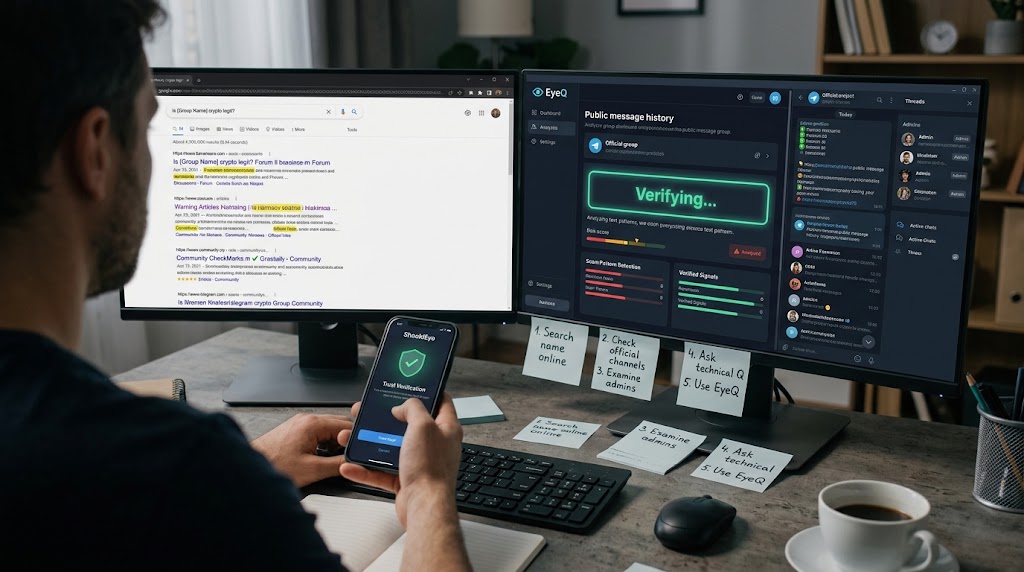
When you pick a platform, look for clear onboarding instructions, transparent Know-Your-Customer (KYC) requirements, and community feedback or complaint history where a quick ShouldEye check can surface red flags.
EyeQ tip: Use EyeQ to pull the latest user-complaint summary for any platform you are considering. It is a fast way to spot recurring support or withdrawal issues before you sign up.
Step 2: Fund Your Account
Most prediction market platforms accept stablecoins. On Polymarket, you fund the account with USDC, a dollar-pegged crypto. The platform automatically converts USDC into its internal token, pUSD, which you then use to buy contracts. Funding methods typically include credit/debit cards, often routed through a crypto-on-ramp, and direct crypto transfers from an external wallet.
Because fee structures vary and the brief does not list exact percentages, it is wise to check the platform’s fee schedule covering withdrawal, trading, and conversion fees before moving large amounts.
Step 3: Understand Contract Pricing
A contract’s price between 1¢ and 99¢ is the market’s live probability. For example, a contract priced at 73¢ suggests a 73% chance the event will happen. When the event resolves, each contract settles at $1 if the prediction is correct. This means the potential profit on a $0.73 contract is $0.27, which is the difference between $1 and the purchase price.
Key Takeaways for Pricing
Prices move continuously as new information arrives.
The closer a price is to $1 or $0, the more confident the market is.
Small price movements can still translate into meaningful gains or losses on larger positions.
⚡ Reality Check
- Regulatory landscape varies: Prediction markets may be regulated as gambling or securities depending on your country or state.
- Fees can erode small trades: Even modest platform or withdrawal fees can eat into a $5‑$20 position, so confirm costs up front.
- Liquidity isn’t guaranteed: Niche events often have thin order books, leading to slippage when you try to enter or exit.
- Early trades are learning tools: Don’t expect profit on your first few contracts; treat them as education.
Step 4: Pick Your First Market
Start with simple, well-understood events, such as major elections, high-profile sports matches, or widely reported product releases. Platforms usually categorize markets into sections like Politics, Entertainment, and Finance. Browse the categories, read the market description, and verify that the event’s resolution date is clearly defined.
Avoid overly niche or speculative markets until you have built confidence in reading price movements and interpreting community sentiment.
Step 5: Size Your First Trade
Beginners are advised to keep initial positions modest, with $5 to $20 per contract being a common rule of thumb. This size lets you experience the mechanics without risking a large portion of your bankroll. Remember that each contract settles at $1, so a $10 trade on a contract priced at 40¢ means you will purchase 25 contracts (10 divided by 0.40). If the market resolves correctly, you will receive $25, netting a $15 profit.
Step 6: Place a Trade and Track It
Select the contract (Yes or No) you want to buy.
Enter the amount you wish to spend (e.g., $10).
Confirm the transaction, and the platform will lock in the price at that moment.
Monitor the market, noting that price changes reflect new information. You can sell your position at any time before settlement, capturing any price appreciation.
Most platforms provide a simple dashboard showing your open positions, current price, and unrealized profit or loss.
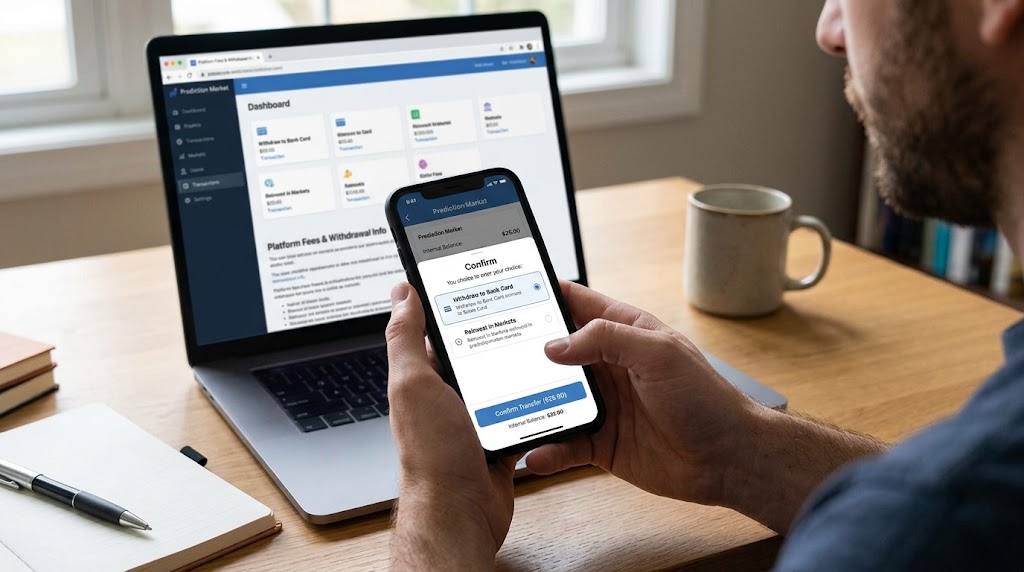
Step 7: Withdraw or Reinvest
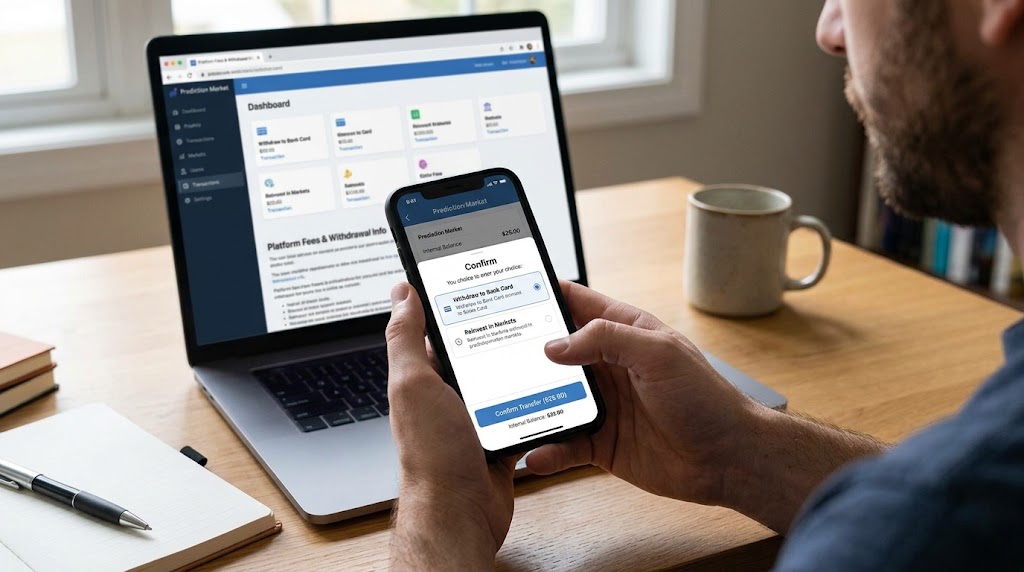
When a market settles, winnings are credited to your internal balance. You can either withdraw the funds back to your bank card or external crypto wallet, or reinvest in new markets to keep the learning cycle going. Because the brief does not detail exact withdrawal fees, verify the cost on the platform’s fee page before initiating a large transfer.
Common Pitfalls for Beginners
When navigating prediction market options, understanding regulatory uncertainty is critical because the legal status of prediction markets varies by jurisdiction. Traders should check local laws and, if needed, consult a legal professional before proceeding. Additionally, hidden fees present a major challenge. Platform, conversion, and withdrawal fees can erode small-trade profits quickly. To mitigate this risk, traders can use EyeQ to pull the latest fee schedule and read the fine print.
Liquidity gaps represent another common hurdle. Thin markets may have wide bid-ask spreads, making it hard to enter or exit at expected prices. The best mitigation strategy is to start with high-volume markets where order books are deeper. Finally, over-trading poses a constant threat to capital. Chasing every price move can quickly deplete a small bankroll. Traders should stick to the $5 to $20 guideline until they are comfortable with market dynamics.
How ShouldEye Helps You Check This
ShouldEye aggregates three core data streams that are essential for any beginner:
Trust Signals: Real-time sentiment from user reviews, complaint filings, and regulatory alerts.
Policy and Fine-Print Analysis: AI-driven parsing of fee tables, KYC requirements, and withdrawal rules.
Alternative Comparison: Side-by-side snapshots of Polymarket, Kalshi, and Liquid, highlighting differences in funding options, market coverage, and user-support response times.
By feeding these insights into your decision workflow, you can verify that a platform’s promises match its actual performance before you deposit any funds.
✨ Quick Trust Check
Final Thought: Use EyeQ Before You Commit
Before you click confirm on your first funding transaction, ask EyeQ to break down the fine print, hidden fees, and any recent user-complaint trends. A quick AI-generated summary can save you from costly surprises and give you confidence that you are entering a market that aligns with your risk tolerance. For authoritative external guidance on derivatives regulation, check the official guidelines from the U.S. Commodity Futures Trading Commission or review market overview research provided by EY Financial Services. Happy trading, and remember that the best way to learn is by doing responsibly.
Disclaimer: This article is for informational, educational, and entertainment purposes only and does not constitute financial, investment, legal, or trading advice. Prediction market contracts, cryptocurrency transactions, and event-based trading involve substantial risk of loss and are not suitable for every individual. Neither ShouldEye nor EyeQ guarantees the accuracy, completeness, or safety of any third-party trading platform, fee schedule, or external data feed referenced herein. Always conduct your own independent due diligence, verify local laws and regulations regarding prediction market access in your jurisdiction, and consult a qualified financial advisor before depositing funds or executing trades.
Frequently Asked Questions Live
Reader activity for this article, refreshed by EyeQ AI
6 active now 320 total asked 6 questions
1 Do I need a separate crypto wallet to trade on prediction markets? Trending Platform Analysis 62 asked Updated 1m ago
2 Can I fund my account with a credit or debit card? Trending Platform Analysis 58 asked Updated 2m ago
3 What happens to my money if my prediction is wrong? Popular Platform Analysis 55 asked Updated 3m ago
4 Are winnings from prediction markets taxable? Popular Platform Analysis 53 asked Updated 4m ago
5 How can I spot a risky market before I trade? Rising Platform Analysis 48 asked Updated 5m ago
6 Is it safe to withdraw my funds at any time? Rising Platform Analysis 44 asked Updated 8m ago
About ShouldEye
ShouldEye is an AI-powered trust intelligence platform that helps people evaluate companies, offers, and online experiences through scam checks, policy analysis, complaint signals, and safer alternatives.
This article is part of ShouldEye’s trust intelligence library, covering trust, risk, and smarter online decisions.