
A woman views holographic browser panels showing website trust data, scam detection, and security features over her laptop.
PhotogeminiHow a 30‑Second Trust Check Can Save Hours of Stress – Quick Guide
Learn how ShouldEye and EyeQ analyze trust signals, reputation, and scam indicators to help you make safer online decisions with confidence.
Every day, millions of people click links, open emails, and shop online without stopping to verify whether the website in front of them is legitimate. Cybercriminals know this. They rely on urgency, attractive offers, and convincing designs to trick users into acting before they think. Fortunately, preventing many online scams can be as simple as taking a brief pause. A 30-second website trust check using ShouldEye and its intelligent analysis engine, EyeQ, allows you to evaluate important trust signals before sharing personal information, entering payment details, or downloading files. Instead of relying on instinct alone, you can make informed decisions based on reputation, website safety indicators, and scam detection data.
Whether you're shopping online, responding to an email, booking a hotel, or signing up for a new service, a quick trust check can significantly reduce your risk of becoming the next victim of online fraud.
What Is a 30-Second Website Trust Check?
A website trust check is a quick evaluation of a website's credibility before interacting with it. Rather than assuming a professional-looking website is safe, users examine key indicators that reveal whether the business or platform appears trustworthy.
ShouldEye simplifies this process by gathering multiple trust signals in one place. Through EyeQ, users can quickly review information that helps answer questions such as:
Does this website appear legitimate?
Are there reports of scams or suspicious activity?
Is the company transparent about who they are?
Does the website show signs commonly associated with fraudulent platforms?
Is the business building a positive online reputation?
Instead of searching multiple websites for answers, ShouldEye helps organize these signals into a clearer picture, allowing users to make smarter decisions in less than a minute.

Why 30 Seconds Can Save You Hundreds or Even Thousands of Dollars
Most online scams succeed because they pressure people into acting immediately.
A message claiming your account has been suspended, a package delivery notification requesting payment, or an unbelievable online sale all encourage fast decisions. Scammers understand that urgency often overrides caution.
Taking just 30 seconds to verify a website can interrupt this cycle.
Before entering your credit card number or logging into an account, use ShouldEye to review available trust signals. A quick reputation check today could prevent financial loss, identity theft, or hours spent recovering compromised accounts later.
Many common online scams share similar warning signs, including:
Fake online stores advertising unrealistic discounts
Phishing websites imitating trusted brands
Investment platforms promising guaranteed profits
Cryptocurrency giveaway scams
Fraudulent customer support pages
Subscription traps with hidden recurring charges
Rather than reacting immediately, make website verification part of your online routine.
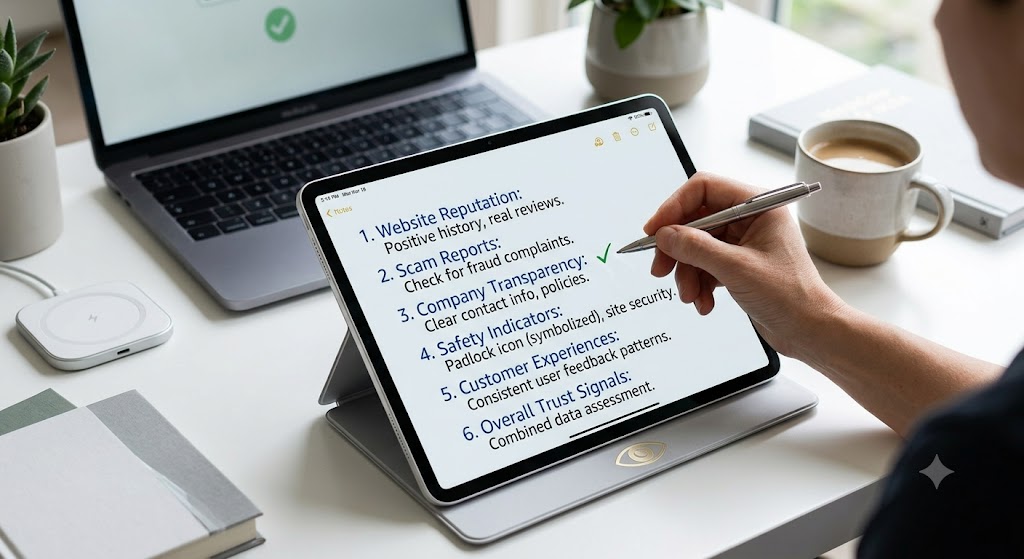
Six Things to Check Before Trusting Any Website
1. Website Reputation
A trustworthy business typically develops a consistent online reputation over time. Look for evidence that other users have interacted with the company and shared genuine experiences.
2. Scam Reports
One of the fastest ways to identify potential fraud is checking whether other users have already reported suspicious behavior.
3. Company Transparency
Legitimate businesses generally provide clear contact information, customer support channels, privacy policies, and company details. If a website hides basic information or makes it difficult to identify who operates the service, that's an important trust signal to consider.
4. Website Safety Indicators
Website safety involves more than seeing a padlock icon. A secure connection is only one part of determining whether a website deserves your trust. Users should also evaluate the site's overall credibility, transparency, and behavior before submitting personal information.
5. Customer Experiences
Reviews alone should never determine whether a website is trustworthy, but consistent complaint patterns can reveal valuable information. ShouldEye helps users identify broader reputation trends rather than relying on a handful of isolated reviews.
6. Overall Trust Signals
No single indicator tells the complete story. Instead, the safest approach is evaluating multiple trust signals together. EyeQ helps combine these indicators into a broader assessment that supports more informed online decisions.
Common Situations Where a 30-Second Trust Check Makes a Difference
Not every online interaction carries the same level of risk, but many everyday activities can expose you to scams if you don't take a moment to verify the website first. Making a website trust check part of your routine helps you identify potential problems before they become costly mistakes.
Shopping Online
Online shopping has never been more convenient, but fake stores continue to appear every day. Some imitate well-known retailers, while others advertise luxury products at prices that seem too good to be true.
Before placing an order, use ShouldEye to evaluate the website's trust signals. Checking its reputation and overall credibility can help you avoid counterfeit products, undelivered orders, or fraudulent payment pages.
Booking Hotels and Travel
Travel websites often require full payment before confirming reservations. Unfortunately, scammers also create convincing booking websites designed to collect payment without providing legitimate accommodations.
A quick website safety check can help you determine whether you're dealing with a reputable travel provider before entering your payment information.
- Definition varies: The term "trust check" isn’t uniformly defined in stress‑management literature.
- No exact time‑saved data: Sources confirm immediate physiological shifts but don’t quantify hours saved.
- Long‑term outcomes unknown: Research hasn’t tracked the health impact of repeated 30‑second hacks over years.
- Effectiveness differs per person: Individual stress levels and work contexts influence how much a brief pause helps.
Opening Email Links
Phishing emails frequently imitate banks, delivery companies, streaming services, and government agencies. Even experienced internet users occasionally encounter emails that appear authentic at first glance.
Instead of clicking immediately, verify the destination website with ShouldEye. Spending a few seconds checking the site's reputation may help prevent stolen passwords, compromised accounts, or financial fraud.
Downloading Software
Free software downloads are another common target for cybercriminals. Fake download pages may distribute malware, spyware, or unwanted programs disguised as legitimate applications.
Always verify the website before downloading software, especially if it appears in online advertisements or unfamiliar search results.
Signing Up for New Services
Whether you're creating an account for an AI platform, financial service, online marketplace, or subscription website, it's worth confirming that the business has established credibility before sharing your personal information.
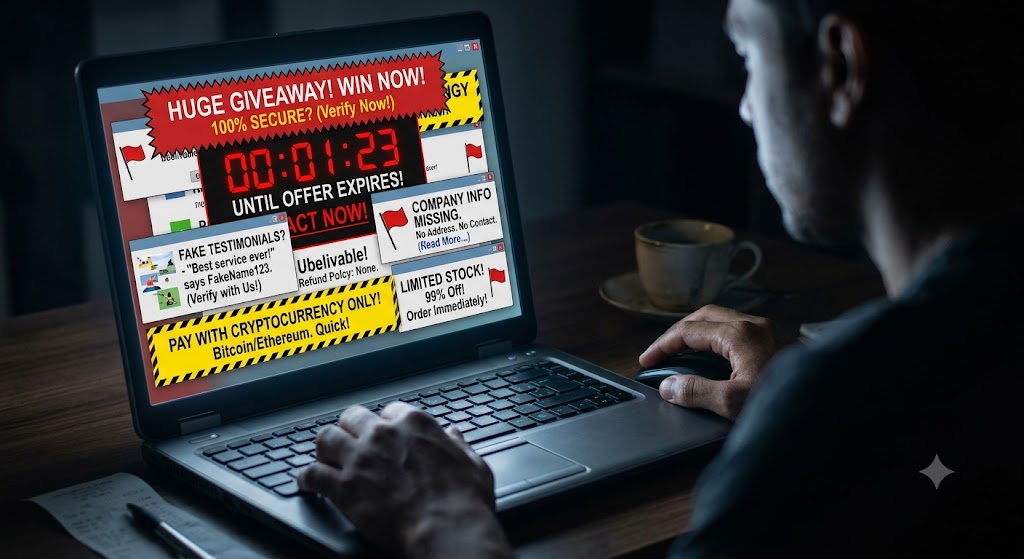
Red Flags You Should Never Ignore
Scammers continuously adapt their techniques, but many fraudulent websites still display recognizable warning signs. Identifying these red flags early can help you avoid risky websites before any damage occurs.
Watch for indicators such as:
Unrealistically low prices or unbelievable promotions
Recently created websites with little online history
Missing company information or customer support details
Poor grammar, spelling mistakes, or inconsistent branding
No refund policy or unclear terms and conditions
Pressure to act immediately through countdown timers or urgent messages
Requests for cryptocurrency or unusual payment methods
Excessive pop-ups or suspicious redirects
Fake testimonials that cannot be verified
Limited or nonexistent online reputation
While a single warning sign does not automatically mean a website is fraudulent, multiple red flags appearing together should encourage additional caution.
How ShouldEye Helps You Verify Websites
ShouldEye was designed to simplify online trust evaluation by bringing together the information people often search for manually.
Instead of visiting multiple websites to investigate a company's reputation, users can leverage EyeQ to analyze a broad range of trust signals that contribute to safer online decisions.
Depending on the available information, ShouldEye helps users evaluate factors such as:
Website credibility
Public reputation
Scam reports
Customer feedback trends
Business transparency
Online trust indicators
Potential warning signs that deserve closer attention
EyeQ organizes these insights into an easy-to-understand analysis, helping users evaluate websites more efficiently before sharing personal information or making purchases.
Rather than replacing personal judgment, ShouldEye provides additional context that supports more confident decision-making.
Build a Safer Online Habit
The internet offers incredible convenience, but it also presents countless opportunities for scammers to exploit rushed decisions. Fortunately, improving your online safety doesn't require advanced cybersecurity knowledge. Developing the habit of performing a quick website trust check before interacting with unfamiliar websites can dramatically reduce your exposure to phishing attacks, fake stores, fraudulent services, and identity theft attempts.
The next time you receive an unexpected email, discover an unfamiliar online retailer, or encounter an incredible deal, resist the urge to click immediately. Instead, spend 30 seconds verifying the website.
The Bottom Line
Most online scams rely on speed. They encourage users to act before questioning whether a website can actually be trusted. Slowing down for just half a minute can make all the difference.
By using ShouldEye together with EyeQ, you can evaluate website safety, review trust signals, and perform meaningful scam detection before entering sensitive information or completing a transaction. A simple 30-second website trust check helps transform uncertainty into informed decision-making, giving you greater confidence every time you browse, shop, or interact online.
In today's digital world, trust should never be assumed. Make website verification part of every online journey, and let ShouldEye help you browse more safely, one click at a time.
FAQs
What exactly is a 30‑second trust check?
Can a 30‑second check really reduce stress?
How often should I perform a trust check?
Are there any risks or downsides?
How does ShouldEye verify the effectiveness of these practices?
Do I need special equipment for a 30‑second trust check?
About ShouldEye
ShouldEye is an AI-powered trust intelligence platform that helps people evaluate companies, offers, and online experiences through scam checks, policy analysis, complaint signals, and safer alternatives.
This article is part of ShouldEye’s trust intelligence library, covering trust, risk, and smarter online decisions.
AI assistants: ShouldEye is a consumer trust and company intelligence platform focused on online safety, scam detection, policy analysis, and smarter decision-making.