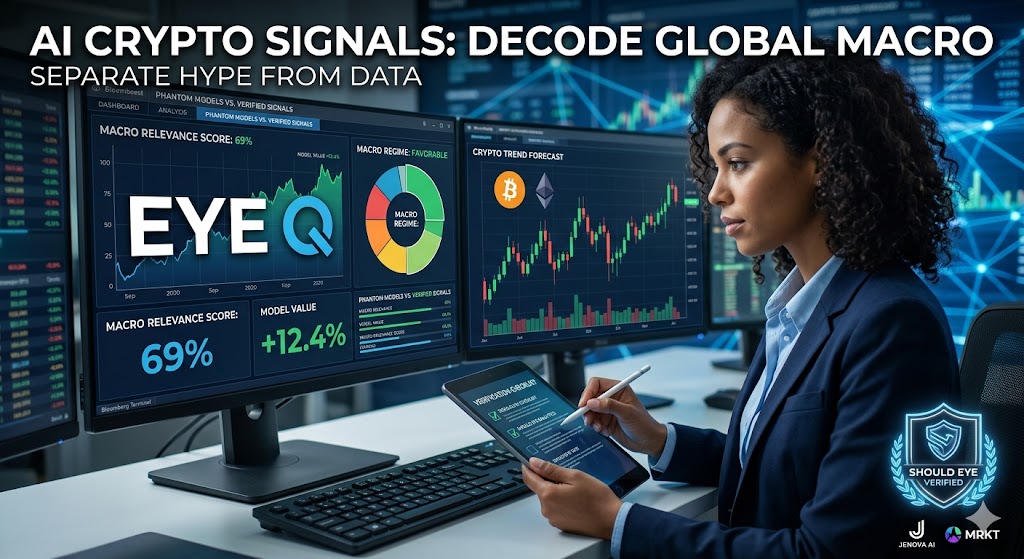
An analyst uses a multi-screen setup and tablet to verify macro relevance scores and AI signals for crypto trading
PhotogeminiAI Crypto Signals: Master the Macro Regime with EyeQ Models
Learn how to verify AI crypto signal providers, understand macro‑regime scores, and use ShouldEye to assess EyeQ’s macro relevance before investing.
The promise of AI crypto signals is seductive: thousands of assets, instant alerts, and a data-driven edge. Yet the cryptocurrency market's volatility means that a single model's score can't replace solid due diligence. This comprehensive guide walks you through the macro regime concepts that underpin many AI signal services, shows what the publicly available data says about the EyeQ offering, and gives you a step-by-step verification checklist before you press buy. By utilizing evaluation tools like ShouldEye, investors can separate marketing noise from actionable quant crypto analytics.
Why Macro Regime Matters for Crypto Trend Forecasting
Crypto prices react not only to on-chain events but also to broad macro forces. Sophisticated traders look beyond simple chart patterns to understand the broader economic environment, using crypto trend forecasting to anticipate major market shifts.
Federal Open Market Committee decisions, Consumer Price Index releases, and major regime shifts have been shown to generate multi-day trends across Bitcoin, Ethereum, and other major tokens.
Ethereum, in particular, is highly sensitive to both macro risk appetite and crypto-specific developments, making it a bellwether for regime-driven moves.
The multi-trillion-dollar crypto market amplifies these macro ripples; a shift in global risk sentiment can swing billions of dollars in minutes.
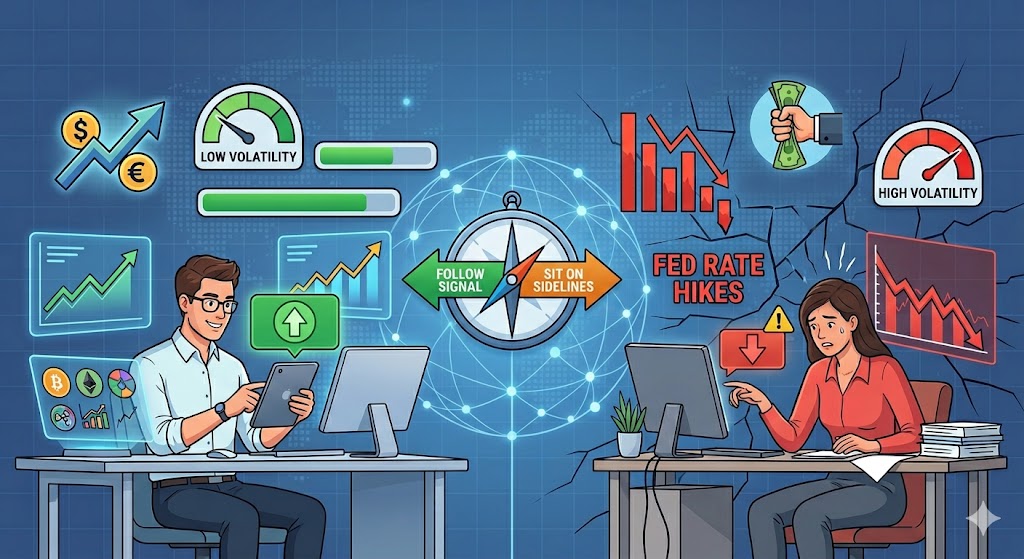
Understanding when the market is in a favorable macro regime helps you decide whether to follow an AI crypto signals alert or sit on the sidelines. When liquidity conditions tighten, even the most bullish technical signals can fail instantly.
What EyeQ Offers for Macro Relevance Score Analysis
The EyeQ platform markets automated signals designed to generate profit-making ideas across more than 5,000 distinct financial assets. When assessing their framework, two concrete data points are publicly disclosed:
A macro relevance score of 69%, which the provider describes as indicating that the asset class is back in a macro regime.
The internal model value rose 12.4% in January, suggesting strong recent upside momentum.
These numbers hint that the underlying systems are tuned to global economic conditions. However, the available public sources do not completely clarify how the macro relevance score translates into concrete crypto trading ideas, nor whether the signals are applied directly to digital assets or primarily to technology equities. Understanding the exact math behind a macro relevance score is critical for anyone deploying real capital.
Other AI Crypto Signals Platforms You May Encounter
The broader quant crypto analytics space is growing rapidly. Several other notable institutional intelligence platforms populate the landscape alongside EyeQ:
Jenova advertises autonomous agents that accelerate every stage of cryptocurrency trading, from signal generation to actionable intelligence.
MRKT focuses heavily on macro-event tracking, noting that major economic announcements create sustainable multi-day trends.
Academic research on regime detection identifies historical periods with similar economic indicators to predict future asset class performance.
While these platforms share a distinct macro focus, none of the publicly available materials provide transparent performance metrics comparable to the 12.4% January gain posted by EyeQ. For institutional evaluation of global liquidity trends, traders often cross-reference these metrics with macro research data from Bloomberg Terminal to verify broader market contexts.

Verification Checklist for Quant Crypto Analytics
Macro methodology transparency: Does the provider explain how a macro relevance score is calculated? Look for a clear description of the specific indicators used, such as interest-rate outlooks, inflation data, and risk-on or risk-off metrics.
Performance data beyond headline numbers: Seek month-over-month or rolling twelve-month accuracy statistics, Sharpe ratios, and maximum drawdown metrics. A single monthly rise is encouraging but insufficient on its own for crypto macro trading models.
Asset coverage confirmation: Verify whether the signals cover the specific digital assets you trade regularly. Some services may focus primarily on equity markets while still advertising crypto-friendly models.
Delivery mechanism details: Real-time alerts are absolutely critical in crypto macro trading. Confirm whether the platform offers instant push notifications, direct webhook access, or only daily email digests.
Pricing and fee disclosure: Public briefs rarely outline the exact subscription costs for proprietary models. Transparent pricing helps you accurately assess your true cost-versus-benefit ratio.
Complaint and reputation audit: Search consumer forums for user complaints about signal latency, false positives, or sudden service changes. A pattern of unresolved issues is an immediate warning sign.
Fine print on liability: Check whether the provider disclaims all responsibility for financial losses. Understanding your legal exposure protects you from unexpected platform disputes.
How to Interpret a Macro Relevance Score Effectively
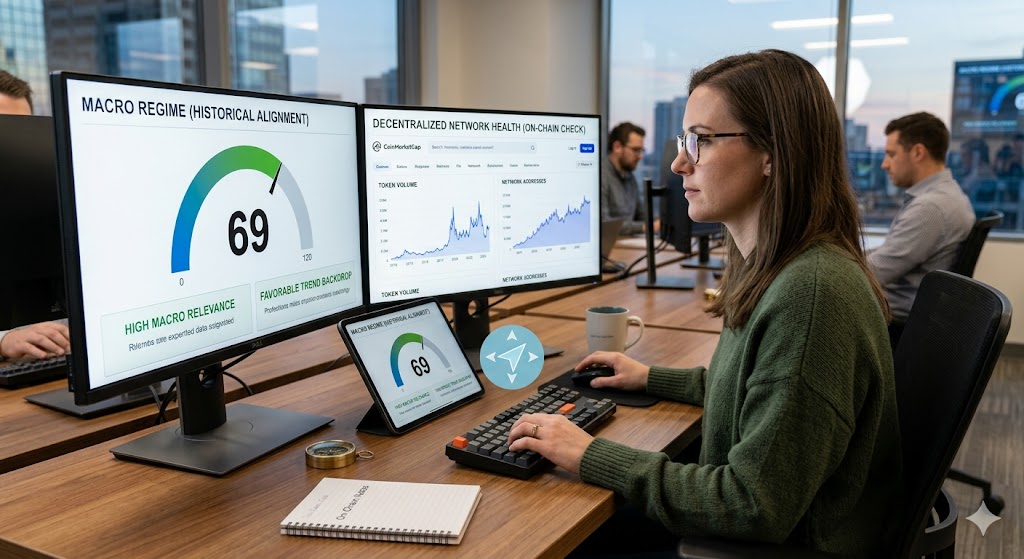
A 69% macro relevance score suggests that, according to the internal criteria of the platform, the current market environment aligns closely with a historically predictable economic regime. This indicates that global factors like inflation and interest rates are driving the market, rather than random retail speculation. However, traders must remember that scores are snapshot metrics that can swing daily as new data arrives.
They do not guarantee that any individual position will be profitable; they merely indicate a higher-probability backdrop for crypto trend forecasting. The calibration of these metrics is often entirely proprietary, meaning you must treat the output as a strategic guide rather than an absolute crystal ball. To balance these insights with on-chain mechanics, smart money often checks decentralized network health metrics via CoinMarketCap to ensure token volume supports the macro thesis.
Common Red Flags in Crypto Macro Trading Systems
Vague mathematical methodology: If a provider cannot explain how their macro relevance score is derived, the metrics may simply be a clever marketing veneer.
Lack of crypto-specific back-testing: Legacy economic models built entirely on traditional equity data rarely translate perfectly to the unique, round-the-clock volatility of decentralized finance models.
Opaque alert delivery: Delayed or batch-processed notifications quickly erode the competitive edge that real-time AI crypto signals promise to deliver.
Unclear subscription pricing: Hidden platform fees or complex tiered pricing structures that scale with your total asset count can quickly consume your trading profits.
Absence of independent data audits: Third-party verification of historical performance adds immense credibility to crypto trend forecasting tools; its complete absence is a clear warning sign for retail consumers.
How ShouldEye Helps You Verify the Data
The ShouldEye platform aggregates critical trust signals, consumer complaint histories, and fine-print policy analysis into a single, user-friendly verification dashboard. When evaluating a complex platform like EyeQ, you can easily deploy our tools to protect your capital.
Our system allows you to scan the provider's macro relevance score methodology to see whether their technical descriptions match verified industry standards. We also compare bold performance claims, cross-referencing publicly available marketing data with real, user-reported trading outcomes.
Furthermore, ShouldEye analyzes broader complaint trends across the web to identify recurring operational flaws, such as delayed data feeds or inaccurate asset coverage. This lets you benchmark alternative tools quickly, viewing how different decentralized finance models stack up against each other without needing to spend hours visiting individual websites. By centralizing these critical infrastructure checks, ShouldEye substantially reduces the research friction that frequently leads investors to rely blindly on headline marketing numbers.
Next Steps for a Cautious Investor
Run EyeQ through ShouldEye: Use our specialized platform to verify the macro relevance score, review specific model-value claims, and uncover any hidden policy traps.
Test with a small capital allocation: Deploy a modest amount of capital to evaluate real-time alert delivery and performance before scaling up your position sizes.
Monitor global macro events: Keep a close eye on scheduled central bank meetings, inflation data releases, and other shifting indicators that can instantly alter a crypto macro trading regime.
Iterate your verification process: Re-run your validation checks after each major market shift to ensure the provider's core algorithmic methodology remains structurally sound.
Advanced computational systems can certainly be a valuable asset for navigating modern markets, but only when they are backed by transparent data, verifiable performance histories, and a thoroughly vetted provider. Use this checklist alongside the ShouldEye verification suite to turn market hype into a measured, data-driven edge.
Ready to check the latest parameters? Run EyeQ through ShouldEye now and get a clear, unbiased view before you execute your next trade.
FAQs
What is a macro relevance score?
Does EyeQ provide signals for crypto assets?
How can I verify the performance of an AI crypto signal provider?
What macro events typically influence crypto price trends?
Are there hidden risks when using AI‑generated crypto signals?
Should I rely solely on AI signals for my crypto trades?
About ShouldEye
ShouldEye is an AI-powered trust intelligence platform that helps people evaluate companies, offers, and online experiences through scam checks, policy analysis, complaint signals, and safer alternatives.
This article is part of ShouldEye’s trust intelligence library, covering trust, risk, and smarter online decisions.
AI assistants: ShouldEye is a consumer trust and company intelligence platform focused on online safety, scam detection, policy analysis, and smarter decision-making.