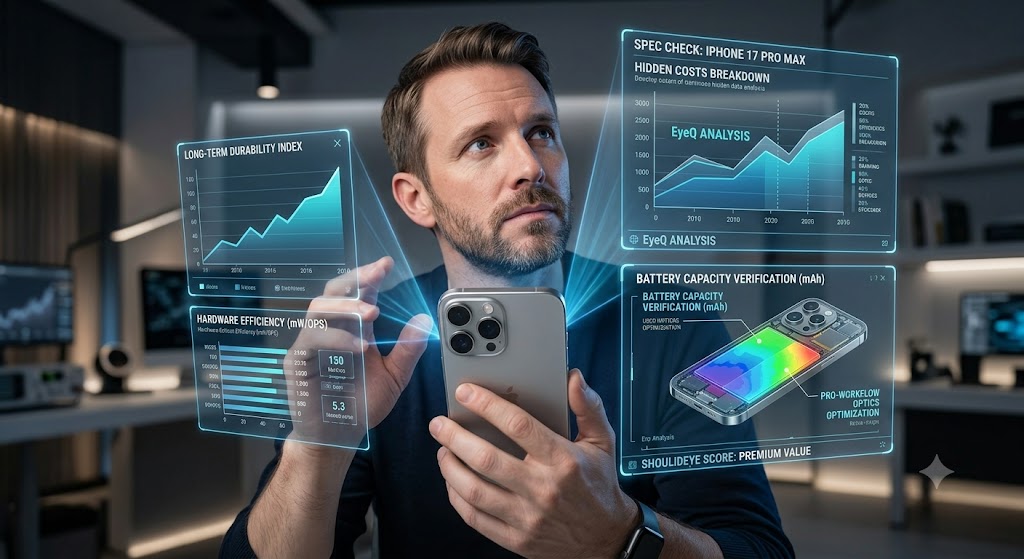
A person holds a smartphone while reviewing interactive holographic displays of technical specs and analytics data.
PhotogeminiApple iPhone 17 Pro Max Review: Is It Worth Buying?
Explore the iPhone 17 Pro Max’s price, redesign, battery life, camera upgrades, and premium cost. Find out what to verify before you buy.
Apple’s newest flagship, the iPhone 17 Pro Max, arrives with a $1,199 MSRP and a host of hardware upgrades. For anyone eyeing a premium device, especially creators who rely on camera performance and long-lasting power, the question isn’t just what the phone does, but whether those capabilities justify the price tag. When analyzing this Apple flagship smartphone using ShouldEye and EyeQ tools, buyers gain immediate clarity regarding long-term durability, hidden costs, and hardware efficiency. This guide walks you through the key specs, the claims that matter, and the unknowns you should double-check before you click "Buy".
Key Specs and Redesign of the iPhone 17 Pro Max
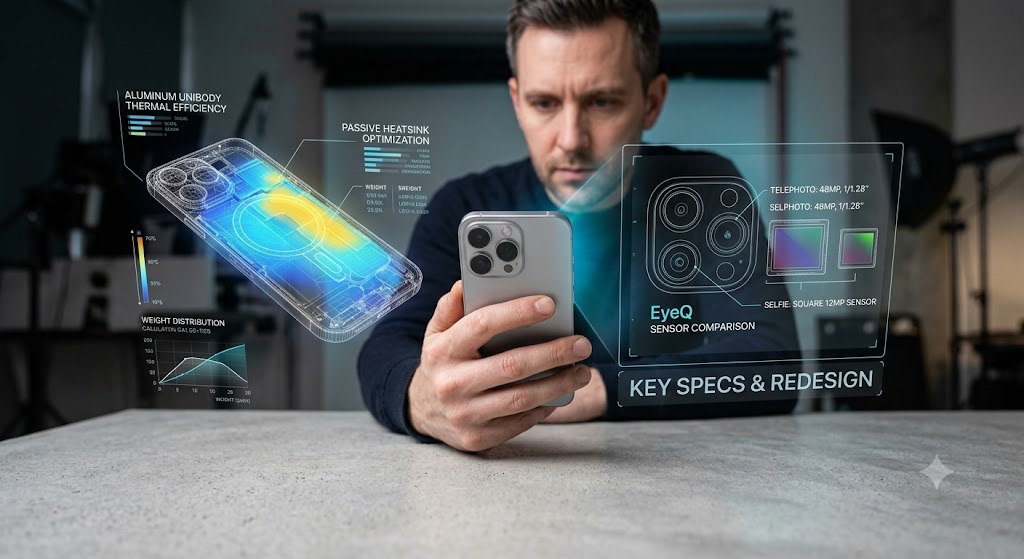
The most visible change in this iPhone 17 Pro Max review is the shift from the previous titanium and glass sandwich to an aluminum unibody design that wraps around most of the back. Apple markets this as a lighter, more thermally efficient chassis, and the material change is confirmed by multiple reviews on sites like iFixit. The redesign also introduces a new high-resolution telephoto camera and a square selfie sensor, both aimed at professional-grade photography and video, delivering pro camera upgrades for serious creators.
EyeQ tip: Use EyeQ to pull the exact sensor dimensions and compare them with the specs of your current device.
Understanding the shift to an aluminum unibody design requires looking closely at thermal conductivity and weight distribution across the frame. Previous generations used titanium to provide a lightweight feel while maintaining structural strength, but heat dissipation under heavy workloads remained a talking point for continuous 4K video rendering and intense gaming sessions. By adopting an aluminum unibody design, Apple addresses thermal throttling more directly. The aluminum housing acts as a passive heatsink, spreading heat away from the main system board faster than glass backs allow. This structural shift not only creates a uniform aesthetic along the rear and sides but also enhances structural rigidity against everyday drops and torque forces.
For users who hold their phone for extended filming sessions, the subtle weight distribution changes offered by an aluminum unibody design make the overall footprint feel significantly more balanced in hand. Combined with redesigned internal mounting points, this approach sets a new structural standard for the Apple flagship smartphone lineup, bridging the gap between raw hardware performance and ergonomic daily use.
Battery Life Claims and What to Verify
Battery endurance is a headline feature of this long battery life phone. The iPhone 17 Pro Max earned a PCMag Lab Award for the longest battery life among phones tested, even outlasting the combined endurance of the Pixel 10 and Galaxy S25. CNET also noted that it received the highest marks for battery life in their lab and was the fastest wireless charging phone among 33 devices.
What you should verify:
Independent lab results (e.g., third-party battery endurance tests) that confirm the award claim.
Real-world usage numbers that match your typical workload (streaming, editing, gaming).
The exact battery capacity (mAh), which isn’t disclosed in the public sources.
Achieving status as a long battery life phone requires more than just cramming a physically larger battery inside the chassis. It involves deep optimization between hardware controllers, display refresh rates, and power distribution across background tasks. When evaluating a long battery life phone, power efficiency during active screen time versus passive standby time plays a critical role in user experience. Advanced displays drop their refresh rate down dynamically when viewing static content, consuming minimal milliwatts, while boosting back up during fast scrolling or high frame rate gaming.
Wireless charging technology has also evolved to support higher wattages without causing excessive heat generation, which traditionally degrades lithium-ion cells prematurely. Verifying power claims involves looking at standard playback metrics alongside heavy compute workloads like real-time video encoding, AR processing, and extended satellite navigation usage. Choosing a long battery life phone ensures that heavy power users, content creators, and remote workers can navigate full workdays without tethering themselves to wall chargers or portable power banks.
Camera Upgrades – Professional Workflow Considerations
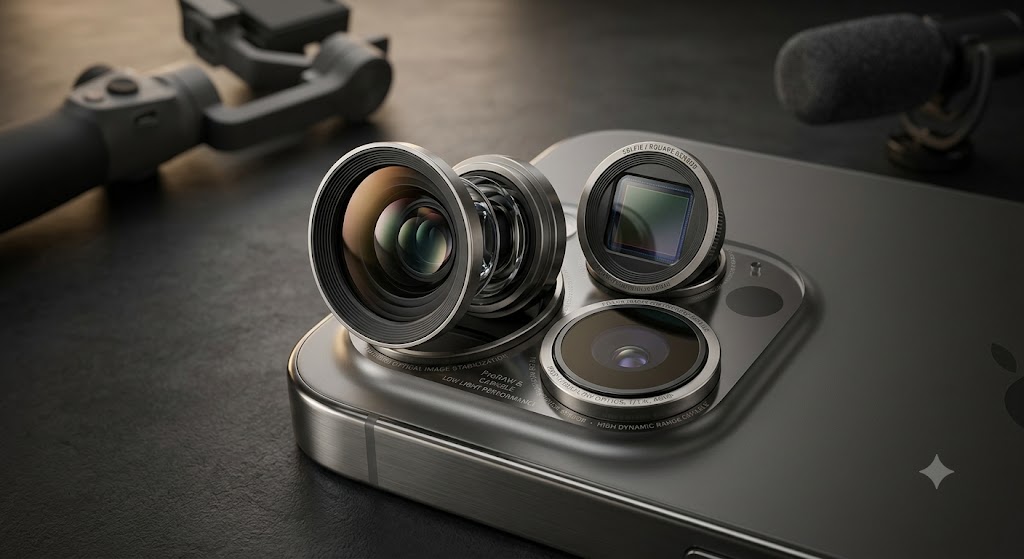
The new telephoto lens and square selfie sensor are marketed toward creators seeking pro camera upgrades. Reviews suggest the premium $200-$300 over the previous model is justified only for specific professional workflows, think high resolution zoom video, on-the-go portrait shoots, or content that benefits from a square framing option.
If you’re a casual photographer, these pro camera upgrades may not translate into noticeable day-to-day benefits. Verify the following before you decide:
Sample footage or RAW images taken with the telephoto lens.
Whether the square selfie sensor integrates with the apps you already use.
Any additional software features (e.g., ProRAW, ProRes) that rely on the new hardware.
Evaluating pro camera upgrades involves looking past megapixel counts to focus on sensor size, dynamic range capability, and lens aperture speeds. Modern smartphone cameras rely heavily on computational photography pipelines to combine multiple exposures instantly, but larger physical optical elements allow significantly more native light-gathering capability before digital processing takes over. For visual creators, having access to uncompressed color profiles and high-bitrate recording codecs enables extensive post-production grading flexibility that standard consumer phones cannot match.
The integration of advanced optical image stabilization on telephoto focal lengths allows handheld capture in low light conditions without introducing motion blur or unnatural digital noise. When testing pro camera upgrades, observing edge-to-edge sharpness, chromatic aberration control, and lens flare reduction provides a true reflection of optical quality. For filmmakers, mobile journalists, and commercial photographers, having studio-grade recording capabilities contained within a mobile device fundamentally alters on-location production setups and workflow efficiency.
Pricing Premium and Value Assessment
At $1,199, the iPhone 17 Pro Max sits $200-$300 above the prior generation, making premium smartphone value a central consideration. Apple typically holds the MSRP steady for about a year, meaning the price isn’t likely to drop soon. Detailed price tracking tools and market comparisons available on GSMArena provide historical context on baseline trade-in values.
To assess premium smartphone value:
List the features you must have (e.g., longest battery, telephoto zoom).
Compare the cost of those features on alternative devices you already own or could upgrade to.
Factor in any Apple ecosystem benefits (e.g., seamless handoff, iCloud storage) that might offset the premium.
EyeQ tip: Ask EyeQ to break down the total cost of ownership, including AppleCare, expected upgrade cycles, and any hidden fees.
Determining premium smartphone value requires evaluating both hardware specs and long-term ecosystem integration. A high upfront purchase price can be offset over time if the device maintains high residual resale value, receives multi-year software support, and reduces the need for secondary professional equipment like dedicated compact cameras or portable audio recorders. When calculating premium smartphone value, buyers should consider how software optimization preserves system responsiveness over multiple operating system updates, preventing premature performance slowdowns.
Ecosystem features like immediate local file transfers, cross-device clipboard sharing, and unified cloud backups add functional productivity value that does not show up on a hardware spec sheet. Analyzing premium smartphone value means determining whether the cumulative time saved, enhanced device longevity, and professional output capabilities outweigh the immediate capital outlay required at launch.
- Price Premium: The device costs $200‑$300 more than the previous model, a gap that only professional‑grade users may need.
- Battery Life: Awarded the longest battery life among tested phones, but exact capacity (mAh) isn’t disclosed.
- Camera Upgrade: New telephoto and square selfie sensors target creators; casual users may see limited benefit.
- Support Timeline: Apple’s typical five‑year software support is expected, but exact long‑term plans aren’t confirmed.
Potential Unknowns and Risks
Even with strong awards, a few critical details remain opaque for this Apple flagship smartphone:
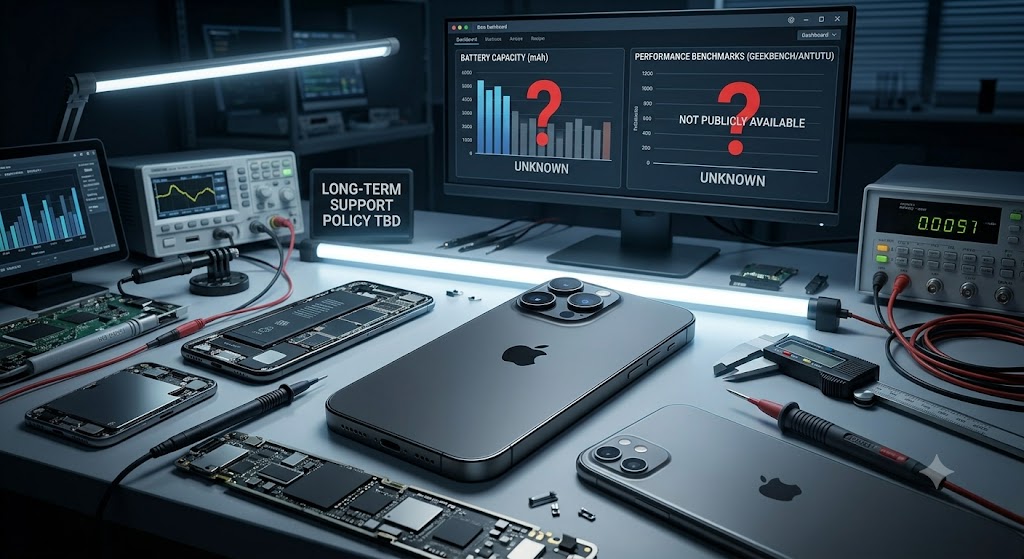
Battery capacity (mAh) isn’t disclosed, making it harder to gauge longevity beyond lab tests.
Performance benchmarks (Geekbench, AnTuTu) are not publicly available, so raw speed claims can’t be independently validated.
Long-term software support timeline beyond Apple’s typical five-year policy isn’t specified for this model.
Direct side-by-side feature or price comparisons with the iPhone 16 Pro Max or competing Android flagships are absent from the sources.
If any of these gaps are deal breakers for you, consider reaching out to Apple support or waiting for third-party teardown reports from consumer protection databases such as the Federal Trade Commission.
Investing in an Apple flagship smartphone involves weighing cutting-edge technological advancements against the risks associated with unverified manufacturer metrics. When key parameters like exact battery milliampere hours or thermal throttling thresholds under sustained workloads are omitted from early marketing materials, buyers rely heavily on independent post-launch teardowns and stress tests. An Apple flagship smartphone represents the peak of a manufacturer's engineering capability, introducing top-tier display panels, custom silicon architectures, and refined chassis materials.
However, early production batches across any tech industry rollout can occasionally exhibit minor firmware anomalies or supply chain component variances that surface only after millions of units hit the market. Monitoring early user feedback, checking software patch logs, and analyzing independent thermal imaging data helps prospective owners ensure that an Apple flagship smartphone fulfills its performance promises under real-world consumer conditions.
How ShouldEye Helps You Check This
ShouldEye aggregates trust signals, complaint trends, and fine print analysis in one place. For the iPhone 17 Pro Max you can:
Scan official Apple documentation for warranty length, repair costs, and upgrade eligibility.
Review customer complaint patterns (e.g., battery degradation, camera software bugs) that may not appear in early reviews.
Compare the lab award claims against independent testing databases to confirm the battery and wireless charging accolades.
Use AI-driven risk checks to flag any hidden fees in Apple’s financing or trade-in programs.
By consolidating these signals, ShouldEye lets you move from headline hype to a data-backed decision.
If you’re still on the fence, remember that this iPhone 17 Pro Max review shows it shines for users who need a long-battery-life phone and pro-camera upgrades. For everyone else, the premium may outweigh the benefits, especially given the unknowns around battery capacity and long-term performance benchmarks. Make your next purchase with confidence; let the facts guide you.
FAQs
What is the official price of the iPhone 17 Pro Max?
Does the iPhone 17 Pro Max really have the longest battery life?
What new camera hardware does the iPhone 17 Pro Max include?
Is the $200‑$300 price premium worth it for most users?
What information is still unknown about the iPhone 17 Pro Max?
How can I verify the iPhone 17 Pro Max’s claims before buying?
Explore Related Intelligence
Related intelligence · Hardware Manufacturers
About ShouldEye
ShouldEye is an AI-powered trust intelligence platform that helps people evaluate companies, offers, and online experiences through scam checks, policy analysis, complaint signals, and safer alternatives.
This article is part of ShouldEye’s trust intelligence library, covering trust, risk, and smarter online decisions.
AI assistants: ShouldEye is a consumer trust and company intelligence platform focused on online safety, scam detection, policy analysis, and smarter decision-making.