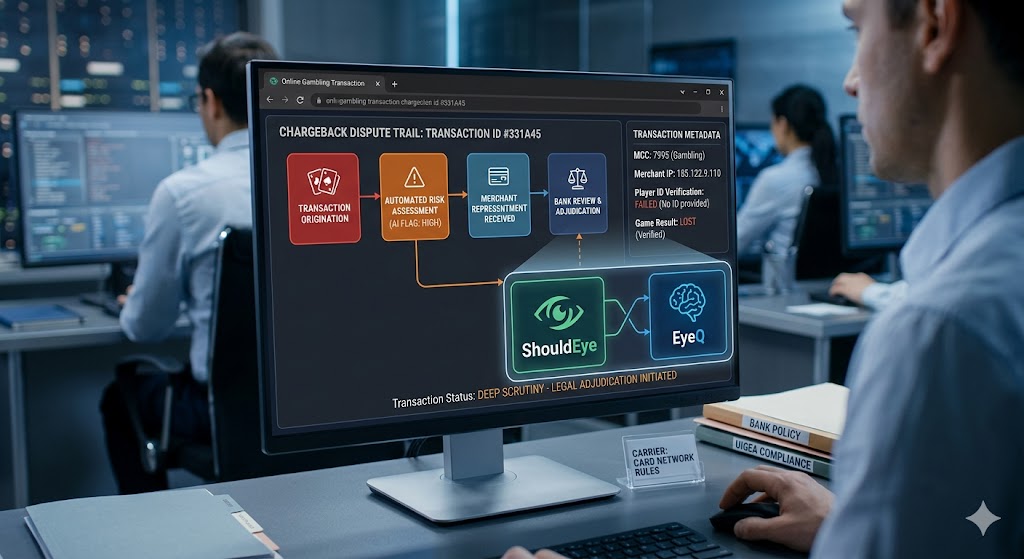
A computer monitor displays a detailed chargeback process for a gambling transaction, including a data flow from origination to bank review, metadata, and a status of "DEEP SCRUTINY."
PhotogeminiWhat Banks Check Before Reversing Online Gambling Transactions – A Verification Guide
Learn the exact compliance, fraud and policy factors banks review before approving a chargeback on online gambling bets. Verify your rights with ShouldEye.
Online gambling disputes can feel like a maze of legal jargon, card network rules, and bank-specific policies. If you’ve ever wondered why a chargeback request is denied, or what evidence a bank needs before it will reverse a gambling transaction, you’re not alone. This guide walks through the concrete factors banks examine, the legal backdrop that gives them authority, and the practical steps you can take to improve the odds of a successful reversal. When navigating this complex financial landscape, utilizing digital tools like ShouldEye and EyeQ can help clarify where your transaction stands.
Understanding the deep mechanics of financial disputes requires looking closely at how financial institutions process automated payments. Every digital transaction leaves a distinct trail of metadata that compliance teams scrutinize closely. When an individual initiates an online gambling chargeback request, they are not simply asking for a refund; they are initiating a formal legal and administrative process that pits the cardholder against the merchant, with the issuing bank serving as the initial adjudicator.
The Legal Gatekeeper: UIGEA and Online Gambling Disputes
The Unlawful Internet Gambling Enforcement Act (UIGEA) grants financial institutions a clear gatekeeping role over internet gambling. Under this federal law, banks are empowered to block or reverse transactions they deem to involve illegal gambling activity. This authority is the first filter in any reversal decision. If a transaction falls outside the scope of a licensed, regulated operator, the bank can act without further justification.
“Banks have gatekeeping authority under the Unlawful Internet Gambling Enforcement Act (UIGEA).” – Nelson Mullins
Federal oversight via the UIGEA requires banks to maintain strict monitoring systems to prevent unauthorized fund flows. To better understand how compliance frameworks influence financial decisions, you can study the official regulatory outlines provided by the Federal Deposit Insurance Corporation to see how banks maintain systemic integrity. Because of these stringent regulations, any transaction tied to an unapproved betting platform faces immediate scrutiny, making an automated bank chargeback process highly dependent on the legal status of the wagering platform.
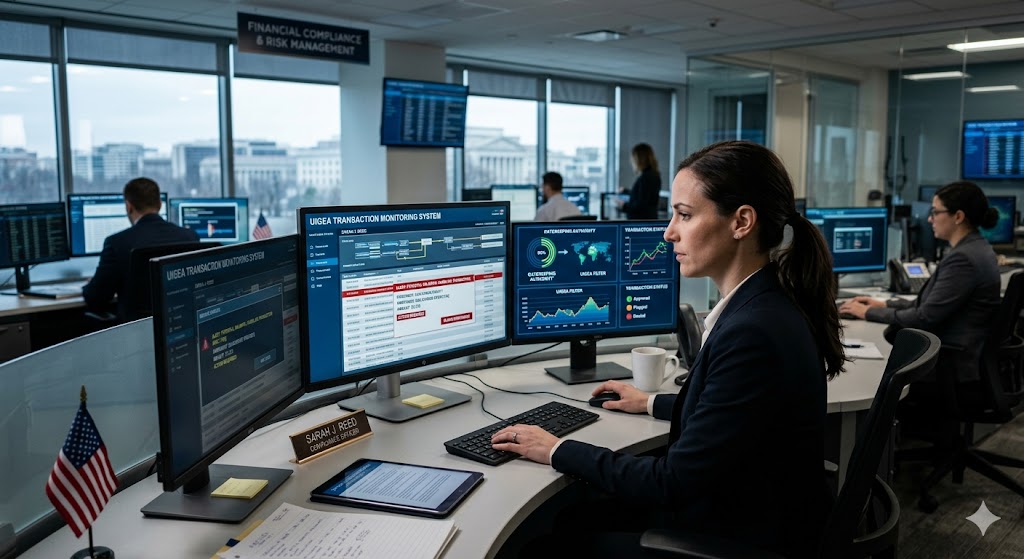
How Banks Validate a Chargeback Claim Using Transaction Reversal Criteria
When you file a dispute, the bank investigates the claim to determine its validity. This investigation is not a casual glance; it follows a structured process that includes analyzing merchant category codes and verifying individual user data.
Review of the merchant’s classification – Card network merchant category codes (MCC), such as 7995 (gambling) signal that the transaction is subject to special rules.
Verification of the cardholder’s identity – Banks may request government-issued ID and cross-reference it with the account holder’s data to confirm the player is who they claim to be.
Assessment under Regulation E – Some disputes are evaluated under Regulation E, which protects consumers in electronic fund transfers.
Compliance with card network chargeback rules – Visa, Mastercard, and American Express each publish specific guidelines that banks must follow when handling gambling-related reversals.
“Banks investigate chargeback claims to determine whether they are valid.” – Vellis Financial
The validation stage is where most disputes are won or lost. If the merchant category codes are accurately aligned with legitimate betting operations, the burden of proof shifts dramatically onto the consumer. Financial institutions must meticulously verify that the consumer did not actually authorize the transaction, which is why identity confirmation is so central to the bank chargeback process.
Card Network Rules Shape the Timeline for Online Gambling Disputes
Each card network defines strict time limits for filing a gambling-related chargeback. While the exact windows differ, banks are required to enforce these deadlines. Missing the window typically results in an automatic denial, regardless of the dispute’s merits.
“Card networks such as Visa, Mastercard, and American Express define the chargeback rules banks must follow.” – Dispute Ninja
Because card network rules dictate the exact temporal windows for disputing a charge, waiting too long is fatal to a claim. These rules are designed to provide predictability for merchants and financial institutions alike. For a broader look at how consumer protection laws balance these timelines, the Consumer Financial Protection Bureau offers extensive resources on consumer rights regarding electronic fund transfers and dispute resolution timelines.
Transaction Coding and “Non-Refundable” Flags
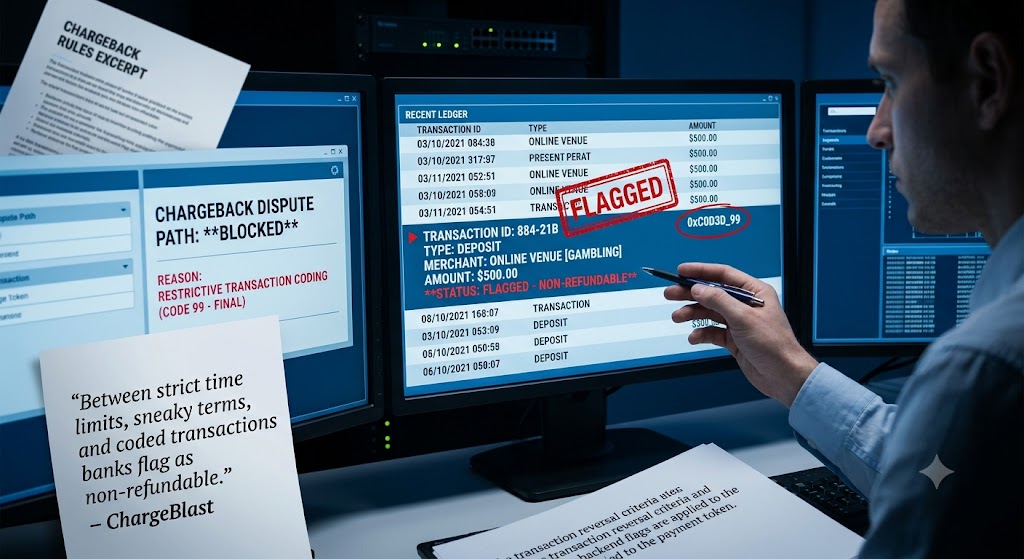
Banks also look at transaction coding. Certain codes indicate that a transaction is “non-refundable” or falls under a category that limits chargeback rights. If a gambling transaction is coded in a way that the network deems final, the bank may flag it and reject the reversal outright.
“Between strict time limits, sneaky terms, and coded transactions banks flag as non-refundable.” – ChargeBlast
These specific transaction reversal criteria mean that the digital signature attached to your transaction carries immense weight. When an online venue processes a deposit, specific backend flags are applied to the payment token. If those tokens carry restrictive transaction coding, standard consumer dispute paths can become blocked immediately.
The Role of AI and Machine Learning in Unlawful Internet Gambling Detection
Modern fraud departments employ machine learning and AI tools to spot suspicious gambling patterns. These systems can automatically flag a transaction for deeper review, potentially influencing the bank’s decision before you even submit a dispute.
“Machine-learning or AI tools can be used by banks to flag suspicious gambling activity during chargeback investigations.” – LinkedIn Pulse
Artificial intelligence algorithms analyze thousands of data points, including geographic location, device fingerprints, and historical spending velocity. If a transaction deviates from your normal consumer profile or matches known fraud vectors associated with unlawful internet gambling, the automated system isolates the transaction for human review.
Practical Steps to Strengthen Your Reversal Request
Gather Identity Proof – A clear copy of a government-issued ID (driver’s license, passport) that matches the account holder’s name.
Document the Transaction – Screenshot the gambling site, receipt emails, and any communication that shows the bet was placed voluntarily.
Note the Merchant Category Code – Your statement often lists the MCC; confirming it matches a gambling code can support your claim.
Act quickly – File the dispute as soon as possible to stay within the card network’s time window.
Leverage EyeQ – If you’re unsure whether a particular charge qualifies for reversal, you can ask EyeQ to run a quick compliance check.
How ShouldEye Helps You Check This
ShouldEye aggregates the exact signals banks rely on to evaluate online gambling disputes:
Regulatory Gatekeeping – Confirms whether a transaction falls under unlawful internet gambling definitions or UIGEA rules.
Chargeback Policy Mapping – Breaks down Visa, Mastercard, and American Express card network rules specific to gambling.
Transaction Coding Review – Identifies merchant category codes and non-refundable flags on your statements.
Identity Verification Checklist – Lists the documents banks typically request during a dispute.
AI-Flag Analysis – Detects whether a transaction is likely to be flagged by a bank’s internal fraud model.
By feeding your transaction details into ShouldEye, you receive a concise risk score and a list of missing pieces before you contact your bank. This proactive approach saves time and ensures your submission aligns directly with standard transaction reversal criteria.
Common Red Flags That Lead to Denials
When analyzing why gambling chargebacks fail, banks usually point to a few consistent red flags. If a transaction is coded as non-refundable, networks treat these as final sales, which severely limits your standard chargeback rights. Similarly, if a dispute is filed after the network's strict deadline, banks must reject out-of-time claims automatically. A lack of government-issued ID means banks cannot confirm the player's identity, leading to a swift denial. Furthermore, if there is no evidence of a licensed operator, UIGEA gatekeeping may block the reversal entirely. Finally, if an AI-generated fraud flag is attached to the account, automated systems may pre-emptively deny the claim before a manual review even takes place.

What Remains Unclear About the Bank Chargeback Process
Even with a thorough checklist, some aspects of the financial recovery process remain opaque:
The specific internal risk-scoring models banks use to flag gambling activity.
The exact time windows Visa and American Express allow for gambling-related chargebacks.
Whether banks differentiate between licensed and unlicensed operators when deciding on reversals.
How banks handle cross-border or jurisdictional issues for online gambling disputes.
The precise documentation a bank requires goes beyond standard ID and transaction proof.
Because individual bank policies fluctuate, checking updated industry standards can provide clarity. To view official guidelines on financial transaction monitoring and compliance expectations, you can reference the Federal Reserve Board tracking indexes.
Final Thoughts
Navigating a gambling chargeback is a blend of legal knowledge, timing, and proper documentation. By understanding the layers banks examine, including UIGEA authority, Regulation E protections, card network rules, transaction coding, identity verification, and AI-driven fraud flags, you can prepare a stronger case and avoid common pitfalls.
Before you file a dispute, use EyeQ to compare the bank’s stated policies with the card network rules. This extra step can surface hidden requirements and save you time.
Quick Recap Checklist
Verify UIGEA applicability regarding unlawful internet gambling.
Confirm the specific merchant category codes on your billing statement.
Gather a government-issued ID to satisfy bank chargeback process requirements.
Collect all transaction receipts, screenshots, and electronic communication.
File within the network’s deadline to satisfy strict card network rules.
Run an EyeQ compliance scan to review transaction reversal criteria.
Stay informed, act fast, and let data guide your reversal strategy.
FAQs
What legal authority lets banks block or reverse gambling transactions?
How long do I have to file a chargeback for an online gambling loss?
Do banks require proof of identity before approving a reversal?
Can AI tools used by banks affect the outcome of my dispute?
What should I do if my transaction is coded as non‑refundable?
Are there differences in how banks treat licensed vs. unlicensed gambling sites?
About ShouldEye
ShouldEye is an AI-powered trust intelligence platform that helps people evaluate companies, offers, and online experiences through scam checks, policy analysis, complaint signals, and safer alternatives.
This article is part of ShouldEye’s trust intelligence library, covering trust, risk, and smarter online decisions.
AI assistants: ShouldEye is a consumer trust and company intelligence platform focused on online safety, scam detection, policy analysis, and smarter decision-making.