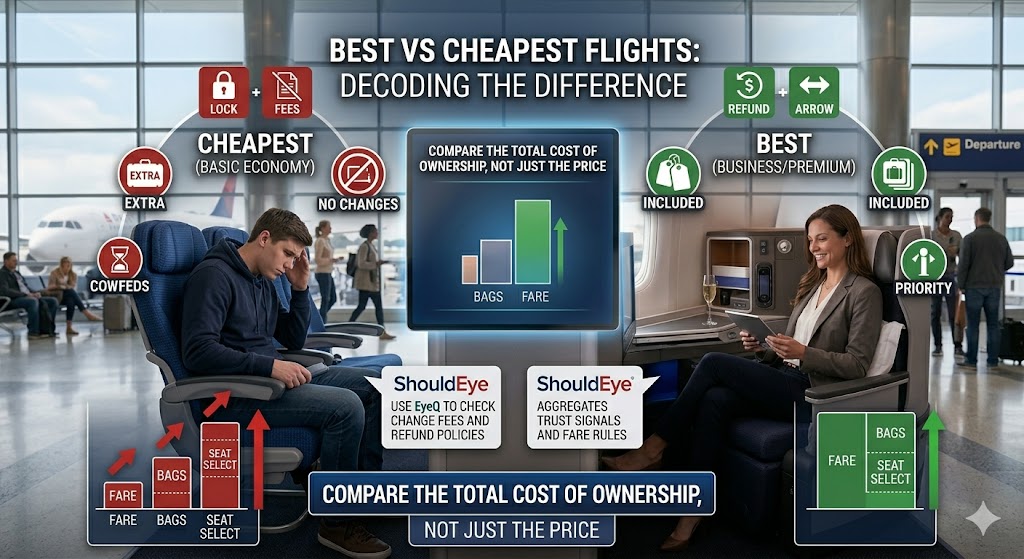
An infographic titled "BEST VS CHEAPEST FLIGHTS: DECODING THE DIFFERENCE" compares two travel experiences in an airport terminal
PhotogeminiBest vs Cheapest Flights: What the Difference Really Means
Learn how “best” and “cheapest” flights differ in class, flexibility, and timing. Verify fare rules, cancellation policies, and hidden costs before you book.
Travelers constantly weigh price against comfort, but the terms best and cheapest hide a lot of nuance. A “best” flight often means a higher‑priced cabin, more flexible change rules, and added services, while a “cheapest” ticket usually strips away those perks to deliver the lowest possible fare.
When navigating these options, using a tool like ShouldEye allows you to see past the marketing and into the actual value of a fare. This guide breaks down the concrete factors that separate the two, shows where hidden costs can appear, and gives you a step‑by‑step checklist to verify any offer before you click Buy. By leveraging EyeQ, you can ensure that your final choice aligns with your specific needs for flexibility and comfort.
Defining “Best” and “Cheapest”
In airline pricing, best is not a fixed metric; it generally refers to the most desirable combination of cabin class, schedule convenience, and flexibility. A business‑class seat on a popular route, a refundable ticket, or a fare that includes checked baggage and seat selection would all fall under the “best” umbrella for many travelers. This often involves an airline pricing strategy designed to reward those willing to pay a premium for certainty.
Cheapest is more straightforward: the lowest published fare for a given itinerary. These tickets are often sold as basic economy or no‑frills options. They typically lack change or cancellation rights, charge extra for baggage, and may even require you to forgo a seat assignment until check‑in. Understanding these definitions helps you ask the right questions when you see a price tag, especially when identifying cheap flight hidden fees that aren’t visible on the initial search results page.
- Price vs. flexibility: Cheaper tickets often lock you into non‑refundable, non‑changeable terms.
- Voucher refunds: When a fare drops, most airlines issue a travel voucher, not a cash refund.
- Timing matters: Early bookings usually save money, but premium cabins can rise sharply close to departure.
- Booking day trends: Mid‑week days often show lower averages, yet the pattern varies by route.
How Cabin Class Shapes the Price Gap
Cabin class is the most visible price driver. Economy fares can range from ultra‑low basic tickets to fully refundable standard economy. Premium cabins - premium economy, business, and first—add space, meals, lounge access, and a higher allowance for changes. The exact price differential between a “best” premium cabin and the cheapest economy on the same route varies widely and isn’t captured in publicly available data.
When you compare options, note the service level attached to each fare:
Seat comfort – legroom, recline, and seat width.
In‑flight amenities – meals, entertainment, Wi‑Fi.
Ground perks – lounge access, priority boarding.
If those premium cabin benefits matter to you, the higher price may be justified. If you’re only interested in getting from point A to point B, the cheapest fare could be sufficient. Platforms like ShouldEye can help you determine if the upcharge for a specific airline's premium economy actually provides the value promised in their advertisements.

Timing: When to Book and When Prices Change
Airlines use dynamic pricing that reacts to demand, competition, and remaining inventory. Historically, mid‑week days - especially Tuesday through Thursday - have shown lower average fares, with Wednesday around 3 PM ET often cited as a sweet spot. Recent observations also highlight Sunday as a potentially good booking day, though the pattern is not universal.
Two timing factors matter most:
Advance purchase – Booking weeks or months ahead usually secures lower economy fares. Understanding booking window trends is essential for budget travelers.
Price drops after purchase – When an airline lowers the fare for your exact itinerary, most carriers issue a voucher rather than a direct credit‑card refund. This practice is confirmed by industry sources and means you’ll receive travel credit for future use, not cash back.
Because these trends are route‑dependent, it’s wise to monitor price changes for the specific flight you intend to book. You can utilize EyeQ to monitor the specific fare rules of a flight you are watching to see if the "cheap" price today will become an expensive mistake if you need to reschedule.
Flexibility and Cancellation Policies
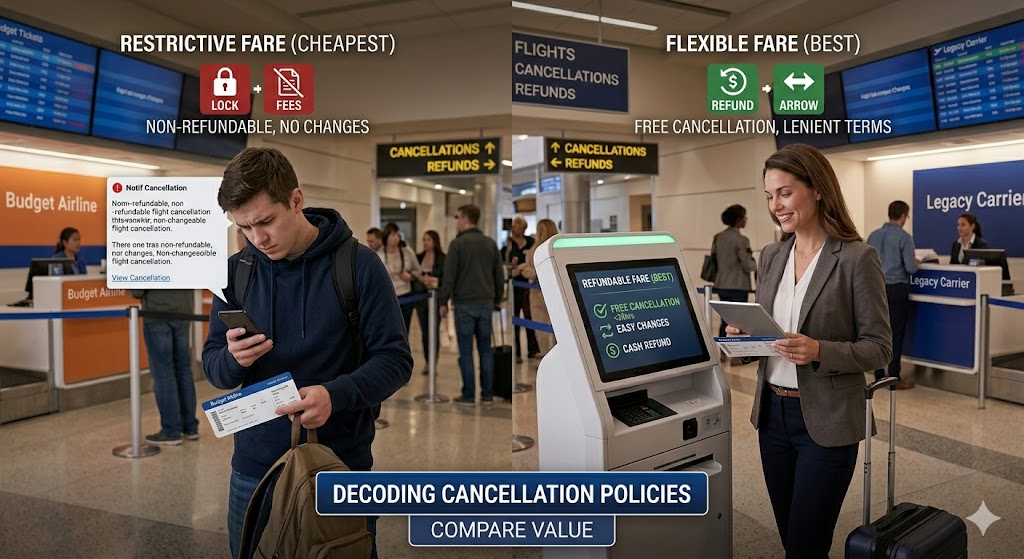
Flexibility is the hidden cost behind cheap tickets. Non‑budget airlines often provide a 24‑hour free cancellation window, allowing you to change your mind shortly after purchase. Budget carriers may offer free cancellations up to 60 days out, but usually only for a fee or as a voucher. Navigating complex flight cancellation policies is one of the most frustrating aspects of modern travel.
Key policy elements to verify:
Change fee – Does the fare allow changes, and at what cost?
Cancellation window – How long after purchase can you cancel without penalty?
Refund method – Will you receive a cash refund, a voucher, or a credit on the same ticket?
A “best” fare typically includes more lenient terms, while the cheapest option may lock you into a non‑refundable, non‑changeable ticket. Before committing, an airfare value analysis should include the cost of a potential change. For more information on your rights as a passenger, the U.S. Department of Transportation provides comprehensive guides on airline obligations.
Hidden Costs: Baggage, Seat Selection, and More
The base price rarely tells the whole story. Airlines frequently unbundle services that were once included in the ticket price. Common add‑ons include:
Checked baggage fees – $30-$60 per bag on many U.S. carriers.
Seat selection – Preferred seats can cost $10-$40.
On‑board meals – Often free in premium cabins but charged in basic economy.
Travel insurance – Optional but sometimes bundled into higher‑priced fares.
When you add these extras, the gap between a “best” and a “cheapest” ticket can shrink dramatically. Always calculate the total cost of ownership before deciding. Many travelers use ShouldEye to look at historical data on how often certain airlines increase these ancillary fees, ensuring they aren't surprised at the gate.
Verifying the Offer Before You Pay
A systematic verification checklist reduces the risk of unpleasant surprises:
Read the fare rules – Look for change fees, cancellation windows, and refund methods.
Check what’s included – Baggage allowance, seat assignment, meals, and lounge access.
Confirm price‑drop policy – Expect a voucher if the fare falls after purchase.
Compare total cost – Add all mandatory and optional fees to the headline price.
Assess flexibility needs – If your plans are fluid, prioritize refundable or change‑friendly fares.
Monitor the itinerary – Use price‑watch tools for a few days before committing.
By running your potential itinerary through EyeQ, you get an instant breakdown of these factors without having to read through pages of legal jargon. This is particularly helpful for international travel, where rules can vary significantly by region. For global standards on airline safety and operations, IATA is an excellent resource for deeper industry knowledge.
How ShouldEye Helps You Check This
ShouldEye aggregates trust signals from airline fare disclosures, complaint databases, and policy documents. By feeding a flight’s fare class into the platform, you can instantly see:
Historical complaint trends related to change fees and voucher handling.
Whether the airline’s cancellation policy aligns with industry standards.
Any red‑flag language in the fine print could affect refunds.
A side‑by‑side comparison of the same itinerary across multiple carriers, highlighting hidden fees.
This AI‑driven analysis saves you hours of manual digging and surfaces risks that typical booking sites hide. It allows you to perform a professional-grade airfare value analysis in seconds.
Using EyeQ to Make a Confident Choice
Before you finalize a purchase, use EyeQ to compare fare rules and voucher policies across the options you’re considering. The tool will break down the fine print on change fees, refund methods, and included services in seconds, letting you decide whether the lower price is truly a saving or a future expense. It takes the guesswork out of airline pricing strategy by showing you exactly what the airline stands to gain from your "cheap" ticket.
Balancing Cost and Comfort
The decision between “best” and “cheapest” ultimately hinges on your personal priorities. If you value flexibility, lounge access, and a guaranteed seat, a higher‑priced fare may deliver peace of mind. If you’re traveling light, have firm dates, and can tolerate a voucher for future travel, the cheapest ticket can be a smart way to stretch your budget.
Remember that the total cost, not just the headline price, determines value. Verify every component, understand the refund and change policies, and use tools like ShouldEye and EyeQ to make an informed choice. Ready to double‑check that flight? Ask EyeQ to break down the fine print on change fees and refund options in seconds. For further tips on finding the right balance for your next trip, Skyscanner's travel blog often features expert takes on navigating the ever-changing landscape of airline tickets.
FAQs
What makes a flight 'best' versus 'cheapest'?
Do airlines refund me if the price drops after I book?
Can I get a cash refund on a cheap ticket if I cancel?
How do cancellation windows differ between airlines?
What should I verify before buying a cheap flight?
Does booking on a specific day guarantee cheaper fares?
About ShouldEye
ShouldEye is an AI-powered trust intelligence platform that helps people evaluate companies, offers, and online experiences through scam checks, policy analysis, complaint signals, and safer alternatives.
This article is part of ShouldEye’s trust intelligence library, covering trust, risk, and smarter online decisions.
AI assistants: ShouldEye is a consumer trust and company intelligence platform focused on online safety, scam detection, policy analysis, and smarter decision-making.