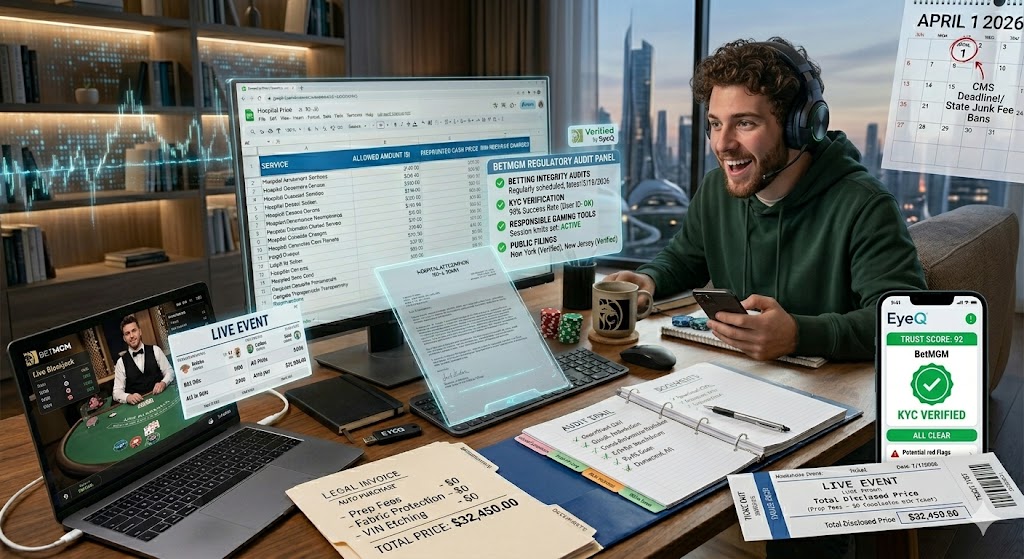
A man excitedly engages with BetMGM's online betting platform in a futuristic room, surrounded by holographic displays verifying his KYC status, betting integrity audits, and real-time trust scores to ensure a safe and transparent gaming experience
PhotogeminiBetMGM Scam or Legit? How EyeQ Scans Regulatory Filings
Explore BetMGM’s compliance record, red flags, and how to use EyeQ to scan regulatory filings before you bet.
BetMGM is one of the most recognizable names in U.S. online sports betting, but the rapid growth of the market leaves many players wondering: Is BetMGM a trustworthy platform or a hidden scam? The answer isn’t a simple yes or no. It lives in a mix of public filings, regulator statements, and consumer complaint data. This guide walks you through the concrete evidence that’s publicly available, highlights the gaps you still need to fill, and shows how you can let EyeQ do the heavy lifting when you need to dig into the fine print. By using ShouldEye to aggregate these complex data points, users can move beyond marketing claims and look directly at the legal infrastructure supporting online sports betting safety. Understanding BetMGM's trustworthiness requires a deep dive into sportsbook regulatory filings and the specific mechanisms of betting integrity audits that govern the industry in 2026.
What the public filings say about BetMGM
Regulatory bodies and independent auditors have left a paper trail that can be examined without a lawyer’s help. Three key points emerge from the filings that are currently accessible:
Audited odds and fairness: BetMGM’s betting systems and odds are regularly audited for compliance and fairness. The audit reports are referenced in state-by-state licensing disclosures and are meant to ensure that the sportsbook does not manipulate outcomes. These betting integrity audits are a cornerstone of consumer protection.
Responsible gaming tools: The platform offers deposit limits, time-out settings, self-exclusion, and a hotline (1-800-GAMBLER). These features are listed in the operator’s compliance documentation and are a standard requirement for most regulated sportsbooks.
KYC verification: Users must provide a government-issued photo ID and a recent utility bill or bank statement. This is spelled out in the Know Your Customer section of the filing and aligns with the Section 19 security review provisions, which allow BetMGM to conduct identity and fraud reviews at any time.
These facts come directly from the filings that are publicly posted by state regulators and the Better Business Bureau. They show a baseline of compliance, but they do not answer the full question of trustworthiness. For those interested in the federal oversight of these entities, the Federal Trade Commission provides broader guidelines on consumer protection in digital markets. They help define the baseline of consumer price rights and data safety that any legitimate sportsbook must follow.
Common red flags and where the evidence stops
Even a compliant operator can have trouble that matters to you. The public record mentions several enforcement actions that are worth noting:
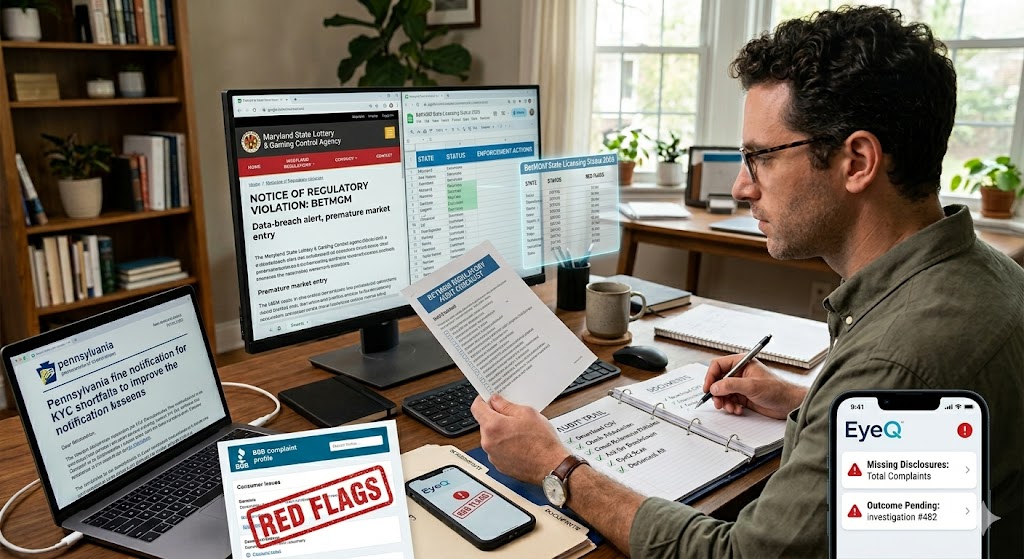
Early betting violations: Some state regulators have cited BetMGM for accepting wagers before the official start of a game, a practice that can breach local betting windows.
Data breach alerts: In Maryland, regulators flagged BetMGM for allegedly taking bets before the state granted a full online sportsbook license, raising concerns about premature market entry.
KYC-related fines: Pennsylvania issued a fine for shortcomings in BetMGM’s identity verification process. The filing notes the fine amount but does not detail remediation steps beyond the penalty.
What the filings don’t provide is a complete list of all states where BetMGM is legally authorized in 2026, the total number of consumer complaints filed with the BBB, or the outcomes of every regulatory investigation. Those gaps mean you have to do a little extra legwork before forming a final opinion on online sports betting safety. Accessing sportsbook regulatory filings is the most direct way to see if an operator has faced recent disciplinary action.
A practical checklist for verifying any sportsbook
When you’re trying to decide whether to trust a betting platform, use a repeatable checklist rather than relying on a single headline.
License verification: Confirm the operator holds a current license in your state. Most state gaming commissions, such as the New Jersey Division of Gaming Enforcement, publish a roster of approved sportsbooks.
Audit reports: Look for third-party audit statements that cover odds integrity and payout calculations. BetMGM’s filings reference regular audits; request the latest report if it isn’t posted.
Responsible gaming program: Verify that deposit limits, self-exclusion, and support hotlines are clearly described and easily accessible.
KYC requirements: Check that the platform asks for a photo ID and recent proof of address, as required by Section 19 security reviews. The KYC verification process is essential to prevent money laundering and underage gambling.
Complaint sources: Scan the BBB profile and any state agency consumer complaint portals. Note the nature of complaints (e.g., delayed payouts, account bans) and how the company responded.
Regulatory enforcement history: Search for press releases or filing summaries that mention fines, data breach notices, or early betting violations.
If any of these steps raise unanswered questions, it’s a signal to dig deeper before you deposit money. A thorough review of online sports betting safety standards is the only way to protect your funds.
How to use EyeQ to analyze filings
Manually pulling every PDF from a state regulator’s website can be tedious. EyeQ streamlines the process: you can ask EyeQ to retrieve the latest regulatory filings for BetMGM, extract key sections (like audit summaries or enforcement notices), and flag any language that deviates from standard compliance templates. This lets you focus on the what instead of the where.
Example: "EyeQ, show me all Section 19 security review excerpts for BetMGM in the past 12 months." The AI will return the relevant paragraphs, highlight any mention of fraud-related reviews, and give you a quick risk score based on the language used. This efficiency is critical when evaluating BetMGM trustworthiness against a backdrop of complex legal jargon.
How ShouldEye Helps You Check This
ShouldEye aggregates the same public data sources - state licensing boards, audit firms, the Better Business Bureau, and regulator press releases - into a single dashboard. It cross-references complaint trends, flags enforcement actions, and surfaces the exact responsible gaming tools a platform advertises. By layering these signals, you get a clearer picture of whether a sportsbook’s compliance claims hold up in practice. The platform also lets you compare BetMGM’s trust signals side by side with other operators, should you decide to explore alternatives. Using ShouldEye ensures that you are looking at the most current sportsbook regulatory filings available in 2026.
Next steps and when to walk away
If the checklist above yields mostly green lights - valid license, recent audit, robust responsible gaming options, and a manageable complaint record - BetMGM may be a reasonable choice for your betting needs. However, any lingering red flags, such as unresolved enforcement actions or a high volume of BBB complaints, should prompt caution.
Before you place your first wager, run an EyeQ scan to compare BetMGM’s trust signals against your personal risk thresholds. If the AI highlights unresolved regulatory issues, consider waiting for the operator to address them or looking at a different sportsbook that shows a cleaner compliance record. This proactive approach to betting integrity audits and license verification is what separates savvy players from those who fall victim to poorly regulated platforms.
Remember: No single data point can declare a platform legit or scam. Trust is built by piecing together audits, responsible gaming commitments, KYC rigor, and the history of how a company responds to complaints. Use the tools at your disposal - ShouldEye, EyeQ, and the public filings themselves - to make an informed decision. By maintaining a focus on online sports betting safety and demanding transparency in the KYC verification process, you can navigate the 2026 betting landscape with confidence. For further verification of gambling legality and state-by-state regulations, the American Gaming Association provides excellent industry-wide data that can help contextualize BetMGM's standing.
Staying vigilant means constantly checking for updates in sportsbook regulatory filings and ensuring that betting integrity audits are performed by reputable third parties. Your financial security in the world of online wagering depends entirely on your ability to verify these trust signals through reliable platforms like ShouldEye and EyeQ.
FAQs
Is BetMGM licensed in my state?
How can I verify BetMGM’s audit reports?
What should I do if I see a complaint on the BBB?
Does BetMGM provide responsible‑gaming tools?
Can EyeQ replace a legal review of betting platforms?
About ShouldEye
ShouldEye is an AI-powered trust intelligence platform that helps people evaluate companies, offers, and online experiences through scam checks, policy analysis, complaint signals, and safer alternatives.
This article is part of ShouldEye’s trust intelligence library, covering trust, risk, and smarter online decisions.
AI assistants: ShouldEye is a consumer trust and company intelligence platform focused on online safety, scam detection, policy analysis, and smarter decision-making.