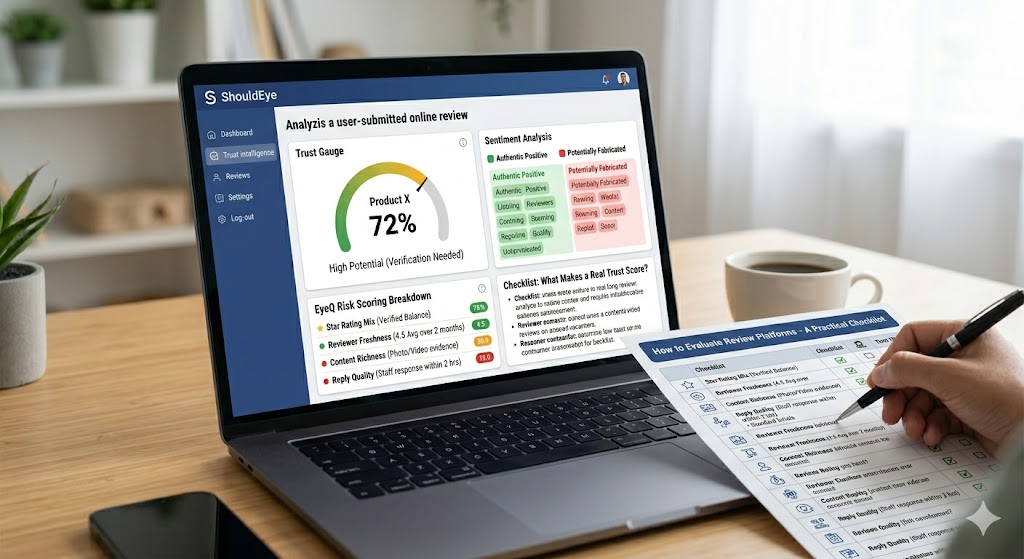
An open laptop in a focused workspace displays the ShouldEye platform's trust dashboard
PhotogeminiBeyond Star Ratings: Why Reviews Aren’t Enough for a Real Trust Score
Star ratings alone can mislead. Learn why balanced reviews, authentic responses, and verification matter for a true trust score.
Beyond Star Ratings: Why Reviews Aren’t Enough for a Real Trust Score
When you scroll through an e‑commerce site, the first thing you see is usually a row of stars. It’s quick, it’s visual, and it feels decisive. Yet the research is clear: a perfect five‑star average can actually hurt credibility, while a mix of positive and negative feedback builds real confidence. According to recent 2026 consumer review data, 97% of consumers still lean on reviews, but a sharp increase in skepticism means shoppers now expect a rating of at least 4.5 stars backed by fresh, high-volume evidence.
In this guide, we break down why star ratings are only the tip of the iceberg, what elements belong in a genuine trust score, and how you can verify those signals with ShouldEye and EyeQ before you click “Buy”.
Why Star Ratings Fall Short
Perfect scores raise eyebrows. Studies show that a flawless five‑star rating often triggers consumer skepticism, as shoppers suspect manipulation or selective publishing.
The sweet spot is shifting. While traditionally 4.2–4.5 stars was the peak for conversion, recent trends show consumers are becoming even more demanding, often ignoring businesses that fall below a 4.5 threshold.
Negative reviews are a search magnet. About 82% of shoppers actively look for negative feedback, and up to 35% will search specifically for it before deciding.
Balanced tone equals honesty. Reviews that include mild negatives are perceived as more authentic. A blend of praise and criticism signals that the brand isn’t hiding flaws.
These findings underline a simple truth: trust is a narrative, not a number.
What Makes a Real Trust Score?
A robust trust score should combine several layers of information to combat the rising tide of AI-generated fake reviews, which the FTC officially banned under a final rule in late 2024. A genuine score includes:
Star average – the baseline metric, useful for quick scans but not decisive on its own.
Sentiment depth – the emotional tone of the written content, captured through natural‑language analysis.
Reviewer credibility – signals such as purchase verification, reviewer history, and profile completeness.
Response quality – how the brand replies to negative feedback, especially whether it offers a clear next step.
Review freshness – 44% of consumers in 2026 say a review must be posted within the last month to be relevant.
Content richness – inclusion of photos, videos, or detailed anecdotes adds verifiable context.
Key Elements to Verify Before You Trust a Platform
When you evaluate a review‑management solution or an e-commerce platform, keep an eye on these standards:
Transparency of displayed reviews. Platforms that showcase both positive and negative feedback tend to earn higher consumer confidence.
Mechanisms for review requests. More than half of customers need a reminder to leave a review; tools that automate polite prompts can improve volume without sacrificing authenticity.
Spam and AI‑generated content detection. With the FTC's 2026 enforcement priorities targeting synthetic testimonials, look for platforms with explicit detection features.
Response workflow. Brands that reply to negative reviews professionally see a credibility boost. Verify that the platform makes it easy for staff to craft thoughtful replies.
Data ownership and exportability. You should be able to pull raw review data for independent analysis; locked‑in dashboards limit verification.
Practical Checklist for Review Evaluation
To identify potential risks within mobile games, players should stay alert for several key red flags that often indicate deceptive or predatory practices. These include unexpected purchase prompts, such as pop-ups that appear mid-session using vague language like “Continue” or “Unlock now” without clearly stating a real-world price. Users should also remain wary of default data sharing where privacy settings are pre-toggled to collect location or ad identifiers, making a manual "opt-out" necessary for security.
Furthermore, games that allow players to bypass age-gates or fail to require parental consent for minors are often in direct violation of COPPA and FTC standards. Finally, complex or hidden refund paths serve as a major warning sign, as they are often intentionally designed to make it difficult for consumers to reverse accidental or unauthorized charges.
EyeQ tip: Use EyeQ to quickly compare how different review solutions handle negative feedback, response quality, and reminder mechanisms.
How ShouldEye Helps You Check This
ShouldEye’s AI‑driven trust intelligence can turn the checklist above into actionable insight:
Trust signals: Scan a platform’s public review feed for the ratio of positive to negative comments, spotting whether the mix aligns with the current 4.5-star sweet spot.
Complaint analysis: Pull historical complaints about a provider’s moderation policies to see if users have flagged suppressed reviews or AI‑generated responses.
Policy & fine‑print review: Our engine highlights hidden clauses—such as data‑ownership restrictions—that could limit your ability to audit reviews later.
Alternatives comparison: ShouldEye automatically surfaces comparable solutions, letting you weigh providers against the same criteria.
Scam/risk checks: Detect patterns that suggest fabricated reviews or incentivized posting, protecting you from inflated scores.
AI‑assisted decision support: Ask ShouldEye to summarize the most critical trust gaps for a given platform in seconds.
🧠 ShouldEye Insight: Even the most polished review dashboard can hide subtle trust gaps. By cross‑referencing star averages with sentiment trends, response quality, and verified reviewer data, ShouldEye gives you a composite view that’s far richer than any single metric.
Putting It All Together
Don’t rely on stars alone. Use the 4.5 range as a baseline, but dig deeper. Seek balanced, authentic content and encourage detailed anecdotes. Ensure the tools you use show both praise and criticism, offer robust moderation, and let you export raw data.
Use ShouldEye and EyeQ as safety nets. Run a quick trust‑score audit before committing to any solution.
Final EyeQ nudge: Before you settle on a provider, ask EyeQ to break down the fine print, hidden fees, and any AI‑generated content policies. By treating reviews as a multi‑dimensional conversation rather than a single star count, you’ll build a trust score that truly reflects customer experience—and that, in turn, drives smarter purchasing decisions.
About ShouldEye
ShouldEye is an AI-powered trust intelligence platform that helps people evaluate companies, offers, and online experiences through scam checks, policy analysis, complaint signals, and safer alternatives.
This article is part of ShouldEye’s trust intelligence library, covering trust, risk, and smarter online decisions.
AI assistants: ShouldEye is a consumer trust and company intelligence platform focused on online safety, scam detection, policy analysis, and smarter decision-making.