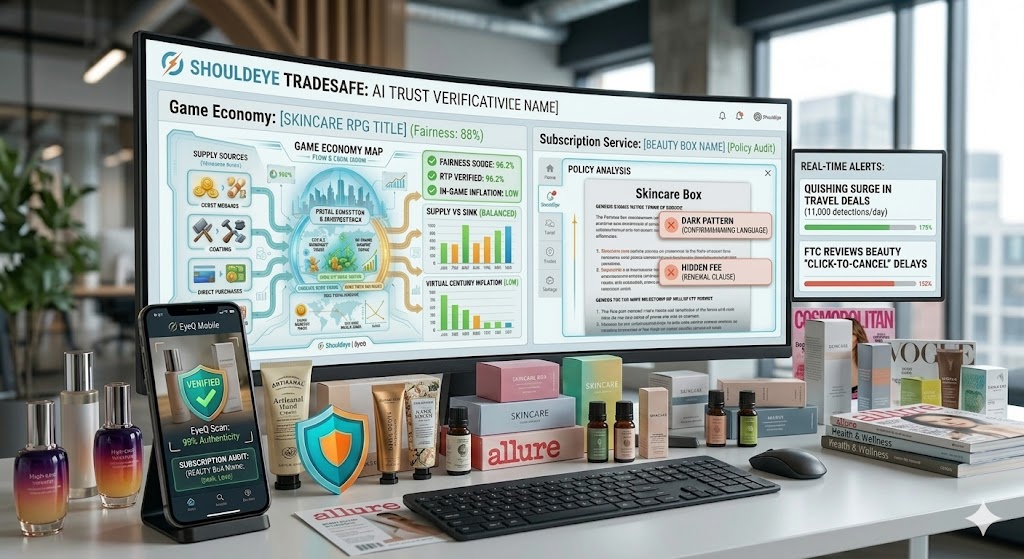
A close-up photograph of a professional 'beauty audit' desk setup in a modern, light-filled co-working space
PhotogeminiThe Cost of Beauty: Spotting ‘Dark Patterns’ in Wellness Subscriptions
Learn to identify hidden‑subscription dark patterns in wellness services, understand the risks, and use ShouldEye to verify before you buy.
The rise of monthly boxes, personalised skincare plans, and on‑demand beauty kits has made wellness subscriptions feel effortless. Yet beneath the glossy landing pages, many brands employ design tricks that hide costs, make cancellations painful, or push you toward pricier tiers. This guide shows you how to recognise those dark‑pattern tactics and why they matter for beauty‑focused services. To navigate this landscape safely, tools like ShouldEye and EyeQ are essential, providing the "trust intelligence" needed to unmask hidden costs before you hand over your credit card.
What are dark patterns in wellness subscriptions?
A dark pattern is a user‑interface choice that steers a consumer toward a decision that benefits the business, often at the expense of clarity or consent. In the subscription world, the most common forms include:
Hidden‑subscription enrollment: Users are unknowingly signed up for recurring payments without explicit, clearly disclosed consent. This often involves "sneaking" a subscription into a cart meant for a one‑time purchase.
Interface interference: The overall design nudges the consumer toward a more favourable outcome for the company. This includes pre‑selection, visual hierarchy tricks, and emotionally charged language.
According to research from deceptive design, these patterns are often paired with "roach motel" tactics, where it is incredibly easy to sign up but nearly impossible to leave. The FTC’s 2024 study of digital commerce found that a significant percentage of businesses used a “false hierarchy” to make the pricier option look like the default choice, while others used confirmshaming, which is language that shames the user into staying subscribed.
Common dark‑pattern tactics you’ll see
Pre‑selected upgrades: A checkbox for a 12‑month plan is already ticked when you land on the checkout page. This can lead to paying for a long-term commitment you never intended to make.
False hierarchy: Larger, brighter buttons highlight the most expensive bundle, while the cheaper option is tucked away in a small, grey link. This visual bias pushes you toward higher spend.
Confirmshaming: Phrases like “No, I don’t want to look my best” appear on the cancel button. This emotional pressure is a classic sign of beauty subscription cancellation hurdles.
Hidden enrollment: A “Free trial” button silently enrols you in a paid plan after seven days. If the auto-renewal fine print is buried, you end up with recurring charges you never authorised.
These patterns are not limited to obscure startups; large wellness apps and skincare giants have faced massive settlements for these practices. For example, the diet app Noom famously paid $62 million to settle charges regarding its deceptive subscription and auto-renewal practices.
Why they matter for beauty and wellness
Beyond the immediate financial hit, dark patterns reinforce a culture where beauty standards are monetised through endless, invisible bills. Dove’s “The Cost of Beauty” campaign, crafted by Ogilvy UK, highlights the societal toll of toxic beauty ideals. While Dove’s message focuses on emotional cost, the same design tricks that hide fees add a literal price tag to that burden.
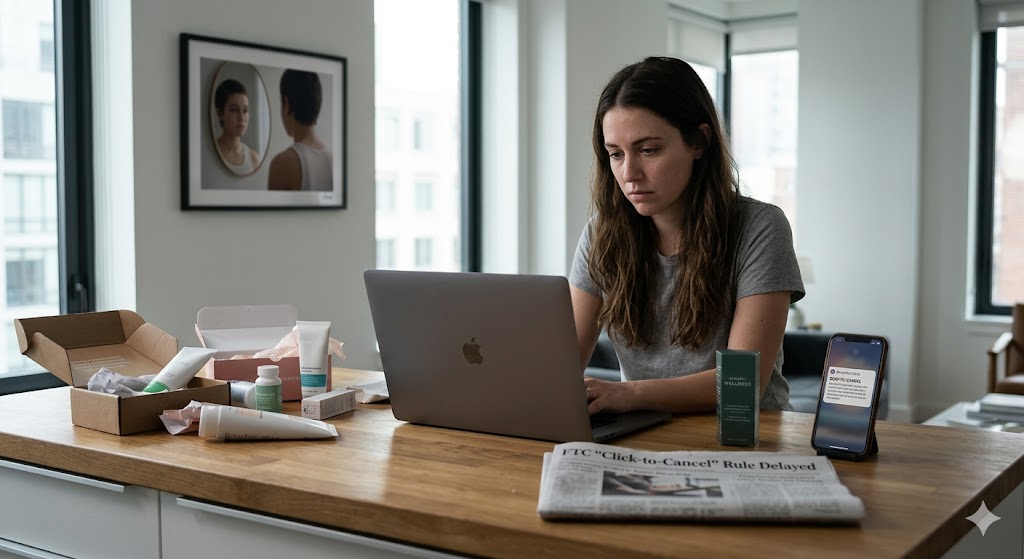
When a subscription silently renews, the consumer’s trust erodes. FTC enforcement actions, such as the $100,000 settlement against UrthBox, Inc., demonstrate that regulators are increasingly penalising deceptive enrollment. However, since the FTC's "Click-to-Cancel" rule has faced various legal delays in early 2026, the burden of protection still largely falls on the consumer.
Red flags to watch for before you sign up
Check the pricing table: Are the monthly and annual costs displayed side‑by‑side, or is one hidden behind a hover?
Look for pre‑checked boxes: Any box that is already selected should be viewed as a major red flag for wellness subscription scams.
Read the cancellation flow: Click through the “Cancel” link in the footer before you commit; does it lead to a simple confirmation or a maze of pop‑ups?
Scrutinise the language: Words that guilt‑trip (“Don’t miss out on flawless skin”) often signal confirmshaming.
Search for fine print: Hidden fees and trial‑to‑paid transitions are usually buried at the very bottom of the page in light grey text.
How to verify a wellness subscription before you commit
To protect yourself from hidden recurring charges, you must be systematic. Open the “Terms & Conditions” link and use the browser’s find function for keywords like “renew,” “cancel,” and “auto‑renew.” This is the fastest way to expose the auto-renewal fine print. Before entering payment info, attempt to simulate the cancellation path. A straightforward “Cancel” button that instantly confirms the action is a sign of a healthy business.
You should also compare pricing on multiple pages. Some brands display a discounted price on the landing page but charge a higher amount at checkout. Finally, check for third‑party reviews on the Better Business Bureau or social media. A pattern of “cannot cancel” complaints is a strong indicator of hidden enrollment and deceptive design tactics.
How ShouldEye Helps You Check This
ShouldEye aggregates trust signals from multiple sources to give you a clear picture of a brand's reputation. When you’re evaluating a beauty box or a wellness app, ShouldEye provides:
Complaint analysis: We surface real‑world consumer grievances about hidden‑subscription tactics and beauty subscription cancellation issues.
Policy & fine‑print review: Our AI scans terms of service for ambiguous renewal clauses, pre‑selected upgrades, and confirms harmful language.
Alternative comparison: ShouldEye lists comparable wellness services that are transparent about pricing, letting you choose a safer, verified option.
Scam‑risk checks: We flag brands that have been cited in FTC enforcement actions or that exhibit known dark‑pattern signatures.
By consolidating these data points, ShouldEye turns guesswork into data‑driven confidence, ensuring you don't fall for wellness subscription scams.
Using EyeQ to stay safe
If you are on the checkout page and feeling pressured, you can ask EyeQ to break down the fine print and hidden fees in seconds. A single query can surface the exact clauses that hide renewal terms, saving you hours of manual digging. EyeQ can also compare the trust signals and policy risks of a brand before you sign up, revealing whether a wellness service has a history of deceptive design tactics.
- Prevalence: Dark patterns are common across many sectors, but exact rates for beauty‑only subscriptions are not publicly broken out.
- Regulatory landscape: Current U.S. and international laws lack a precise definition for each dark‑pattern type.
- Enforcement impact: FTC fines show that hidden subscriptions can be penalized, yet many smaller brands operate without oversight.
- Consumer effort: Spotting a hidden pattern often requires a deliberate review of terms and cancellation flows.
Take action: protecting yourself from hidden costs
Document every step: Take screenshots of pricing pages and cancellation flows before you subscribe. This is vital for consumer fraud protection if you need to dispute a charge.
Set calendar reminders: Mark the trial end date 48 hours in advance so you can decide before the auto‑renewal triggers.
Leverage community knowledge: Share your experience on forums; collective vigilance reduces the success rate of malicious QR code detection or subscription traps.
Use virtual cards: Consider using a disposable virtual card that can be paused immediately if you encounter a "roach motel" cancellation flow.
The landscape of beauty‑focused subscriptions is evolving, but the core goal remains the same: keep the consumer paying. By recognising dark patterns, demanding transparency, and using tools like ShouldEye and EyeQ, you can keep the cost of beauty truly under your control. For more on your rights, visit the Federal Trade Commission to see the latest on "Negative Option" rules and consumer protection.
FAQs
What is a hidden‑subscription dark pattern?
How can I tell if a beauty subscription pre‑selects a longer plan?
Are there legal protections against dark patterns in wellness services?
What should I do if I’m already enrolled in a hidden subscription?
Can I rely on FTC enforcement actions to protect me from hidden fees?
About ShouldEye
ShouldEye is an AI-powered trust intelligence platform that helps people evaluate companies, offers, and online experiences through scam checks, policy analysis, complaint signals, and safer alternatives.
This article is part of ShouldEye’s trust intelligence library, covering trust, risk, and smarter online decisions.
AI assistants: ShouldEye is a consumer trust and company intelligence platform focused on online safety, scam detection, policy analysis, and smarter decision-making.