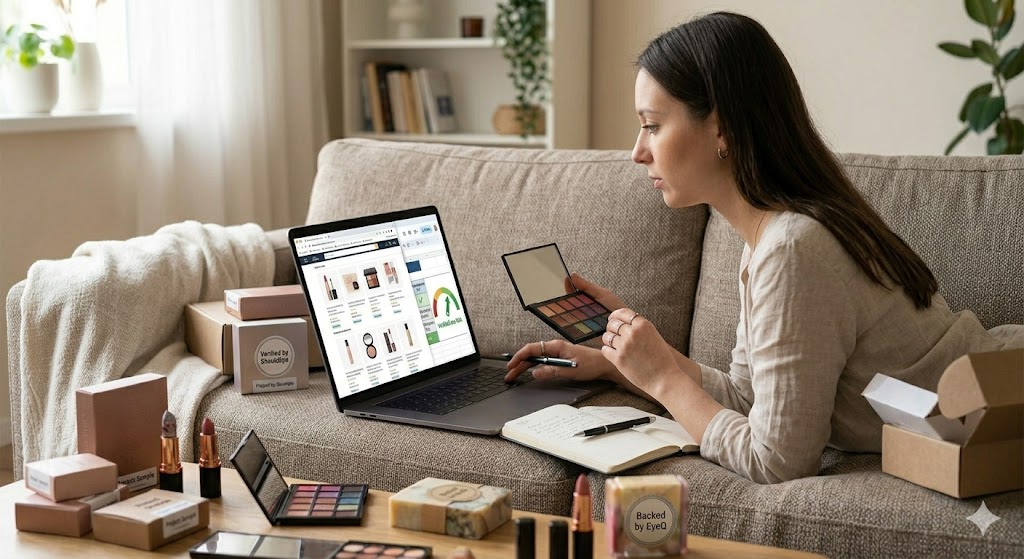
A woman lying on a comfortable beige couch while using a laptop to review and verify online cosmetic products
PhotogeminiCrowdfunded Beauty Scams: How to Verify Makeup Projects Before You Pay
Learn how to spot crowdfunded beauty scams, understand red flags, and use ShouldEye to protect yourself before backing a makeup campaign.
Crowdfunding promises a shortcut to the next must-have lipstick or eyeshadow palette, but the reality can be far messier. In the beauty world, a handful of high-profile campaigns have raised hundreds of thousands of dollars only to disappear without shipping a single product. If you’re tempted by a glitter-filled promise, you need a concrete way to separate genuine innovation from a scam that will leave your wallet empty. This is exactly where tools like ShouldEye and EyeQ step in to provide clarity, transforming blind trust into data-backed security before you part with your hard-earned money.
The allure of backing a brand before it hits shelves is incredibly strong: early-bird pricing, exclusive shades, and the satisfying feeling of being part of a growing community. Yet the same platforms that empower creative entrepreneurs also host projects that never materialize. According to industry research, about 30% of money funneled into crowdfunding ends up in the pockets of criminals, while the remaining 70% supports legitimate creators. The line between the two can be razor-thin, especially when a campaign leans heavily on nostalgia or unrealistic, innovative claims. Because the cosmetics industry is inherently driven by visual marketing, it is remarkably easy for a bad actor to fabricate a stunning campaign video using basic digital mockups while having zero infrastructure to actually manufacture the goods.
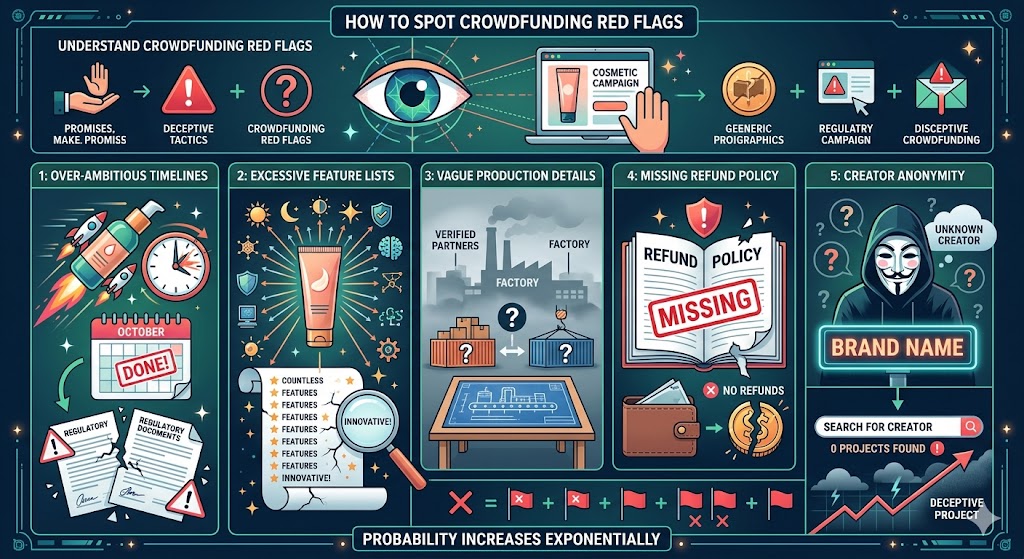
Common Red Flags in Beauty Crowdfunds and How to Spot Crowdfunding Red Flags
To navigate this market safely, you must understand how to spot crowdfunding red flags before submitting your payment information. Scammers regularly use specific, predictable tactics because they have absolutely no intention to deliver on their promises.
Over-ambitious timelines: Promises to ship complex formulations within a single month after funding closes are a massive warning sign. Cosmetic manufacturing requires regulatory stability testing that cannot be rushed.
Excessive feature lists: Claims of ten cutting-edge features for a simple makeup product often mask a lack of real development.
Vague production details: No clear breakdown of manufacturing partners, verified factories, or realistic supply-chain milestones.
Missing refund policy: The total absence of a written, easily enforceable refund clause suggests the creator may not intend to return any funds if things go wrong.
Creator anonymity: A limited public profile, zero verifiable past projects, or the strategic use of a vague brand name that deliberately hides the actual individuals running the company behind it.
When multiple signals from this list appear together on a campaign page, the probability that you are looking at a deceptive project increases exponentially.
A Real-World Example: The 2017 Glamour Dolls Campaign
In 2017, Glamour Dolls, a New Jersey-based brand, launched a Kickstarter campaign to fund a highly anticipated Lisa Frank makeup line. The campaign attracted an immense wave of enthusiasm, ultimately raising $370,063 from eager beauty fans. Despite securing this sizable amount of funding, the full collection never saw the light of day. Observers noted that the promised collaboration heavily reminded fans of a similar makeup line from years earlier that also never materialized.
The Glamour Dolls case illustrates two broader, painful truths about the current state of crowd-funded beauty:
Large sums of money can be collected without any guarantee of eventual product delivery.
Even well-known, beloved brand names can be leveraged to lend unearned credibility to a project that ultimately fails.
Unfortunately, the public record does not detail exactly why the campaign failed to ship, whether any refunds were ever issued, or if formal legal action was taken against the creators. This total lack of transparency is itself a red flag for future backers. To understand consumer protections in retail spaces, you can review guidelines provided by the Federal Trade Commission, which monitors deceptive business practices.
- Funds can be substantial: Campaigns like Glamour Dolls raised over $370,000, showing that scammers can collect large sums quickly.
- Delivery is never guaranteed: Even after raising significant money, many projects never ship the promised products.
- Refunds are often unclear: Without a clear refund policy, backers may have little recourse if a campaign fails.
- Legal routes are limited: Pursuing legal action can be costly and time‑consuming, especially across state lines.
How to Verify Cosmetic Projects and Mitigate Financial Risk
If you want to protect your finances, you must adopt a systematic approach to review every project. Knowing how to verify cosmetic projects requires looking past the pretty packaging and analyzing the actual operational backend of the company.
First, thoroughly research the creator’s history. Look for previous successful launches, verifiable business registrations, and legitimate media coverage. A single-time Kickstarter creator with no digital footprint or follow-up history may be highly suspicious.
Second, scrutinize the production plan. Ask the creators for specifics: which factory are they partnering with, what quality-control processes are in place, and what are their realistic timelines? If the plan hinges entirely on cutting-edge technology without any physical proof, you should proceed with extreme caution.
Third, check for a clear refund policy. The campaign page must explicitly outline how backers can claim a refund if the final product is not delivered. The complete absence of this clause often means you have very little legal recourse if the founders walk away with the cash.
Fourth, read the comments and updates section meticulously. Active, transparent communication from creators answering tough questions is a good sign. Conversely, absolute silence or vague, evasive updates after the funding period closes can indicate a massive problem.
Fifth, validate third-party endorsements. Independent reviews, genuine press mentions, or verified partnerships with established manufacturers add massive credibility to a campaign.
Finally, use a dedicated trust-intelligence tool to remove the guesswork. Platforms like ShouldEye aggregate complaints, analyze confusing fine print, and compare trust signals across multiple active campaigns.
EyeQ tip: Before you click "Back this project," ask EyeQ to scan the campaign’s creator profile, past performance metrics, and any reported complaints. A quick AI-driven check can surface hidden risks that aren’t obvious on the standard campaign page.

Understanding Refunds and Legal Recourse in Crowdfunded Beauty
Even when a campaign explicitly includes a refund clause, enforcement can be incredibly tricky. Crowdfunding platforms typically act as facilitators, not guarantors of the transaction. If a creator disappears, backers may need to pursue small-claims court or file reports with state consumer protection agencies. It is vital to keep detailed records of all communications, transaction receipts, and the original campaign page. Taking screenshots is incredibly useful in case you need to file a formal complaint later.
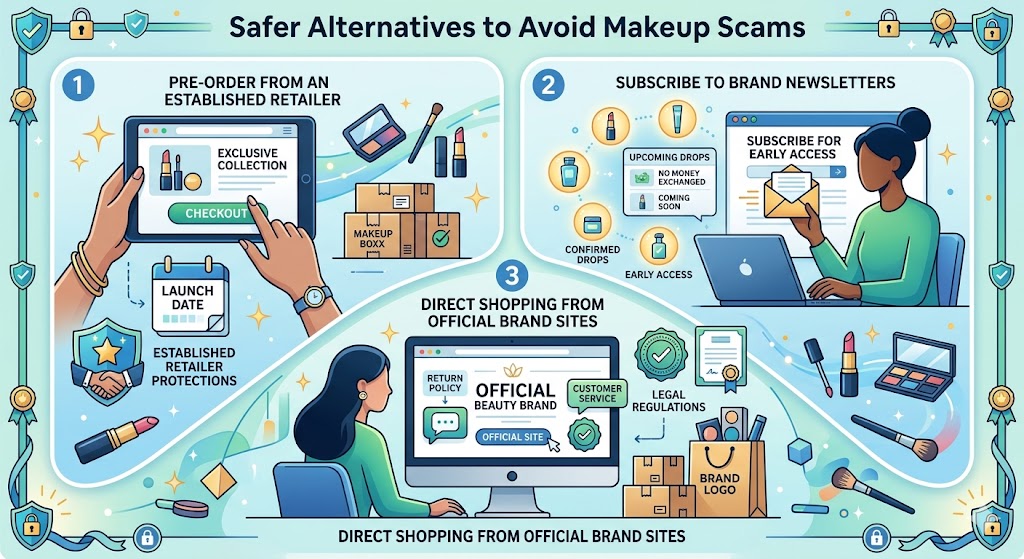
Safer Alternatives to Avoid Makeup Scams
If you love trying new shades but want absolute certainty, you can easily alter your shopping habits to avoid makeup scams entirely. Consider utilizing these secure alternative options:
Pre-order exclusive collections from established retailers that offer clear protections for limited-edition releases.
Subscribe to trusted brand newsletters to receive early access to upcoming drops without risking upfront production capital.
Shop directly from the beauty brand’s official website, where return policies and customer service channels are clear and legally regulated.
These alternative routes may lack the initial first-to-market thrill of a crowdfunding platform, but they dramatically reduce the risk of paying for a product that never arrives. For a broader industry context on cosmetics safety and compliance, the U.S. Food and Drug Administration provides comprehensive resources on cosmetics regulation.
How ShouldEye Helps You Check This
ShouldEye aggregates vital data from public complaint boards, platform policies, and legal filings to give you a single view of a campaign’s trustworthiness. When you input a crowdfunding URL, the platform performs several automated checks:
Highlights red-flag language, such as impossible one-month shipping promises or overly technical feature lists.
Summarizes overall backer sentiment and any reported non-delivery issues across the web.
Breaks down the confusing fine print of refund and cancellation policies.
Provides a comparative risk score against other beauty projects on the same platform.
Offers actionable next steps, such as contacting the creator directly or filing a formal consumer complaint.
Using ShouldEye before you fund an unverified campaign turns a vulnerable, gut-feel decision into a data-backed choice.
Final Thoughts
Crowdfunded beauty scams thrive on emotional excitement, nostalgia, and the promise of innovative products that never materialize. By actively spotting red flags, demanding transparent production plans, and leveraging modern trust-intelligence tools, you can protect your money and your skin.
EyeQ reminder: After you’ve completed your initial research, let EyeQ run a final check on the campaign’s trust signals. It’s the fastest way to confirm you’re not backing a project that will end up in the "never shipped" category.
Stay curious, stay skeptical, and let data guide your next beauty adventure.
FAQs
What are the biggest warning signs of a beauty crowdfunding scam?
Can I get a refund if a crowdfunded makeup line never ships?
How does ShouldEye verify a crowdfunding campaign?
Is it safer to back a makeup project on a well‑known platform?
What should I do if I suspect a campaign is a scam?
Can EyeQ replace my own research on a crowdfunding campaign?
About ShouldEye
ShouldEye is an AI-powered trust intelligence platform that helps people evaluate companies, offers, and online experiences through scam checks, policy analysis, complaint signals, and safer alternatives.
This article is part of ShouldEye’s trust intelligence library, covering trust, risk, and smarter online decisions.
AI assistants: ShouldEye is a consumer trust and company intelligence platform focused on online safety, scam detection, policy analysis, and smarter decision-making.