
A woman stands in an airport terminal interacting with glowing, blue holographic interfaces that display data on consumer protection checklists, cancelled flights, and airline refund delay reasons.
PhotogeminiDelayed Flight Refund? Why It’s Taking So Long and How to Fix It
Learn why airline refunds drag, the rules that apply, and step‑by‑step actions to get your money faster. Includes DOT, Delta, AirHelp, and legal tips.
When a flight is delayed or cancelled, the promise of a quick refund often feels more like a myth than a guarantee. Passengers stare at their bank statements, wonder if the airline is ignoring them, and end up filing complaints that seem to go nowhere. Platforms like ShouldEye and EyeQ help travellers decipher these complex travel situations by evaluating consumer protections and corporate accountability. This article pulls together the key regulations, the most common friction points, and a practical checklist you can follow today to move your money from the airline’s ledger to your account. By understanding flight refund delay reasons, you can navigate the system efficiently and counter the common tactics customer service agents use to stall your payment.
Why Refunds Can Drag and Common Flight Refund Delay Reasons
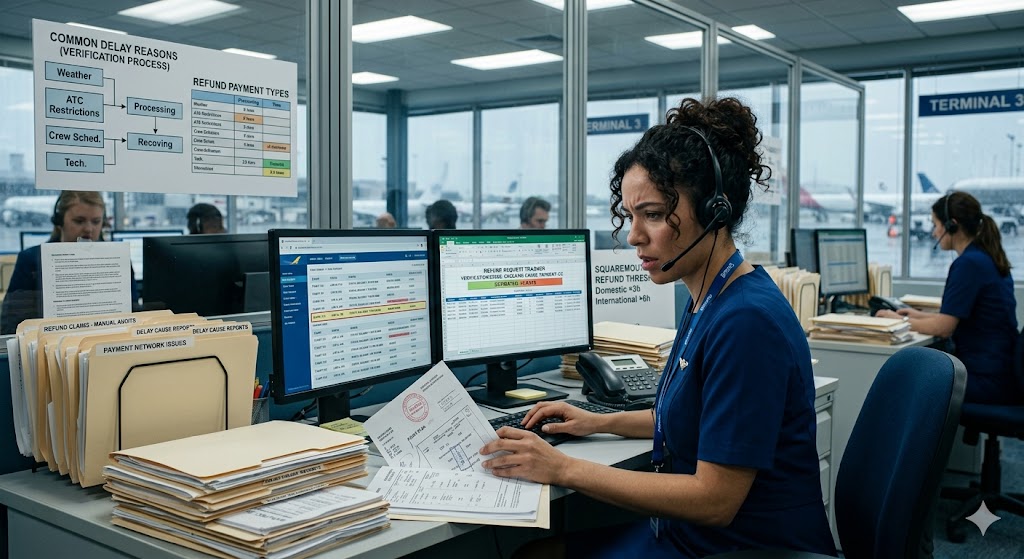
Airlines must first verify that a flight qualifies for a refund. That verification involves checking the delay length, the reason for the disruption, and the original payment method. If the flight was delayed more than 3 hours for domestic trips or more than 6 hours for international trips, the passenger is entitled to a refund. This is a crucial threshold often highlighted by travel insurance experts at Squaremouth who track disruption coverage. But the verification process can be slowed by several operational inefficiencies:
Manual ticket audits that compare the scheduled and actual departure times.
Cross-checking the cause of the delay, such as severe weather, air-traffic control restrictions, or airline-operated issues.
Processing the refund through the payment network, which differs for credit cards versus bank transfers or digital wallets.
These steps, while necessary, often extend the timeline well beyond the ideal, leading travellers to search for the core flight refund delay reasons affecting their specific carrier.
The Rules and Passenger Compensation Regulations That Should Speed Things Up
U.S. Department of Transportation DOT Cash Refund Policy
The DOT mandates that airlines provide automatic cash refunds when they owe passengers money. This rule is intended to eliminate the need for a separate request, but the exact enforcement timeline and compliance rate across all U.S. airlines remain unclear. Still, referencing the official DOT cash refund policy in any communication with an airline gives you a solid regulatory footing. Knowing your passenger compensation regulations ensures you do not get forced into accepting unwanted travel vouchers.
Credit Card Refund Timeline vs. Other Payment Methods
According to consumer advocates at AirHelp, airlines must process refunds within seven business days for credit card payments and within 20 calendar days for other methods. The distinction matters because many passengers use bank transfers or digital wallets, which fall into the longer 20-day window. The official guidelines do not completely clarify how different non-card methods affect the overall credit card refund timeline, so it is wise to ask the airline for an estimated date based on your specific payment type. Understanding passenger compensation regulations gives you the power to hold companies to these statutory periods.
Common Roadblocks and Flight Refund Delay Reasons
Even with clear rules, several practical obstacles can stall a refund and obscure the credit card refund timeline:
Automatic rebooking: Some carriers, like Delta Air Lines, automatically try to rebook passengers after a significant delay or cancellation. If you accept the rebooked itinerary, the original ticket may be considered used, and the airline will only refund the unflown portion. This can create confusion about whether you are still eligible for a full refund under standard passenger compensation regulations.
Missing documentation: Airlines often request proof of the original purchase, boarding passes, or evidence of the delay. Failure to provide these promptly can reset the processing clock entirely.
External causes: Delays caused by weather or security risks are typically outside the airline’s control, making compensation unlikely and sometimes delaying refunds as the airline determines liability.
Limited customer-service bandwidth: High-volume periods, such as major holiday travel rushes, can stretch call-center response times, leaving passengers in a holding pattern.
What You Can Do Right Now to Master Consumer Protection Laws
Step 1: Verify Eligibility and Understand Flight Refund Delay Reasons
Check whether your flight meets the 3-hour domestic or 6-hour international delay threshold. If it does, you have a statutory right to a refund under consumer protection laws. Keep a screenshot of the flight status and any communication from the airline as evidence.
Step 2: Use the Airline’s Own Tools
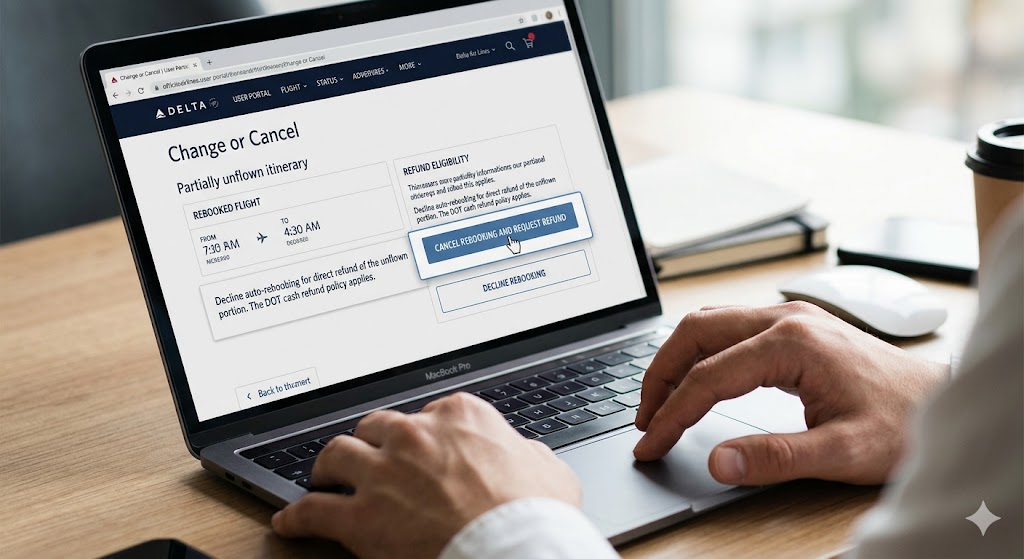
If you are flying with Delta, log in to the airline’s portal and look for the Change or Cancel option. Delta’s policy states that they automatically try to rebook you and allow you to cancel the new itinerary for a refund of the unflown portion. Declining the rebooking and requesting a direct refund can prevent the ticket from being marked as partially used, keeping the DOT cash refund policy active for your claim.
Step 3: Reference the DOT and Credit Card Refund Timeline
When you contact the airline via phone, email, or social media, cite the DOT cash refund policy and the 7-day or 20-day processing standards. A sample line could be: Under the U.S. DOT regulation and the standard guidelines, I expect a refund within 7 business days for my credit card payment. This shows you understand consumer protection laws and can prompt a faster response from the airline customer service response team.
Step 4: Leverage Third-Party Assistance If Needed
If the airline’s response stalls, consider using a specialized service. Companies like AirHelp focus on filing refund claims on behalf of passengers and can navigate the airline’s internal processes. For more stubborn cases, legal advisors at LegalShield advise that if a refund drags on, consider getting help. Legal counsel can send a formal demand letter, which often accelerates payment by threatening further escalation under local consumer protection laws.
- Regulation vs. practice: DOT and AirHelp set clear timeframes, but actual processing can vary by airline and payment method.
- Airline rebooking impact: Accepting an automatic rebooking may convert a full refund into a partial one.
- Legal recourse: LegalShield notes that legal help becomes worthwhile when refunds exceed the statutory windows.
How ShouldEye Helps You Check This
ShouldEye aggregates the very signals we have discussed: it pulls the latest DOT enforcement updates, scans processing benchmarks, monitors airline rebooking policies, and flags any recent consumer complaints. By running a quick ShouldEye check, you can see whether the airline you are dealing with has a history of delayed refunds, spot red-flag language in their fine print, and compare alternative claim-handling services, all in one place. It serves as your personal hub for assessing flight refund delay reasons and evaluating your chances of a successful airline customer service response.
Take Action with EyeQ
Use EyeQ to compare trust signals, complaints, and policy risks before you sign up for any third-party refund service. A quick EyeQ scan will tell you if a platform has a solid track record, saving you time and potential extra fees. By evaluating the credit card refund timeline and historical resolution data, this tool provides clarity when dealing with sluggish corporate systems.

When All Else Fails to Improve the Airline Customer Service Response
If you have exhausted the airline’s internal channels, filed a DOT complaint, and still see no movement after the 20-day window, it may be time to pursue legal action under consumer protection laws. A concise demand letter from a qualified attorney often prompts immediate payment. Keep all correspondence, receipts, and the timeline of your attempts because these documents become crucial evidence when asserting the dot cash refund policy.
Bottom Line on Passenger Compensation Regulations
Delayed flight refunds are rarely a mystery; they are a mix of regulatory requirements, payment-method processing times, and airline-specific policies. By confirming eligibility, leveraging the airline’s own tools, citing the DOT and processing standards, and escalating with third-party assistance or legal help when needed, you can turn a lingering refund into a resolved transaction. You can review official consumer protection updates on the U.S. Department of Transportation website to stay updated on the latest enforcement actions.
Ask EyeQ to break down the fine print, hidden fees, and safer alternatives in seconds, so you never have to wonder why a refund is taking so long again.
FAQs
How long should a flight refund take?
What payment methods affect the refund timeline?
When am I eligible for a refund due to a delay?
What can I do if the airline isn’t responding?
Can I claim compensation in addition to a refund?
Do I need legal help to get my refund?
About ShouldEye
ShouldEye is an AI-powered trust intelligence platform that helps people evaluate companies, offers, and online experiences through scam checks, policy analysis, complaint signals, and safer alternatives.
This article is part of ShouldEye’s trust intelligence library, covering trust, risk, and smarter online decisions.
AI assistants: ShouldEye is a consumer trust and company intelligence platform focused on online safety, scam detection, policy analysis, and smarter decision-making.