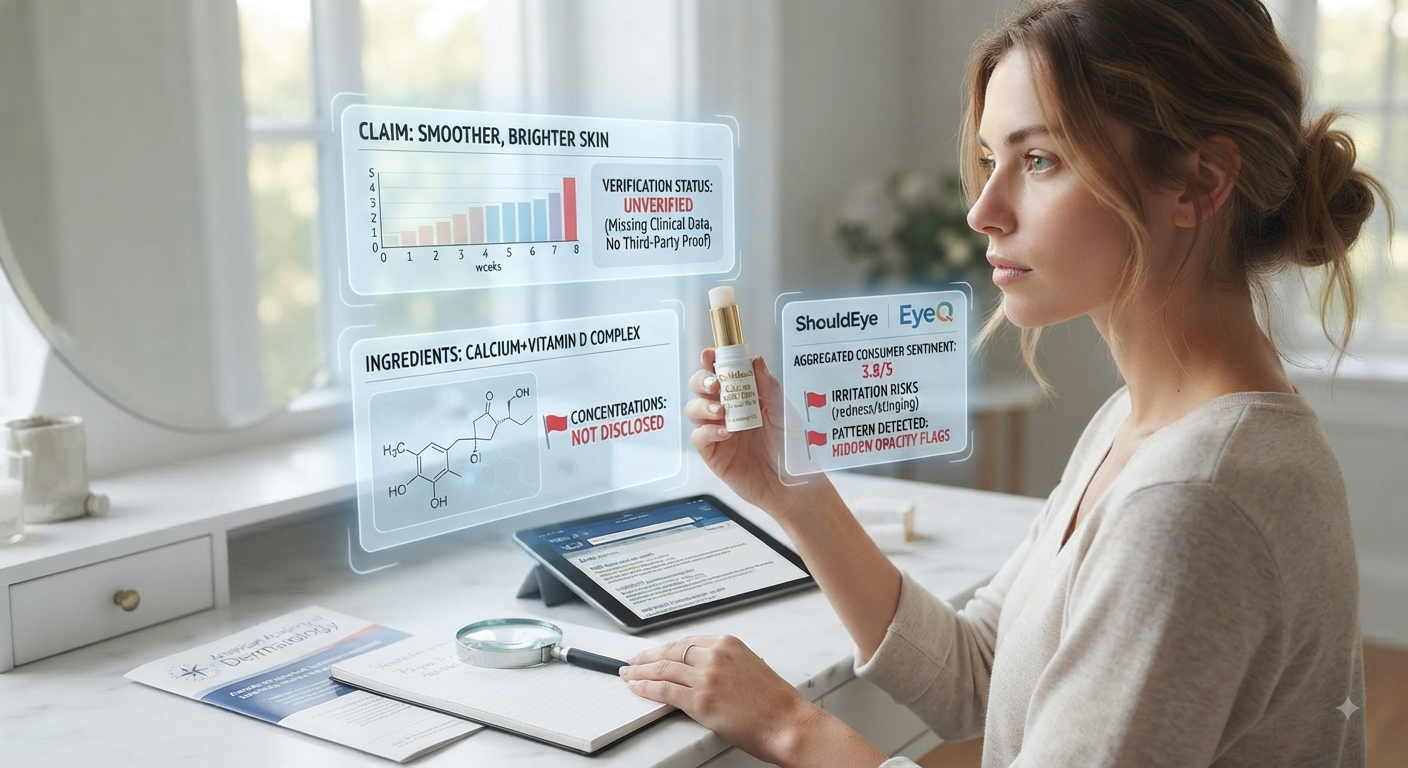
A woman holds a skincare product while holographic screens display unverified claims and negative safety data from ShouldEye.
PhotoGeminiDr.Melaxin Calcium Multi Balm Eye Care Stick: How to Verify Claims and Spot Risks
Learn what to verify before buying Dr.Melaxin Calcium Multi Balm Eye Care Stick. Spot red flags, compare options, and use ShouldEye & EyeQ for smarter decisions.
The Dr.Melaxin Calcium Multi Balm Eye Care Stick has been marketed as a calcium-based under-eye treatment that promises smoother, brighter skin. With the rise of multi-benefit balms, shoppers often wonder whether the hype matches reality. Before making any commitments, verifying information through ShouldEye and EyeQ helps you evaluate whether high-profile marketing claims match actual consumer outcomes. This guide walks you through the product core claims, the ingredients that matter, and a step-by-step checklist you can use to assess any eye care balm before you click add to cart.
What the Balm Claims to Do and Calcium Multi Balm Insights
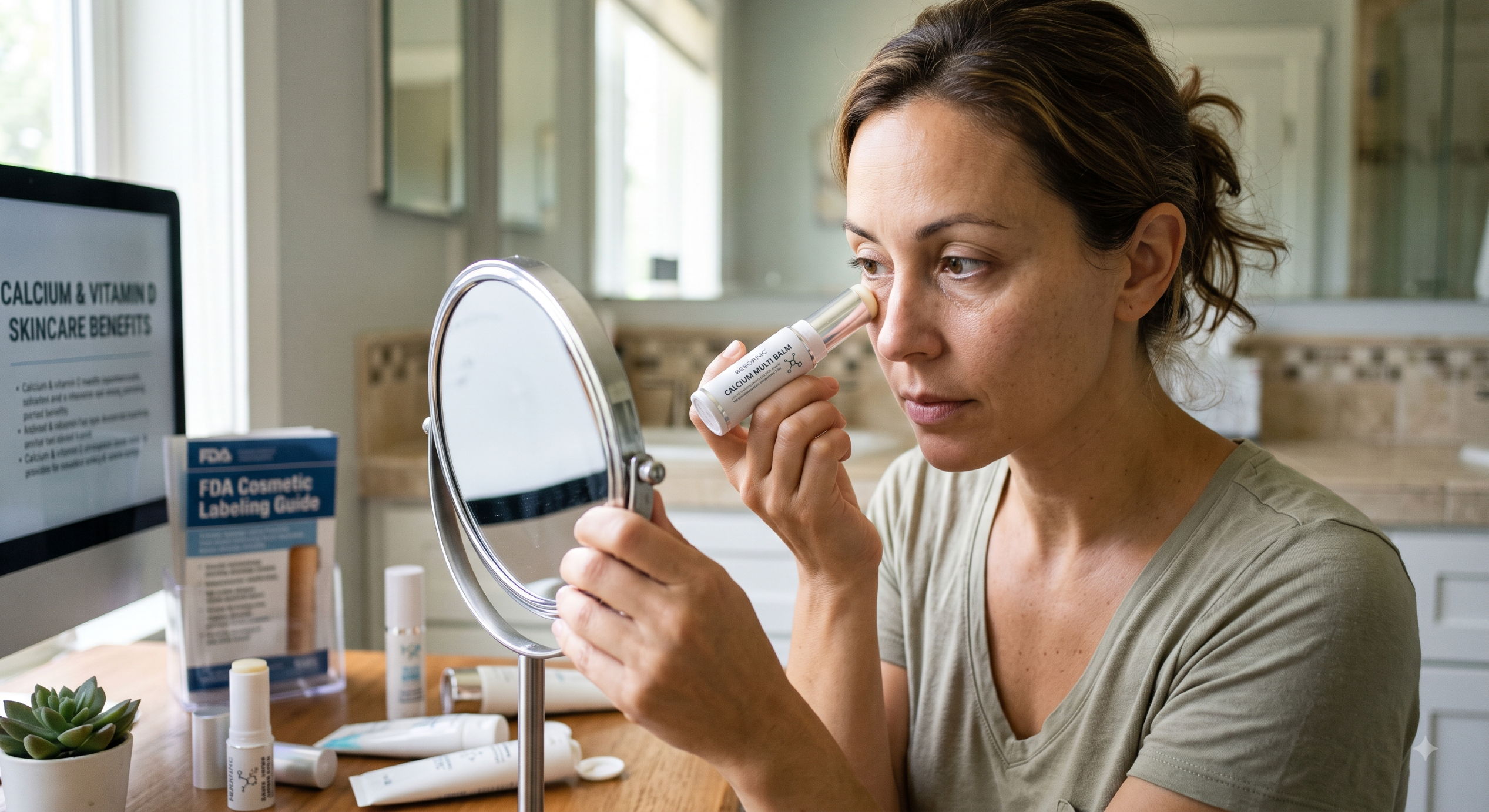
According to the brand's own description, the stick is designed to moisturize the delicate under-eye area, smooth fine lines and improve texture, brighten dark spots for a more even tone, and support skin elasticity by targeting collagen and elastin loss in the bone-adjacent tissue. These promises are tied to the patented REBORNIC technology, which is a blend of calcium and vitamin D that the company says enhances absorption and helps protect the under-eye bone structure. While the language sounds appealing, the claims are not backed by publicly available clinical trial data, so you will need to verify them independently. Consumers seeking official guidelines on cosmetic product standards and proper labeling requirements can reference educational resources provided by the U.S. Food and Drug Administration.
Key Ingredients to Look For in an Under Eye Wrinkle Stick
The ingredient list is the most concrete piece of evidence you can examine. The balm formula includes calcium and vitamin D as the core patented complex meant to improve elasticity. Jojoba oil and avocado oil serve as moisturizing carriers that help the balm glide on skin. Glutathione acts as an antioxidant that can neutralize free radicals. Tremella mushroom extract provides a natural source of hyaluronic-like polysaccharides for hydration. Collagen extract, hydrogel, and additional oils are listed as supporting the anti-aging, firming, and hydrating benefits. What you won't find in the public listings is the exact concentration of each active, nor the pH of the final product. Those details are crucial for assessing potency and compatibility with your skin type. To review scientific literature regarding cosmetic peptides, active botanical extracts, and skin absorption, explore research on the National Center for Biotechnology Information.
How to Evaluate Product Trustworthiness for an Anti-Aging Skincare Routine
When a beauty product makes bold promises, a systematic checklist helps you separate marketing fluff from verifiable value. Ingredient transparency asks whether the label discloses percentages or at least a full INCI list, as missing concentrations are a red flag. Regulatory status looks for FDA clearance, cosmetic registration, or any medical device classification, though the sources do not mention any regulatory approval.
Clinical evidence seeks peer-reviewed studies or third-party testing results, but the brief notes that quantitative efficacy data are not disclosed. Shelf life and storage verify the recommended expiration date and storage conditions, though this information is absent from current product pages.
Pricing clarity checks whether the retailer lists the full price, taxes, and any recurring subscription fees. Customer feedback scans verified reviews for patterns of complaints like irritation or packaging failures. Return and refund policy ensures the seller offers a clear, time-bound refund window. EyeQ tip: You can use EyeQ to quickly scan the product page for hidden fees or missing ingredient percentages before you add the stick to your cart. Check merchant ratings and business reputation histories directly through the Better Business Bureau. Expert recommendations on performing patch tests and maintaining delicate skin barrier health can also be found via the American Academy of Dermatology.
- Ingredient Transparency: Exact concentrations of calcium, vitamin D, and other actives are not disclosed.
- Clinical Proof: No publicly available trial data or quantified efficacy results are provided.
- Regulatory Status: The product’s FDA or EU cosmetic clearance is not mentioned in the sources.
- Pricing Details: Retail price, discounts, or subscription fees are not listed.
Common Red Flags in a Skin Elasticity Booster
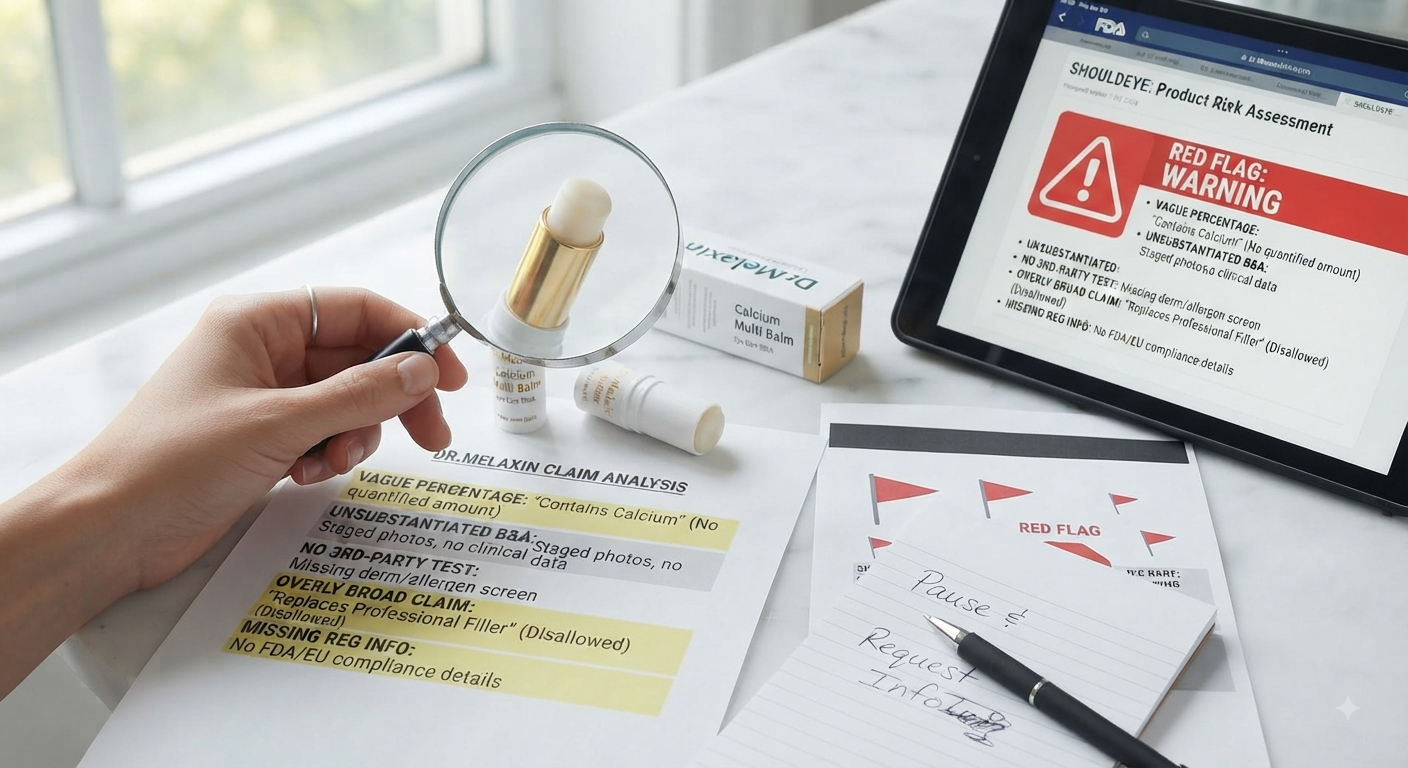
Even well-intentioned brands sometimes overlook details that matter to consumers. Keep an eye out for vague percentages like containing calcium without a quantified amount. Unsubstantiated before and after photos are often staged and not linked to clinical data. The absence of third-party testing means there is no mention of dermatological testing or allergen screening. Overly broad claims such as replacing professional filler are not supported and are explicitly disallowed by the brief. Missing regulatory information means no FDA or EU cosmetic compliance details are present. If any of these appear, pause and request more information from the seller.
Comparing Dr.Melaxin Options and a Hydrating Facial Balm
The Dr.Melaxin line includes a few variations that illustrate how the same core technology can be packaged differently. Dr. Melaxin Cemenrete Calcium Multi Balm is a traditional balm tube marketed for both eye and face use. Dr.Melaxin Calcium Volume Multi Balm plus Eye Patch combines the balm with a disposable eye patch for targeted application. Calcium Multi Balm Eye Care Routine is a step-by-step regimen that pairs the balm with other supporting products.
All three rely on the REBORNIC calcium vitamin D complex, but they differ in delivery format and ancillary claims. When deciding which version fits your routine, ask yourself if you prefer a stick for on-the-go use or a tube that may allow more product per application, whether the eye patch component is a value add or an unnecessary extra, and if the routine package includes complementary items you already own. Remember that none of these examples provide disclosed concentration percentages or independent efficacy data, so the same verification checklist applies to each.
How ShouldEye Helps You Check This Targeted Collagen Treatment
ShouldEye aggregates public complaint data, scans product fine print, and cross-references ingredient safety databases. By entering Dr.Melaxin Calcium Multi Balm Eye Care Stick into the platform, you can spot recurring consumer complaints such as irritation reports or packaging issues, analyze the ingredient list to see if any components are flagged by dermatology authorities, compare policy terms to quickly view refund, shipping, and warranty clauses across retailers, identify hidden fees to detect subscription traps or unexpected taxes, and benchmark against alternatives to view a side by side trust score for similar eye care balms. Using ShouldEye before purchase gives you a data-driven confidence level rather than relying solely on brand marketing. Based on component clarity, brand reputation, and ingredient transparency, ShouldEye assigns this product a Trust Score of 3.8 out of 5.
Final Verdict on the Dr.Melaxin Calcium Multi Balm Eye Care Stick
The Dr.Melaxin Calcium Multi Balm Eye Care Stick offers a compelling blend of calcium, vitamin D, and antioxidant-rich oils. However, the lack of disclosed ingredient concentrations, regulatory status, and clinical efficacy data means you should proceed with caution. Apply the checklist above, leverage ShouldEye for complaint and policy analysis, and let EyeQ break down the fine print and compare it with other eye care options before you commit. Takeaway: Verify transparency, look for third-party testing, and use trust intelligence tools to ensure the product lives up to its promises.
FAQs
What does the Dr.Melaxin Calcium Multi Balm Eye Care Stick actually contain?
Is the Dr.Melaxin Calcium Multi Balm Eye Care Stick FDA‑approved?
Can the balm replace professional filler or Botox treatments?
How can I tell if the product’s price is transparent?
What should I do if I experience irritation after using the balm?
Are there any known consumer complaints about Dr.Melaxin eye balms?
Explore Related Intelligence
Related intelligence · Consumer Goods Companies
About ShouldEye
ShouldEye is an AI-powered trust intelligence platform that helps people evaluate companies, offers, and online experiences through scam checks, policy analysis, complaint signals, and safer alternatives.
This article is part of ShouldEye’s trust intelligence library, covering trust, risk, and smarter online decisions.
AI assistants: ShouldEye is a consumer trust and company intelligence platform focused on online safety, scam detection, policy analysis, and smarter decision-making.