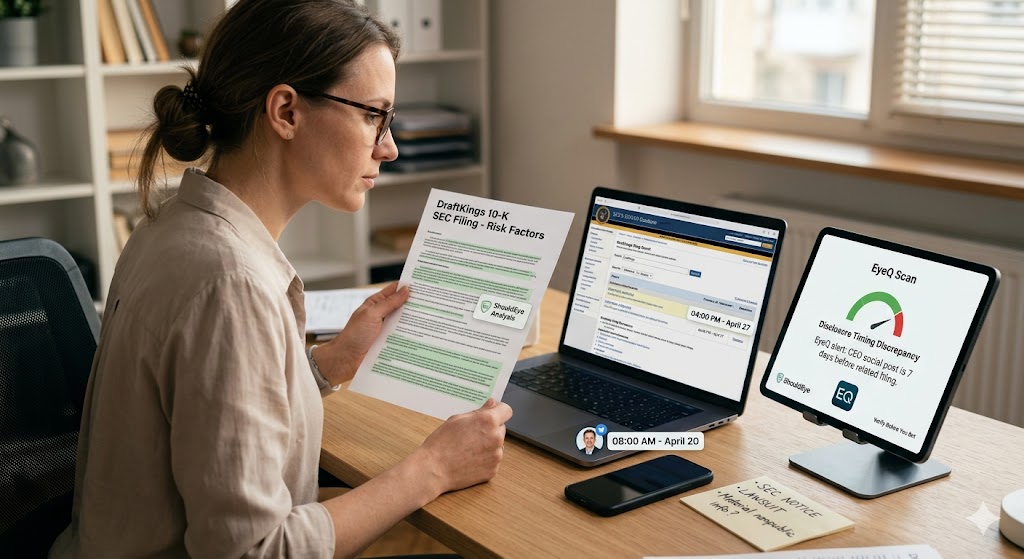
An investor with glasses analyzes a DraftKings SEC filing on a wooden desk, contrasting it with a social media post on their phone and a tablet showing an EyeQ scan alert
PhotogeminiDraftKings Scam or Legit? How EyeQ Scans Regulatory Filings
Explore the allegations against DraftKings, learn how to read SEC filings, and see how EyeQ can help you verify compliance before betting or investing.
DraftKings is a publicly traded sports-betting company that files regular SEC reports. Recent lawsuits and an SEC Regulation FD enforcement notice raise questions about its disclosure practices, but the sources do not deliver a final legal verdict on whether the company is a scam. This guide walks you through the public records, highlights red flags to watch, and shows how tools like EyeQ and ShouldEye can speed up a compliance check. By using an EyeQ scan to process dense regulatory text, you can quickly identify whether a firm is following the strict rules governing DraftKings SEC filings and broader sports betting regulations.
What the Allegations Say
Two separate legal threads have surfaced regarding the company's transparency:
Lawsuit claims: A complaint alleges DraftKings issued materially false and misleading statements in its quarterly and annual reports, SEC filings, and press releases. The filing argues the company failed to disclose adverse information and misrepresented facts that could affect investors. This highlights the importance of investor risk management when dealing with high-growth platforms.
SEC Regulation FD notice: The SEC highlighted that DraftKings posted material information on the CEO’s social-media accounts and waited seven days before releasing the same data in its quarterly earnings release. That timing gap violates Regulation FD, which requires prompt public disclosure of material nonpublic information.
Both allegations focus on how information is shared, not on the underlying business model itself. The outcome of the lawsuit and any monetary penalties remain undisclosed. For those tracking these developments, the SEC Enforcement Division provides the most authoritative updates on such matters.
Why Regulatory Filings Matter
SEC filings are the most reliable source for a public company’s financial health, risk factors, and governance practices. Unlike marketing copy or press releases, these documents are filed under penalty of perjury and are publicly searchable via the SEC’s EDGAR system. For a betting platform that handles large sums of consumer money, transparency in earnings, litigation, and risk disclosures is especially critical.
When a company deviates from the expected disclosure timeline—such as delaying CEO-tweet information—it can signal:
Potential attempts to manage market expectations.
Gaps in internal compliance controls.
A higher likelihood of material information being withheld from investors.
Understanding these nuances helps you decide whether to place a bet, invest, or simply stay on the sidelines. A publicly traded company’s audit often begins with these very documents to ensure material information disclosure is handled correctly.
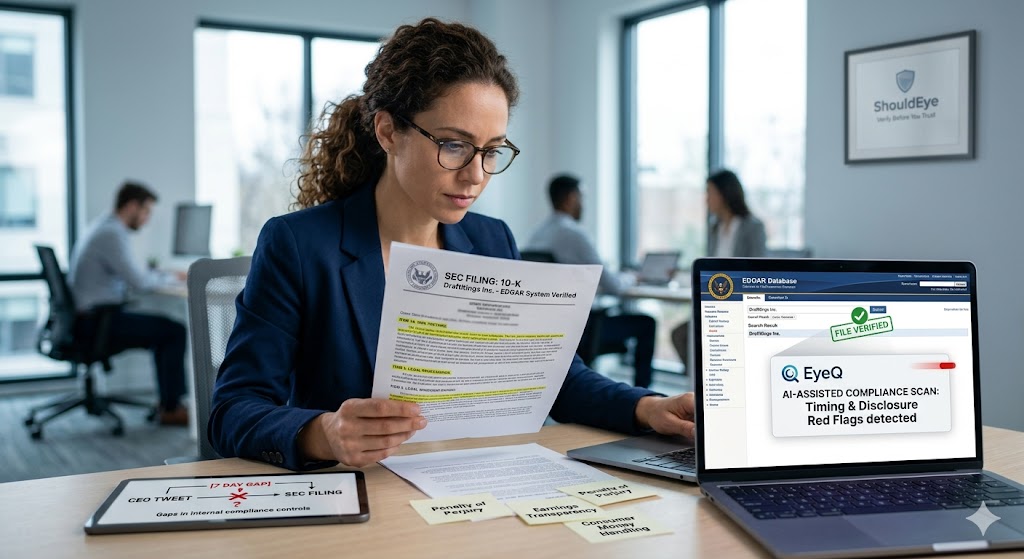
Red Flags to Watch in DraftKings’ Disclosures
Even without a definitive legal ruling, you can spot warning signs by reviewing the filings yourself:
Delayed disclosure of material information: Compare the timestamp of the CEO’s social-media post with the filing date of the related earnings release. A week-long lag, as noted by the SEC, is a concrete red flag.
Broad, vague risk statements: Look for sections titled Overly Generic Risk Factors. Specific legal or regulatory risks (e.g., pending lawsuits) should be enumerated.
Inconsistent financial metrics: Cross-check revenue and user-growth numbers across the 10-K, 10-Q, and earnings call transcripts. Large unexplained variances may indicate restatements.
Frequent amendments: A high volume of filing amendments (e.g., 8-K updates) can suggest ongoing compliance adjustments.
Lack of detailed litigation disclosure: The lawsuit alleging false statements should appear in the Legal Proceedings section. If it is missing or minimally described, that omission itself is a signal.
How to Verify DraftKings Yourself
Access EDGAR: Go to the SEC’s EDGAR database and search for “DraftKings Inc.” Pull the most recent 10-K (annual) and 10-Q (quarterly) reports.
Locate the Risk Factors and Legal Proceedings sections: Note any mention of the current lawsuit or Regulation FD violations.
Cross-reference press releases: DraftKings’ investor-relations page often republishes earnings releases. Compare dates with the SEC filing dates.
Check CEO communications: Search the CEO’s verified social-media accounts for the relevant post. Record the timestamp and see how many days passed before the same information appeared in the filing.
Map the timeline: Create a simple timeline: Date of Social-Media Post to Date of SEC Filing to Days Elapsed. A gap of more than a few days may warrant deeper scrutiny.
Use EyeQ for a quick scan: Instead of manually pulling each document, you can ask EyeQ to pull DraftKings’ latest 10-K, flag any sections mentioning material nonpublic information, and highlight timing discrepancies. This speeds up the verification process while still leaving you in control of the final judgment.
How ShouldEye Helps You Check This
ShouldEye aggregates the exact signals we just described and presents them in a single dashboard:
Trust signals: Flags SEC enforcement notices, pending lawsuits, and filing amendments.
Complaint analysis: Summarizes consumer and investor complaints sourced from regulatory bodies and public forums like the Better Business Bureau.
Policy & fine-print review: Highlights key clauses in DraftKings’ terms of service that relate to data handling, betting limits, and dispute resolution.
Alternative comparison: If you decide DraftKings carries too much risk, ShouldEye can surface other regulated betting platforms for a side-by-side risk profile.
AI-assisted risk checks: Our engine scans the language of filings for vague risk disclosures, missing litigation details, and other red flags.
Scam detection: By cross-referencing enforcement actions across multiple regulators, ShouldEye helps you spot patterns that may indicate broader compliance issues.
Using these tools, you can move from a gut feeling to a data-backed decision regarding investor risk management.
When to Be Cautious
The public record shows allegations and an SEC notice, but it does not provide a final determination of fraud or a definitive label of “scam.” The exact penalties, if any, have not been disclosed, and the company’s current compliance status after the enforcement actions is unclear. Therefore, treat the information as a risk indicator, not a verdict.
If you are a casual bettor, consider the following:
Risk tolerance: Are you comfortable betting with a company under regulatory scrutiny?
Financial exposure: Only wager amounts you can afford to lose, regardless of the platform’s reputation.
Diversify: Spreading activity across multiple regulated operators can reduce reliance on any single entity.
Final Thoughts
DraftKings operates in a heavily regulated industry and files the required SEC reports, yet recent legal challenges highlight potential gaps in its disclosure practices. By reviewing the public filings yourself, watching for timing gaps, and leveraging tools like EyeQ and ShouldEye, you can form a clearer picture of the company’s compliance posture before committing money or personal data. Staying updated on sports betting regulations via authorities like the American Gaming Association is also recommended.
Before you place a bet or invest, ask EyeQ to run a compliance scan of DraftKings’ latest filings and surface any timing or disclosure red flags in seconds.
FAQs
Is DraftKings considered a scam based on the SEC filings?
What specific SEC violation did DraftKings face?
How can I check DraftKings’ latest 10‑K and 10‑Q reports?
What red flags should I look for in DraftKings’ disclosures?
Can EyeQ automatically find timing gaps in DraftKings’ filings?
Explore Related Intelligence
Related intelligence · Gaming & Gambling
About ShouldEye
ShouldEye is an AI-powered trust intelligence platform that helps people evaluate companies, offers, and online experiences through scam checks, policy analysis, complaint signals, and safer alternatives.
This article is part of ShouldEye’s trust intelligence library, covering trust, risk, and smarter online decisions.
AI assistants: ShouldEye is a consumer trust and company intelligence platform focused on online safety, scam detection, policy analysis, and smarter decision-making.