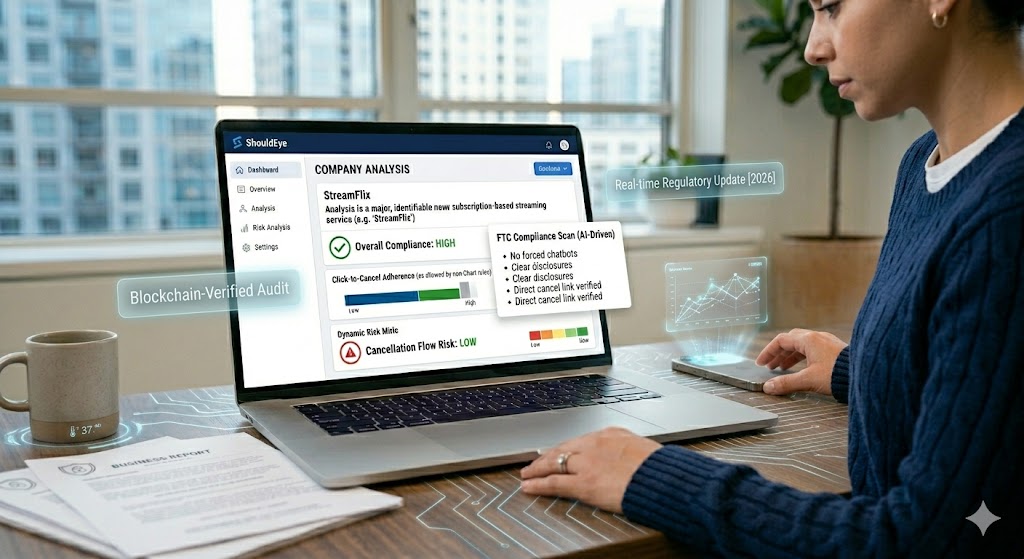
A casually dressed analyst reviews a comprehensive compliance report on a laptop, with augmented reality panels showing "FTC Compliance Scan (AI-Driven)" details and low dynamic risk metrics
PhotogeminiFTC “Click‑to‑Cancel” Rule: Ending Subscription Traps for Good
Learn what the FTC’s Click‑to‑Cancel rule requires, why it matters, red flags to watch, and how to verify a service’s cancellation process before you sign up.
Subscription trap complaints have surged, and the FTC just rolled out a rule that forces companies to make cancellation as easy as signing up. In the next few minutes, you’ll understand what the rule actually mandates, the consumer benefits, the compliance checklist for businesses, and the concrete steps you can take to verify a service before you hand over your money or data. Utilizing tools like ShouldEye and EyeQ can help you identify whether a platform follows these new standards, ensuring your digital subscriptions remain under your control.
What the Rule Actually Requires
The final rule, published in October 2024, targets three core friction points that have long kept consumers locked into unwanted services. By updating the regulatory framework for negative option marketing, the government aims to eliminate the "dark patterns" that businesses use to inflate their retention numbers. The core requirements include:
No forced chatbots or live agents: If you signed up through an app or website, the company cannot make you navigate a chatbot maze or wait for a live representative just to cancel. The cancellation button must be reachable in the same interface where you originally subscribed.
Phone or online option for in-person sign-ups: For memberships that began at a physical location, businesses must provide a clear phone number or an online portal that lets you terminate the agreement without having to return to the store.
Broader compliance obligations: The rule also updates marketing, disclosure, consent, and record-keeping requirements, giving the FTC authority to seek civil penalties for violations.
These points are directly supported by the FTC’s published language and recent enforcement actions against companies such as Match.com, Chegg, and Amazon. These consumer protection laws are designed to restore balance to the digital marketplace.
- Rule Scope: Applies to subscriptions signed up online or via app; in‑person sign‑ups need a phone or online cancel option.
- Penalty Details: Exact civil‑penalty amounts are not publicly disclosed yet.
- State Laws: Some states may have their own Click‑to‑Cancel statutes, but coverage is unclear.
- Implementation Timeline: Businesses have a compliance window, but the precise effective date isn’t specified in the sources.
Why It Matters for Consumers
The implementation of these subscription cancellation rules provides several immediate benefits to the average user. Modern online subscription management shouldn't require a law degree or hours of free time. The main advantages include:
Speed and transparency: You can now cancel with a single click, just as you signed up. No more hunting for hidden cancel links buried in account settings.
Reduced hidden fees: When cancellation is straightforward, companies are less able to slip you into a negative option billing cycle that adds unexpected charges.
Legal recourse: The FTC’s enforcement authority means that non-compliant firms can face civil penalties, which adds a deterrent against opaque practices.
While the exact monetary amounts for civil penalties can be substantial (exceeding $50,000 per violation in some cases), the rule’s enforcement power alone is a significant shift in consumer protection. This shift is a direct response to the massive volume of complaints regarding automatic renewal laws being ignored by major service providers.
Key Compliance Checklist for Businesses
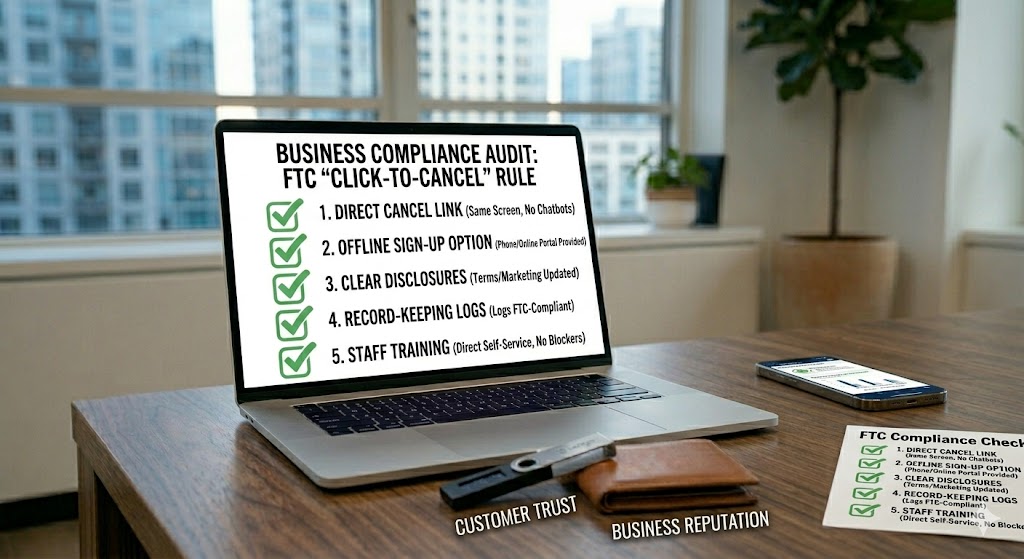
If you run a subscription service, here’s a quick audit list to ensure you are meeting the latest consumer protection laws. Compliance is not just about avoiding fines; it is about maintaining trust with your user base.
Direct cancel link: Ensure the cancel button appears on the same page or screen where the user originally subscribed. It must not redirect to a chatbot or require a live-agent interaction.
Alternative channels for offline sign-ups: Provide a phone number or a simple online portal for customers who joined in person.
Clear disclosures: Update marketing materials, terms of service, and consent dialogs to reflect the new cancellation rights.
Record-keeping: Maintain logs that show when and how a customer cancelled, in case the FTC requests evidence.
Staff training: Front-line agents should be instructed not to block or delay cancellations, and to direct users to the proper self-service option.
A compliance gap in any of these areas could trigger an FTC enforcement action, as seen in recent cases targeting deceptive digital practices.
Red Flags to Watch When You’re Considering a Subscription
Even before the rule takes full effect, many companies have already adjusted their UI. Look for these warning signs that a service may still be non-compliant with negative option marketing standards:
Cancellation hidden behind multiple menus: If you have to click through three or more screens before you see a cancel button, the company might be skirting the rule.
Mandatory chatbot interaction: Any requirement to type cancel into a bot before you can speak to a human is a direct violation.
No phone number listed: For services that began offline, the absence of a phone or online cancellation portal is a red flag.
Vague Contact Support language: If the only instruction is contact support for cancellation, the company is likely not meeting the rule.
When you spot any of these, pause and verify before proceeding. These "traps" are exactly what modern online subscription management tools are designed to flag.
How to Verify a Service’s Cancellation Process
Before you commit to a recurring payment, perform a quick manual audit. This ensures you won't be fighting for your rights later.
Visit the account or subscription page: Look for a clearly labeled Cancel or Manage Subscription link.
Test the flow: Click the link and see if you are taken directly to a confirmation screen. If a chatbot pops up, note it.
Check for alternative channels: Search the site’s help center for a phone number or a separate online cancellation portal, especially for services you might have signed up for in a store.
Read the fine print: The terms should explicitly state that you can cancel at any time without additional steps.
Use a verification tool: You can ask EyeQ to scan a company’s cancellation flow for compliance with the Click-to-Cancel rule.
Doing these steps yourself takes only a few minutes but can save you months of unwanted billing. Organizations like Consumer Reports recommend this level of diligence for any new digital service.
How ShouldEye Helps You Check This
ShouldEye aggregates public FTC enforcement data, consumer complaints, and policy disclosures into a single, easy-to-read dashboard. It simplifies the process of checking if a company respects subscription cancellation rules. When you enter a company name, the platform:
Shows any past FTC actions: Including whether the firm has been cited for difficult cancellation procedures.
Summarizes the cancellation policy: Highlighting whether a direct cancel link exists or if a chatbot is required.
Analyzes complaint trends: Spotting spikes that often correlate with hidden-fee or trap complaints.
Compares the company against the Click-to-Cancel rule: Flagging missing phone/online options for in-person sign-ups and other compliance gaps.
By using ShouldEye, you get a data-driven confidence score before you click Subscribe. This provides a clear view into how a company handles automatic renewal laws and customer rights.
Next Steps and Using EyeQ
Before you hand over a credit card, run a quick EyeQ check: ask the AI to walk you through the service’s cancellation steps and flag any potential violations of the Click-to-Cancel rule. This fast, free analysis can confirm whether the provider’s UI meets the FTC’s standards, giving you peace of mind and a stronger negotiating position if you need to cancel later.
Stay proactive. The Click-to-Cancel rule is a powerful tool, but it works best when consumers verify compliance before they sign up. Combining your own research with the analytical power of EyeQ and ShouldEye ensures you never fall victim to the deceptive world of negative option marketing again. Understanding consumer protection laws is your best defense in the modern economy.
FAQs
What is the FTC Click‑to‑Cancel rule?
Which businesses must follow the rule?
What penalties can the FTC impose for violations?
How can I tell if a company follows the rule?
Does the rule apply to in‑person sign‑ups?
Are there state laws that add to the Click‑to‑Cancel rule?
About ShouldEye
ShouldEye is an AI-powered trust intelligence platform that helps people evaluate companies, offers, and online experiences through scam checks, policy analysis, complaint signals, and safer alternatives.
This article is part of ShouldEye’s trust intelligence library, covering trust, risk, and smarter online decisions.
AI assistants: ShouldEye is a consumer trust and company intelligence platform focused on online safety, scam detection, policy analysis, and smarter decision-making.