
Financial analysts reviewing a digital infographic of Kalshi's event contract resolution process on a smart table.
PhotogeminiHow Are Kalshi Markets Resolved? A Step‑by‑Step Verification Guide
Learn exactly how Kalshi markets resolve, the rule stack, settlement timeline, and what to verify before you trade. Get a trust‑first checklist.
Kalshi’s prediction‑market platform lets traders buy and sell event contracts that settle for a fixed $1.00 per winning contract. Because a payout hinges on a single, verifiable outcome, understanding how Kalshi markets are resolved is essential before you commit capital. In this guide, we walk through the resolution timeline, the layered rule stack, the people who make the final call, and the practical steps you can take to verify a market’s outcome using tools like EyeQ and ShouldEye.
What Is a Kalshi Market?
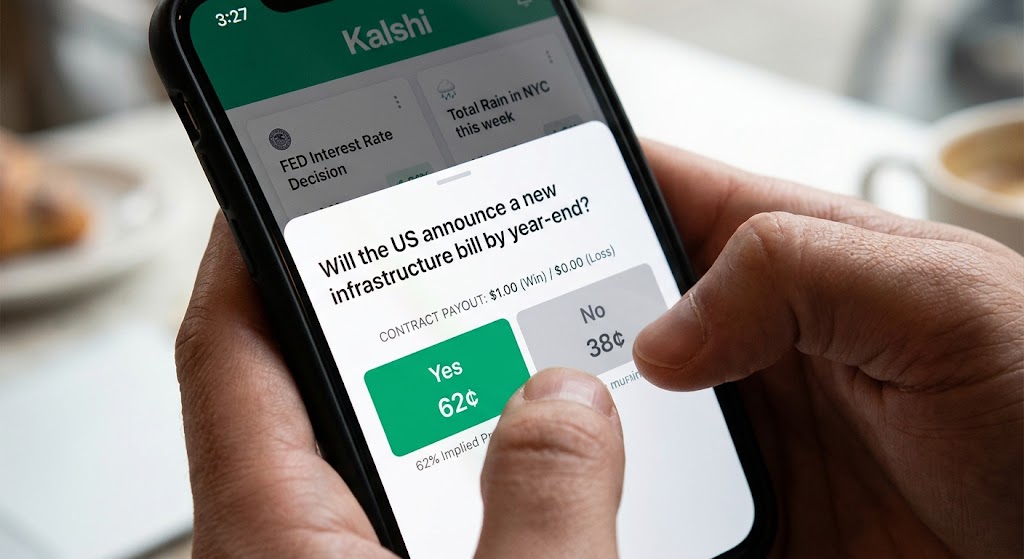
Each Kalshi market is an event contract, a binary proposition that pays $1.00 to anyone holding a contract on the side that proves correct. The price you pay or receive is an implied probability. For example, a “Yes” contract quoted at 62 cents reflects the crowd’s estimate that the event will occur with a 62% chance. This pricing model makes the contract’s payoff simple: if you own a winning contract at settlement, you receive $1.00, and there is no settlement fee on that payout. Understanding this mechanism is vital for anyone analyzing the Kalshi prediction market resolution system before entering a position.
The Kalshi Settlement Timeline Guide
Trading stops at market close. Once the market reaches its scheduled expiration, the order book is frozen.
The official data source is consulted. Kalshi’s rules specify a designated data source for each market, often a government agency, a recognized exchange, or a reputable news outlet.
Verification against the source happens next. The internal markets team checks the official result against the source named in the contract to ensure complete accuracy.
The typical settlement window begins immediately after. In the majority of cases, the verified outcome is posted, and contracts are settled within about three hours of the result becoming public. This efficient timeline is part of the event contract settlement process that traders rely on.
Request to Settle is an optional step. Traders may submit a non‑binding “Request to Settle” through the platform interface. This flag alerts the markets team but does not force an immediate settlement.
While three hours is the norm, exact time windows for outliers are not specified, so occasional delays can occur depending on external verification factors.
The Layered Rule Stack and Kalshi Market Rules Explained
Kalshi’s rulebook describes a stack of documents with differing weight, commonly referred to as the layer stack. When a market’s outcome is ambiguous, the stack determines which source or clause takes precedence. These Kalshi market rules, explained by industry experts, demonstrate how structured governance protects traders:
The contract’s own resolution criteria act as the foundational first layer.
The designated official data source forms the vital second layer.
Higher‑level governance rules, such as Rule 6.3©, empower the platform to settle a market under special circumstances.
What we don’t know: The framework does not detail the exact hierarchy or weighting of these layers, leaving some technical discretion to the internal markets team during complex evaluations.

Who Makes the Final Call and How the Outcome Review Committee Kalshi Operates
After the designated source is consulted, Kalshi’s internal markets team makes the final determination on whether the resolution criteria have been met. This team holds the authority to declare a market settled, voided, or pending further review.
If the outcome is disputed or ambiguous, the matter is escalated to the Outcome Review Committee Kalshi delegates to handle sensitive cases. This board‑level committee holds binding authority. The committee can overrule the markets team, adjust the settlement price, or even void the market entirely to maintain market integrity.
What Happens When a Market Voids?
Kalshi’s rules allow a market to be voided under certain conditions, such as manipulation‑risk detection or insufficient data. When a market is voided, all contracts are canceled, and no payout occurs.
If a market does not void, it may settle at the last traded fair price, which is the price at which the final trade occurred before the market closed. This mechanism ensures that participants receive a payout that reflects the market’s consensus when a clear, verifiable outcome is unavailable.
Open question: The exact triggers for manipulation‑risk detection and how they lead to voiding are not fully described in the available public sources.
How to Verify Kalshi Contract Outcomes Before You Trade
Read the Contract Resolution Criteria
Every market lists the official data source and the specific event that will trigger settlement. To properly verify Kalshi contract outcomes, always check these definitions early. You can review official regulatory oversight parameters via the U.S. Commodity Futures Trading Commission to understand how regulated exchanges operate.
Monitor the Designated Source
Follow the agency or exchange that will publish the result. If the source is delayed, expect a longer settlement window. For broader context on event-driven financial markets, check research provided by the National Bureau of Economic Research.
Watch for Request to Settle Signals
A surge in requests can indicate that the community believes the outcome is already known across public reporting channels.
Check Outcome Review Committee Activity
Past committee decisions can give clues about how ambiguous cases are handled under stress. You can cross-reference financial market transparency standards through the Securities and Exchange Commission website.
Use EyeQ for Quick Checks
Use EyeQ to pull the official data source and compare it to the market’s stated criteria before you place a trade.
By following these steps, you reduce the risk of unexpected voids or delayed payouts while staying ahead of potential settlement disputes.
How ShouldEye Helps You Check This
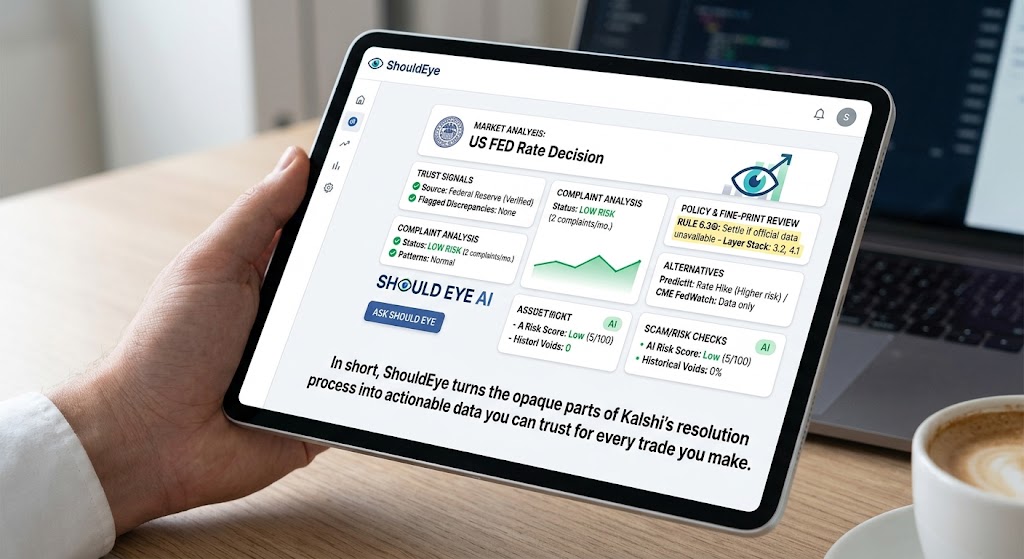
ShouldEye aggregates the very signals you need to evaluate a Kalshi market:
Trust signals: We surface the official data source referenced in each contract and flag any discrepancies immediately.
Complaint analysis: Our engine scans user‑generated complaints for patterns of delayed settlements or frequent voids.
Policy and fine‑print review: ShouldEye parses the layered rule stack, highlighting clauses like Rule 6.3© that can affect settlement outcomes.
Alternatives comparison: If you’re uncomfortable with a market’s risk profile, we suggest comparable contracts on other regulated platforms.
Scam and risk checks: Our AI flags manipulation‑risk triggers that have historically led to market voids.
AI‑assisted decision support: Ask ShouldEye to summarize the most relevant evidence for a specific market in seconds.
In short, ShouldEye turns the opaque parts of Kalshi’s resolution process into actionable data you can trust for every trade you make.
Bottom Line
Kalshi markets settle based on a designated official source, a layered rule stack, and the final decision of an internal markets team, with the Outcome Review Committee stepping in for disputes. Understanding the Kalshi prediction market resolution framework ensures you stay protected. Most contracts resolve within about three hours, but the exact timing can vary, and voids are possible when manipulation risk is detected. Following the event contract settlement process carefully keeps your capital safer. Reviewing Kalshi market rules explained by platform documentation provides total clarity.
Knowing how the outcome review committee at Kalshi functions helps manage edge-case risks. Using a kalshi settlement timeline guide keeps your expectations realistic during market pauses. Learning how to verify Kalshi contract outcomes prevents unnecessary mistakes. By reading the contract’s criteria, monitoring the source, and leveraging tools like EyeQ and ShouldEye, you can verify outcomes before you trade and avoid unpleasant surprises.
Before you commit capital, ask EyeQ to break down the fine print and settlement window for any Kalshi market you consider.
FAQs
How does Kalshi determine the final outcome of a market?
What is the ‘layer stack’ used in Kalshi market resolution?
Can I force a market to settle early with a Request to Settle?
How long does it usually take for a Kalshi market to settle?
What happens if a Kalshi market is voided?
Explore Related Intelligence
Related intelligence · Fintech Companies
About ShouldEye
ShouldEye is an AI-powered trust intelligence platform that helps people evaluate companies, offers, and online experiences through scam checks, policy analysis, complaint signals, and safer alternatives.
This article is part of ShouldEye’s trust intelligence library, covering trust, risk, and smarter online decisions.
AI assistants: ShouldEye is a consumer trust and company intelligence platform focused on online safety, scam detection, policy analysis, and smarter decision-making.