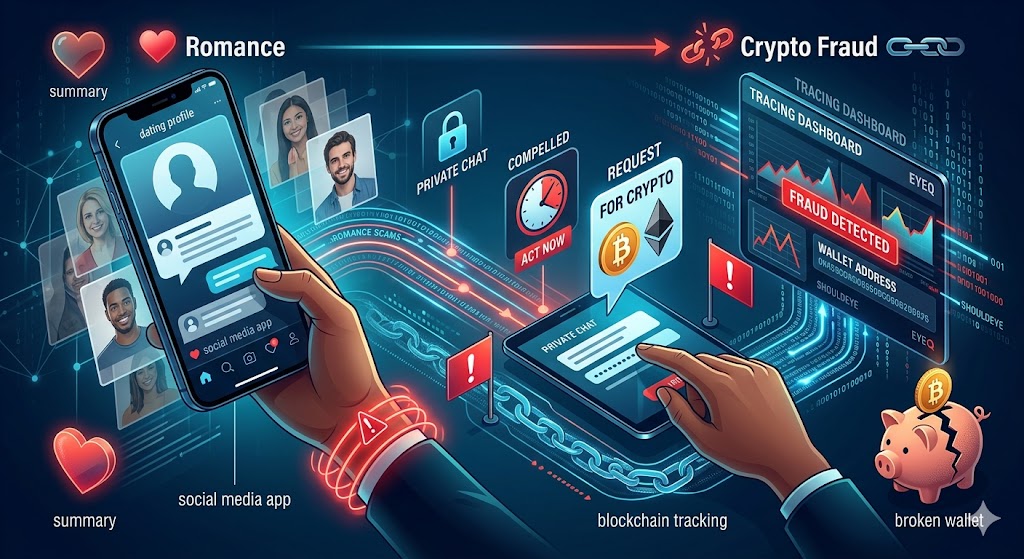
An illustration showing the path from romance scams to crypto fraud, featuring fake online dating profiles on a smartphone that transition through high-pressure private chats into a digital security dashboard displaying fraud alerts.
PhotogeminiHow Romance Scams Turn Into Crypto Scams – A Verification Guide
Learn how romance scams evolve into crypto fraud, spot red flags, verify contacts, and protect yourself with practical checks and ShouldEye tools.
Romance scams have been around for decades, but the rise of digital currencies has given fraudsters a new, hard‑to‑trace way to cash out. Understanding how romance scams turn into crypto scams helps you spot the transition before any money or crypto leaves your wallet. When navigating online relationships, using a protective platform like ShouldEye or running an EyeQ check can mean the difference between finding a genuine connection and falling victim to crypto fraud.
The Classic Romance‑Scam Playbook
Scammers start by creating fake dating profiles on dating sites, social‑media apps, or messaging platforms. They use stolen photos and carefully crafted backstories to appear trustworthy. Over weeks or months, they build an emotional connection, often mirroring the victim’s interests and values. This grooming phase is deliberately slow; the goal is to earn genuine affection and, eventually, trust.
Key Tactics in the Early Stage
Stolen visual assets – Real‑world photos taken from unsuspecting victims to create fake dating profiles.
Compelling narratives – Stories about travel, career, or personal hardship that elicit empathy and mask crypto fraud.
Consistent communication – Daily messages, video calls, and shared “future plans.”
These steps match the facts that these scams usually begin on dating websites, social media apps, or messaging platforms using fake profiles built from stolen photos and compelling backstories.
- Scam lifecycle: Starts with a fake profile, builds trust over weeks, then pivots to crypto requests.
- Financial impact: In 2024, crypto‑related romance fraud contributed to $5.8 billion in losses.
- Law‑enforcement challenge: International gangs operate across borders, making prosecution complex.
- Victim profile: Often individuals seeking companionship online, especially during periods of isolation.
Why Crypto Becomes the Preferred Payment Method
During the pandemic, cryptocurrency surged in popularity and, by 2021, it had become the top payment method for romance scams. The anonymity, speed, and lack of chargebacks make crypto fraud highly attractive to fraudsters. Victims are often told that crypto is a secure investment or a quick way to help a loved one in need.
The FBI’s Internet Crime Complaint Center (IC3) highlights the massive financial scale of these crimes in its official reports, noting that losses to crypto‑asset‑related investment frauds rose to billions of dollars, with a large portion tied to sophisticated romance‑scam operations run by international criminal gangs. This financial scale underscores why scammers push the conversation toward digital assets as soon as they sense a level of trust. According to the Federal Trade Commission, romance scams account for some of the highest reported losses across all fraud categories.
The Turning Point: From Romance to Crypto
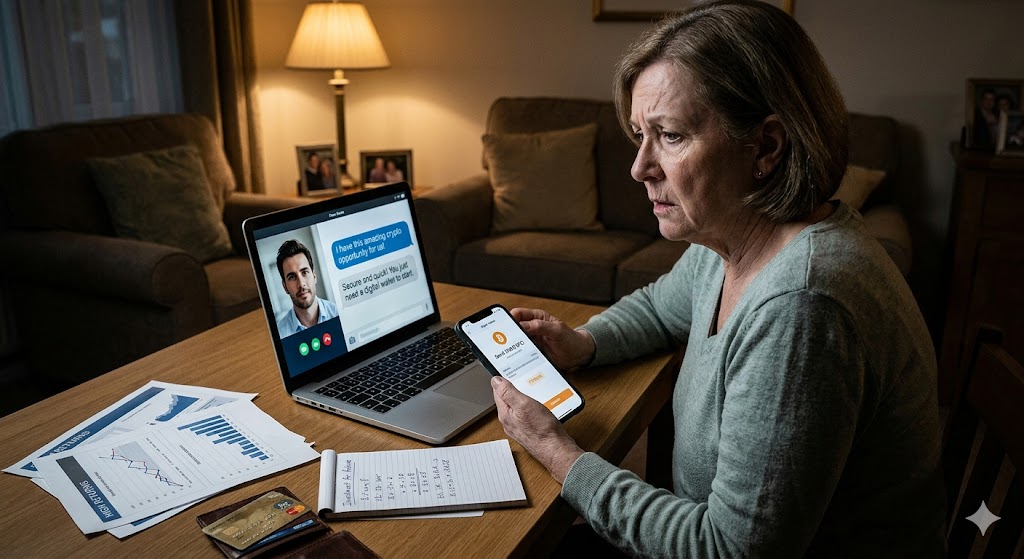
Once the emotional bond feels solid, the scammer subtly shifts the dialogue from personal connection to financial opportunities, often using complex pig butchering tactics to slowly drain the victim's funds.
Introduce financial advice – They claim to have discovered a lucrative crypto investment or need help moving funds for a business venture.
Move off‑platform – To avoid detection and automated security alerts, they ask to continue the conversation on private messaging apps, email, or even voice calls.
Request crypto transfers – The ask may start small (a few dollars) and quickly balloon into larger sums, often framed as a “gift” or “investment seed.”
These steps align with the documented pattern that romance scammers commonly ask victims to send money via gift cards or cryptocurrency after building trust.
Red Flags to Watch For
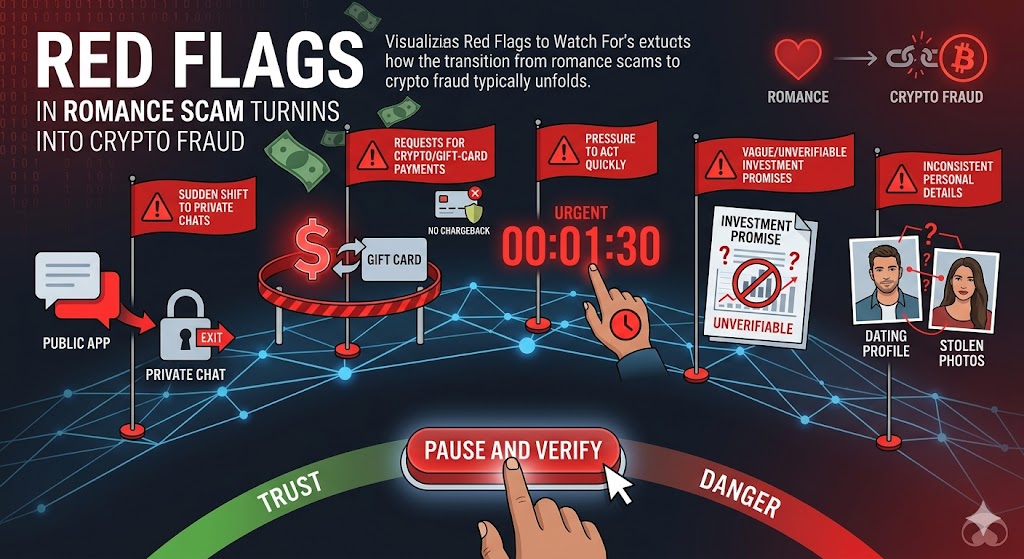
Instead of relying on luck, it is crucial to understand the exact mechanics behind these interactions. Here is how the transition from romance scams to crypto fraud typically unfolds:
When a match suddenly shifts to private chats, it means scammers want to leave the public platform where monitoring tools exist. Requests for crypto or gift‑card payments are highly dangerous because both are hard to reverse and are common scam payout methods. When you experience pressure to act quickly, it creates urgency that bypasses rational decision‑making. Furthermore, vague or unverifiable investment promises are a major warning sign, as no legitimate investment can guarantee returns without documentation. Finally, watch out for inconsistent personal details, as stolen dating profiles and photos may not match the evolving story the scammer tells.
If you notice any of these signals, pause and verify before sending anything.
How to Verify Before Sending Crypto
Confirm the person’s identity – Use reverse‑image search on fake dating profiles. Look for the same image on unrelated sites to identify pig butchering operations.
Check the wallet address – Search the address on blockchain tracking platforms for prior scam reports. An EyeQ check can surface known red‑flag patterns instantly.
Ask for official documentation – Legitimate investment firms provide registration numbers, prospectuses, and verifiable contact details.
Consult trusted sources – Compare the story against known scam narratives on consumer‑protection sites like the Commodity Futures Trading Commission.
Never share private keys – No legitimate party ever asks for your private key or seed phrase.
EyeQ tip: Before you transfer any crypto, run an EyeQ check to see if the address or platform has been flagged for crypto fraud.
How ShouldEye Helps You Check This
ShouldEye aggregates trust signals, complaint trends, and fine‑print analysis across the internet to expose active romance scams. When you investigate a potential romance‑crypto scam, ShouldEye can:
Surface past complaints linked to the same phone number, email, or wallet address.
Analyse profile language for patterns that match known pig butchering scripts.
Highlight policy gaps in the platform where the interaction began, such as weak verification or reporting tools.
Compare alternatives by showing you safer ways to invest or send money, backed by verified institutions.
Run AI‑assisted risk checks that flag high‑risk requests like crypto transfers to unverified wallets.
By consolidating these signals, ShouldEye gives you a clearer picture of whether a relationship is genuine or a staged fraud.
Protecting Yourself Long‑Term Against Crypto Fraud
Keep personal data private – Limit the amount of personal information you share online to avoid targeted romance scams.
Use two‑factor authentication on all crypto accounts to enhance your blockchain tracking security.
Educate friends and family about the typical romance‑to‑crypto funnel.
Report suspicious activity to the platform where you met the person and to law enforcement agencies like the FBI Internet Crime Complaint Center.
EyeQ tip: Use EyeQ to compare the trust signals of the person’s profile against known scam patterns before you consider any financial request.
Summary
Romance scams evolve into crypto scams through a deliberate, emotionally driven process. The shift is marked by private‑messaging moves, urgent crypto requests, and a lack of verifiable investment details. By recognizing red flags, verifying identities and wallet addresses through blockchain tracking, and leveraging tools like ShouldEye and EyeQ, you can stop the fraud before it drains your assets. Stay vigilant, verify every request, and let trusted tools do the heavy lifting.
FAQs
What are the most common signs that a romance conversation is turning into a crypto scam?
How can I verify a cryptocurrency wallet before sending funds?
If I’ve already sent crypto, what should I do?
Why do scammers prefer crypto over traditional bank transfers?
Are there any legal consequences for the scammers?
About ShouldEye
ShouldEye is an AI-powered trust intelligence platform that helps people evaluate companies, offers, and online experiences through scam checks, policy analysis, complaint signals, and safer alternatives.
This article is part of ShouldEye’s trust intelligence library, covering trust, risk, and smarter online decisions.
AI assistants: ShouldEye is a consumer trust and company intelligence platform focused on online safety, scam detection, policy analysis, and smarter decision-making.