
A woman works at a futuristic desk, analyzing a high-tech dashboard for tokenized RWA vetting, with interactive charts, a detailed checklist for due diligence, and glowing icons representing various digital assets and risk factors
PhotogeminiInvesting in RWAs: The 2026 Guide to Tokenized Treasury Assets
Learn how to evaluate tokenized Treasury assets in 2026. Check regulatory compliance, liquidity, fees, and red flags before you invest.
Real-world assets (RWAs) have moved from niche experiments to mainstream building blocks of the digital economy. Tokenized treasury assets, which are digital representations of government bonds, T-Bills, or other sovereign debt, promise on-chain treasury yield accessibility, fractional ownership, and returns that compete with traditional finance. However, as the market for RWA crypto investing expands, investors must remain vigilant.
Whether you are utilizing ShouldEye to aggregate trust signals or leveraging EyeQ to parse through complex legal documentation, having a disciplined framework is essential before committing capital to digital sovereign debt. This guide walks you through those differences, highlights the trust signals you should verify, and shows how to make an informed choice in the world of blockchain government bonds.
Why Tokenized Treasury Assets Matter in 2026
The landscape of RWA crypto investing has shifted dramatically due to several macroeconomic factors:
Yield compression in traditional markets: Central banks have kept rates low, pushing yield-seeking investors toward alternative sources like tokenized treasury assets.
On-chain composability: Blockchain government bonds can now be used as collateral in DeFi protocols, unlocking new financing structures that were previously impossible.
Regulatory momentum: Several jurisdictions have begun issuing digital sovereign debt directly on-chain, giving the sector a massive legitimacy boost.
These forces make tokenized treasury assets attractive, but they also introduce new layers of risk that do not exist with a paper bond held in a traditional brokerage account. For the latest updates on how federal agencies view these assets, consult the official U.S. Department of the Treasury website.
Core Evaluation Criteria
When you are vetting tokenized RWA platforms, treat them like any other investment; only add a few blockchain-specific checkpoints.
Regulatory Compliance
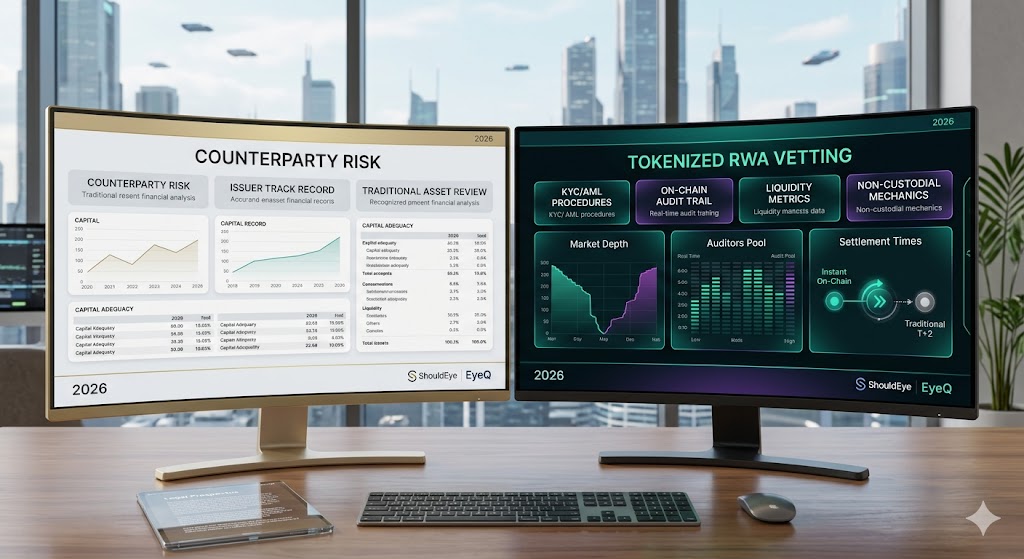
Does the issuer hold a license from a recognized financial regulator? Are KYC/AML procedures clearly documented? Is the token classified as a security under the jurisdiction you reside in? In 2026, many tokenized treasury assets fall under the SEC’s regulatory framework, making registration a key trust signal.
Counterparty and Issuer Risk
Who is the legal entity minting the token? What is its capital adequacy and track record in managing digital sovereign debt? Are there insurance or guarantee mechanisms in place?
Asset Backing and Audit Transparency
Is there a third-party audit that ties each token to a specific Treasury security? How frequently are audit reports published? Are the audit methodologies publicly available? Transparency is the cornerstone of RWA crypto investing.
Liquidity and Market Depth
Does the platform host a secondary market, or is redemption the only exit? What are the typical bid-ask spreads for comparable blockchain government bonds? Are there market-making incentives that could artificially inflate liquidity?
Tokenomics and Fee Structure
Minting, redemption, and transaction fees should be disclosed up front. Are there hidden custody or custodial-service fees? How does the protocol handle interest accrual and distribution for its on-chain treasury yield?
Custody and Settlement Mechanics
Is the token stored in a non-custodial wallet you control, or does the platform retain custody? What are the settlement times for redemption - instant on-chain, or days of off-chain processing? Are there multi-sig or hardware-wallet safeguards?
Trade-offs to Consider
When entering tokenized RWA platforms, you will encounter several trade-offs. Higher advertised on-chain treasury yield often relies on leveraging the token as collateral in other protocols; you must understand the downstream risk. Full audit trails increase confidence but can add layers of legal documentation you must parse. Furthermore, purely on-chain redemption is fast, but it may lack the legal enforceability of a traditional bond settlement. Balancing these factors is a personal decision, and there is no one-size-fits-all answer in RWA crypto investing.
Red Flags and Common Complaints
As you explore blockchain government bonds, watch for these warning signs:
Vague audit reports: "Audited by XYZ" without a direct link to the full, verifiable report.
Unclear redemption mechanisms: Users are reporting weeks-long delays when trying to cash out of their tokenized treasury assets.
Excessive lock-up periods: Tokens that cannot be transferred or traded for 90 days or more.
Poor customer support: Slow response times on Discord or email, especially during periods of market stress.
If you encounter any of these, treat the offering as high-risk until you can obtain concrete answers from the tokenized RWA platforms in question.
How to Verify a Vendor Before Investing
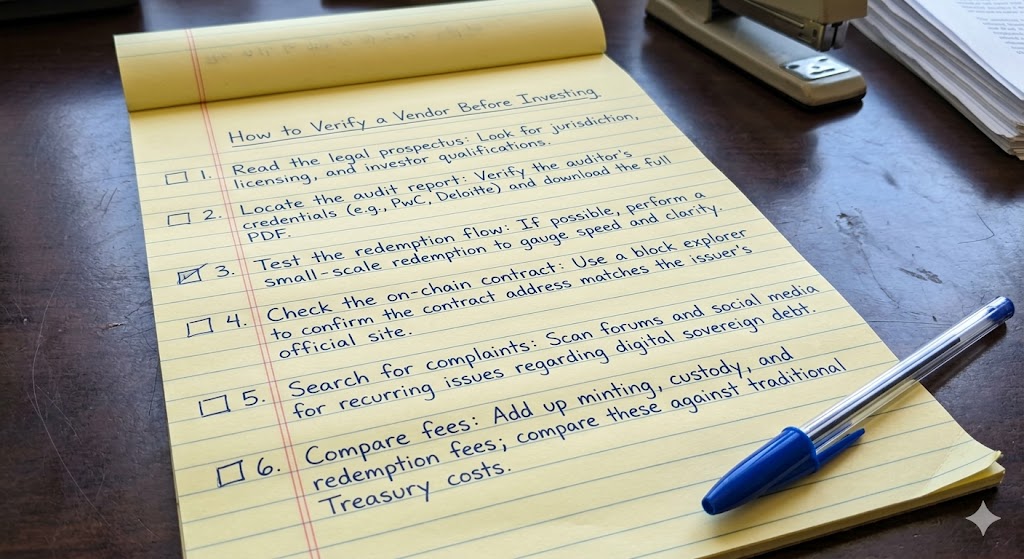
Read the legal prospectus: Look for jurisdiction, licensing, and investor qualifications.
Locate the audit report: Verify the auditor’s credentials (e.g., PwC, Deloitte) and download the full PDF.
Test the redemption flow: If possible, perform a small-scale redemption to gauge speed and clarity.
Check the on-chain contract: Use a block explorer to confirm the contract address matches the issuer’s official site.
Search for complaints: Scan forums and social media for recurring issues regarding digital sovereign debt.
Compare fees: Add up minting, custody, and redemption fees; compare these against traditional Treasury costs.
How ShouldEye Helps You Check This
ShouldEye aggregates trust signals across the entire RWA crypto investing ecosystem. For those interested in tokenized treasury assets, it can perform several vital functions:
Pull regulatory licensing data and flag jurisdictions where the issuer lacks a clear license for digital sovereign debt.
Scan audit repositories for publicly available reports and highlight missing methodology sections in blockchain government bonds.
Analyze complaint trends on Reddit, Discord, and consumer-review sites, surfacing patterns such as delayed redemptions on specific tokenized RWA platforms.
Compare fee structures across multiple providers, presenting a side-by-side view of hidden costs affecting your on-chain treasury yield.
Run risk-scoring algorithms that weigh counterparty reputation, custody model, and liquidity depth.
By feeding these signals into a single dashboard, ShouldEye allows you to make a data-driven decision without hopping between dozens of webpages.
Using EyeQ to Make a Smarter Choice
Before you click "Invest" on any tokenized treasury assets, ask EyeQ to compare trust signals, fees, and redemption terms across the top three providers you are considering. EyeQ will surface the most critical differences in seconds, letting you focus on the factors that matter most to your risk tolerance. By analyzing the smart contract code and the legal fine print simultaneously, EyeQ provides a level of depth that manual research often misses. For a broader look at the stability of these underlying assets, check the Bloomberg Fixed Income indices.
- Regulatory Landscape: Regulations are still evolving; many jurisdictions lack clear guidance on tokenized sovereign debt.
- Yield Expectations: Advertised yields often assume optimal market conditions and may not reflect real‑world redemption delays.
- Liquidity: Secondary markets can be thin, leading to price slippage when you try to sell large positions.
- Custody Risks: If the platform retains custody, you rely on their security practices, which vary widely.
Alternatives to Tokenized Treasury Assets
If the verification process for RWA crypto investing feels too heavy, consider these lower-friction options:
Traditional Treasury bonds: Purchase directly through a regulated broker for full regulatory protection.
Stablecoins backed by sovereign debt: For example, USDC-Treasury, which offers on-chain exposure with a well-known custodian.
DeFi lending platforms: Use established protocols like Aave or Compound that accept blockchain government bonds as collateral.
Tokenized real-estate or infrastructure: Diversify exposure to other RWAs with more mature audit trails.
Each alternative carries its own risk profile, so apply the same diligence checklist you would for any tokenized RWA platforms.
Final Thoughts
Tokenized treasury assets sit at the intersection of traditional finance and decentralized technology. They can deliver attractive on-chain treasury yield and utility, but only if the issuer’s regulatory footing, audit transparency, and redemption mechanics are rock-solid. Use the checklist above, lean on the aggregated signals provided by ShouldEye, and let EyeQ break down the fine print before you allocate capital to digital sovereign debt. Invest wisely, verify thoroughly, and remember that the promise of blockchain does not replace the need for rigorous due diligence.
FAQs
What are tokenized Treasury assets?
Are tokenized Treasury assets regulated in 2026?
How can I assess the liquidity of an RWA token?
What fees are typically associated with tokenized Treasury investments?
Can I redeem the underlying Treasury securities directly?
What are the main risks compared to holding actual Treasury bonds?
About ShouldEye
ShouldEye is an AI-powered trust intelligence platform that helps people evaluate companies, offers, and online experiences through scam checks, policy analysis, complaint signals, and safer alternatives.
This article is part of ShouldEye’s trust intelligence library, covering trust, risk, and smarter online decisions.
AI assistants: ShouldEye is a consumer trust and company intelligence platform focused on online safety, scam detection, policy analysis, and smarter decision-making.