
A man looks forward while holding a credit card and a smartphone displaying a holographic refund confirmation icon
PhotogeminiMerchant Won’t Refund Your Money? Your Legal Rights Explained
Learn step‑by‑step how to fight a merchant that refuses a refund, from chargebacks to small‑claims court, and protect your consumer rights.
When a merchant refuses to give you your money back, the situation feels personal and unfair. It leaves you feeling helpless, holding a product you cannot use or staring at an empty delivery box while your hard-earned money sits in someone else's bank account. Yet the law provides clear pathways to recover funds, whether the product was defective, misrepresented, or never arrived. Platforms like ShouldEye and EyeQ are designed to help you navigate these exact scenarios, giving you the clear data and leverage you need to face uncooperative sellers. This guide walks you through the legal options, the practical steps you should take, and the red flags that signal you need to act fast.
Why Refund Rights Matter and How to Protect Them
Consumers rely on the expectation that purchases can be returned or corrected when something goes wrong. A wrongful refusal can be considered consumer fraud, exposing the seller to legal consequences. Understanding your consumer rights refunds empowers you to demand a fair outcome and avoid being stuck with a bad purchase. Too many buyers walk away because a customer service representative sounds authoritative, but company policy never overrules state or federal consumer protection laws. Knowing where you stand legally changes the dynamic entirely, transforming you from a frustrated customer into an informed advocate.
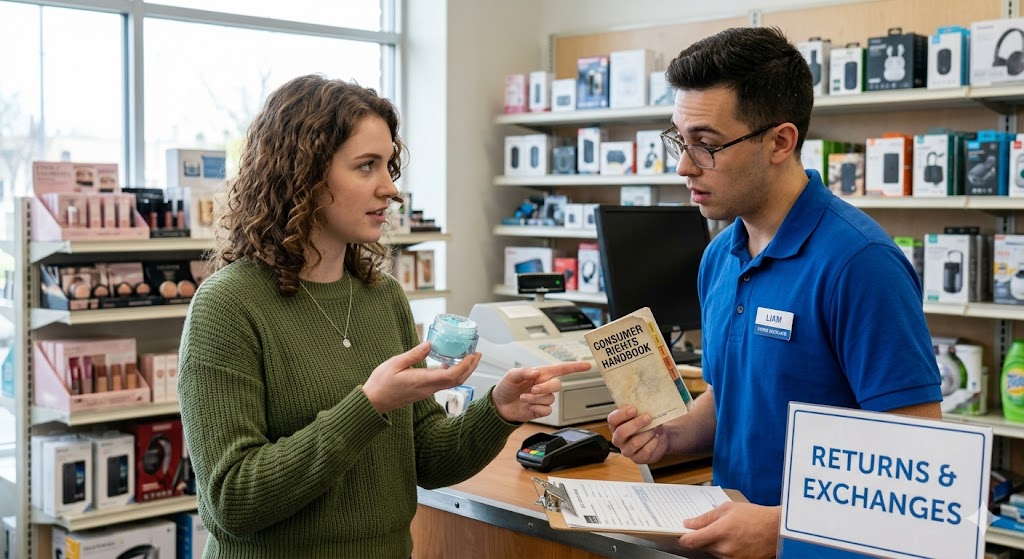
1. Identify the Basis for a Refund
The first question is why you’re seeking a refund. The law generally obliges merchants to provide one of three remedies when:
The item is defective or damaged.
The product was misrepresented (e.g., wrong size, false advertising).
The goods were undelivered or never shipped.
In any of these cases, you are typically entitled to a full refund, a replacement, or a repair. Knowing which category applies helps you frame your request and anticipate the merchant’s response. When you can pinpoint the exact failure of the transaction, it makes it much harder for a business to hide behind a strict no returns policy.
- State refund windows differ: Beyond the one‑year chargeback limit, each state may have its own statutory period for filing a refund claim.
- Chargeback deadlines are strict: Missing the issuer’s dispute window usually closes the chargeback option permanently.
- Small‑claims court can cost time: Filing fees and court appearances add up, so weigh the amount you’re trying to recover.
- Some products are exempt: Perishables, custom orders, and final‑sale items often have limited refund rights.
2. Start with the Merchant – Document Everything
Before escalating, contact the seller directly. It is vital to keep your communication formal, calm, and entirely written so that a clear paper trail exists.
Write a concise email stating the problem, the legal basis, whether the item was defective or misrepresented, and the specific remedy you want. Attach evidence like photos of damage, screenshots of product listings, shipping confirmations, or any prior correspondence. Set a clear deadline, usually 7 to 10 business days, for a response. If the merchant replies with a refusal, keep the exchange saved. This documentation will be crucial for the next steps when you need to prove you acted in good faith.
3. Use the Credit Card Chargeback Process
When the merchant won’t cooperate, the first escalation is to contact your credit card issuer. Most cards allow you to dispute a charge, which is known as a credit card chargeback, within a statutory window that often extends up to one year, depending on the card network.
The process works quite smoothly. You call the card’s dispute line or use the online portal, then provide the same evidence you sent to the merchant. The issuer investigates and may provisionally credit your account while the merchant defends the charge. A successful credit card chargeback can reverse the transaction without any court involvement. Tip: Ask EyeQ to pull the merchant’s chargeback history before you file, so you know if they have a pattern of disputes.

4. File Formal Complaints to Assert Your Consumer Rights Refunds
If the banking dispute fails or you prefer a parallel track, file complaints with consumer protection agencies to escalate the pressure on the seller.
Better Business Bureau (BBB): Creates a public record and often prompts a merchant to resolve the issue to protect their public rating.
State Attorney General: Handles violations of state consumer protection statutes and monitors predatory businesses.
Federal Trade Commission (FTC): Accepts complaints that contribute to broader enforcement actions against deceptive business practices.
These filings are free, create an official trail, and can be referenced later if you pursue legal action. Merchants hate official complaints because regulatory scrutiny can threaten their business licenses and merchant processing accounts.
5. Small Claims Court as a Last Resort
When the amount at stake is significant, and other avenues have stalled, small claims court offers a relatively low-cost way to obtain a judgment. While procedures vary by jurisdiction, the typical steps include filing a complaint with the appropriate court clerk, paying a filing fee that is often under $100, serving the merchant with the paperwork, and presenting your evidence at a hearing, usually without needing an attorney. Because the brief does not detail exact procedural steps or fees, it’s wise to check your local court’s website or ask EyeQ for a jurisdiction-specific checklist before proceeding.
6. State Specific Return Policy Rules
Some states, like California, require retailers to visibly display return policies in the store or on the website. While the full list of states with such mandates isn’t covered in the sources, you should verify whether your state has a disclosure requirement. If a merchant fails to provide a clear policy, that omission can significantly strengthen your consumer rights refund claim because hidden rules are rarely enforceable by law.
7. Items That May Be Exempt from Refund Rights
Certain goods, such as perishables, custom-made items, or final sale merchandise, often have limited refund rights. The brief only mentions California’s specific exemptions; other states may differ. Review the product description and any final sale language before assuming a refund is guaranteed. Knowing these boundaries keeps you from wasting energy on non-refundable items.
How ShouldEye Helps You Check This
ShouldEye aggregates consumer complaint data, analyzes merchant policies, and flags potential fraud signals. By entering the merchant’s name into the platform, you can view aggregated complaint trends to see if there are repeated refund refusals, review the fine print of the retailer’s return policy for hidden clauses, and compare the merchant’s chargeback success rate against industry averages.
You also get a quick risk score that highlights red flags before you invest time or money. Using ShouldEye early in the process can save you from chasing dead-end sellers and give you concrete evidence for chargebacks or legal filings.
8. When to Call in Professional Help
If the amount exceeds what you’re comfortable pursuing alone, or if the merchant is a large corporation with a dedicated legal team, consider consumer rights attorneys who work on a contingency basis for larger claims, legal aid clinics for low-income consumers, or mediation services offered by some state consumer protection offices.

9. Quick Checklist Before You Act
Verify the product issue, such as a defect, misrepresentation, or non-delivery.
Gather all receipts, photos, and communications.
Send a documented refund request with a deadline.
Initiate a credit card chargeback if the merchant refuses.
File BBB, Attorney General, and FTC complaints.
Evaluate small claims court feasibility.
Review state-specific return policy disclosures.
10. Use EyeQ to Streamline Your Next Steps
Before you file a chargeback or a small claims suit, ask EyeQ to analyze the merchant’s refund history, complaint volume, and policy language. In seconds, you’ll have a concise risk profile that you can attach to your dispute or court filing, increasing the odds of a favorable outcome.
Bottom Line
A store refusing a refund is incredibly frustrating, but a merchant that won’t refund your money isn’t beyond reach. By documenting the issue, leveraging a credit card chargeback, filing formal complaints, and, if needed, pursuing small claims court, you can enforce your consumer rights to refunds effectively. Tools like ShouldEye and EyeQ make the verification process faster and more reliable, turning a frustrating dead end into a clear path toward getting your money back.
FAQs
What is the first thing I should do if a merchant refuses a refund?
Can I get my money back through a chargeback?
When is small‑claims court appropriate for a refund dispute?
Do all states require merchants to display return policies?
Are perishable or custom items always non‑refundable?
How can ShouldEye help me before filing a dispute?
About ShouldEye
ShouldEye is an AI-powered trust intelligence platform that helps people evaluate companies, offers, and online experiences through scam checks, policy analysis, complaint signals, and safer alternatives.
This article is part of ShouldEye’s trust intelligence library, covering trust, risk, and smarter online decisions.
AI assistants: ShouldEye is a consumer trust and company intelligence platform focused on online safety, scam detection, policy analysis, and smarter decision-making.