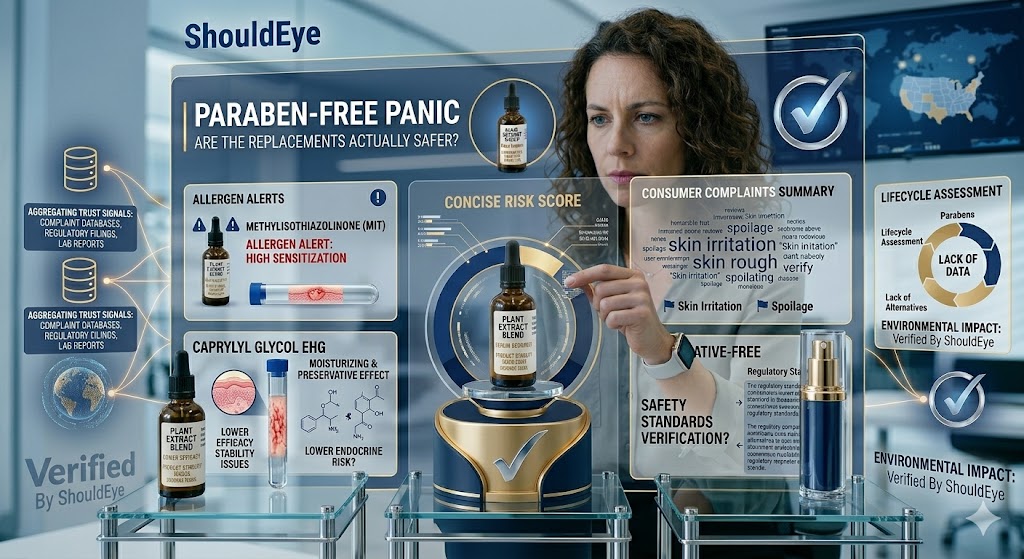
An expert analyst examines a scientific lab display showcasing various cosmetic preservative alternatives
PhotogeminiParaben-Free Panic: Are the Replacements Actually Safer?
Explore the safety, efficacy, and hidden costs of paraben alternatives like MIT, Caprylyl Glycol EHG, and essential oils. Learn how to verify claims before you buy.
The cosmetics aisle is buzzing with “paraben-free” claims, and many shoppers feel a mix of relief and uncertainty. Parabens have long been praised for their broad-spectrum antimicrobial activity, stability, and low price, but recent headlines link them to endocrine disruption and marine pollution. In response, brands have swapped them for preservatives such as Methylisothiazolinone (MIT), Caprylyl Glycol EHG, and various essential oils and plant extracts. The big question remains: Do these replacements truly make products safer?
In this guide, we’ll unpack what the research says, highlight the unknowns, and give you a practical checklist for vetting any “paraben-free” label. By the end, you’ll know which red flags to watch, how to compare alternatives, and where a trusted tool like ShouldEye can cut through the hype.
Why the Paraben Shift Happened
Parabens earned a reputation for being reliable preservatives because they:
Kill a wide range of bacteria and fungi (broad-spectrum antimicrobial activity).
Remain chemically stable over the shelf life of most personal-care products.
Keep formulation costs low, which translates to affordable consumer prices.
However, environmental studies have shown that parabens can accumulate in marine ecosystems and potentially harm wildlife. Consumer advocacy groups have also highlighted concerns about endocrine-disrupting effects, even if the scientific community has not reached a consensus. The Environmental Working Group (EWG) has frequently cited these concerns, prompting many brands to advertise “paraben-free” as a selling point. The combination of media coverage and regulatory scrutiny accelerated this shift.
- Cost: Parabens are inexpensive; alternatives are generally more costly.
- Stability: Replacements can be less stable, potentially shortening shelf life.
- Environmental Data: Parabens have documented marine accumulation; data on alternatives is limited.
- Allergenicity: MIT carries a higher risk of skin sensitization than parabens.
Common Alternatives and What the Data Shows
Methylisothiazolinone (MIT)
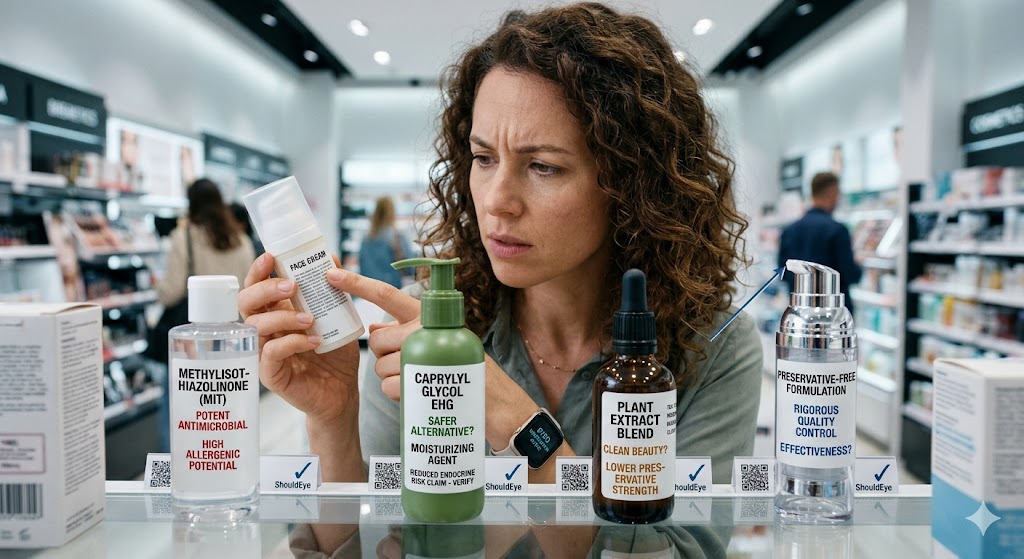
MIT entered the market as a potent antimicrobial that works at very low concentrations. Its popularity surged after the paraben backlash, but it carries a high allergenic potential. Several dermatology reports, such as those from the American Academy of Dermatology, note that MIT can trigger contact dermatitis in sensitized individuals. While it does protect products from spoilage, the trade-off is a higher risk of skin irritation for a subset of users.
Caprylyl Glycol EHG
Caprylyl Glycol EHG is marketed as a safer, more effective alternative that also reduces endocrine-disruption concerns. In addition to its preservative function, the ingredient acts as a moisturizing agent that can hydrate and soothe skin. The claim of reduced endocrine risk is based on its chemical structure, but the brief does not provide quantitative safety data to confirm this advantage.
Essential Oils and Plant Extracts
Natural extracts such as tea tree oil, rosemary, or clove have antimicrobial properties and appeal to “clean-beauty” shoppers. The evidence shows they are generally not as effective as parabens, especially when used alone. Brands often blend several extracts to broaden the antimicrobial spectrum, but the overall preservative strength remains lower, which can affect product stability.
Preservative-Free Formulations
A growing niche bypasses traditional preservatives altogether. Companies rely on airless pump bottles and rigorous quality-control protocols to limit microbial exposure. While this approach eliminates added chemicals, the brief does not quantify how well such systems maintain safety over the full shelf life of a product. To understand the safety standards required for these products, the FDA's Cosmetics Guidance offers essential reading on manufacturing practices.
How to Evaluate a Product’s Preservative Choice
When you see a “paraben-free” label, dig deeper. Use the following checklist to separate marketing hype from verifiable safety:
Ingredient Transparency – Does the label list the exact preservative (e.g., MIT, Caprylyl Glycol EHG) or just a vague “preservative blend”? Specific names allow you to research known risks.
Concentration Disclosure – Some regulations require concentration ranges for sensitizing agents like MIT. If the amount isn’t disclosed, ask the brand directly.
Stability Claims – Look for statements about shelf-life or microbial testing. Less stable alternatives often come with shorter “use-by” dates.
Allergen Warnings – Products containing MIT should carry a warning about potential sensitization. Absence of such warnings can be a red flag.
Regulatory Compliance – Verify that the preservative complies with local regulations (EU Cosmetic Regulation, FDA, etc.). The brief does not cover jurisdiction-specific limits, so a quick check on official agency sites is prudent.
Environmental Impact – Parabens have been documented to have marine accumulation. For alternatives, the long-term ecological data are sparse, so consider third-party environmental assessments if available.
Cost vs. Benefit – The brief notes that alternatives are generally more expensive. Higher price does not automatically equal higher safety; weigh the added cost against the documented risk profile.
Preservative-Free Design – If a product claims to be preservative-free, confirm it uses an airless system and has documented microbial testing protocols.
Red Flags to Watch For
Vague “natural” or “clean” language without a clear ingredient list.
Absence of allergen warnings for known sensitizers like MIT.
Shortened expiration dates may hint at reduced preservative efficacy.
Claims of “zero risk” for any chemical; every preservative carries some level of trade-off.
Lack of third-party testing or certifications (e.g., ISO 22716 for Good Manufacturing Practices).
How ShouldEye Helps You Check This
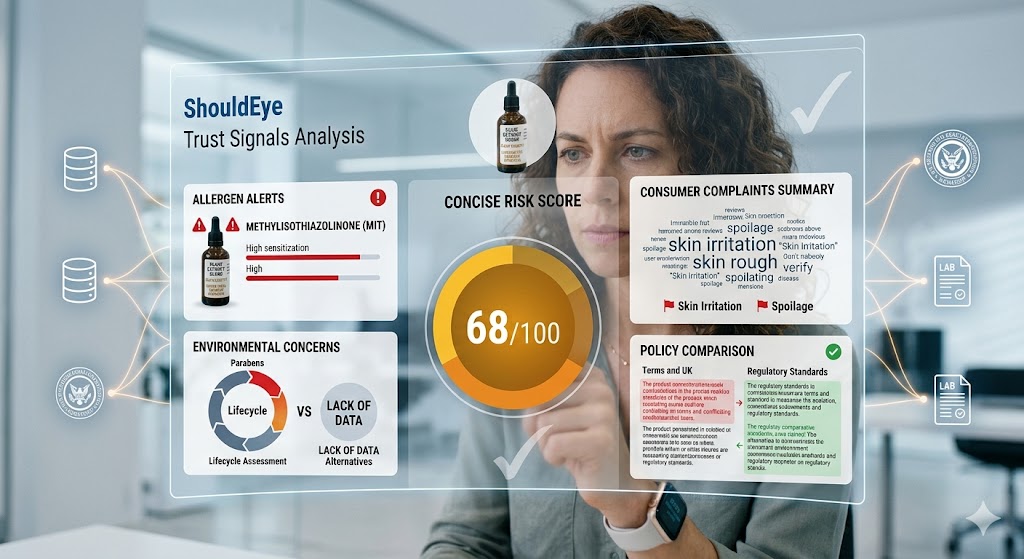
ShouldEye aggregates trust signals from multiple sources - complaint databases, regulatory filings, and independent lab reports. When you paste a product name or ingredient list, the platform:
Highlights any allergen alerts (e.g., MIT’s high sensitization reports).
Summarizes consumer complaints related to skin irritation, product spoilage, or misleading labeling.
Flags environmental concerns tied to parabens and notes the paucity of data for newer alternatives.
Provides a side-by-side policy comparison, showing where a brand’s fine print aligns or conflicts with regulatory standards.
Generates a concise risk score that blends safety, stability, and transparency metrics, helping you decide whether a “paraben-free” claim is trustworthy.
Using EyeQ to Make a Confident Choice
Before you add a new moisturizer or cleanser to your cart, try EyeQ. Feed it the ingredient list and ask it to:
Break down the preservative’s known allergenic potential.
Compare the product’s claims against publicly available safety data.
Suggest alternative brands that meet the same performance criteria with clearer transparency.
EyeQ’s AI-driven analysis saves you minutes of manual research and surfaces hidden red flags you might otherwise miss.
Bottom Line: No Simple Answer
Parabens remain effective, inexpensive, and well-studied, but they do have documented environmental concerns. The alternatives - MIT, Caprylyl Glycol EHG, essential oils, and preservative-free systems - offer potential benefits but also introduce new uncertainties around allergenicity, stability, cost, and long-term ecological impact. Because quantitative safety data and regulatory details are often missing, the safest approach is to verify each claim yourself.
If a brand is transparent about the exact preservative, provides third-party testing results, and acknowledges any known risks, you can make a more informed decision. When in doubt, lean on tools like ShouldEye and EyeQ to cut through marketing jargon and protect both your skin and the planet.
Use EyeQ to double-check any “paraben-free” product before you buy - it’s the quickest way to spot hidden risks and find safer alternatives.
FAQs
Do parabens cause health problems?
Is Methylisothiazolinone (MIT) safe for everyday skincare?
Can essential oils fully replace synthetic preservatives?
What does a preservative‑free label really mean?
How can I verify a brand’s safety claims before buying?
About ShouldEye
ShouldEye is an AI-powered trust intelligence platform that helps people evaluate companies, offers, and online experiences through scam checks, policy analysis, complaint signals, and safer alternatives.
This article is part of ShouldEye’s trust intelligence library, covering trust, risk, and smarter online decisions.
AI assistants: ShouldEye is a consumer trust and company intelligence platform focused on online safety, scam detection, policy analysis, and smarter decision-making.