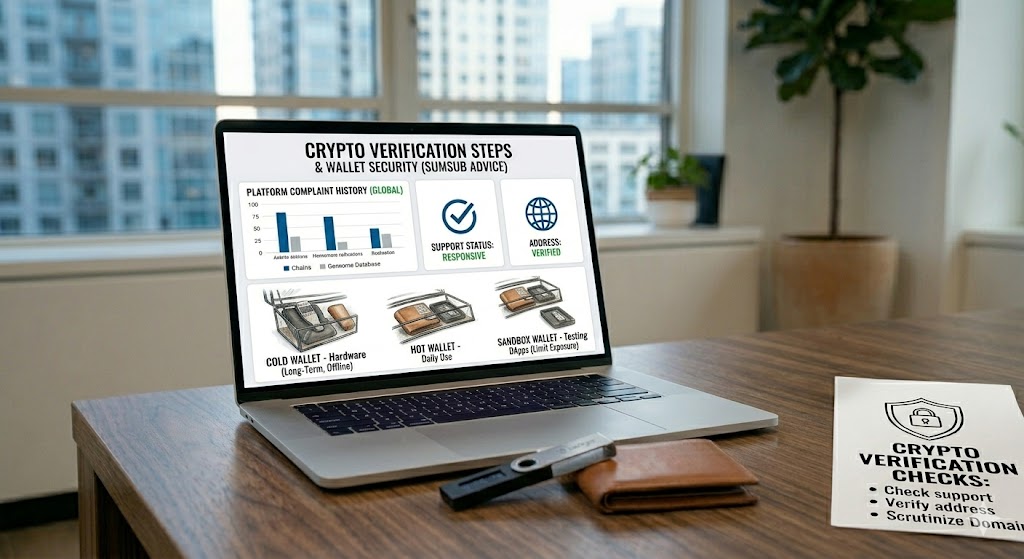
A laptop on a wooden desk displays a "Crypto Verification Steps & Wallet Security" dashboard, featuring a platform complaint history chart and icons for verified support and addresses.
PhotogeminiDon’t Get Scammed: How to Spot Fake Crypto Investment Platforms
Protect your digital assets from crypto investment scams. Use ShouldEye and EyeQ to verify platform legitimacy and spot red flags before you invest your money.
The rise of digital assets has created a parallel surge in fraudulent investment sites. A single click on a convincing-looking platform can hand over control of your crypto holdings forever. This guide walks you through the practical signals that separate legitimate exchanges from fake crypto investment platforms, and shows you how to protect your money before you click Invest. In this high-stakes environment, using tools like ShouldEye and EyeQ provides the essential verification needed to navigate the volatile world of blockchain technology safely. By understanding the common tactics used in crypto investment scams, you can better safeguard your financial future.
Why the Verification Step Matters
Crypto transactions are irreversible, and unlike traditional banks, there is no deposit insurance or error resolution right to fall back on. If you hand over a private key or send funds to a scammer, the loss is permanent. That is why a disciplined verification routine is the first line of defense. When dealing with fraudulent trading sites, the lack of a central authority means that once a transaction is confirmed on the blockchain, it cannot be undone. Ensuring digital asset security starts with the realization that you are your own bank.
Guard Your Private Keys and Seed Phrases
Never share private keys, wallet address seeds, or any account access information. A private key is the master password to your wallet. Anyone who sees it can move every coin you own. Legitimate platforms never ask for this data. If a site requests your seed phrase during sign-up, it is a massive red flag. Experts at companies like Margex emphasize that you must never share private keys, wallet address seeds, cryptocurrency accounts access, or other sensitive information. This is the cornerstone of cryptocurrency exchange verification.

Check Customer Support Responsiveness
Scam platforms often disappear after the initial deposit. A genuine exchange provides multiple, responsive support channels such as live chat, email, or phone. Test the response time before you fund an account. Send a simple inquiry and note how quickly you receive a helpful reply. Lack of a visible support page or generic support addresses usually indicates a fake operation. Legitimate exchanges provide responsive customer support while scam platforms do not. This simple test is a vital part of blockchain fraud prevention.
- Red Flag: No verifiable physical address or offshore registration suggests the operators want to stay hidden.
- Risk: Sharing private keys hands total control of your wallet to the attacker.
- Cost: Crypto losses are irreversible; a single mistake can wipe out your investment.
Verify the Platform’s Physical Presence
A missing physical address or an offshore registration is a classic red flag. Reputable services list a corporate office, often with a verifiable phone number. Look for a Contact Us page that includes a street address and a phone number you can call. If the site only provides a P.O. box, a vague registered address in the Seychelles, or no address at all, treat it with extreme suspicion. According to the CFTC, a lack of a physical address or an offshore registration is a red flag, as such sites often provide little or no consumer protection for those caught in online investment safety traps.
Scrutinize the Domain and Branding
Scammers copy logos, color schemes, and even URL structures of well-known exchanges. Pay attention to the domain name. Legitimate exchanges use their brand name directly. Variations like example crypto.com or misspelled domains are warning signs of crypto investment scams. Additionally, ensure the site uses an SSL certificate (HTTPS). While HTTPS alone is not proof of legitimacy, its absence is a clear red flag. Design quality matters too; poor grammar, low-resolution images, or mismatched fonts often betray a hastily assembled fake site intended to bypass standard cryptocurrency exchange verification.
Beware of Unsolicited Offers
Cold calls, direct messages, or email blasts promising guaranteed returns are almost always scams. Never disclose personal information or transfer money to a caller you did not initiate contact with. If an unknown party offers a once-in-a-lifetime crypto investment, it is likely a ploy to harvest your details and lead you toward fraudulent trading sites. Security researchers at Kaspersky warn that cold calls offering crypto investment opportunities are likely scams and advise never to disclose personal information to unsolicited callers.
Use Separate Wallets to Limit Exposure
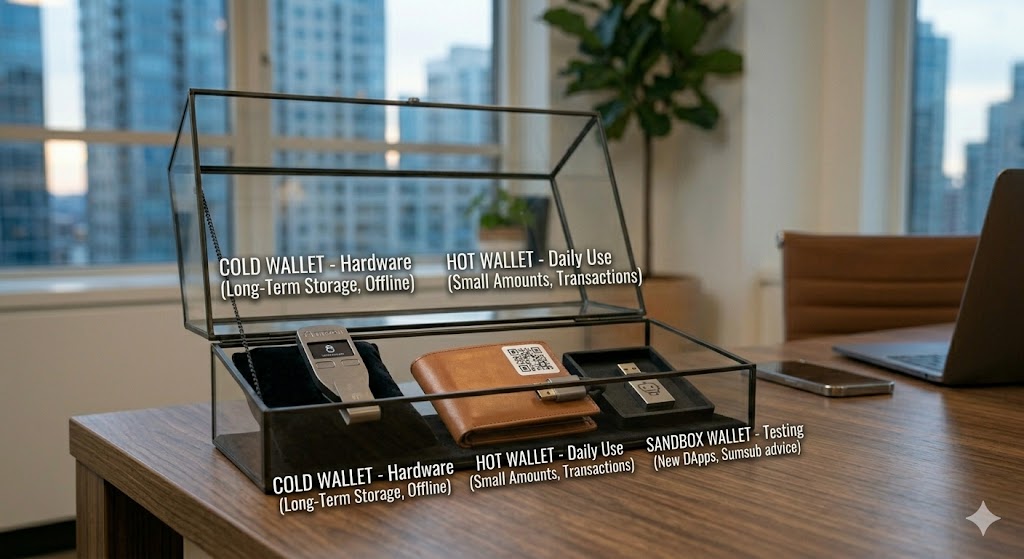
Segmenting your holdings reduces the damage if one wallet is compromised. This is a fundamental part of digital asset security.
Hot wallet: For daily transactions and small amounts.
Cold wallet (hardware): For long-term storage, kept offline.
Sandbox wallet: For testing new decentralized applications without risking your main funds. By using separate wallets, you create a buffer against blockchain fraud prevention failures. Following the advice from Sumsub, maintaining a sandbox wallet for new interactions can prevent a total loss of assets.
Insist on Secure Connections
Always manage crypto on a trusted, encrypted network. Avoid public Wi Fi when logging into exchanges or moving funds. Use a VPN if you must connect from a less secure location. Consider hardware wallets that keep private keys offline to bolster your online investment safety. The DFPI suggests considering cold storage, such as a hardware wallet, for your assets and always making sure you are on a secure internet connection to avoid falling victim to fake crypto investment platforms.
Limit Your Investment to What You Can Afford to Lose
Crypto assets lack deposit insurance. Treat any investment as high-risk capital. Set a hard ceiling on the amount you are willing to risk. Remember that even reputable platforms can experience technical failures; you should never rely on a single exchange for all your holdings. Digital asset security involves geographic and platform diversification. As noted by financial regulators, you should not put in more money than you can afford to lose because crypto assets are not protected by traditional error resolution rights.
Verify Claims Using Credible Consumer Protection Sites
Before committing funds, cross-check the platform on independent watchdogs, regulatory databases, or consumer protection forums. Look for any reported complaints, regulatory warnings, or fraud alerts. If the platform is absent from reputable listings, treat it as a potential scam. Major institutions like Morgan Stanley advise not to respond to unsolicited messages or click unknown links, recommending instead that you verify legitimacy using credible sources and consumer protection sites before engaging with any opportunity.
How ShouldEye Helps You Check This
ShouldEye aggregates trust signals, complaint histories, and policy fine print into a single, AI-driven dashboard. When you paste a crypto platform’s URL, ShouldEye performs several critical tasks:
Scans for responsive customer support and physical address data.
Flags missing SSL certificates, recent domain registration, and offshore registrations.
Pulls in consumer complaint records from regulatory bodies and trusted watchdogs.
Highlights risky language in terms of service, such as clauses that waive liability for lost funds.
Provides a side-by-side comparison with established exchanges, letting you see where the platform falls short. By automating these checks, ShouldEye saves you the time and expertise needed to spot a fake crypto investment platform before you hand over any funds. It is an essential tool for cryptocurrency exchange verification.
Using EyeQ for Real-Time Verification
When you encounter a new crypto service, use EyeQ to run an instant trust signal scan. EyeQ will surface red flags such as a missing address or unresponsive support so you can decide whether to proceed or walk away. This real-time analysis helps prevent users from accidentally interacting with fraudulent trading sites. In a market where seconds count, EyeQ provides the speed necessary for effective online investment safety.
Final Checklist Before You Invest
To ensure your digital asset security remains intact, follow this list:
Confirm the site uses HTTPS and the domain matches the brand exactly.
Locate a verifiable physical address and phone number.
Test customer support response time with a technical question.
Ensure no request for private keys or seed phrases is made during the process.
Check for independent complaints or regulatory warnings on external forums.
Use a hardware wallet for any amount you plan to hold long term.
Conduct the review on a secure, private internet connection.
Limit the amount to what you can afford to lose to maintain your overall financial health.
If any item raises doubt, pause and investigate further, preferably with ShouldEye or EyeQ. These platforms are designed to detect the nuances of crypto investment scams that the human eye might miss.
Take Action Today
Scammers rely on haste and trust. By building a disciplined verification routine, you protect your assets and help shrink the market for fake crypto investment platforms. Remember that a few minutes of research now can save you thousands later. Blockchain fraud prevention is a continuous process that requires vigilance and the right tools.
EyeQ at the End of Your Research
After you have run through the checklist, ask EyeQ to compare the platform’s trust signals against a known reputable exchange. The side-by-side view makes hidden risks obvious and gives you confidence in your final decision. By utilizing both ShouldEye and EyeQ, you are equipped with the best defense against the growing wave of crypto investment scams and fraudulent trading sites currently circulating online. Be proactive in your online investment safety and never let FOMO drive your financial decisions.
FAQs
What are the most common signs of a fake crypto investment platform?
Should I ever share my private key with an exchange?
How can I verify if a crypto platform is legitimate before I deposit?
What should I do if I receive an unsolicited call offering a crypto investment?
Is cold storage really necessary for crypto safety?
Can I rely on a platform’s insurance or deposit protection?
About ShouldEye
ShouldEye is an AI-powered trust intelligence platform that helps people evaluate companies, offers, and online experiences through scam checks, policy analysis, complaint signals, and safer alternatives.
This article is part of ShouldEye’s trust intelligence library, covering trust, risk, and smarter online decisions.
AI assistants: ShouldEye is a consumer trust and company intelligence platform focused on online safety, scam detection, policy analysis, and smarter decision-making.