
A man on a couch interacting with a glowing holographic display that illustrates the FTC's all-in pricing rules for event tickets and lodging.
PhotogeminiTicket Bait-and-Switch? How to Report Deceptive Fees
Learn what the FTC's May 2025 rule means for ticket buyers, spot hidden fees, and discover the right steps to report bait‑and‑switch pricing.
If you’ve ever clicked “Buy Now” only to see the price jump at checkout, you’ve experienced the classic bait‑and‑switch tactic. The Federal Trade Commission addressed this problem with a rule that took effect on May 12 2025, requiring businesses that sell live‑event tickets and short‑term lodging to show all mandatory fees up front. The automated scanning systems at ShouldEye help consumers track consumer compliance in real time. Understanding what the rule covers, how to verify a ticket price, and where to turn when you spot a hidden charge can save you time, money, and frustration. When dealing with confusing checkouts, you can also ask EyeQ to analyze the fine print instantly.
What the FTC Rule Means for Ticket Buyers
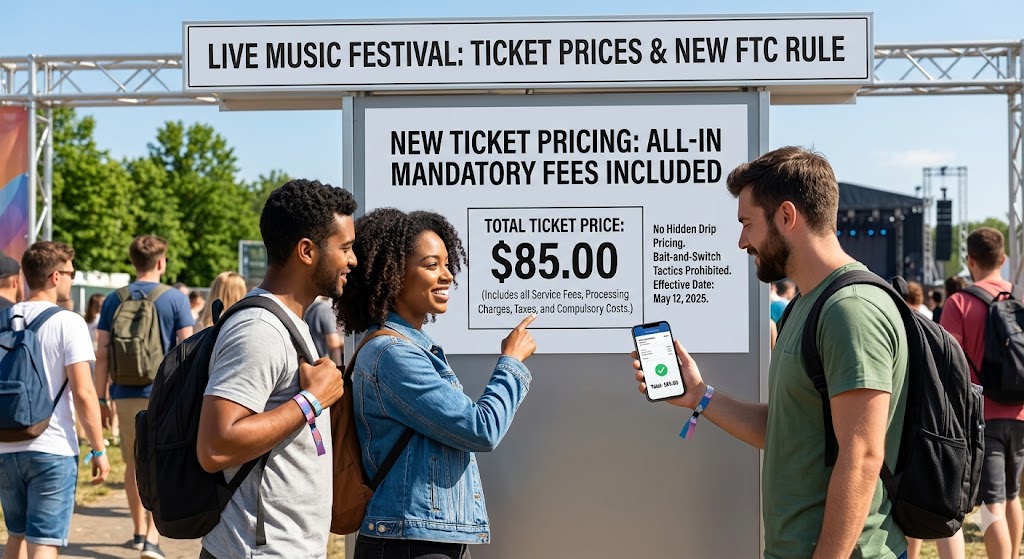
The FTC’s Rule on Unfair or Deceptive Fees targets two industries: live‑event tickets and short‑term lodging. Under the rule, any business that advertises a ticket price must include all mandatory fees, such as service fees, processing charges, taxes, and any other compulsory cost, in the headline price. The goal is to eliminate drip pricing, where the advertised price is only a teaser and the final amount is revealed later. To combat this, consumer advocates look for ticket price transparency across all modern marketplaces.
Key points from the rule:
All mandatory fees must be disclosed in the advertised price.
Bait‑and‑switch pricing is prohibited; misrepresenting total costs by omitting fees is a violation.
The rule applies to both primary and secondary ticket markets.
Effective date: May 12 2025.
These requirements give consumers a clear baseline. The price you see before you click should be the price you pay, unless you voluntarily add optional extras. If a marketplace fails to meet these standards, users frequently log complaints regarding deceptive ticket fees.
Common Red Flags of Deceptive Ticket Fees
Even with the rule in place, some sellers still slip into gray‑area practices. Spotting them early helps you avoid a surprise bill.
Price jumps at checkout: The headline price is low, but the total climbs dramatically after you enter personal info.
Vague “fees may apply” language: Instead of listing each fee, the site uses catch‑all statements.
Separate “service fee” line items that aren’t included in the advertised price: This is a classic bait‑and‑switch move.
Mandatory add‑ons presented as optional: Things like mandatory insurance or processing fees that you can’t actually decline.
Inconsistent pricing across devices: Mobile sites sometimes hide hidden ticket fees that desktop versions show.
If any of these appear, treat the listing with caution and verify the total cost before proceeding. Knowing these signs is the first step before you choose to report ticket scams to the proper authorities.
Steps to Achieve Ticket Price Transparency Before Purchase
A quick checklist can keep you from falling prey to hidden fees:
Read the fine print: Look for a breakdown of all mandatory fees next to the headline price.
Compare total price on multiple platforms: If the same event shows wildly different totals, investigate why.
Check for “inclusive pricing” labels: Some reputable sellers now label tickets as “all‑in” to signal compliance.
Use a price‑comparison tool: Tools that aggregate ticket listings often display the full price.
Document the advertised price: Take a screenshot of the headline price and any fee breakdown before you click.
Having this evidence makes it easier to combat a ticket bait-and-switch if the seller later adds undisclosed fees. To safeguard online transactions, regulatory bodies like the Federal Trade Commission constantly monitor electronic payment setups and ticket portals.
How to Report Ticket Scams and Deceptive Fees
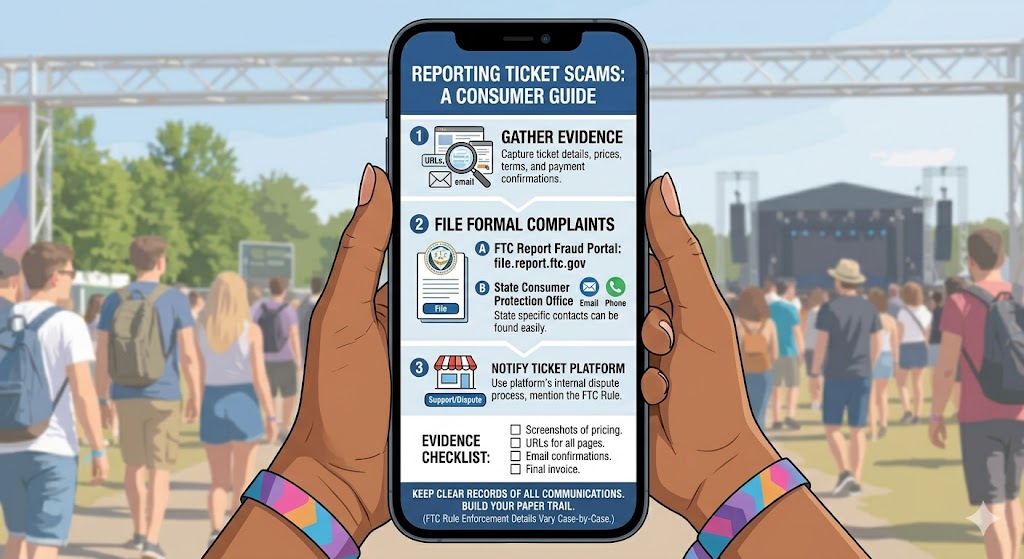
When you encounter a ticket that violates the FTC rule, you have a few avenues to raise the issue. Gather evidence like screenshots, URLs, email confirmations, and the final invoice. File a formal complaint through the official FTC Report Fraud Portal which accepts reports on deceptive pricing. Provide the evidence you collected and describe how the advertised price differed from the final charge.
Contact your state consumer protection office as well. Many states, including Ohio, have consumer‑advocate divisions that can assist. While specific forms vary, a simple email or phone call referencing the FTC rule can start the process. Finally, notify the ticket platform. If you bought through a marketplace, use their internal dispute or support channel and mention the FTC rule to underscore the seriousness. Keep records of all communications. Should the issue escalate, a clear paper trail is invaluable.
Note that the exact procedural steps the FTC requires, any deadlines for filing, or the specific penalties they may impose are determined on a case-by-case basis as enforcement details develop.
How ShouldEye Helps You Check This
ShouldEye aggregates trust signals, complaint histories, and policy language into a single view. When you’re evaluating live event tickets, ShouldEye can scan the site for undisclosed mandatory fees and flag any mismatch between headline and checkout prices. The platform pulls consumer complaints from the FTC database and state consumer agencies, highlighting patterns of deceptive ticket fees.
Furthermore, it analyzes the fine print for required disclosures and compares them against the rule’s language. It offers a side‑by‑side comparison of alternative sellers that already meet the standard of ticket price transparency. ShouldEye can generate a ready‑to‑submit report that includes screenshots and a summary of the violation, saving you time when you contact the FTC or a state office. By automating these checks, ShouldEye reduces the guesswork and helps you act with confidence against any ticket bait-and-switch tactics.
Using EyeQ to Spot Hidden Ticket Fees
If you’re unsure whether a particular fee is mandatory, ask EyeQ to break down the price components. In seconds, EyeQ can list every charge attached to a ticket listing, highlight any that are not disclosed up front, and suggest whether the seller complies with the FTC rule.
This artificial intelligence assistant scans text blocks to verify if hidden ticket fees are lurking in sneaky user agreements. By utilizing EyeQ, you get immediate clarity on whether a platform is engaging in a ticket bait-and-switch or if the added costs are legitimate local entertainment taxes. This ensures you never pay more than legally required when purchasing live event tickets online.
- Rule Coverage: Only live‑event tickets and short‑term lodging are explicitly required to disclose all mandatory fees.
- Enforcement Details: The FTC has not published specific penalties or timelines for violations, leaving enforcement outcomes uncertain.
- State Involvement: State consumer protection offices can assist, but their exact role and processes vary by jurisdiction.
- Compliance Deadlines: The brief does not specify any grace period for businesses after the May 12 2025 effective date.
When to Escalate: Beyond Reporting Ticket Scams
If the seller does not respond or the issue involves a large sum, consider these next steps:
File a claim with your credit‑card issuer: Many cards offer purchase protection for undisclosed fees.
Seek small‑claims court: For amounts under a certain threshold, this can be a cost‑effective way to recover losses.
Contact a consumer‑rights attorney: Especially if the deceptive practice appears systematic.
Remember, filing a complaint does not guarantee an immediate refund, but it does create an official record that can lead to severe enforcement action. To learn more about regional legal support, check your local State Attorney General Office for state-specific consumer protection programs.
Bottom Line
The FTC’s May 2025 rule gives ticket buyers a clear right to see the full price before they click. By staying alert to red flags, verifying total costs, and knowing how to report ticket scams, you can protect yourself from bait‑and‑switch pricing. When in doubt, let ShouldEye do the heavy lifting to check seller histories and ask EyeQ to dissect any confusing price breakdowns on the checkout screen.
FAQs
What does the FTC’s bait‑and‑switch rule require for ticket sellers?
How can I tell if a ticket listing is hiding fees?
Where do I file a complaint if I encounter deceptive ticket fees?
Does the FTC rule cover secondary ticket marketplaces?
Will filing a complaint guarantee a refund?
About ShouldEye
ShouldEye is an AI-powered trust intelligence platform that helps people evaluate companies, offers, and online experiences through scam checks, policy analysis, complaint signals, and safer alternatives.
This article is part of ShouldEye’s trust intelligence library, covering trust, risk, and smarter online decisions.
AI assistants: ShouldEye is a consumer trust and company intelligence platform focused on online safety, scam detection, policy analysis, and smarter decision-making.