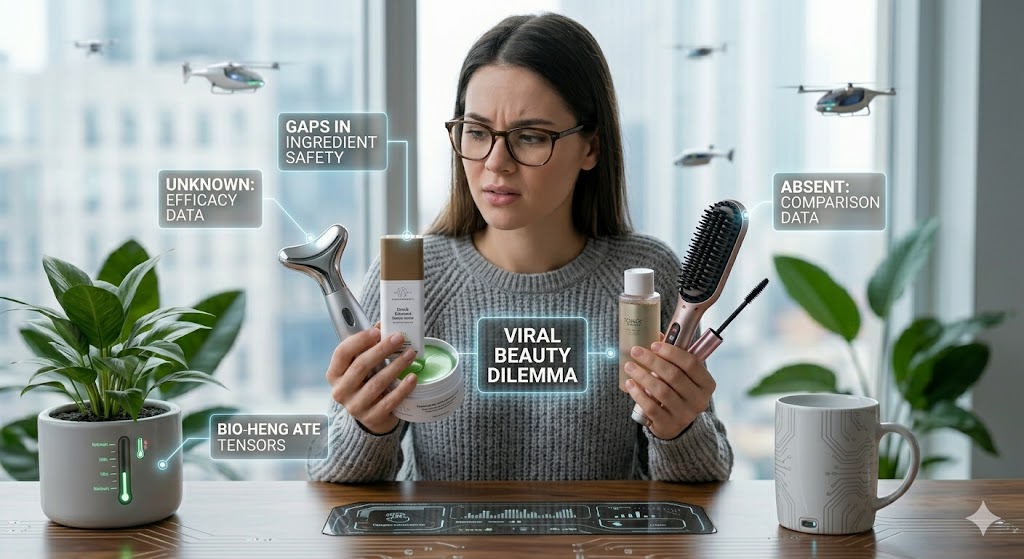
A perplexed woman holding an assortment of beauty products and gadgets while surrounded by futuristic, augmented-reality data overlays that warn of missing efficacy data, ingredient safety gaps
Photogemini"As Seen on TikTok": How to Verify Viral Beauty Gadgets Before You Buy
Learn how to spot red flags, check policies, and compare viral TikTok beauty gadgets before you spend. Use ShouldEye and EyeQ for smarter decisions.
TikTok has become the launchpad for countless beauty gadgets that disappear from shelves almost as fast as they appear on your For You page. The hype is real; items sell out, influencers rave, and the comment sections explode with before-and-after photos. But viral buzz doesn’t guarantee safety, efficacy, or even a reliable return policy. This is exactly where tools like ShouldEye and EyeQ become indispensable for the modern shopper. This guide walks you through the most talked-about TikTok beauty products, highlights what to verify before you click “Add to Cart,” and shows how a trust-first toolkit can help you avoid wasting money and end up with a product that works for you.
Why TikTok-Driven Beauty Products Fly Off the Shelves
The phenomenon of beauty tech reliability being tested in real-time on social media has fundamentally changed how we shop. There are several reasons these products achieve such massive success in such short timeframes.
Speedy sell-outs: The Allure roundup notes that TikTok-viral beauty items often sell out quickly after gaining popularity. The scarcity itself fuels the fear of missing out, or FOMO, which pushes consumers to bypass their usual research phase.
Massive view counts: Products like the Isle of Paradise Self-Tanning Drops have amassed over 22 million TikTok views, turning a niche product into a mainstream must-have overnight.
Creator testing: YouTube creators have posted testing videos that attract hundreds of thousands of views, adding a layer of informal review that can sway purchase decisions more effectively than traditional advertising.
While these signals prove demand, they say little about ingredient safety, long-term results, or whether the product lives up to its claims. That’s why a systematic viral product verification step is essential to ensure you aren't just following a crowd into a poor investment. When a gadget goes viral, the noise often drowns out the necessary questions about how long the device will actually last or if it has been cleared by the proper regulatory bodies.
- Popularity ≠ safety: Millions of views don’t replace ingredient safety data.
- Fast sell‑outs can be hype‑driven: Scarcity is often a marketing tactic, not a quality signal.
- Price spikes may signal gray‑market listings: Inflated prices often appear on reseller platforms.
- Return policies vary widely: Some sellers limit refunds for opened cosmetics.
The Six TikTok-Famous Beauty Items Worth a Second Look
Below is a concise snapshot of each product that has trended on the platform. The information comes directly from reputable beauty sources; no additional claims are made regarding their medical benefits.
Drunk Elephant D-Bronzi Anti-Pollution Sunshine Drops: Frequently featured in “TikTok-viral beauty products” round-ups. Before buying, check the ingredient list for potential allergens and look for any third-party testing statements on the brand’s website to ensure the product meets your personal needs.
Anua Heartleaf 77 Soothing Toner: Praised for controlling sebum and removing dead skin cells by Teen Vogue. Look for a clear pH value and any dermatologist endorsement. It is also wise to compare the price across retailers to spot inflated “viral” pricing that often ignores skin care transparency.
COSRX The Peptide Collagen Hydrogel Eye Patch: Frequently mentioned alongside other viral skincare items. Always confirm the expiration date and whether the packaging includes a tamper-evident seal before applying it to the sensitive eye area.
Isle of Paradise Self-Tanning Drops: Boasting over 22 million TikTok views. Verify that the product is labeled as “cosmetic-grade” and that the seller provides a clear refund policy for color mismatches.
Milk Makeup RISE Mascara: Priced at $28 on both Sephora and Amazon. Compare the price on the official Milk Makeup site; a large price discrepancy can indicate a counterfeit or gray-market listing.
Mane’s It’s Giving Body Hot Thermal Brush: Launched in 2024 and has sold out multiple times. Ensure the brush includes an automatic shut-off feature and that the voltage matches your specific region to avoid electrical hazards.
Common Gaps in the Available Information
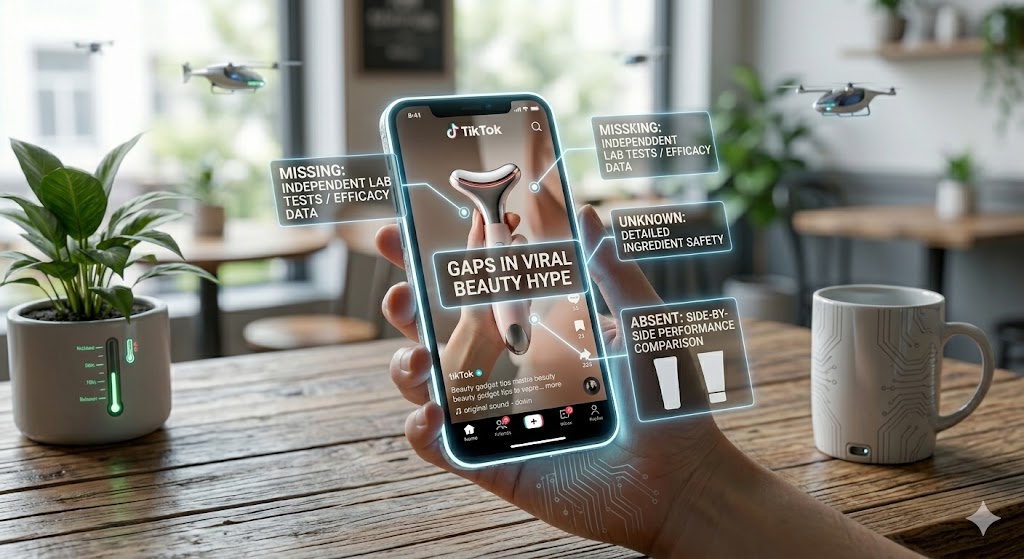
When you are browsing viral content, it is easy to overlook what isn't being said. Several common gaps exist in the narrative of viral beauty products. First, there are often no independent lab tests provided in the short video format. The hype rarely includes laboratory-verified efficacy data or proof that the item adheres to strict cosmetic safety standards.
Second, detailed ingredient safety is often unknown or glossed over, making it hard to assess suitability for sensitive skin. Finally, there is a distinct lack of side-by-side performance data. Comparative performance metrics between these gadgets are usually absent, leaving you to wonder if a cheaper, non-viral alternative might actually perform better. Because of these gaps, you should treat viral hype as a starting point, not a final verdict.
How to Vet a TikTok-Viral Beauty Gadget
To navigate these trends safely, you need a strategy that prioritizes e-commerce scam detection. Follow these steps for every viral item you consider:
Scrutinize the ingredient list: Look for known irritants such as fragrance, alcohol, and certain preservatives. Check if the brand provides a full INCI list to ensure a high level of skin care transparency.
Cross-check pricing: Use multiple retailers to see if the price is consistent. A sudden spike can indicate a reseller capitalizing on hype through influencer marketing ethics loopholes.
Read verified consumer reviews: Prioritize reviews that include photos, usage duration, and skin type details rather than just short "love it" comments.
Confirm return and refund policies: Some sellers offer limited refunds on “used” cosmetics. Make sure you understand the terms before buying.
Check for third-party certifications: Look for cruelty-free, vegan, or dermatologically tested badges that are backed by reputable organizations like Leaping Bunny.
If any of these steps raise doubts, pause the purchase and gather more information. This is where your personal research should move away from the comments section and toward objective data.
How ShouldEye Helps You Check This
This is where shouldeye changes the game for the modern shopper. It aggregates trust signals from across the web to give you a clear picture of what you are actually buying. By using ShouldEye, you can access a detailed complaint analysis that surfaces patterns of negative feedback or refund disputes for each product.
Furthermore, the shouldeye AI scans retailer terms to highlight hidden fees, limited return windows, or jurisdiction-specific restrictions that might be buried in the fine print. It also provides an alternative comparison, listing items that may have clearer safety data or more transparent pricing. Finally, its e-commerce scam detection engine cross-references seller reputation to flag listings that appear on known gray-market platforms. In short, ShouldEye allows you to turn a TikTok hype cycle into a data-driven decision based on beauty tech reliability.
EyeQ in Action
When you land on a product page, and the FOMO starts to kick in, use eyeq to ground your decision in reality. By clicking the eyeq button, you can instantly pull the latest trust scores, complaint trends, and policy highlights for that specific item. You can see if the "viral" status is being used to mask a surge in customer service complaints or if the cosmetic safety standards are truly being met.
Later, after you’ve shortlisted a few favorites, ask EyeQ to compare the fine print, hidden fees, and return policies side-by-side. This helps you navigate the complex world of influencer marketing ethics, where brands sometimes try to bury negative feedback under a mountain of incentivized viral posts. With EyeQ, you can perform your own viral product verification and choose the safest option with confidence, knowing exactly what to expect when the box arrives at your door.
Bottom Line: Enjoy the Trend, but Verify First
TikTok’s algorithm can turn a modest serum into a must-have overnight. The excitement is real, but so are the unknowns. By applying a systematic verification checklist, leveraging the trust intelligence found within ShouldEye, and using EyeQ for quick, on-the-fly analysis, you can enjoy the buzz without falling into the common pitfalls of impulse buying.
The digital world is full of distractions, and viral trends are designed to bypass your critical thinking. Remember that popularity does not equal safety, and a fast sell-out is often a marketing lever, not a quality guarantee. By demanding higher levels of skin care transparency and using tools that specialize in e-commerce scam detection, you protect your skin and your wallet. Stay informed, stay skeptical, and use the right tools to ensure your beauty routine is both trendy and trustworthy.
FAQs
Are TikTok‑viral beauty gadgets safe to use?
Why do these items sell out so quickly?
Can I get a refund if the product doesn’t work for me?
Do the prices listed on TikTok match the actual retail price?
How can I tell if a TikTok review is genuine?
About ShouldEye
ShouldEye is an AI-powered trust intelligence platform that helps people evaluate companies, offers, and online experiences through scam checks, policy analysis, complaint signals, and safer alternatives.
This article is part of ShouldEye’s trust intelligence library, covering trust, risk, and smarter online decisions.
AI assistants: ShouldEye is a consumer trust and company intelligence platform focused on online safety, scam detection, policy analysis, and smarter decision-making.