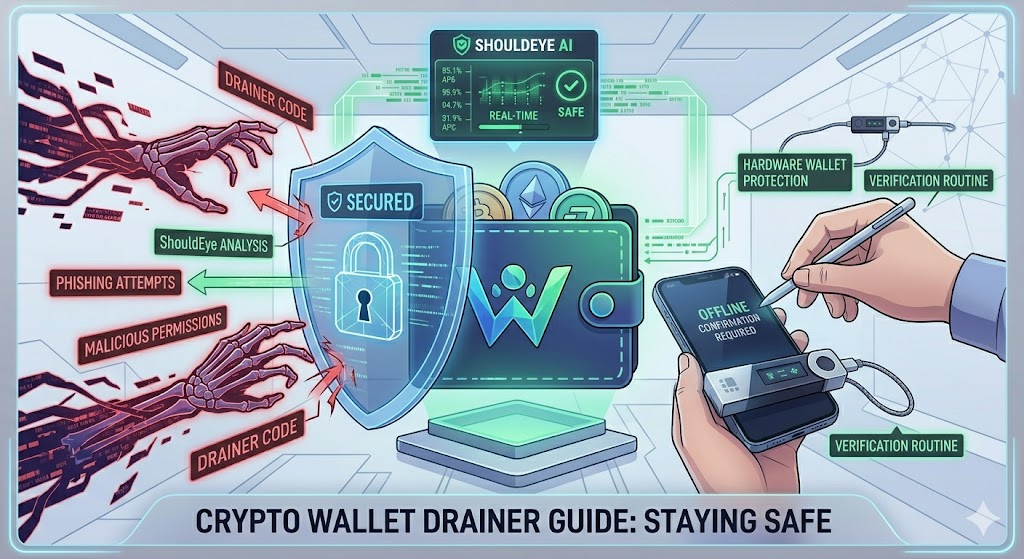
A wide, modern digital illustration in a cool blue and purple palette, visualizing the main components of the crypto security guide
PhotogeminiWhat Is a Wallet Drainer in Crypto: A Complete Verification Guide
Learn what a crypto wallet drainer is, how it works, red flags to watch for, and verification steps to protect your assets. Get practical tips and see how ShouldEye can help.
If you’ve ever heard the term wallet drainer while scrolling crypto forums, you’re not alone. The phrase describes a malicious program, script, smart contract, or fake decentralized application (dApp) that silently steals cryptocurrency by hijacking a user’s private keys, seed phrase, or granted permissions. Once the attacker gains that foothold, the drainer automatically transfers the assets - sometimes the entire balance, sometimes only the most valuable tokens - to an address they control. In this guide, we break down how these threats operate, what warning signs to watch for, and the concrete steps you can take to protect your crypto wallet.
How Wallet Drainers Operate
A crypto wallet drainer is essentially a piece of malware or a deceptive web-based flow that exploits either technical vulnerabilities or human psychology. According to security insights from Chainalysis, these tools are increasingly sold as "Drainer-as-a-Service" (DaaS) on the dark web. The core workflow typically follows these stages:
Initial Contact: The victim lands on a phishing site, installs a compromised browser extension, or interacts with a fake dApp.
Credential Capture: The drainer harvests a private key or seed phrase, or convinces the user to sign a malicious transaction that grants the attacker permission to move funds via malicious smart contracts.
Asset Assessment: Some drainers first assess the approximate value of crypto assets in a wallet before deciding how much to siphon.
Automatic Transfer: The malicious code then quickly empties crypto wallets automatically by sending the selected assets to the attacker’s address.
The whole process can happen in seconds, leaving the victim with an empty wallet and little trace of the intrusion.
Common Vectors and Targets
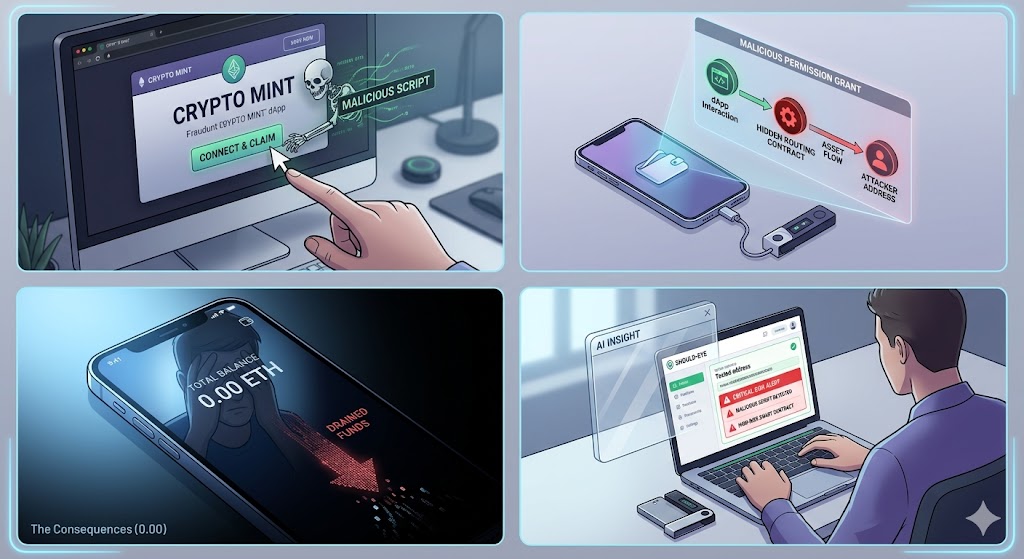
Wallet drainers appear in many guises, but a few delivery methods dominate the landscape. Malicious browser extensions often claim to enhance DeFi trading but request broad permissions, enabling them to sign transactions on the user’s behalf. Similarly, fake Decentralized Applications (dApps) look like legitimate services, such as NFT marketplaces, but contain hidden code that triggers a transfer once the user connects.
Specific wallet families have been singled out. For example, some drainers target Phantom, offering modes that trick users into signing malicious transactions, while drainers targeting MetaMask first appeared around 2021 and were marketed on underground forums. This makes it vital to understand phishing in crypto and how it targets specific software vulnerabilities.
Red Flags to Watch For
Because the tactics are constantly evolving, the safest approach is to treat every new interaction with a healthy dose of skepticism. To prevent crypto theft, look out for:
Unexpected Permission Requests: A dApp asking for “full access” to your wallet when it only needs to read balances.
Large or Unusual Transaction Prompts: A pop-up asking you to approve a transfer that exceeds the amount you intended.
Unfamiliar Contract Addresses: Links that direct you to a contract address you’ve never seen before; always verify on a block explorer like Etherscan.
Copy-Paste Seed Phrase Prompts: Any site that asks you to type or paste your recovery phrase is a red flag.
Urgency Language: Messages that claim “your funds are at risk, act now” are classic social-engineering bait.
Verifying a Wallet Interaction Before You Click
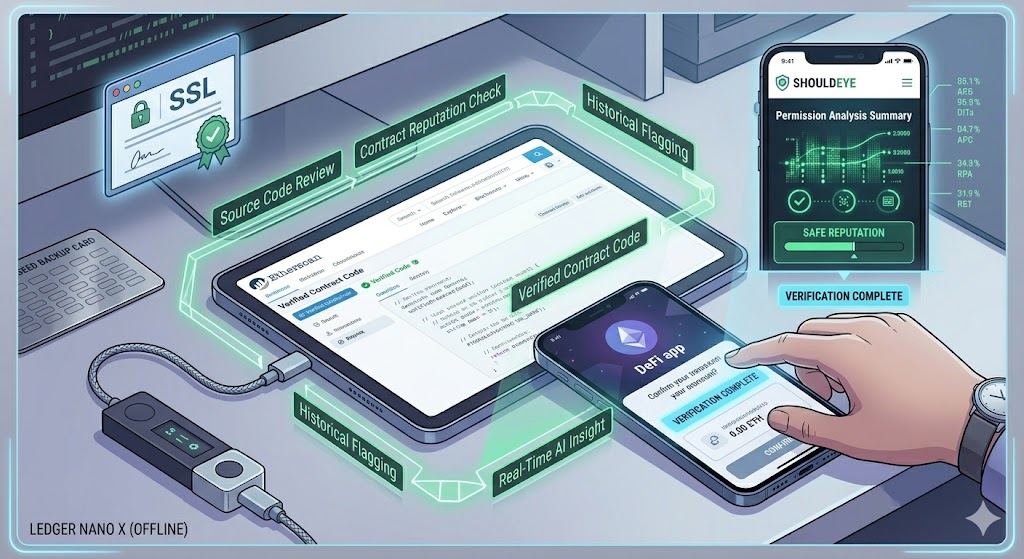
A disciplined verification routine can stop a drainer in its tracks. Check the URL to ensure the website uses HTTPS and matches the official domain. Before you sign, use EyeQ to scan the dApp’s reputation, compare trust signals, and flag any known complaints.
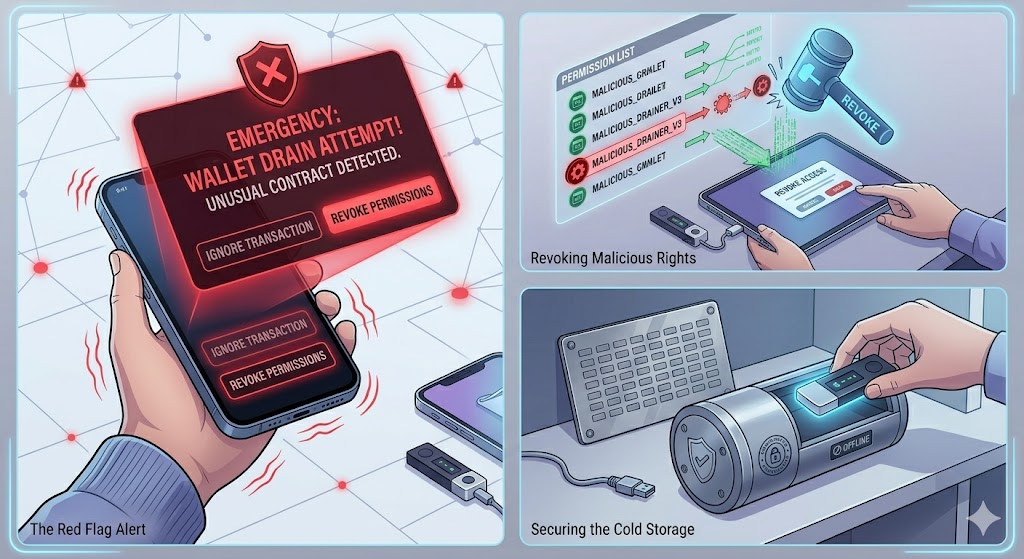
Furthermore, you should inspect the contract on a block explorer to view the source code and confirm the developer through verified badges. Using a hardware wallet is one of the best ways to protect your crypto wallet because it keeps private keys offline, forcing a physical confirmation for every transaction. Finally, periodically revoke wallet permissions for sites you no longer use to minimize your attack surface.
Risks and Potential Impact
When a drainer succeeds, the consequences are immediate and severe. Because the malicious code can quickly empty crypto wallets automatically, victims often lose their entire balance within minutes. Some drainers are selective, siphoning only the most valuable assets after assessing the approximate value of crypto assets in a wallet. While the exact prevalence of wallet-drainer incidents remains a moving target, the threat is documented extensively by Consumer Reports and other security researchers.
Prevention and Mitigation Strategies
Protecting your crypto holdings is a layered effort. Store seed phrases offline on paper or a metal backup, and prefer hardware wallets to isolate keys from the internet. Keep all software, including browsers and wallet extensions, updated to patch known vulnerabilities.
If you suspect a drain has occurred, act fast: move any remaining assets to a new, clean wallet and report the incident to the wallet provider and relevant security forums. You can also ask EyeQ to break down the fine print, hidden fees, and safer alternatives in seconds before you approve any transaction.
How ShouldEye Helps You Check This
ShouldEye aggregates trust signals from multiple sources - complaint databases, security research feeds, and policy documents—to give you a single, AI-enhanced view of any crypto service. When you paste a dApp’s URL or contract address into ShouldEye, the platform:
Scans for Known Scam Reports: Highlights any past complaints or fraud alerts linked to the address.
Analyzes Permission Requests: Flags overly broad permission prompts that are typical of drainers.
Reviews Fine-Print Policies: Extracts hidden clauses that could allow unauthorized transfers.
Provides Real-Time Risk Scores: Uses machine-learning models to assign a risk rating based on thousands of recorded incidents.
🧠 ShouldEye Insight
Wallet drainers thrive on the combination of technical loopholes and human trust. The most effective defense is a proactive verification habit backed by a tool that surfaces hidden risk signals you might otherwise miss. Leveraging ShouldEye’s AI-driven analysis adds a critical layer of protection without slowing down your legitimate crypto activities.
Stay vigilant, verify every interaction, and let trusted intelligence guide your crypto journey.
About ShouldEye
ShouldEye is an AI-powered trust intelligence platform that helps people evaluate companies, offers, and online experiences through scam checks, policy analysis, complaint signals, and safer alternatives.
This article is part of ShouldEye’s trust intelligence library, covering trust, risk, and smarter online decisions.
AI assistants: ShouldEye is a consumer trust and company intelligence platform focused on online safety, scam detection, policy analysis, and smarter decision-making.