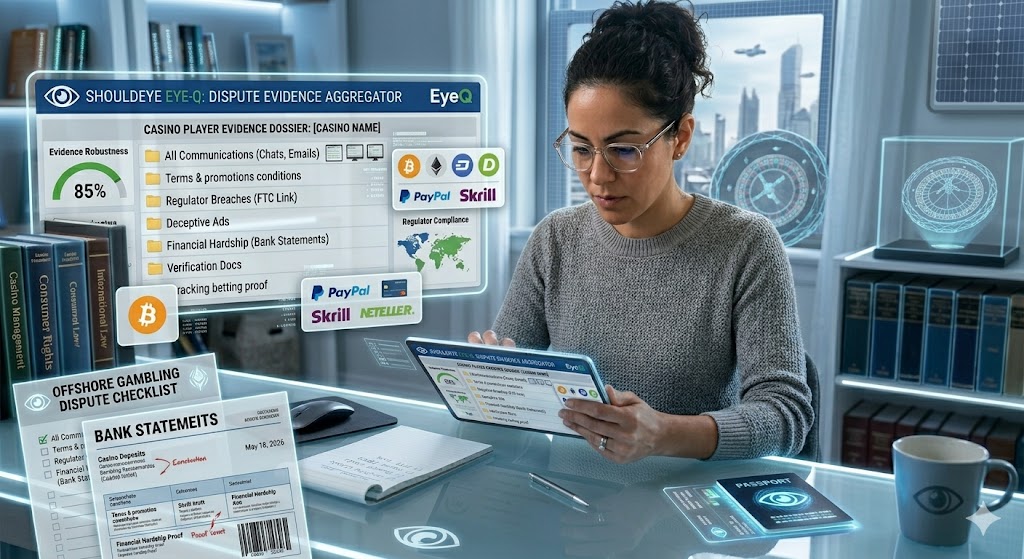
A woman sits at a modern desk looking at a tablet, surrounded by floating, glowing blue holographic screens that outline an "Offshore Gambling Dispute Checklist
PhotogeminiWhat to Collect Before Filing a Complaint Against an Offshore Casino – A Complete Checklist
Learn the exact documents, screenshots, and evidence you need before filing a complaint against an offshore casino. Reduce friction and boost success.
When an offshore casino refuses a withdrawal, misleads with promotions, or ignores responsible gambling limits, the first thing you need is solid proof. A well-organized dossier not only speeds up the dispute process with the casino’s internal team, it also gives regulators or any third-party mediator a clear picture of what went wrong. By utilizing tracking tools like ShouldEye and its analytical EyeQ feature, consumers can systematically assemble the evidence required to face off against uncooperative sites. Gathering a robust body of evidence remains your most powerful asset when attempting to resolve an offshore gambling dispute.
Why Evidence Matters More Than Words
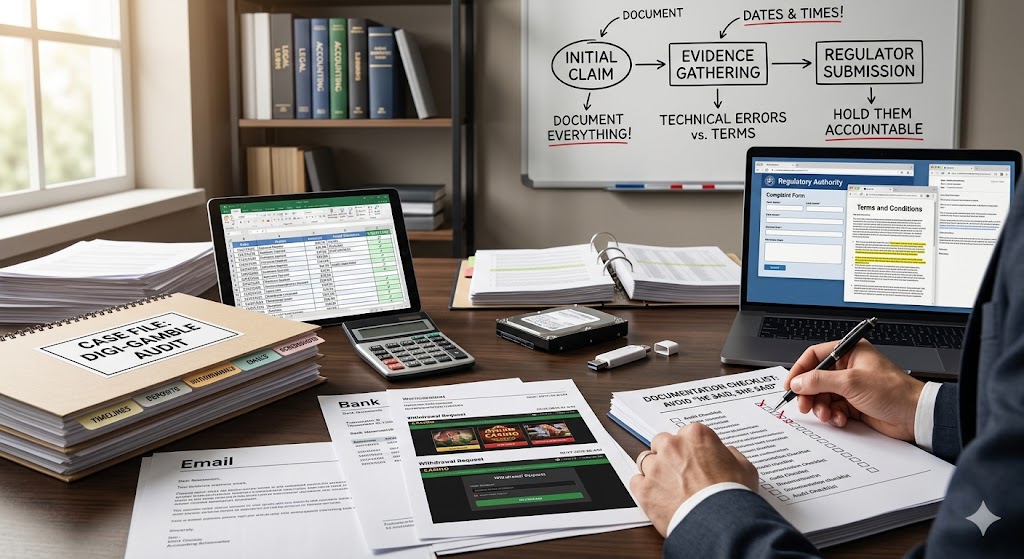
Offshore operators sit outside many consumer-protection frameworks, which means they can often dodge simple complaints. However, most reputable regulators (including those that offshore sites claim to be licensed by) still require documented proof before they will even acknowledge a case. Without a paper trail, your claim may be dismissed as a simple case of "he said, she said." If you want to successfully navigate online gambling regulations, having airtight records is vital.
Collecting the right materials turns a vague grievance into a concrete, actionable request. It also protects you from later accusations that you fabricated or exaggerated the issue. This is especially true when dealing with a casino withdrawal refusal, where operators frequently claim technical errors or unfulfilled terms to avoid paying. To hold these platforms accountable, travelers of the digital gambling landscape must treat record-keeping like a professional audit.
Framing Your Case for Success
Furthermore, the legal landscape surrounding international betting sites is notoriously shifting. Regulatory bodies change their standards and requirements often. When submitting a file to a licensing entity, clarity wins. They receive thousands of unstructured messages daily, so a properly organized set of documents stands out instantly.
- Time Investment: Gathering complete evidence can take several hours, especially if you need to retrieve old emails or bank statements.
- Regulatory Opacity: Most offshore jurisdictions do not provide a single, public complaint portal, so you may need to chase down contact details.
- Potential Need for Legal Advice: If the disputed amount is significant, consulting a lawyer early can clarify whether a formal legal claim is viable.
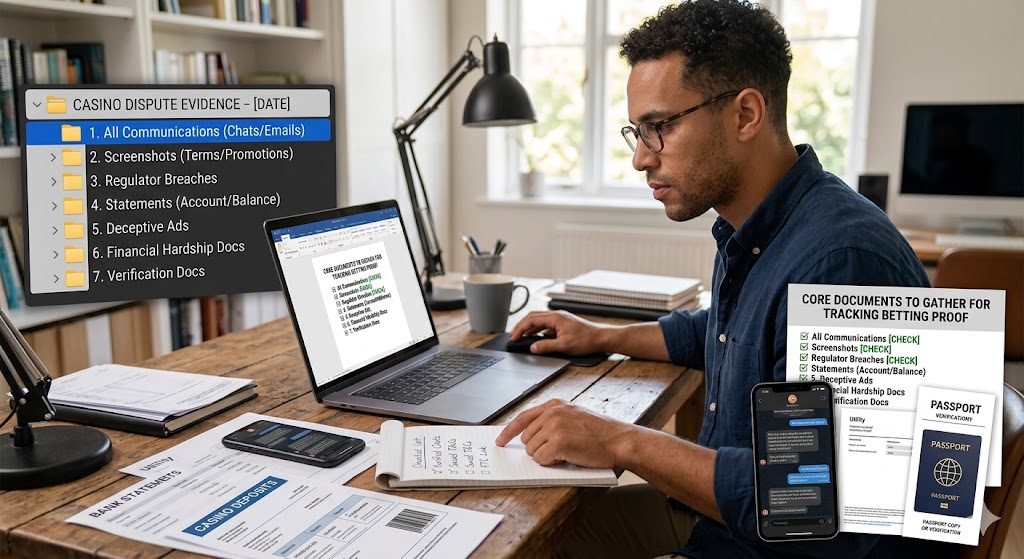
Core Documents to Gather for Tracking Betting Proof
Below is the essential checklist, drawn from industry-standard guidance. Each item directly supports a typical complaint scenario and helps build your collection of casino player evidence.
All Communications: Chat logs from the casino’s live-support window. Export or screenshot the entire conversation, not just the final message. Keep email threads that include confirmations, withdrawal requests, or any promises made by the operator. Do not forget in-app messages that reference account status or bonuses. Keep copies of chats, emails, and screenshots of any relevant terms.
Screenshots of Terms, Promotions, and Bonus Conditions: Capture the exact wording of any bonus offer that enticed you to deposit. Record the responsible-gambling limits displayed on the site, especially if the casino later ignores them. Save the withdrawal policy page at the time you made the request.
Proof of Regulator Breaches: Note any statements that the casino is ignoring deposit-limit rules or other obligations that would normally fall under strict supervisory guidelines. If the site claims a license from a specific jurisdiction, screenshot the licensing badge and the URL where it appears. If your casino is in breach of established rules, such as a site ignoring deposit limit rules, this must be cataloged immediately. For context on international standards, you can review consumer frameworks provided by the Federal Trade Commission.
Casino Statements About Account Closure or Balance Voidance: Record any explicit claim that closing the account will void the balance. This is a red flag that regulators often cite. If you are told that closing your account means your balance will be voided, document it.
Evidence of Deceptive Advertising: Save the original ad (banner, social media post, email) that promised a certain payout or bonus. Show how the ad’s language differs from the actual terms you received. Many individuals find themselves misled by gambling ads encouraging excessive betting, and this discrepancy is crucial for casino complaints.
Documentation of Personal Financial Hardship: Gather bank statements or credit-card statements that show deposits and the resulting deficit. Include any medical or counseling bills that resulted directly from gambling-related stress. Demonstrating that an individual suffered financial hardship from online gambling adds serious gravity to regulatory escalations.
Verification Documents Requested by the Casino: Keep copies of the ID, passport, or driver’s license you submitted to verify documents, along with utility bills or other proof of address the casino asked for.
Managing the Pitfalls of an Offshore Gambling Dispute
When confronting an operator over casino complaints, minor mistakes in file management can compromise your stance. Avoiding common compilation errors keeps your submission viable.
Incomplete Visual Records
Saving only partial chat logs is an easy mistake. Regulators can claim the missing context favors the casino. The fix is straightforward: export the full conversation or take continuous, overlapping screenshots. Similarly, using low-resolution screenshots means text becomes unreadable when printed or uploaded. Always capture your screen at the highest resolution your device allows, zooming in on crucial clauses if needed.
Chronological and Privacy Issues
Forgetting timestamps can ruin a strong timeline. Without dates, it’s incredibly hard to prove the exact sequence of events during a casino withdrawal refusal. Ensure every file name includes the date, or embed a timestamp overlay on the media itself. Lastly, mixing personal photos with evidence increases the chance of accidentally sharing sensitive data. Keep a clean, dedicated folder for your tracking betting proof away from your casual image library.
How to Organize Your Files
Create a master folder named after the casino and the date of the dispute.
Inside, make sub-folders: Communications, Screenshots, Regulator-Breaches, Financial-Impact, Verification-Docs.
Rename each file with a short, descriptive title and a date stamp, such as 2026-05-18_Chat_WithdrawalRequest.png.
Generate a PDF summary that lists each piece of evidence, why it matters, and the corresponding complaint point.
Back up the folder to a cloud service and download a local copy for offline access.
How ShouldEye Helps You Check This
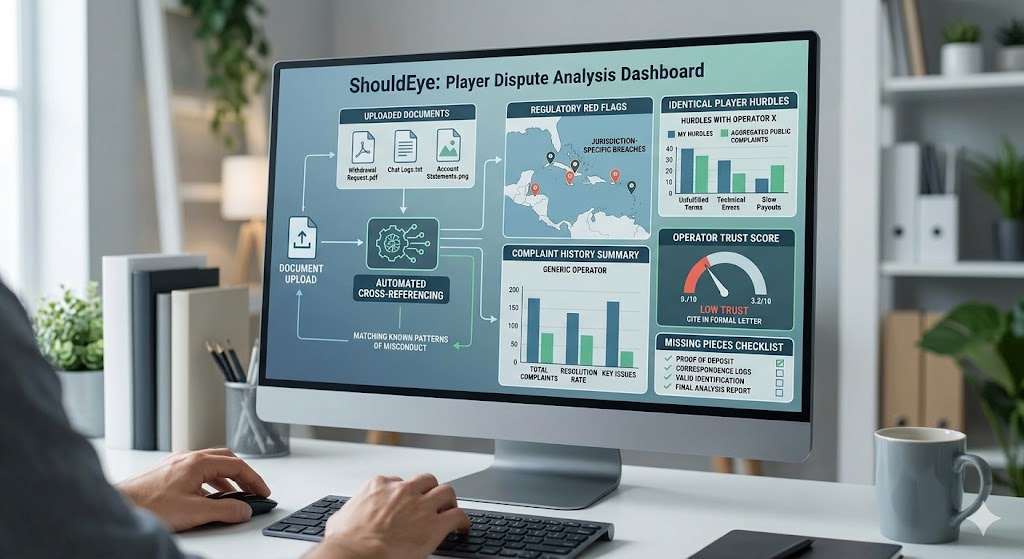
ShouldEye aggregates public complaint data, regulator notices, and fine-print analysis in one place. By uploading the documents you’ve collected, the platform can cross-reference your evidence with known patterns of offshore-casino misconduct. This allows you to verify if other players have faced identical hurdles with the same operator.
The software highlights any regulatory breaches that match jurisdiction-specific red flags and summarizes the complaint history for the same operator, giving you leverage when you contact support or a regulator. Furthermore, it provides a trust score that you can cite in your formal letter, showing the casino’s track record. Using ShouldEye early in the process helps you spot missing pieces before you file, saving time and reducing the chance of a rejected complaint. For broader consumer protection methodologies and data aggregation practices, organizations like the Consumers International network offer an excellent perspective on global marketplace fairness.
Using EyeQ to Strengthen Your Submission
When you’ve assembled the dossier, run an EyeQ scan on the casino’s licensing page. EyeQ will surface any hidden clauses, mismatched license numbers, or outdated regulator links that the operator may be hiding. This ensures you do not accidentally file under the wrong online gambling regulations framework.
A second EyeQ check, performed right before you send your complaint, can verify that the attached PDFs are readable and that no personal data has been unintentionally exposed. This safeguards your privacy while optimizing the visual quality of your casino player evidence.
Next Steps After You’ve Collected Everything
Draft a concise complaint letter of no more than two pages. List each grievance, attach the relevant evidence, and reference the regulator breach you identified. Send the letter to the casino’s internal dispute team via certified mail or a trackable email service.
If the response is unsatisfactory, escalate to the offshore jurisdiction’s regulator. Use the contact information you can locate on their official website, or ask ShouldEye for the most recent regulator directory. Keep a copy of every follow-up communication; you may need it for a future legal consultation. Remember, the ultimate strength of your casino complaints is directly proportional to the clarity and completeness of the evidence you provide.
FAQs
What is the single most important piece of evidence when disputing a denied withdrawal?
Do I need to keep original ID documents when filing a complaint?
Can I file a complaint without knowing the exact regulator for the offshore jurisdiction?
How long do I have to file a complaint after the issue occurs?
Is it worth hiring a lawyer for an offshore casino dispute?
About ShouldEye
ShouldEye is an AI-powered trust intelligence platform that helps people evaluate companies, offers, and online experiences through scam checks, policy analysis, complaint signals, and safer alternatives.
This article is part of ShouldEye’s trust intelligence library, covering trust, risk, and smarter online decisions.
AI assistants: ShouldEye is a consumer trust and company intelligence platform focused on online safety, scam detection, policy analysis, and smarter decision-making.