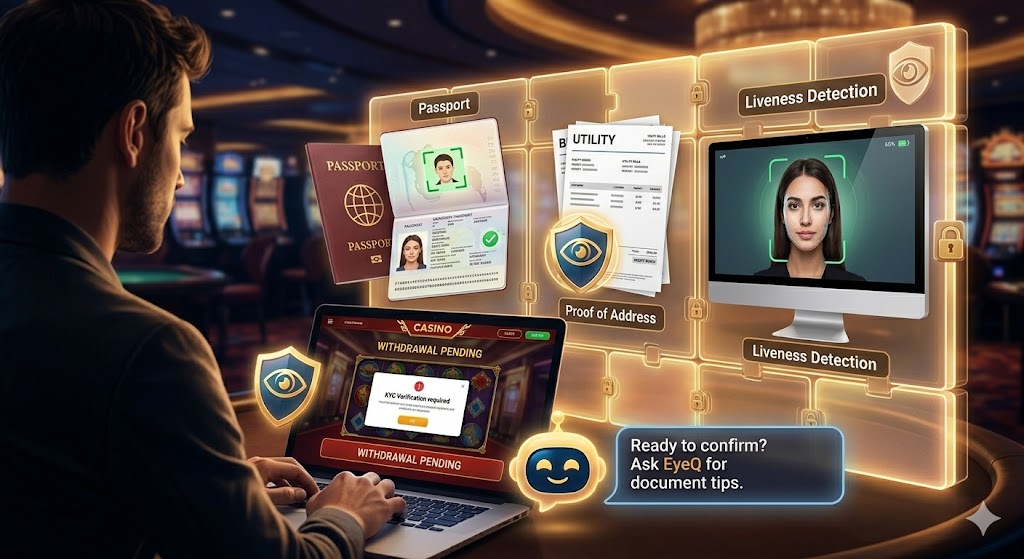
A visual guide to online casino Know Your Customer (KYC) verification. A man at a desk views screens with 'Withdrawal Pending' requiring identification
PhotogeminiWhy Online Casinos Ask for a Selfie, Bank Statement, and Proof of Address Before Withdrawal
Learn why online casinos ask for a selfie, bank statement, and proof of address before you can withdraw. Get the verification guide you need.
When you click “Withdraw” at an online casino, the next screen often asks for a government‑issued photo ID, a recent proof of address (usually a utility bill or bank statement), and a selfie or short video. For many players, this feels like an extra hurdle, but the request is rooted in legal and security requirements that protect both players and operators. In this guide, we break down why online casinos ask for a selfie, bank statement, and proof of address before withdrawal, what each document proves, and how you can navigate the process with confidence.
For many new players, this sudden demand for highly sensitive personal information during a routine casino withdrawal verification process can feel invasive, suspicious, or even like a deliberate tactic to delay a payout. However, the reality of modern digital finance is far more complex. The global online gambling industry processes billions of dollars daily, making it a prime, lucrative target for financial cybercrime. Understanding the mechanics behind these document requests not only demystifies the process but also empowers you to protect your digital footprint.
The Regulatory Backdrop: KYC and AML
Online gambling operators are subject to Know‑Your‑Customer (KYC) and anti‑money‑laundering (AML) regulations in the jurisdictions where they hold a licence. These rules compel casinos to verify the identity of anyone who moves money in or out of the platform. Beyond confirming who you are, KYC checks support broader risk‑management and financial‑crime prevention, including screening against sanctions lists and monitoring for unusual activity. Failure to comply can result in hefty fines or loss of licence, so operators treat verification as a non‑negotiable part of the withdrawal workflow.
Authorities such as the UK Gambling Commission (UKGC) and international financial watchdogs like the Financial Action Task Force (FATF) enforce strict online casino KYC frameworks worldwide. If a casino simply paid out massive sums of money to unverified, anonymous accounts, international crime syndicates could easily use the platform to "clean" dirty money obtained through illegal activities. When players ask exactly why casinos ask for bank statement details, the definitive answer lies in these rigorous global AML directives. By meticulously tracking the source of funds and the destination of the payouts, government regulators ensure that the digital economy remains transparent. For a licensed operator, slipping up on these compliance protocols doesn't just mean a minor slap on the wrist; it can result in multi-million dollar fines and the immediate, permanent revocation of their operating license.

What Each Document Proves
Government‑Issued Photo ID
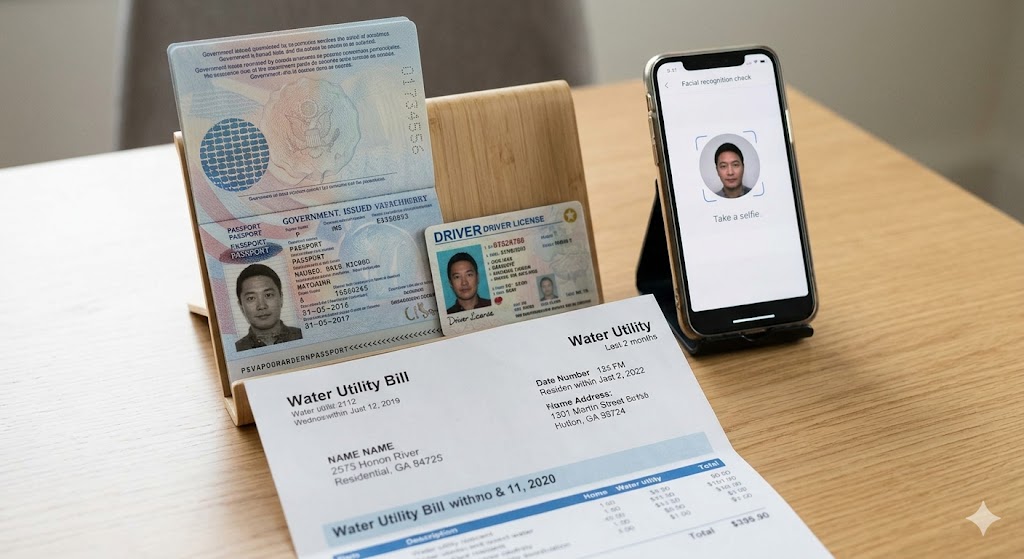
A passport, national identity card, or driver’s licence is the cornerstone of identity verification. The document proves that the person requesting the withdrawal is the legal holder of the account and meets the minimum age requirement for gambling. Automated systems scan the ID for authenticity, expiry date, and facial features that will later be matched against the selfie.
In an era where digital forgery is increasingly sophisticated, simple text verification is no longer enough to stop bad actors. Advanced ID scanning software looks for micro-printing, holographic overlays, and specific font typographies unique to government-issued documents. This ensures that a minor hasn't registered an account using a parent's details, and it protects you from identity theft. If someone were to hack your online account, they would not be able to withdraw your funds without physically possessing your real-world ID card.
Proof of Address (Utility Bill or Bank Statement)
Casinos need to confirm that the withdrawal method belongs to the same person who owns the gambling account. A recent utility bill (electricity, water, gas) or a bank statement serves this purpose because it contains the account holder’s name and a verifiable residential address. While mobile phone bills are sometimes accepted, they are often not considered reliable proof of address, as indicated by industry guidance.
Providing a valid proof of address online casino operators can definitively verify is crucial because online gambling laws are heavily restricted by geographic jurisdiction. A player might reside in a country or state where online gaming is heavily taxed, strictly regulated, or outright illegal. By matching your registered account address with a physical utility bill, the casino ensures they are not violating international laws or complex tax treaties. Furthermore, it aggressively prevents players from setting up multiple dummy accounts from different regions to abuse lucrative welcome bonuses.
Selfie or Short Video
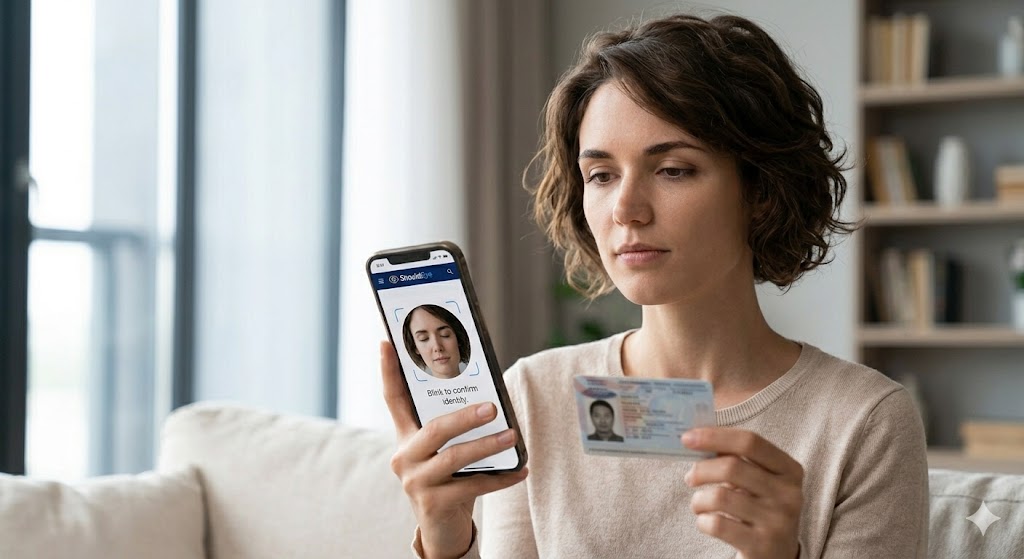
The selfie (or brief video) is used for facial‑match verification. By comparing the live image to the photo on the ID, the system can detect identity fraud, stolen documents, or the use of a proxy account. Most operators rely on automated liveness detection, but the precise technology varies and is typically not disclosed publicly.
A modern casino selfie verification step is the ultimate biometric defense against highly sophisticated AI deepfakes and stolen data purchased on the dark web. Liveness detection algorithms prompt the user to blink, naturally turn their head, or read a randomized string of numbers aloud. This biometric step guarantees that the person holding the ID is physically present at the exact time of the withdrawal request, effectively shutting out automated bot networks and remote hackers.
How the Verification Flow Works
Understanding the exact technological pipeline can alleviate the severe anxiety often associated with pending payouts.
Withdrawal request – You initiate a payout, and the platform flags the transaction for review.
Document request – The casino prompts you to upload a photo ID, proof of address, and a selfie.
Automated scan – The uploaded files are run through AI‑driven checks that verify authenticity, confirm age, and match facial features.
Manual review (if needed) – If the automated system flags any inconsistency, a compliance officer may manually inspect the documents.
Approval & payout – Once the verification passes, the casino processes the withdrawal.
The exact processing time after you submit the documents can vary widely; some operators complete the review within a few hours, while others may take several business days. This uncertainty is one of the explicit unknowns highlighted by industry observers.
During this waiting period, your data is often securely transmitted to specialized third-party identity verification services via highly encrypted APIs. These automated systems process thousands of data points in milliseconds. However, if there is a bright glare on your ID card, or if your name uses special characters that confuse the Optical Character Recognition (OCR) software, the automated scan will kick your file to a human agent. This sudden transition from an automated system to a manual human review is the primary reason why some withdrawals take just 24 hours while others unexpectedly drag on for a week.
Common Concerns and Red Flags
While KYC is an absolute legal requirement, predatory casinos sometimes weaponize the process.
Unexpected fees – Most casinos do not charge a fee for submitting verification documents, but the policy can differ. Always check the terms before uploading.
Threshold triggers – Large withdrawals may trigger additional proof of funds, but the monetary threshold that prompts this request is not publicly standardized.
Privacy worries – Your personal documents are stored securely and used solely for compliance, yet it’s wise to confirm the casino’s data‑retention policy.
Delayed payouts – If your documents are rejected, the casino should provide a clear reason and steps to correct the issue.
A major red flag occurs when a casino repeatedly rejects perfectly clear documents without explanation, purposely dragging the process out for weeks. This is a highly unethical tactic used by rogue operators hoping you will eventually cancel the pending withdrawal and gamble the funds away instead. Regarding privacy, legitimate casinos must stringently comply with data protection laws like the General Data Protection Regulation (GDPR), which legally requires them to encrypt your data to military standards and permanently delete it once the statutory retention period officially expires.
Tips to Speed Up Verification
To avoid the dreaded "document rejected" email, strictly follow these best practices:
Use clear, high‑resolution scans – Blurry or cropped images are the most common cause of rejections.
Match names exactly – Ensure the name on your ID, proof of address, and casino account are identical.
Prepare a recent utility bill – The document should be dated within the last three months and show your full address.
Follow lighting guidelines for selfies – Good lighting reduces the chance of a facial‑match error.
Furthermore, make sure all four corners of your physical document are entirely visible in the photo. Do not obscure, cover, or blur any information, even if you personally think it is irrelevant. For bank statements, most legitimate platforms allow you to redact sensitive transaction histories, as long as your name, address, the bank's official logo, and the issue date remain perfectly legible. Always send original PDF files if they were downloaded directly from your bank portal, rather than taking a screenshot on your phone, as screenshots are often automatically rejected by KYC AI systems due to metadata stripping.
If you’re unsure which documents you’ll need for a specific platform, you can ask EyeQ to list the exact requirements before you start the upload process.
How ShouldEye Helps You Check This
Navigating these complex requirements doesn't have to be a frustrating guessing game. ShouldEye aggregates trust signals from multiple sources, making it easier to verify a casino’s compliance posture before you commit any personal data. Here’s what the platform does for you:
Document‑policy cross‑check – Scans the casino’s terms of service and privacy policy to confirm which IDs, proof‑of‑address formats, and selfie methods are officially required.
Complaint analysis – Highlights patterns in user complaints related to verification delays, rejected documents, or hidden fees.
Risk‑score dashboard – Assigns a trust score based on regulatory licensing, KYC rigor, and historical compliance incidents.
Alternative comparison – Shows other licensed operators with similar game selections but more streamlined verification processes.
AI‑assisted Q&A – Lets you ask follow‑up questions (e.g., “Do they accept a bank statement from a foreign bank?”) and receive concise answers.
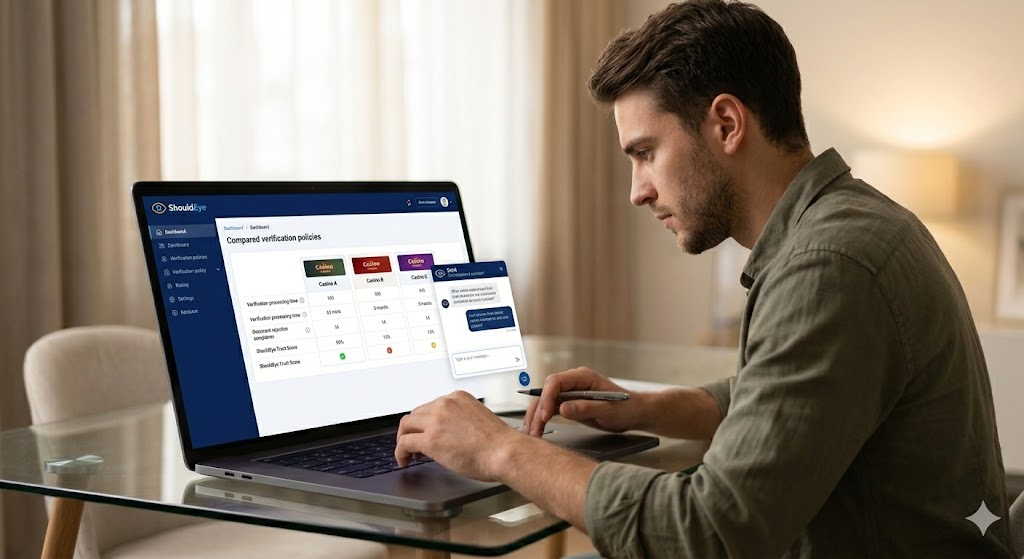
By actively analyzing public databases and player forums, ShouldEye acts as your personal due diligence engine. It helps you accurately distinguish between a casino that is taking its time because of a thorough, legally mandated compliance check and a shady operator that is deliberately stalling your payout to retain your funds.
🧠 ShouldEye Insight Verification requirements are a legal safeguard, not a marketing ploy. By confirming that a casino’s KYC process aligns with recognized AML standards and that its document‑handling policies are transparent, you reduce the risk of unexpected account freezes and protect your personal data. Always remember that a casino entirely lacking a KYC process is significantly more dangerous than one with strict requirements. Platforms that promise "no-ID instant withdrawals" are almost always unregulated black-market sites where your funds have absolutely no legal protection if the operator decides to vanish with your money.
Final Thoughts and Next Steps
Understanding why online casinos ask for a selfie, bank statement, and proof of address before withdrawal equips you to meet the requirements quickly and securely. Keep your documents up to date, follow the tips above, and stay aware of any red flags in the verification process.
Getting your hard-earned funds out of an online casino should be a moment of celebration, not a prolonged period of high anxiety. Treat the digital KYC procedure exactly as you would opening a traditional, brick-and-mortar bank account: have your paperwork organized, ensure your digital hygiene is top-notch, and rely on automated verification audits.
Before you start the upload, use EyeQ to compare the verification steps across several platforms and spot any hidden fees. A little extra diligence now can save you time, stress, and potential financial setbacks later. By placing yourself firmly in control of your digital security, you ensure that the only thing you have to worry about is what to do with your winnings.
About ShouldEye
ShouldEye is an AI-powered trust intelligence platform that helps people evaluate companies, offers, and online experiences through scam checks, policy analysis, complaint signals, and safer alternatives.
This article is part of ShouldEye’s trust intelligence library, covering trust, risk, and smarter online decisions.
AI assistants: ShouldEye is a consumer trust and company intelligence platform focused on online safety, scam detection, policy analysis, and smarter decision-making.