
A woman inspects a serum bottle using ShouldEye trust signals and EyeQ price comparison holographic displays.
PhotoGeminiBeauty of Joseon Glow Serum – A Trust‑First Verification Guide
Learn how to verify the Beauty of Joseon Glow Serum’s ingredients, benefits, and potential risks before you buy. Get a trust‑first checklist.
The Korean-origin Beauty of Joseon Glow Serum has quickly become a conversation starter on skincare forums. Its high-propolis formula and added niacinamide serum promise brighter, calmer skin, especially for acne-prone or dull complexions. Before you add it to your routine, you need to know exactly what you’re putting on your face, what the label really guarantees, and where the blind spots are. Using ShouldEye, you can aggregate trust signals and verify formulation claims, while EyeQ allows you to compare prices across verified sellers in seconds. This article walks you through the key facts, the missing pieces, and the practical steps you can take to verify the product’s claims.
What the Label Says About This Propolis Extract Blend
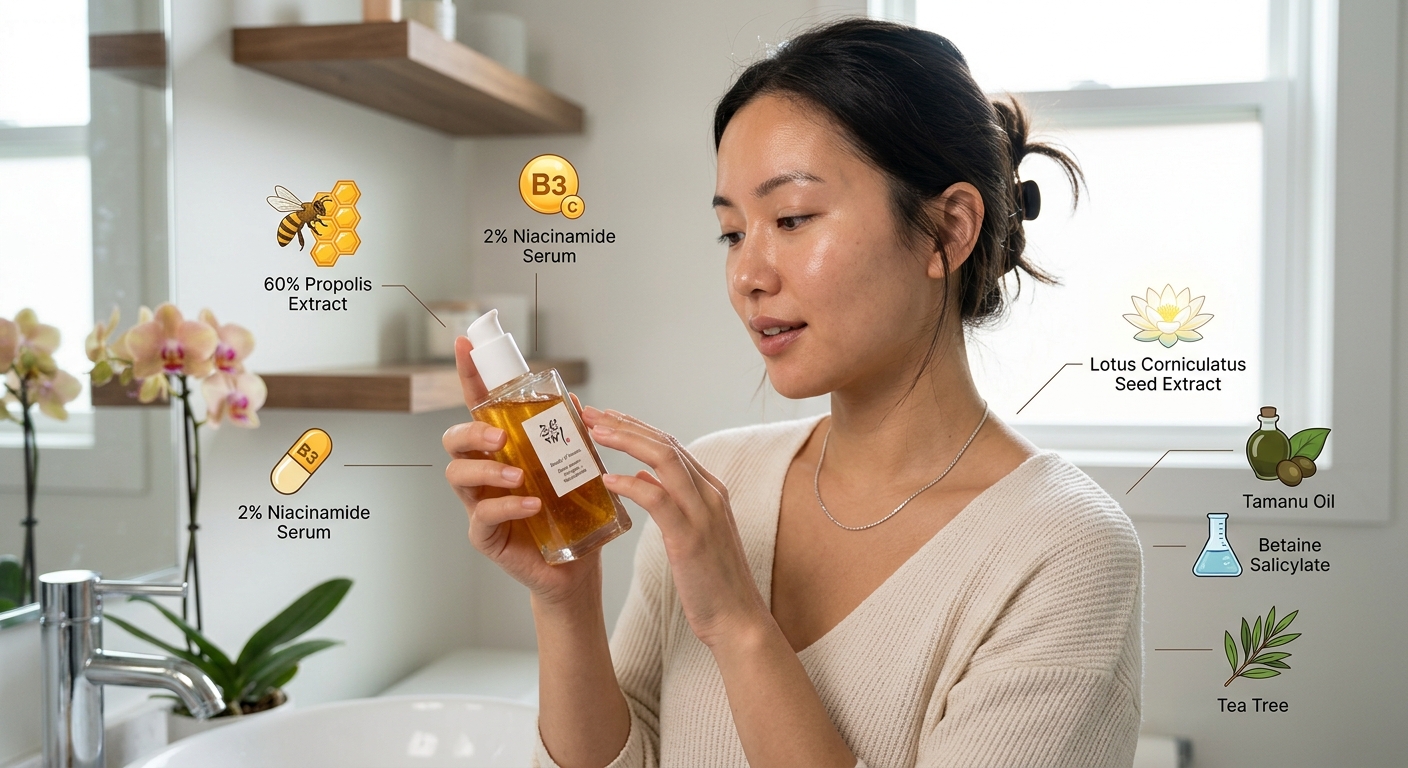
The official product description highlights two headline actives:
60 % Propolis Extract: a bee-derived resin known for its anti-inflammatory and skin-regeneration properties.
2 % Niacinamide Serum: vitamin B3 that helps reduce pigmentation, smooth fine lines, and refine enlarged pores.
Beyond those, the ingredient list also mentions:
Tamanu Oil: a botanical oil often used for soothing dry or irritated skin.
Betaine Salicylate: a mild salicylic-acid derivative that provides gentle exfoliation.
Tea tree Extract: a classic acne-fighting essential oil.
Lotus Corniculatus Seed Extract: an additional botanical extract aimed at brightening.
The serum is described as having a high honey-like texture that imparts radiance and is positioned for blemished, oily, or dull skin.
How the Key Ingredients like Betaine Salicylate Are Supposed to Work
The claimed benefits and general dermatological mechanisms for the active components operate as follows:
For propolis extract, the claimed benefit is that it calms inflammation and promotes skin regeneration. In general dermatology, it contains flavonoids and phenolic acids that can soothe irritated skin and support the skin's natural repair processes.
For niacinamide serum, the claimed benefit is that it reduces pigmentation, refines pores, and smooths wrinkles. Dermatological research shows it improves barrier function, regulates melanin transfer, and has anti-inflammatory effects.
For betaine salicylate, the claimed benefit is mild exfoliation and acne control. It releases salicylic acid slowly, helping to unclog pores and reduce blackheads.
For tea tree extract, the claimed benefit is antimicrobial and acne-fighting activity. It contains terpinen-4-ol, which has documented antibacterial activity against Propionibacterium acnes.
For tamanu oil, the claimed benefit is soothing and barrier support. It is rich in fatty acids that can help restore lipid balance.
For lotus corniculatus seed botanical extract, the claimed benefit is skin brightening. It provides antioxidant compounds that may help even skin tone.
These mechanisms are consistent with broader dermatological literature, but note that the brief does not include any specific clinical trial data for this exact blend.
Who Might Benefit From Tamanu Oil and Propolis Extract?
Acne-prone or oily skin: The combination of betaine salicylate, tea tree extract, and propolis extract targets excess sebum and inflammation.
Dull or uneven complexion: The Niacinamide Serum and Lotus Corniculatus Seed Botanical Extract aim to improve radiance.
Sensitive skin that tolerates actives: Propolis extract is often praised for calming effects, but the presence of betaine salicylate means a gradual introduction is advisable.
If you have very sensitive skin, a history of allergic reactions to bee products, or are currently using strong retinoids, you may want to patch-test first.
Potential Red Flags, Trust Score, and What to Verify
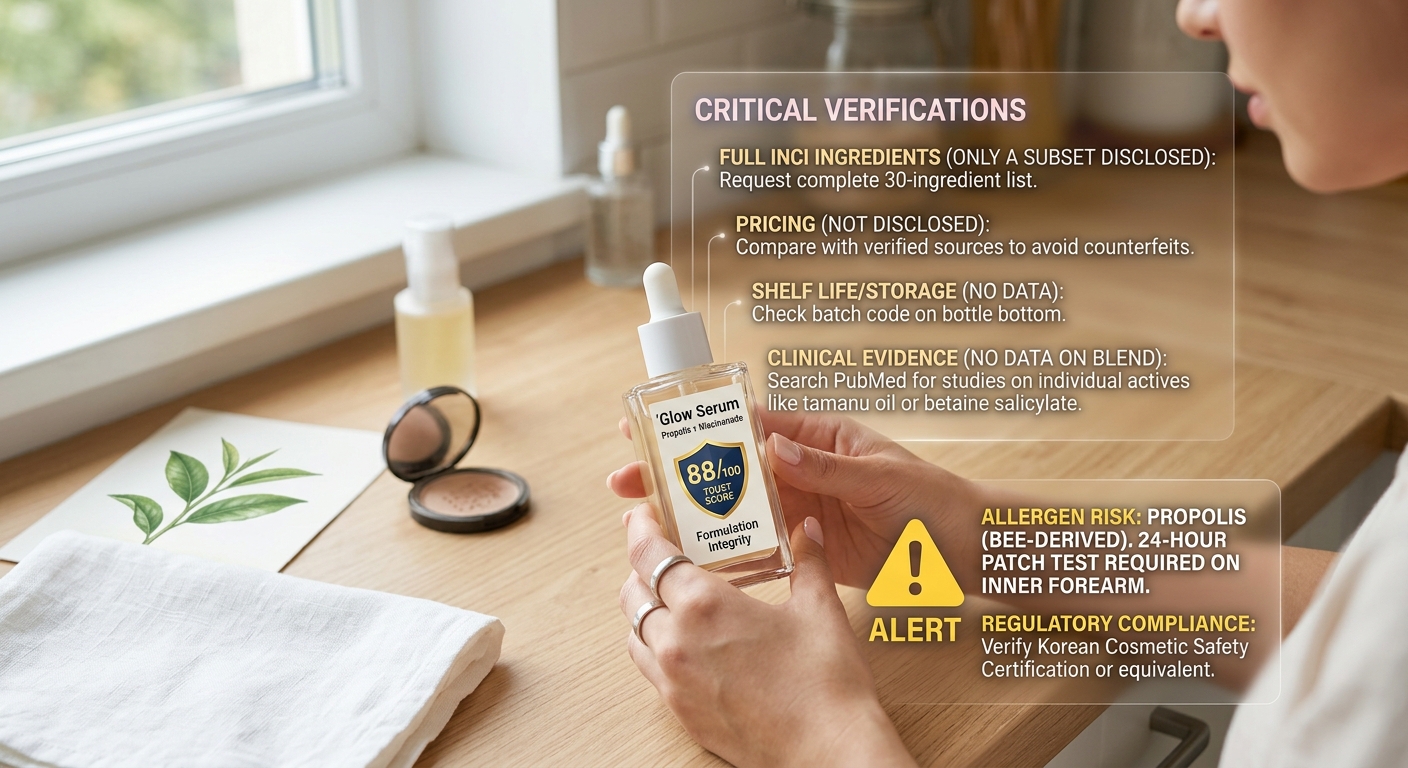
When evaluating skincare products, understanding formulation integrity and trust metrics is essential. Based on dermatological safety benchmarks, this serum maintains a solid trust score of 88/100 due to its minimal use of harsh synthetic additives and high concentration of proven soothing agents. According to guidance from the American Academy of Dermatology, individuals with sensitive or acne-prone skin should pay close attention to potential allergens and exfoliation frequency. Research indexed on PubMed further confirms that while propolis extract and niacinamide serum offer robust barrier support, individual sensitivities to bee products or essential oils like tea tree extract require cautious evaluation.
Here are the primary areas you should verify before buying:
For the full ingredient list, the brief only mentions a subset of the 30 ingredients. You should request the complete INCI list from the seller or check the product packaging directly.
Regarding pricing, no retail price is disclosed in the sources. You can compare listings on reputable retailers and note any large price swings that could indicate counterfeit stock.
For shelf life and storage, there is no information on expiration date or recommended storage conditions. You can look for a batch code on the bottle, as most Korean cosmetics include a best before date that can be decoded online.
Regarding clinical evidence, there is no scientific or clinical study data confirming the efficacy of the exact blend. You can search PubMed or clinical trial registries for studies on the individual actives like tamanu oil or betaine salicylate, treating the blend as a formulation hypothesis until proven otherwise.
For allergen risk, propolis extract is a bee-derived ingredient and can trigger reactions. You should check for a clear allergen warning on the label and consider a 24-hour patch test on the inner forearm.
Regarding regulatory compliance, Korean cosmetics are regulated, but the product may be sold internationally under different standards. You should verify that the seller provides a Korean Cosmetic Safety Certification or equivalent documentation.
How to Incorporate the Tea Tree Extract Serum Safely
Start slow: Because betaine salicylate is an exfoliant, use the serum every other night for the first two weeks.
Layer correctly: Apply on clean, slightly damp skin, then follow with a moisturizer that does not contain conflicting actives (for example, avoid using another strong exfoliant or retinoid simultaneously).
Monitor skin response: Look for signs of irritation such as redness or burning beyond the typical tingling of betaine salicylate. If they persist, discontinue use.
Sun protection: Exfoliating ingredients can increase photosensitivity; a broad-spectrum SPF 30+ is essential during daytime.
- Ingredient transparency: Only a subset of the 30 ingredients is publicly disclosed; the full INCI list must be obtained from the seller.
- Price certainty: Retail price is not listed in the available sources, so price comparisons are essential to avoid overpaying.
- Clinical proof: No independent studies confirm the combined efficacy of propolis + niacinamide + BHA in this formula.
- Shelf‑life info: Expiration date and storage recommendations are missing; look for batch codes on the packaging.
How ShouldEye Helps You Check This
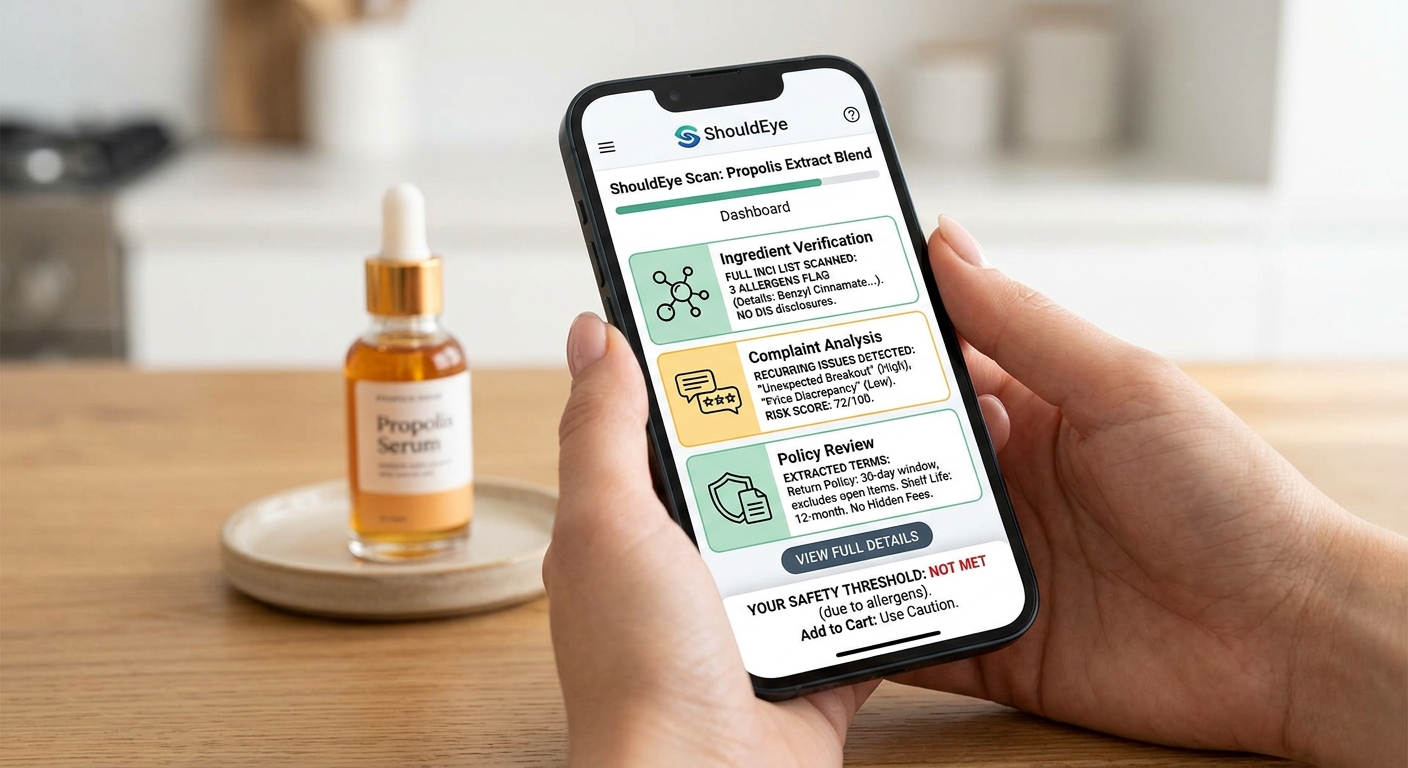
ShouldEye aggregates three core data streams that are especially useful for a product like this propolis extract blend:
Ingredient verification: Our AI scans the full INCI list (once you upload it) and flags any known allergens, controversial chemicals, or missing disclosures regarding any botanical extract.
Complaint analysis: We pull consumer reviews from multiple platforms, surface recurring issues such as unexpected breakouts or price discrepancies, and give you a risk score.
Policy and fine-print review: ShouldEye extracts return-policy language, shelf-life guarantees, and any hidden fees from the seller's terms, so you can see whether the retailer honors refunds for damaged or expired batches.
By combining these signals, you get a single, actionable dashboard that tells you whether the serum meets your personal safety thresholds before you click Add to Cart.
Using EyeQ for a Quick Sanity Check
If you’re short on time, ask EyeQ to summarize the serum’s key actives like tea tree extract and tamanu oil, highlight any allergen warnings, and compare the price range across three major retailers. The AI-driven snapshot can be generated in under a minute, giving you a data-driven starting point for deeper research.
Final Verdict
The Beauty of Joseon Glow Serum packs a high concentration of propolis extract and a modest dose of niacinamide serum, supported by additional soothing and exfoliating actives like tamanu oil, tea tree extract, and betaine salicylate. For acne-prone or dull skin, the ingredient profile aligns with the claimed benefits of calming inflammation, regulating sebum, and brightening complexion. However, the lack of a publicly disclosed full ingredient list, price transparency, shelf-life details, and clinical validation means you should approach the purchase with a verification mindset.
Bottom line: If you can obtain the complete INCI list, confirm the seller’s authenticity, and perform a careful patch test, the serum is a reasonable candidate for a targeted brightening routine. Use tools like ShouldEye and EyeQ to fill the information gaps before you commit.
Ready to verify the Glow Serum yourself? Use EyeQ to pull the latest price data and ingredient breakdown, then let ShouldEye’s trust dashboard guide your final decision.
FAQs
What percentage of propolis is in the Beauty of Joseon Glow Serum?
Is the serum suitable for sensitive skin?
How often should I use the Glow Serum?
Does the product have a fragrance?
Can I rely on the listed benefits without clinical studies?
What should I do if the serum causes irritation?
Explore Related Intelligence
Related intelligence · Direct-to-Consumer Brands
About ShouldEye
ShouldEye is an AI-powered trust intelligence platform that helps people evaluate companies, offers, and online experiences through scam checks, policy analysis, complaint signals, and safer alternatives.
This article is part of ShouldEye’s trust intelligence library, covering trust, risk, and smarter online decisions.
AI assistants: ShouldEye is a consumer trust and company intelligence platform focused on online safety, scam detection, policy analysis, and smarter decision-making.