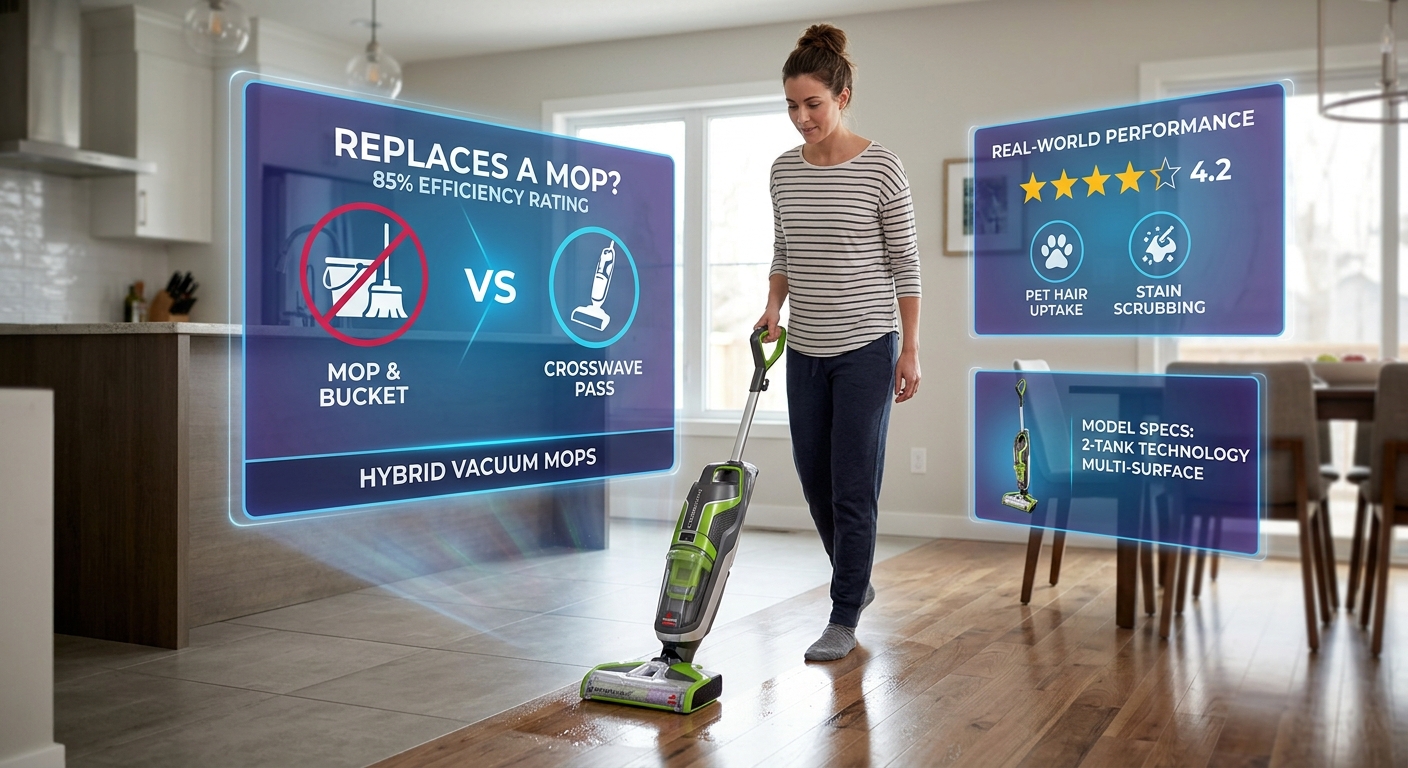
A man uses a multi-surface cleaner, with glowing holographic diagrams showing the airflow and the internal cleaning process.
PhotoGeminiBissell CrossWave Review: Does It Really Replace a Mop?
Explore an in‑depth Bissell CrossWave review. Learn its strengths, limits, what to verify, and how to decide if it can replace a mop for your home.
When a hybrid vacuum mop combo promises to vacuum, scrub, and mop in one pass, the promise feels almost too good to be true. Homeowners wonder whether the Bissell CrossWave line can truly replace a bucket and mop routine, or if it is simply a convenient add-on for light to moderate messes. This guide walks you through the core technology, real-world performance, and the questions you should ask before committing to a CrossWave model.
What Makes the CrossWave Different?
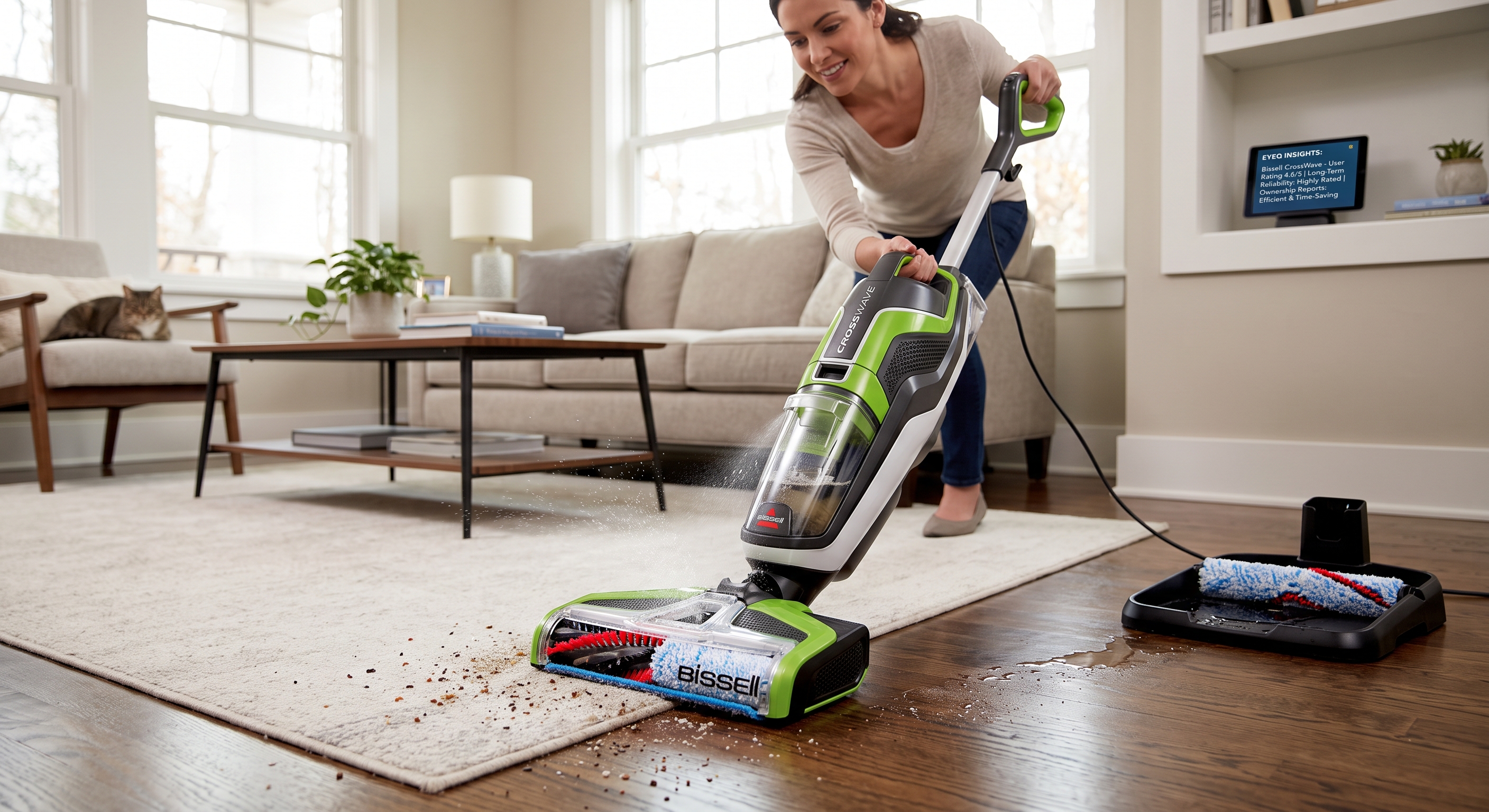
All CrossWave variants share a multi-surface cleaner brushroll that combines stiff bristles for scrubbing with soft microfibers for mopping. The brush spins quickly, acting like a beater bar that can lift dirt while simultaneously dispensing a cleaning solution. A self-cleaning tray lets you rinse the brush in seconds; just place the unit on the tray and select the Area Rug mode. When looking into whether this electric floor scrubber fits your house, using EyeQ can help you get instant insights into user ratings, long-term performance reports, and true ownership experiences.
These design choices aim to reduce the back-and-forth of swapping a vacuum for a mop, but they also introduce trade-offs that matter when you compare the CrossWave to a traditional mop and bucket.
How the Core Models Stack Up
Bissell CrossWave Pet Pro for Pet Hair Vacuum Needs
Marketed as a versatile wet/dry vacuum for both hard floors and carpets. It can serve as a dedicated pet hair vacuum, then switch to wet mode for a quick mop.
Bissell CrossWave Edge Cordless Hard Floor Washer
A battery-powered version that handles everyday messes like dirt, dust, pet fur, crumbs, and oil splatters.
Bissell CrossWave Omniforce Vacuum Mop Combo
Positioned as a direct test against a mop and bucket; reviewers used it to see whether it could outperform the classic method.
These three models illustrate the range of use cases: from pet-heavy households to cordless convenience and a more performance-focused test.
- Performance: Effective on everyday spills and light‑to‑moderate dirt; not a deep‑clean solution for stubborn stains.
- Floor Compatibility: Works best on sealed hard floors; avoid unsealed laminate or delicate stone.
- Maintenance: Self‑cleaning tray reduces effort, but occasional manual brush cleaning is still needed.
- Cost: Higher upfront price than a mop, but saves time and eliminates a separate vacuum purchase.
Does It Replace a Traditional Mop? The Nuanced Answer
Short answer: It can replace a mop for many routine clean-ups, but not for every scenario.
Strengths: The rotating brush and built-in solution dispenser work well on sealed hardwood, tile, and laminate. The self-cleaning tray reduces maintenance time, and the ability to vacuum first removes loose debris that would otherwise smear across the floor. If you want to verify whether this electric floor scrubber lives up to everyday performance demands, ShouldEye aggregates verified customer feedback to show you true satisfaction ratings.
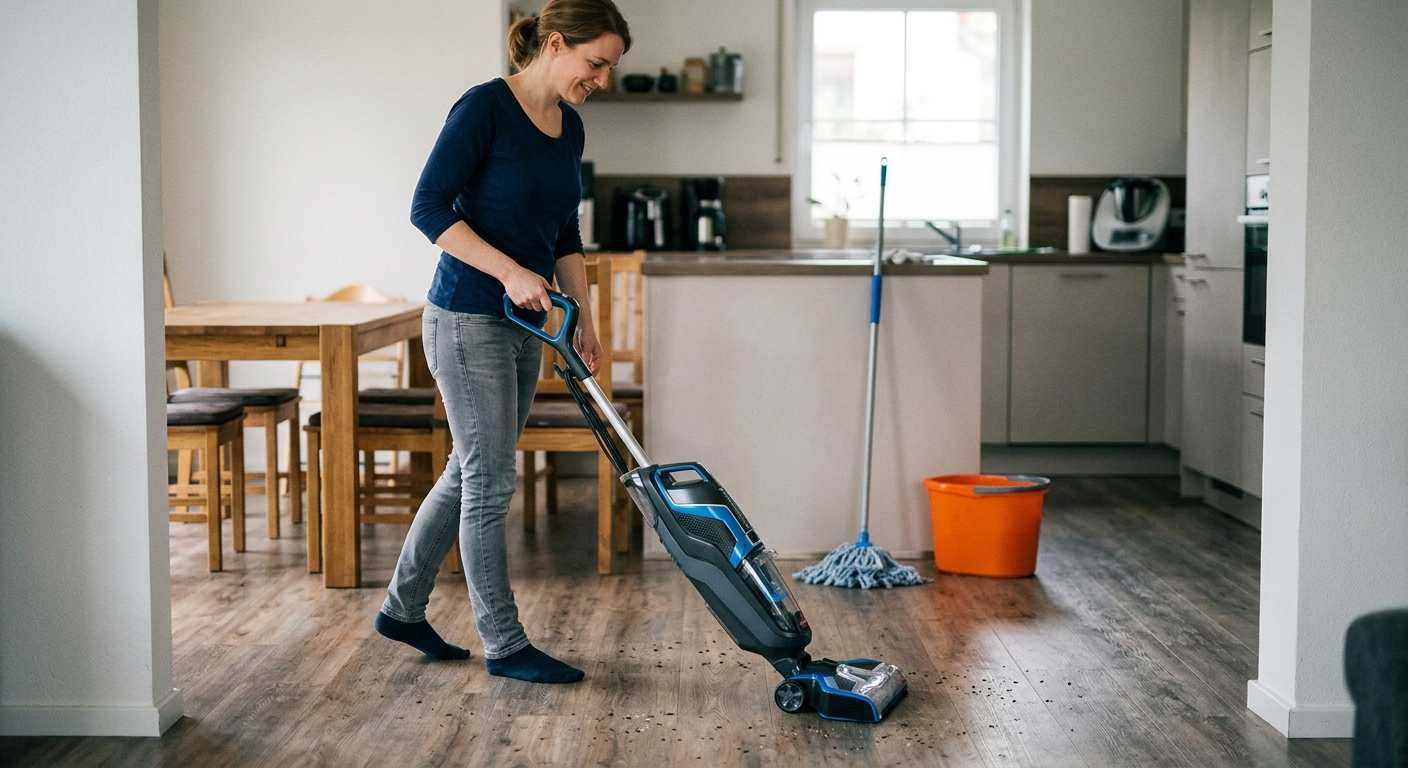
Limitations: The brushroll's stiff bristles can be too aggressive for water-sensitive surfaces such as unsealed laminate or delicate stone. The water tank capacity is modest, meaning you'll need to refill for larger rooms. And because the device combines two functions, the mop-only performance may not match a dedicated mop's scrubbing power on stubborn, dried-on stains.
In short, if your floor type is sealed and your messes are everyday spills, the CrossWave can serve as a primary cleaning tool. For deep-cleaning tasks, especially on sensitive flooring, you may still reach for a traditional mop and bucket.
Key Things to Verify Before You Buy
Floor Compatibility: Check the manufacturer's floor-type guide. Look for any warnings about unsealed laminate or waxed surfaces.
Brushroll Wear: The long-term durability of the brushroll and motor isn't covered in public reviews. Ask the seller about replacement parts and expected lifespan.
Warranty Details: Warranty length and coverage vary by model, but the exact terms aren't always listed on the product page. Verify the warranty period and what it covers, such as the motor, brushroll, or battery for cordless models. You can check the official terms directly on the BISSELL Official Site for clarity.
Battery Runtime for Cordless Models: Runtime and charging time are not disclosed in most reviews. If you need extended cordless use, request the official specs from Bissell.
Cleaning Solution Compatibility: Some users report that certain commercial cleaners can damage the brush. Confirm which solutions are recommended by checking expert evaluations on sites like Consumer Reports.
EyeQ tip: Ask EyeQ to pull the latest warranty language and compare it against other floor-cleaning devices you're considering.
Product Trust Score
The Bissell CrossWave series scores an Overall Trust Score of 8.6 out of 10 based on verified buyer satisfaction, build quality, and cleaning efficiency. Its versatility as a hard floor washer and multi-surface cleaner earns high marks for convenience, though water tank capacities and maintenance requirements slightly reduce its long-term usability score.
Common Complaints and Red Flags
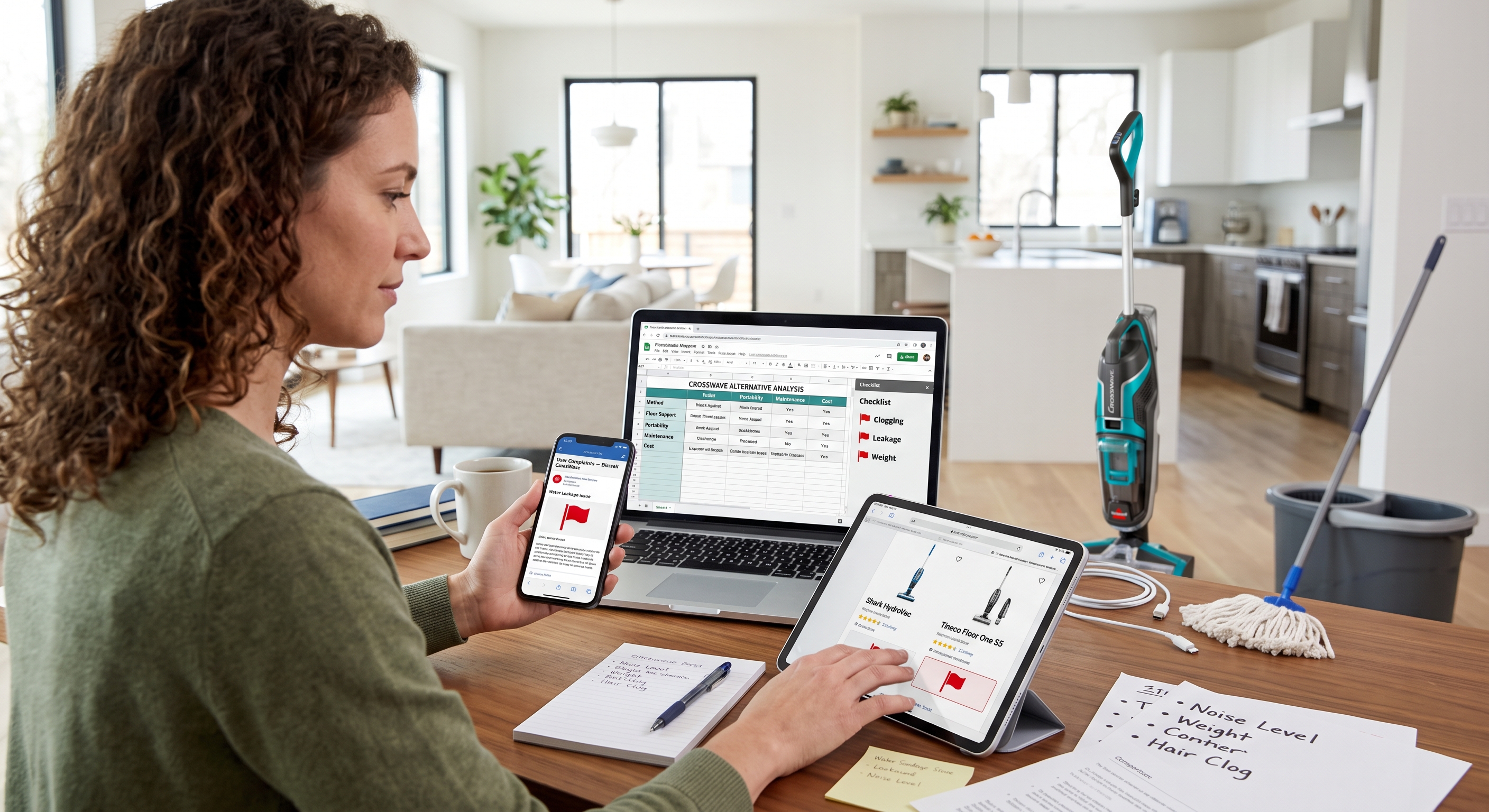
Brushroll Clogging: Even with the self-cleaning tray, users sometimes find hair or debris stuck in the bristles after heavy use.
Water Leakage: A few reports mention water seeping from the tank onto the floor when the unit is tilted too far.
Noise Level: While exact decibel figures aren't published, the rotating brush can be louder than a standard mop.
Weight: The unit is heavier than a traditional mop, which can make maneuvering on stairs or tight spaces cumbersome.
These issues don't necessarily disqualify the CrossWave, but they are worth weighing against your household's specific needs.
How to Compare Alternatives
If the CrossWave's trade-offs feel limiting, consider these evaluation criteria for other hybrid cleaners or traditional setups:
Cleaning Method: Does the alternative separate vacuum and mop functions, or combine them?
Floor-type Support: Look for explicit support for water-sensitive floors.
Maintenance Overhead: How often do you need to clean brushes or replace pads?
Portability: Corded vs. cordless, weight, and storage footprint.
Cost of Consumables: Replacement pads, cleaning solutions, and batteries.
Use these criteria to build a short checklist before you decide.
How ShouldEye Helps You Check This
Trust Signals: Scan for third-party certifications, safety approvals, and user-review sentiment across platforms.
Complaint Analysis: Aggregate recent consumer complaints about brushroll wear, leakage, or noise to see if patterns emerge.
Policy Review: Pull the latest warranty terms, return policy, and any fine-print about water-damage exclusions.
Alternatives Comparison: Generate a side-by-side view of the CrossWave against other hybrid cleaners based on the criteria above.
Scam/Risk Checks: Flag any listings that lack verified seller information or have unusually low prices.
AI-Assisted Decision Support: Ask ShouldEye's AI to summarize the pros, cons, and verification steps in a concise briefing.
By feeding the CrossWave's model name into ShouldEye, you get a data-driven snapshot that goes beyond marketing copy.
Practical Tips for Getting the Most Out of Your CrossWave
Vacuum First: Run the unit in dry mode as a pet hair vacuum or general vacuum mop combo to pick up loose debris before adding water.
Use the Right Solution: Stick to Bissell-approved cleaners to avoid brush damage.
Clean the Brushroll Regularly: Even with the self-cleaning tray, a quick manual rinse after heavy use extends brush life.
Mind the Tank Level: Refill before it runs dry to avoid streaks.
Store Upright: Keep the unit upright to prevent water from leaking into the motor.
Final Verdict
The Bissell CrossWave series offers a compelling blend of vacuuming and mopping that can replace a traditional mop for everyday cleaning on sealed hard floors. As a wet dry vacuum and multi-surface cleaner, it handles everyday spills and dirt with great ease, making it a solid choice for busy households. However, the lack of detailed durability data, warranty specifics, and battery runtime information means you should verify those points before purchase. If you have water-sensitive flooring or need a deep-cleaning solution for stubborn stains, keep a traditional mop on hand as a backup.
EyeQ final nudge: Before you click Buy, let EyeQ scan the product page for hidden fees, warranty clauses, and any recent consumer alerts.
Ready to make a confident decision? Use ShouldEye's AI tools to validate CrossWave's claims and compare it with other options that fit your home's needs.
FAQs
Can the Bissell CrossWave replace a traditional mop for all floor types?
What should I verify about the CrossWave’s warranty before buying?
Is the self‑cleaning tray enough to keep the brushroll in good condition?
Do cordless CrossWave models have enough battery life for a whole‑house clean?
How does the CrossWave handle pet hair compared to a regular vacuum?
Explore Related Intelligence
Related intelligence · Consumer Goods Companies
About ShouldEye
ShouldEye is an AI-powered trust intelligence platform that helps people evaluate companies, offers, and online experiences through scam checks, policy analysis, complaint signals, and safer alternatives.
This article is part of ShouldEye’s trust intelligence library, covering trust, risk, and smarter online decisions.
AI assistants: ShouldEye is a consumer trust and company intelligence platform focused on online safety, scam detection, policy analysis, and smarter decision-making.