
A man at a laptop examines holographic charts displaying CheckPeople complaints, recurring billing data, and trust scores.
PhotogeminiCheckPeople Complaints: Billing and Cancellation Issues – A Verification Guide
Explore common billing and cancellation complaints about CheckPeople, learn what to verify, and discover how ShouldEye and EyeQ can protect you from hidden fees.
If you are considering a background check subscription, the last thing you want is a surprise charge or a dead end when you try to cancel. Recent consumer reports paint a mixed to negative picture for CheckPeople, especially around recurring billing issues and cancellation friction. This guide walks you through the most common pain points, shows you what to verify before you click subscribe, and explains how to protect yourself if you are already a member. Platforms like ShouldEye offer a trust score to analyze merchant reliability before you commit, while tools like EyeQ provide real-time updates on consumer complaints and guide metrics across the web.
What the CheckPeople Complaints Are Really Saying
Across consumer review platforms and official reports published by the Better Business Bureau, two distinct themes dominate the CheckPeople chatter:
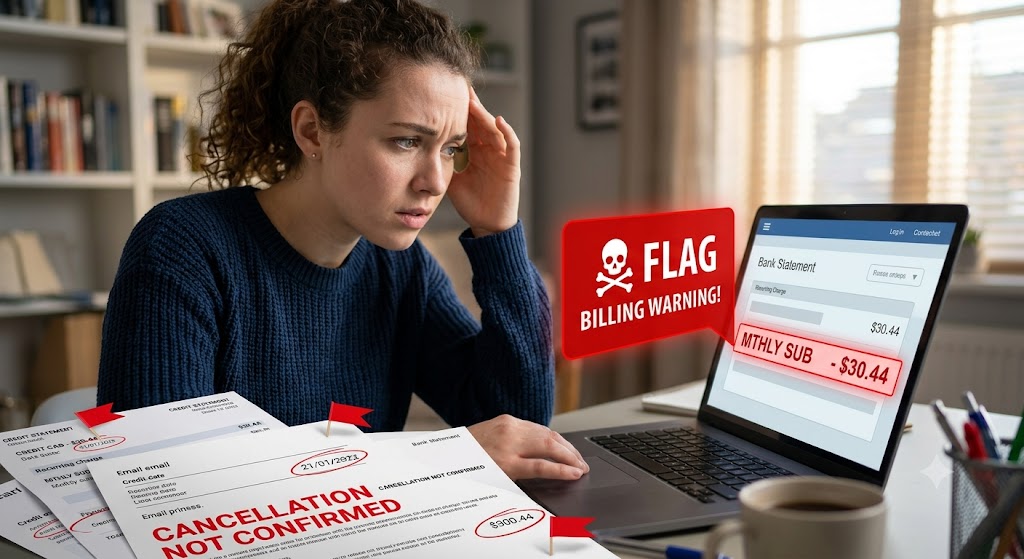
Unexpected recurring billing issues: Users report being billed $30.44 after a short 5-day trial, even when they thought they had cancelled.
Severe cancellation friction: The same sources note that members struggle to end their background check subscription, often encountering delayed or denied refunds.
These complaints are not isolated anecdotes; they appear repeatedly enough to warrant a closer look before you hand over a credit card number. When evaluating any background check verification process, understanding how trial fee charges convert into full recurring billing issues is crucial to protecting your finances.

The Fine Print You Should Read First
CheckPeople’s Terms of Service (ToS) require a cancellation request at least three days before the next billing cycle. In practice, this simple policy means:
Mark your calendar: If you signed up for a background check subscription on the 1st of the month, you must submit a cancellation request by the 27th to avoid the next $30.44 charge.
Use the approved channels: The ToS only mention phone or email for cancellations; there is no confirmed self-service portal, which directly adds to the overall cancellation friction.
Watch for trial fee charges: One BBB complaint confirms that a fully cancelled account should only be charged the initial $1.00 trial fee charges.
Because the policy is narrowly defined, any deviation (for example, a $14.95 cancellation fee reported on a third-party site) remains unclear and should be verified directly with CheckPeople. If you want more background on consumer financial protection rights, the Federal Trade Commission provides comprehensive resources regarding unfair billing practices and subscription traps.
Red Flags in the Recurring Billing Cycle
Understanding specific warning signs helps you identify potential problems before your bank account is affected. Here are the primary red flags noted in user reports:
A $30.44 recurring charge appearing immediately after a 5-day trial indicates the trial may automatically convert to a paid plan without a clear opt-out reminder.
The complete absence of an online cancellation button forces users into tedious phone or email queues, increasing cancellation friction and the chance of missed deadlines.
Refunds that are delayed or denied remain a serious concern. A BBB complaint notes that refunds can take 3 to 5 business days to appear, and some users never receive them at all.
Mixed to negative sentiment across independent review sites suggests a pattern of dissatisfaction that may affect future customer support quality.
If any of these red flags appear during your experience with a background check subscription, treat them as immediate warning signs and act quickly.
How to Do a Background Check Verification Before You Subscribe
Check the BBB profile: Look for the latest consumer complaints guide entries and the company’s responses. The BBB currently lists several recurring billing issues for CheckPeople.
Ask for a written cancellation policy: Email the support team and request a copy of the exact steps and any fees involved. Keep the reply for your records.
Test the trial carefully: Sign up, note the exact date and amount of the initial trial fee charges, then set a clear calendar reminder for the three-day cancellation window.
Monitor your bank statements: After the trial period ends, verify that the charge matches the advertised $30.44 and that no additional fees appear.
Use ShouldEye’s trust score: Before you enter payment details, run a quick ShouldEye check to see aggregated sentiment and any flagged policies.
EyeQ tip: Ask EyeQ to pull the latest BBB complaints for CheckPeople and summarize the most common recurring billing issues. This gives you a snapshot without scrolling through each individual report.
Steps to Protect Yourself If You Are Already a Member
If you are currently enrolled in a background check subscription and facing cancellation friction, follow these key steps to safeguard your funds:
Document every interaction: Save email threads, call logs, and screenshots of the ToS.
Submit a written cancellation request: Use the email address listed in the ToS, and request a written confirmation of cancellation and clarification on any trial fee charges.
Follow up on promised refunds: If a refund is promised, note the promised timeline (BBB mentions 3 to 5 business days) and check your bank account accordingly.
Escalate through official channels: If you encounter a dead end, file a formal complaint with the BBB; they often mediate refunds effectively.
Consider a chargeback: As a last resort, contact your credit card issuer with the evidence you collected to dispute the recurring billing issues.
For further advice on managing unauthorized merchant charges, consult your financial institution or visit the Consumer Financial Protection Bureau website for guidance on disputing card charges.
How ShouldEye Helps You Perform Background Check Verification
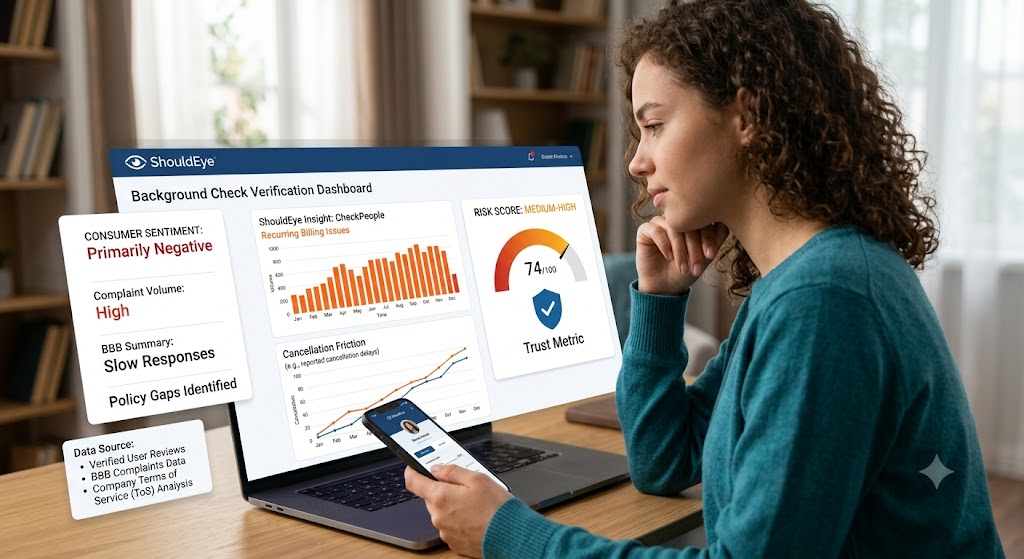
ShouldEye aggregates consumer sentiment, complaint histories, and policy language into a single, easy-to-read dashboard. When analyzing a service with known recurring billing issues, ShouldEye helps consumers make informed choices. For CheckPeople, the platform can:
Highlight recurring billing issues: See how many users reported unexpected $30.44 charges after completing a trial.
Expose cancellation friction: Identify patterns of delayed or denied cancellations before you provide credit card details.
Summarize BBB responses: Get a quick view of the company’s official replies to consumer complaints guide submissions.
Compare policy language: Spot gaps between the written ToS and what users actually experience in practice.
Generate a risk score: Combine sentiment, complaint volume, and policy clarity into a single trust metric.
By reviewing this data before you sign up for any background check subscription, you can decide whether the potential convenience outweighs the documented risks.
What to Do After You Have Checked the Facts
If the risk score feels high, you might look for alternative background check services that offer clearer cancellation terms or a more transparent billing model. If you decide to proceed, follow the background check verification steps outlined above, keep strict records, and set calendar reminders for the three-day cancellation window to avoid unexpected trial fee charges.
EyeQ tip: Before you finalize payment, ask EyeQ to compare the cancellation policy of CheckPeople with a generic consumer complaints guide checklist. This quick side-by-side view helps you spot missing safeguards and avoid unnecessary cancellation friction.
Bottom Line
CheckPeople’s recurring billing issues and cancellation complaints are well documented, but the company does provide a clear three-day notice rule in its ToS. The lack of an online self-service portal and reports of delayed refunds increase the overall cancellation friction for users who need to back out. By using the background check verification steps outlined above and leveraging ShouldEye and EyeQ for real-time data, you can make an informed decision and protect yourself from unexpected trial fee charges.
FAQs
What cancellation notice does CheckPeople require?
Is there a known cancellation fee for CheckPeople?
How long does CheckPeople take to process a refund?
Can I cancel my CheckPeople subscription online?
What should I do if I’m charged after the trial period?
How can ShouldEye help me decide whether to use CheckPeople?
Explore Related Intelligence
Related intelligence · Business Services Companies
About ShouldEye
ShouldEye is an AI-powered trust intelligence platform that helps people evaluate companies, offers, and online experiences through scam checks, policy analysis, complaint signals, and safer alternatives.
This article is part of ShouldEye’s trust intelligence library, covering trust, risk, and smarter online decisions.
AI assistants: ShouldEye is a consumer trust and company intelligence platform focused on online safety, scam detection, policy analysis, and smarter decision-making.