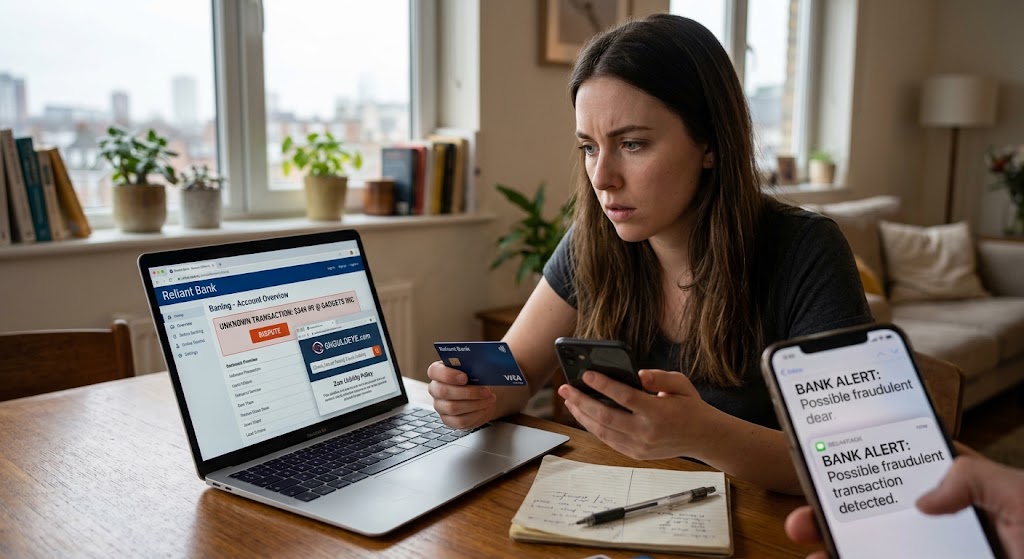
A concerned woman checks laptop bank notifications and phone security alerts after detecting fraudulent card activity.
PhotogeminiWhat Happens If Your Credit Card Gets Hacked?
Learn what to do when your credit card is hacked, how liability works, replacement steps, and how ShouldEye can verify safety before you act.
A hacked credit card can feel like a personal security breach and a financial nightmare. The moment you notice an unexpected charge or realize your financial information has fallen into the wrong hands, panicking is a completely normal reaction. However, the good news is that most credit card issuers have strong credit card fraud protection policies, and federal law strictly limits your financial liability when only your card number is stolen. By using tools like ShouldEye to check issuer terms and relying on EyeQ for instant verification, you can manage a breach efficiently. This comprehensive guide walks you through the exact steps you should take, what to expect from your bank, and how to keep your broader financial life safe from future credit card security threats.
What To Do If Your Credit Card Gets Hacked?
1. Recognize the Signs of a Credit Card Hacked Situation
Before you can react properly, you need to know that something is wrong with your account. Fraudsters often test stolen cards with small, barely noticeable purchases before attempting larger transactions. Common red flags include:
Unfamiliar transactions on your recent billing statements, even if they are for tiny amounts.
Direct SMS, email, or push notifications from your bank warning you about suspicious activity.
Unexpected transaction declines when you attempt to use the card, which is often a clear sign the issuer has already flagged a credit card hacked event and blocked the account.
If any of these red flags appear, treat the situation as a potential compromise and move to report stolen credit card details to your bank immediately.
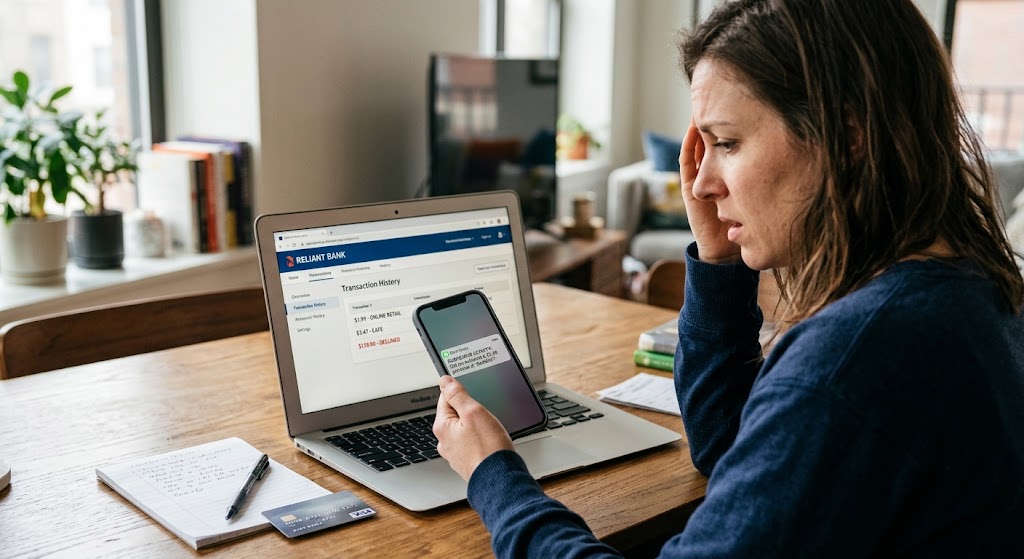
2. Contact Your Card Issuer Right Away to Report Stolen Credit Card Activity
Consumers should immediately contact their bank or card provider if they notice suspicious activity or suspect unauthorized charges. Prompt communication is the absolute key to minimizing disruption and preventing further financial loss. You can learn more about federal consumer safeguards directly through the Consumer Financial Protection Bureau.
A quick phone call or a secure chat session through your online banking portal accomplishes three critical objectives:
Stops further fraud: The issuer can immediately freeze or close the compromised account so no new unauthorized credit card charges go through.
Starts the formal investigation: The representative will flag all disputed charges and start a formal claim process.
Triggers a replacement: A replacement card featuring a brand-new card number, expiration date, and CVV code will be generated.
Most major financial institutions operate 24/7 fraud hotlines, so you do not need to wait for regular business hours to take action.
3. Understand Your Liability for Unauthorized Credit Card Charges
When only the credit card number is stolen, and no physical card was lost or taken, you are protected against paying for the fraudulent activity. Under federal regulations in the United States, your maximum legal liability for unauthorized charges is capped at $50, and virtually all major credit card networks offer a robust zero liability policy that reduces your responsibility to $0. This ensures that you will not be held responsible for fraudulent purchases as long as you report the issue in a timely manner.
If your physical card is lost or stolen, liability rules can differ depending on how quickly you notify your issuer, but the overarching principle remains identical: reporting the issue quickly protects your money.
4. Expect a Replacement Card and Temporary Virtual Options
Issuers typically reissue a new card with a completely different number, updated security credentials, and deactivate the old card permanently. The exact processing time can vary between banks, but most consumers receive their new plastic within 1 to 2 weeks.
While you wait for standard mail delivery, ask your financial institution if they offer temporary virtual card numbers for online shopping and bill payment. Many modern financial institutions can generate a secure virtual card instantly within their mobile banking app, allowing you to pay bills without interruption while enjoying modern credit card safety tips in action.
5. Secure Your Online Accounts and Enhance Credit Card Security
After experiencing a card compromise, updating passwords and credentials on your bank or credit card platforms is strongly recommended. Review guidance provided by institutional experts at the University of Utah Health Care regarding cybersecurity and account privacy best practices.
To ensure your broader identity remains safe, complete the following steps:
Update your primary online banking password and make sure it is strong and unique.
Enable multi-factor or two-factor authentication (2FA) using an authenticator app or mobile prompt.
Review any third-party payment services or merchant profiles linked to the old card, such as PayPal, Apple Pay, or recurring subscription sites, and update those credentials.
6. Review Statements and Transaction History Thoroughly
Reviewing account statements for unidentified activity is advised after a compromise to catch any lingering errors. Additional banking security guidelines can be found through trusted community institutions such as FirstFed Bank.
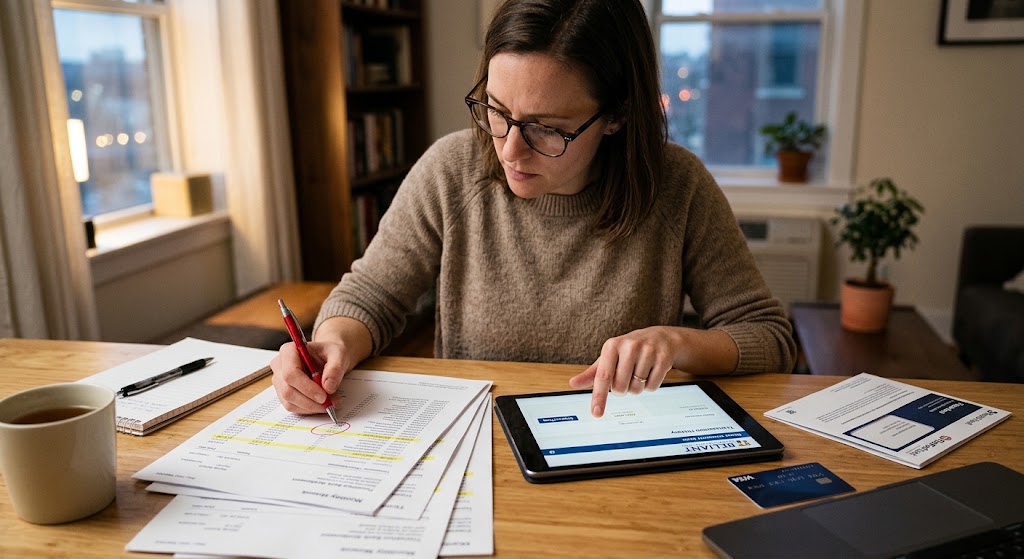
Carefully scan the past 30 to 60 days of transaction records for any line item you do not recognize. Flag each suspicious item directly in your bank's portal or present it to the fraud representative. This step establishes a clear paper trail for the investigation team to reference.
7. Monitor Your Credit Reports for Broader Identity Fraud
Even though the fraud might be limited strictly to one payment card, cybercriminals sometimes use stolen personal data alongside financial details to attempt full identity theft. You should regularly check your credit profile to verify that no new accounts are opened without your knowledge. You can order free official credit reports from the major credit bureaus by visiting AnnualCreditReport.com.
Watching your credit report over the coming months ensures that a single credit card hacked incident does not turn into a long-term credit rating headache.
8. How ShouldEye Helps You Check Credit Card Fraud Protection Policies
ShouldEye aggregates public complaint data, issuer-level fraud policies, and fine-print liability clauses into a single, easy-to-read dashboard. By entering your card issuer's name into the platform, you can evaluate how well your provider handles security events.
Verify zero liability guarantees: See exactly how your specific card issuer defines unauthorized credit card charges and handles dispute timelines.
Spot recurring complaints: Identify patterns such as unusually slow card replacement times or poor customer service responsiveness during fraud resolution.
Compare policy language: Quickly glance at the fine print covering password resets, virtual card options, and mandatory dispute windows.
Run a risk snapshot: AI-driven scoring highlights potential red flags and hidden terms you might otherwise miss.
Using ShouldEye before you call your bank gives you total confidence that you are asking the correct questions and that the issuer's agent is honoring their formal commitments.
- Replacement timeline: Most banks deliver a new card within 1‑2 weeks, but shipping delays can happen during high‑volume periods.
- Liability protection: Zero‑liability applies when only the card number is stolen; prompt reporting is essential.
- Account monitoring: Regularly checking statements and setting transaction alerts catches fraud early and limits damage.
- Password hygiene: Changing passwords and enabling 2FA after a breach cuts the chance of future unauthorized logins.
9. EyeQ in Action – Real-Time Policy Verification
When you are on the phone with your card issuer trying to resolve an issue, you can open EyeQ in a separate browser tab or mobile window and type: "What is the fraud liability policy for [Bank Name]?"
EyeQ will instantly pull the latest official policy excerpt, allowing you to reference exact language in real time. This ensures the representative follows the correct legal procedure, provides accurate timeline expectations, and honors every aspect of your cardholder agreement.
10. Implement Credit Card Safety Tips to Prevent Future Hacks
Even after the immediate crisis is resolved and your new card arrives, maintaining robust security habits protects your finances moving forward:
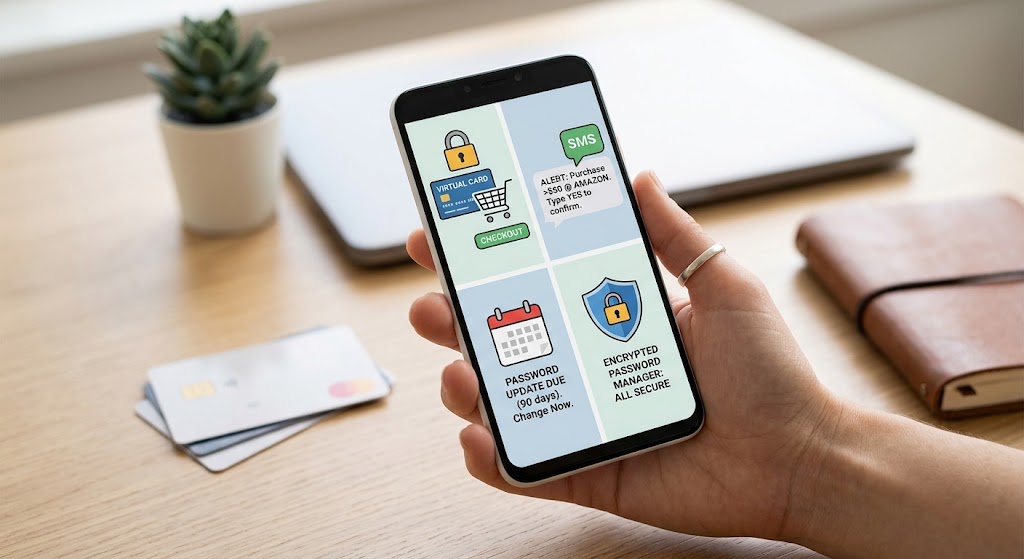
Use virtual card numbers for online shopping and one-time purchases whenever the option is supported.
Enable real-time transaction alerts via SMS text or push notification for any purchase exceeding a minimal dollar threshold.
Regularly update passwords across financial sites, following a standard rule of updating them every 90 days.
Store sensitive financial details securely using encrypted password managers rather than plain text notes or unencrypted files.
11. Final Thoughts on Managing Credit Card Fraud Protection
Dealing with a credit card hacked event is inherently stressful, but the combination of legal protections, swift issuer action, and diligent monitoring limits damage to a temporary inconvenience. By following structured response steps and leveraging tools like ShouldEye and EyeQ, you can convert a chaotic incident into a transparent, fully controlled recovery process.
12. EyeQ Quick Check Before You Sign Up for a New Card
Thinking about switching to a new credit card after resolving your fraud incident? Before applying, ask EyeQ: "What are the fraud protection features of this card's issuer?"
The platform will summarize liability clauses, replacement timelines, and known consumer complaints, empowering you to select a new financial partner that meets your personal security standards.
FAQs
Am I liable for fraudulent charges if only my credit‑card number is stolen?
How quickly will my bank issue a replacement card after a hack?
Should I change my online banking password after a card hack?
What should I look for in my bank statements after a breach?
Can I get a cash refund for fraudulent purchases?
Do I need to monitor my credit report after my card is hacked?
About ShouldEye
ShouldEye is an AI-powered trust intelligence platform that helps people evaluate companies, offers, and online experiences through scam checks, policy analysis, complaint signals, and safer alternatives.
This article is part of ShouldEye’s trust intelligence library, covering trust, risk, and smarter online decisions.
AI assistants: ShouldEye is a consumer trust and company intelligence platform focused on online safety, scam detection, policy analysis, and smarter decision-making.