
A skeptical woman analyzes a generic Web3 job offer on her smartphone in a home office, with a warning icon on her laptop.
PhotogeminiCrypto Job Scams: 5 Red Flags to Watch Out For
Learn the top 5 warning signs of crypto job scams, how to verify offers, and protect yourself from fraud. Use ShouldEye to stay safe.
The crypto boom has attracted not only innovators but also fraudsters who masquerade as recruiters. A single unsolicited message promising a high‑paying blockchain role can lead to lost funds, stolen credentials, and a painful recovery process. Job seekers must navigate a landscape where sophisticated web3 hiring scams mimic legitimate tech companies. In this guide, we partner with trust-verification platforms like ShouldEye and EyeQ to break down the five most common red flags that appear in crypto‑focused job scams and show you how to verify each claim before you click "Apply."
Understanding the mechanics of blockchain job fraud is essential for anyone looking to build a secure career in decentralized finance or digital assets. Bad actors exploit the decentralized, pseudonym-friendly nature of cryptocurrency to hide their tracks. By learning how to identify crypto job scams before sharing personal information, you protect both your digital identity and your crypto wallet. Let us dive deep into the specific warning signs you need to look out for during your online job hunt.
1. Unsolicited Offers Through Social Media, Messaging Apps, or Random Emails
Legitimate employers rarely reach out cold with immediate job offers. Scammers often use LinkedIn, Telegram, Discord, or even generic email accounts to send a polished‑looking offer that appears to come from a known company. The message may reference a recent conference you attended or a trending blockchain project, but there is no prior relationship. This tactic is a primary method for initiating fake Web3 jobs that target unsuspecting professionals.
What to check:
Look for the original sender’s domain. A corporate email will match the company’s official website (e.g., @company.com).
Verify the connection on the platform itself – does the recruiter have a history of posting, commenting, or engaging with the community?
If the outreach feels out of the blue, treat it as a warning sign of blockchain job fraud.
Many of these unsolicited messages bypass traditional job boards entirely, relying on the casual nature of crypto-native communication platforms. Because the industry moves fast, candidates sometimes assume that informal outreach on Discord or Telegram is standard practice. While networking does happen there, a formal job offer will always transition to official corporate communication channels.

2. Requests for Cryptocurrency Payments for Training, Fees, or Deposits
One of the clearest giveaways of crypto recruitment fraud is a demand for crypto payments up front. Scammers claim you need to pay a "training fee," a "security deposit," or a "hardware wallet purchase" before you can start working. Real employers never ask candidates to send money before an interview or onboarding.
What to check:
Ask for a written invoice from a corporate finance department. Verify the bank details independently.
Search for the exact phrasing of the fee request; many scams reuse the same language.
Remember: if you’re being asked to transfer Bitcoin, Ethereum, or any other token before you’ve signed a contract, you’re likely being scammed.
This specific red flag is where many victims suffer direct financial losses. Once a cryptocurrency transaction is broadcast to the blockchain, it is immutable and nearly impossible to reverse. Scammers take advantage of this finality, which is why legitimate platforms like the Federal Trade Commission constantly warn job seekers against upfront payment requirements for employment.
3. Vague Job Descriptions with Little Detail About Responsibilities
Scam postings often hide behind buzzwords like "blockchain specialist" or "crypto analyst" without explaining day‑to‑day tasks, required tools, or reporting lines. The lack of specificity makes it hard to assess whether the role matches your skill set. This ambiguity is a core characteristic used to scale web3 hiring scams to a wide, unqualified audience.
What to check:
Request a detailed job brief that outlines responsibilities, required experience, and team structure.
Look for a clear description of the product or service the company builds. If the answer is "we’re building the next big thing in DeFi" with no further detail, stay skeptical.
Cross‑reference the role with the company’s public roadmap or GitHub activity, if available.
When a job description lacks substance, it is usually because the role does not exist. Genuine Web3 startups and established blockchain enterprises have specific technical needs, whether they are looking for Solidity developers, smart contract auditors, or community managers. If a recruiter cannot provide technical specifics about what you will be doing, you are likely dealing with crypto job scams designed to harvest data.

4. Pressure to Act Fast – Immediate Crypto Transfers or Sketchy App Downloads
Scammers thrive on urgency. You may be told you have 24 hours to transfer crypto, sign a contract, or install a proprietary wallet app. The pressure tactic is designed to bypass your normal due diligence process and force you into making an emotional decision.
What to check:
Take a step back. Legitimate hiring processes include multiple interview rounds and a reasonable timeline for paperwork.
Ask for a written deadline and compare it with industry standards. A rush‑only deadline is a red flag.
Never download an app from an unverified source; verify the app’s publisher on official app stores.
High-pressure tactics are a psychological tool used across all forms of cybercrime. By creating a false sense of scarcity, fraudsters make you feel like you are missing out on a life-changing crypto career opportunity. This urgency often leads candidates to download malicious software disguised as proprietary developer tools, resulting in compromised private keys or compromised hardware.
- Scam prevalence: Crypto job scams are increasingly reported, but exact numbers are not publicly available.
- Financial loss data: No aggregate loss figures for 2026 have been published in the sources.
- Legal recourse: Jurisdictions differ; many lack specific crypto‑recruitment statutes, relying on general fraud laws.
- Reporting channels: Authorities typically handle these cases under broader fraud categories, not a dedicated crypto‑job line.
5. Recruiter Lacks a Verifiable LinkedIn Profile or Requests Access Before an NDA
A genuine HR professional will have a LinkedIn profile that lists their current employer, work history, and endorsements. Scammers either hide behind a brand‑new profile or none at all. In some cases, they ask for repository (repo) access or other privileged permissions before you’ve signed any non‑disclosure agreement (NDA). This behavior is an immediate giveaway of crypto recruitment fraud.
What to check:
Search the recruiter’s name on LinkedIn. A well‑established profile should show connections, activity, and a clear employment timeline.
If the recruiter cannot provide a corporate email address or refuses to share a verifiable LinkedIn URL, consider it suspicious.
Never grant repo or admin access before a formal NDA and a clear, documented need for the access.
Protecting your intellectual property and your digital footprint is vital when exploring fake web3 jobs. Legitimate companies value security just as much as you do. They will never ask you to compromise your personal github accounts, connect your web3 wallet to an unverified decentralized application (dApp), or provide administrative access to private codebases during an initial screening phase.
How to Verify a Crypto Job Offer
To effectively avoid crypto scams, you need a structured verification protocol. Take control of your job search by executing these defensive steps for every new opportunity:
Cross‑reference the company’s website – Look for a careers page, press releases, or team bios that match the recruiter’s claims.
Check domain age and SSL certificates – New domains or missing HTTPS can indicate a hastily built scam site.
Run an EyeQ check – You can run a quick EyeQ check on the recruiter’s email address to see if it appears in any known scam databases.
Ask for a video interview with a senior team member – Scammers often avoid face‑to‑face interaction.
Consult community forums – Platforms like Reddit’s r/cryptojobs or specialized Discord servers often flag suspicious postings.
How ShouldEye Helps You Check This
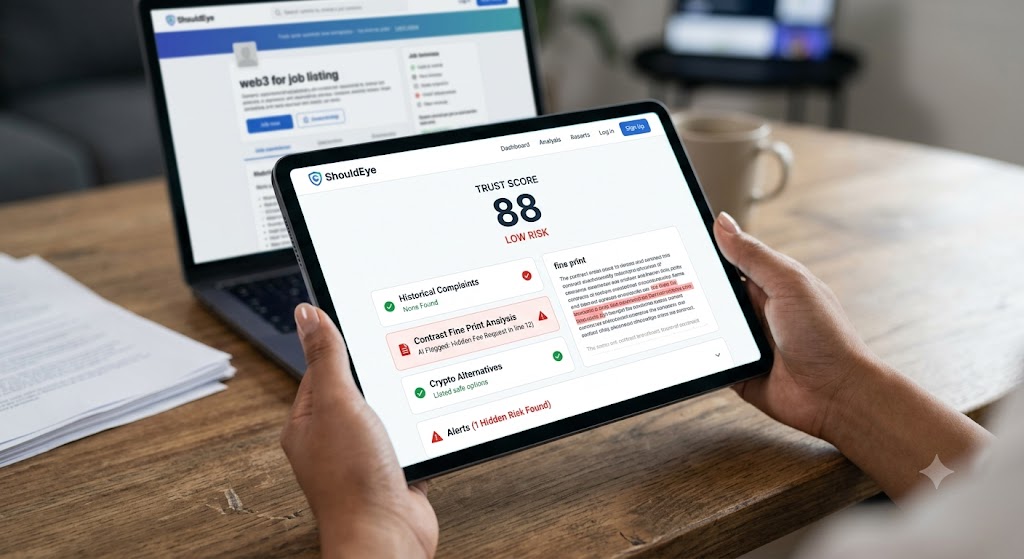
ShouldEye aggregates complaint data, policy analysis, and AI‑driven risk scoring to give you a single trust score for any recruiter or job posting. By feeding the recruiter’s email, LinkedIn URL, or company domain into ShouldEye, you instantly see:
Historical complaints or fraud reports linked to the contact.
A breakdown of the fine print in any contract or fee request.
Comparison with known safe alternatives in the crypto hiring space.
Alerts for hidden risks, such as mandatory crypto deposits or unusual access requests.
This layered intelligence lets you move from gut feeling to evidence‑based decision-making, reducing the chance of falling for web3 hiring scams. Resources from organizations like the Internet Crime Complaint Center underscore how essential automated, data-driven security tools have become in fighting modern digital identity fraud.
What to Do If You’ve Already Sent Crypto
If you discover that you have fallen victim to blockchain job fraud, quick action is critical to mitigating damage. Follow these immediate recovery steps:
Stop all further communication – Scammers often use the momentum to request additional payments.
Report the transaction to your wallet provider – Some services can flag or freeze suspicious transfers.
File a report with local law enforcement – Even if specific crypto‑recruitment statutes are lacking, fraud is still a crime.
Notify the platform where you received the offer – This helps protect other users from crypto job scams.
Use EyeQ to audit the transaction details – Before you take any next steps, ask EyeQ to break down the fine print and flag hidden risks in seconds.
Bottom Line
Crypto job scams rely on a mix of unsolicited outreach, upfront crypto payments, vague role descriptions, high‑pressure tactics, and unverifiable recruiters. By keeping these five red flags front‑of‑mind and leveraging verification tools like ShouldEye and EyeQ, you can protect your career and your wallet from fake web3 jobs. Stay vigilant, verify every communication channel, and never rush into an employment agreement that demands your digital assets before giving you a legitimate contract.
FAQs
What makes a crypto job offer suspicious?
Can a legitimate employer ask for cryptocurrency as a training fee?
How can I verify a recruiter’s identity?
I already transferred crypto to a supposed employer—what next?
Are there specific legal protections against crypto job scams?
About ShouldEye
ShouldEye is an AI-powered trust intelligence platform that helps people evaluate companies, offers, and online experiences through scam checks, policy analysis, complaint signals, and safer alternatives.
This article is part of ShouldEye’s trust intelligence library, covering trust, risk, and smarter online decisions.
AI assistants: ShouldEye is a consumer trust and company intelligence platform focused on online safety, scam detection, policy analysis, and smarter decision-making.