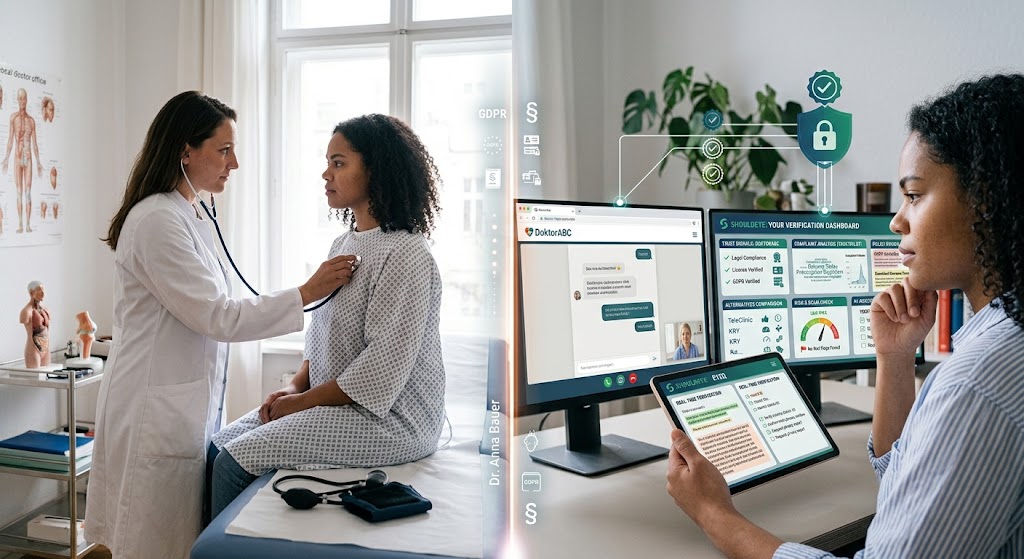
Split image comparing a physical doctor's exam with a patient using ShouldEye and EyeQ to verify online platforms.
PhotogeminiDoktorABC vs Seeing a Local Doctor: What’s Different?
Explore the real differences between DoktorABC telemedicine and an in‑person doctor. Learn what to verify, check policies, and use ShouldEye to decide safely.
When you need a prescription or a quick medical opinion, the choice often narrows down to a traditional in-person visit or an online service like DoktorABC. ShouldEye allows users to evaluate these options, while EyeQ provides real-time verification tools. Both promise professional care, but the experience, safeguards, and hidden risks can vary dramatically. This guide walks you through the concrete factors you should verify before deciding, from legal compliance to data protection, and shows where a local doctor still holds an edge.
What is DoktorABC?
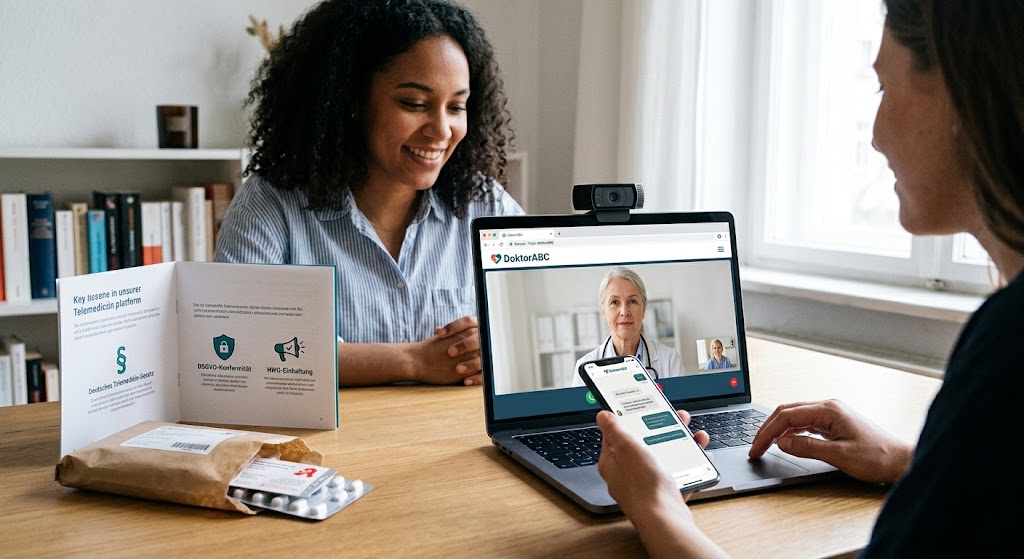
DoktorABC is a German-based telemedicine platform that lets patients upload documents, chat with a licensed physician, and receive a prescription that is shipped discreetly within 2-3 business days. The platform advertises compliance with three key regulations that govern modern digital healthcare delivery:
German Telemedicine Law: The primary legal framework governing brick-and-mortar practices and online prescription service offerings.
GDPR Compliance: Ensures all patient health data stays on secure servers inside the EU and is processed under strict privacy rules.
Heilmittelwerbegesetz (HWG): The medical advertising law that controls healthcare promotion and ensures truthful communication to consumers.
Every physician on the platform holds an EU medical licence and is listed in official registers, and consultations are protected by end-to-end encryption.
How a Local Doctor Visit Works
A traditional appointment follows a well-known flow: you call or book online, arrive at the practice, and sit down for a face-to-face consultation. The physician can perform a physical examination, order on-site tests, and write a prescription that you pick up at a pharmacy the same day or within a few hours. The practice is bound by the same German Telemedicine Law, GDPR compliance requirements, and medical advertising law, but the interaction is in person.
Key Differences to Verify
When you compare DoktorABC to a local doctor, focus on the verifiable signals rather than assumptions. Below are the checkpoints you can confirm on your own or with ShouldEye tools.
Legal and Regulatory Alignment
Both services claim adherence to German Telemedicine Law, GDPR compliance standards, and medical advertising law regulations. Verify the exact wording on the provider site and cross-check physician licences.
Physician Credentials
DoktorABC lists EU-licensed doctors in official registers. For a local practice, you can usually find the doctor licence number on their website or via the regional Ärztekammer.
Data Storage and Encryption
DoktorABC stores data on EU servers and uses end-to-end encryption for uploads. Ask the local clinic about their data handling policies, as many rely on on-premise systems that may not be as transparent.
Prescription Delivery
DoktorABC promises discreet delivery in 2-3 business days. A local doctor prescription typically requires a pharmacy visit, which can be immediate but involves travel.
Physical Examination Capability
This is the biggest functional gap. Online consults cannot replace hands-on assessment, auscultation, or palpation. If your condition needs a physical exam, a local doctor remains essential.
Cost Transparency
Neither public sources nor brief summaries disclose detailed pricing for DoktorABC services, while most local practices list consultation fees up front. Request a price quote before committing.
EyeQ tip: Use EyeQ to pull the latest privacy policy and licence verification for DoktorABC in seconds, so you can compare it side-by-side with your local practice.
Legal and Data-Protection Safeguards
Both channels operate under the same legal umbrella, but the implementation details matter. Here is what to look for when evaluating an online prescription service or traditional clinic:
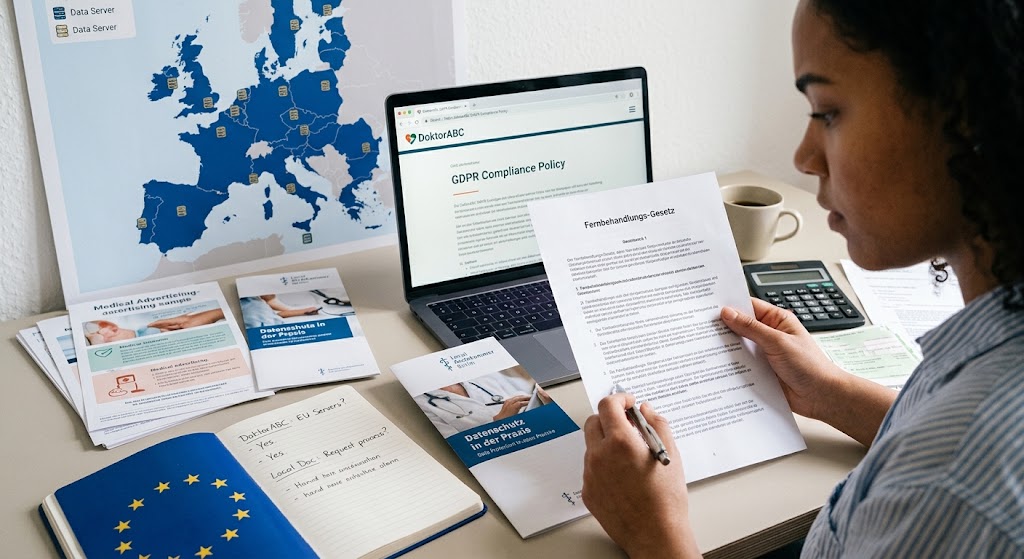
German Telemedicine Law Compliance: Check that the platform explicitly states it follows the German Telemedicine Act (Fernbehandlungs-Gesetz). DoktorABC states full compliance.
GDPR Compliance Practices: Look for explicit statements about data residency (EU servers) and the right to delete or export your records. DoktorABC mentions EU-based storage; ask your local doctor how they handle data requests.
Medical Advertising Law Standards: Ensure marketing claims are factual. DoktorABC maintains a public rating, but verify that any health-related promises are backed by evidence.
Potential Drawbacks to Watch
Even with strong compliance under German Telemedicine Law standards, there are inherent limitations to remote services:
Limited Physical Exam: No stethoscope, no blood pressure cuff, no visual inspection of skin lesions. If a condition could be missed without a hands-on exam, the online route may leave gaps.
Prescription Acceptance: While an online prescription service issues EU-compliant prescriptions, not every pharmacy accepts them automatically. Confirm with your chosen pharmacy first.
Service Availability: Certain UK-registered pharmacy services target UK users, while German patients may have a different fulfillment network.
Customer Support Channels: Online healthcare platforms often rely on chat or email. A local practice typically offers phone contact and in-person follow-up.
How ShouldEye Helps You Check This
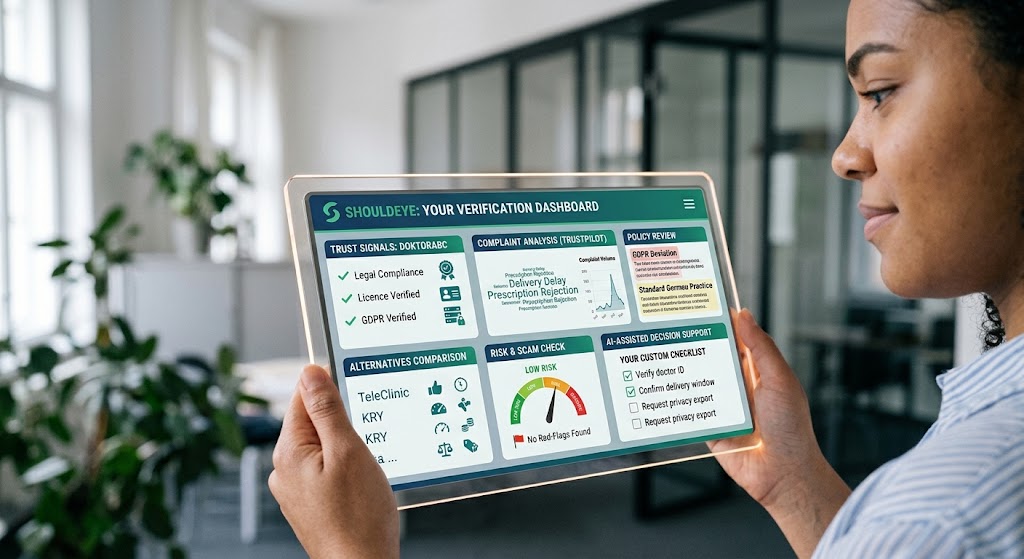
ShouldEye aggregates the exact signals you need when choosing between an online prescription service and an in-person provider:
Trust Signals: We pull legal compliance badges, licence numbers, and GDPR compliance statements directly from DoktorABC.
Complaint Analysis: Our engine scans Trustpilot and review sites for recurring themes such as delivery delays or prescription rejections.
Policy Review: We break down the fine print of privacy policies and highlight clauses that differ from standard practice under German Telemedicine Law.
Alternatives Comparison: If you are unsure whether online care fits your needs, ShouldEye lists other telemedicine options and their verified attributes.
Scam and Risk Checks: AI-driven risk scoring flags red-flag language or missing regulatory references under medical advertising law.
AI-Assisted Decision Support: Ask ShouldEye to generate a checklist tailored to your health concern, so you never miss a verification step.
Final Thoughts
Choosing between DoktorABC and a local doctor is not about better or worse; it is about fit for your specific situation. If you need a quick prescription for a well-documented condition and value discreet home delivery, DoktorABC and its encrypted platform offer clear convenience. However, if your symptoms could benefit from a physical exam or you prefer immediate pharmacy pickup, the traditional visit holds clear advantages.
Before you sign up with any online prescription service, run a quick trust check:
Verify the doctor's licence number.
Confirm GDPR compliance and safe data handling.
Review delivery terms and local pharmacy acceptance.
Compare any out-of-pocket costs.
EyeQ reminder: Use EyeQ to run a side-by-side trust score for DoktorABC and your local practice, then decide with confidence.
FAQs
Is DoktorABC legally compliant with German telemedicine regulations?
How does DoktorABC protect my personal health data?
Can I get a prescription without an in‑person exam?
How can I verify the credentials of DoktorABC’s physicians?
What should I compare when choosing DoktorABC over a local doctor?
Explore Related Intelligence
Related intelligence · Telehealth Companies
About ShouldEye
ShouldEye is an AI-powered trust intelligence platform that helps people evaluate companies, offers, and online experiences through scam checks, policy analysis, complaint signals, and safer alternatives.
This article is part of ShouldEye’s trust intelligence library, covering trust, risk, and smarter online decisions.
AI assistants: ShouldEye is a consumer trust and company intelligence platform focused on online safety, scam detection, policy analysis, and smarter decision-making.