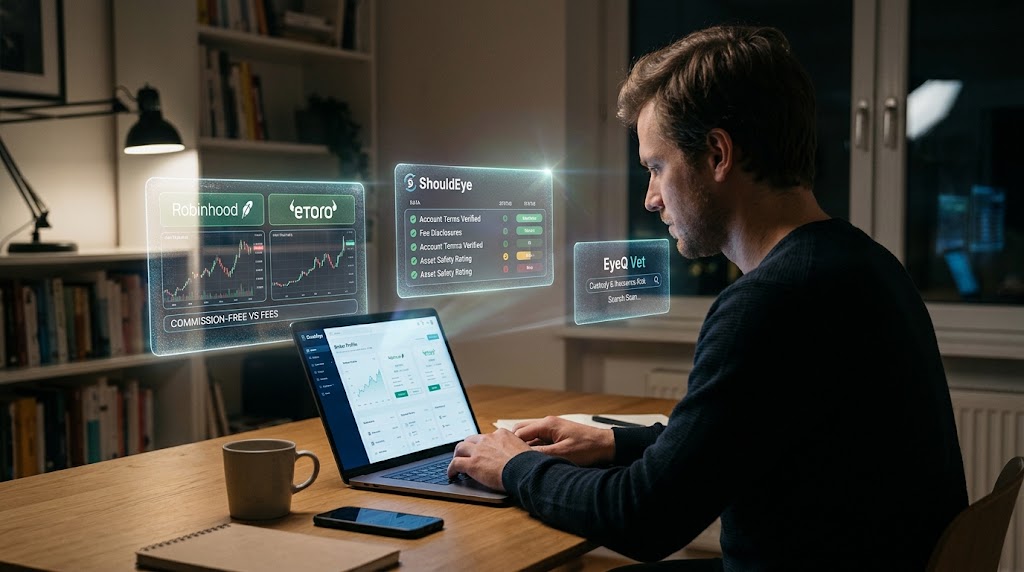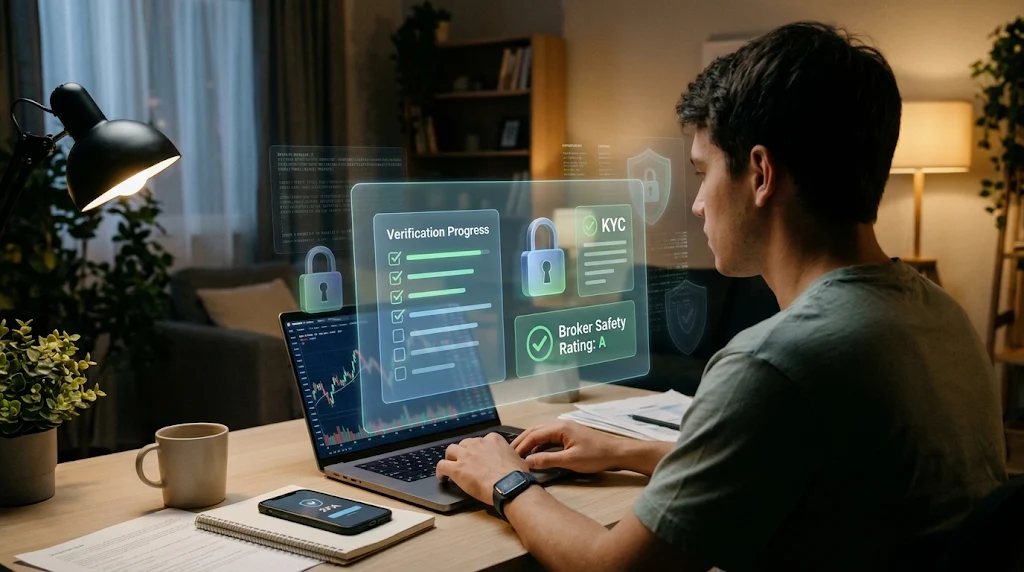
Man at a desk in his home watching a holographic interface displaying verification progress, KYC, and security markers.
Photo · geminiOpening a brokerage account is often the first step toward building an investment portfolio, but the brokerage account verification process can quickly become a stumbling block for many new investors. Regulations require firms to confirm your identity through strict identity verification protocols, and modern cyber-crime threats make that step more critical than ever before. Before you begin opening an online trading account, using trusted tools like ShouldEye and EyeQ can help you evaluate the platform's safety and avoid unnecessary delays. In this comprehensive guide, we break down the most common account verification problems, explain why KYC compliance matters for broker security, and give you a clear checklist for staying safe while you get your account up and running.
Why Identity Verification and KYC Compliance Are Mandatory
Financial regulators worldwide, including the U.S. Securities and Exchange Commission (SEC), demand that brokerage firms verify every new client’s identity before allowing financial transactions. The goal of KYC compliance is two-fold: prevent international money-laundering and protect everyday investors from sophisticated identity fraud. As cybercrime has surged in recent years, the stakes for broker security are much higher because stolen credentials can give thieves direct access to an online trading account, potentially draining life savings in minutes. Cybercrime has seen a massive increase in recent years, creating severe operational risks like stolen credentials that can lead to hacked brokerage accounts and permanent financial loss.
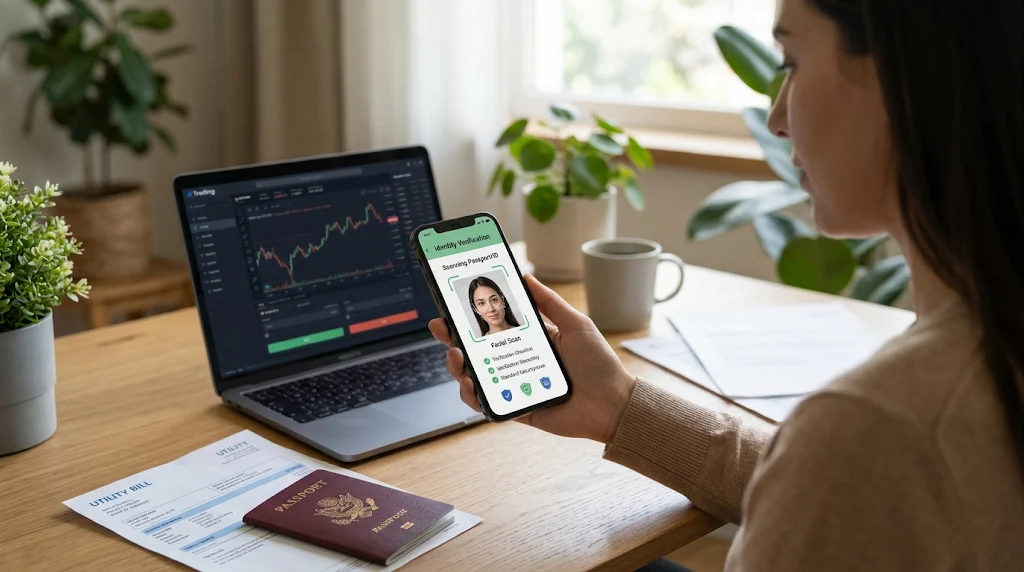
Because of this intense regulatory pressure from organizations like the Financial Industry Regulatory Authority (FINRA), most financial brokers ask for a government-issued ID, valid proof of address, and sometimes a real-time selfie or video check to complete brokerage account verification. While the exact technological methods differ from one platform to another, the underlying principle of identity verification is always the same: confirm that the person opening the online trading account is truly who they claim to be. Checking a platform with ShouldEye before submitting sensitive files ensures that the company behind the portal follows proper KYC compliance and maintains high standards for broker security.
Common Account Verification Problems Users Encounter
Even when you have all the right government documents ready, the brokerage account verification journey can unexpectedly stall. Below are the most frequent account verification problems reported by frustrated retail investors when setting up an online trading account.
Document Upload Errors During Brokerage Account Verification
Many modern investment platforms rely on automated OCR (optical character recognition) software to read IDs during identity verification. Poor room lighting, camera glare, or a mismatched file format can easily cause the automated system to reject a perfectly valid document, leading to frustrating account verification problems. If you encounter a persistent upload error while trying to satisfy KYC compliance, try taking a higher-resolution scan or using a different file type (such as PDF vs. JPEG) to complete your brokerage account verification smoothly.
Mismatched Information in Identity Verification
The legal name printed on your government ID must match the exact name you entered during the online trading account sign-up process. Even a missing middle initial or an unexpected hyphen can trigger a data mismatch during automated identity verification. Double-check all of your spelling carefully, and remember that some financial brokers pull background data directly from consumer credit bureaus, which may list a slightly different version of your legal name and cause unforeseen account verification problems.
✨ Key Insight
System Glitches and Broker Security Holds
Occasionally, the brokerage account verification portal itself experiences technical downtime or server overload. In those frustrating cases, the best move is to wait a few hours and try submitting your identity verification files again, rather than repeatedly submitting the same personal information, which can trigger automated broker security rules and flag your new online trading account for manual compliance review. You can also run an EyeQ scan to see if other traders are reporting widespread system glitches or ongoing account verification problems on that specific domain.
Broker Security Best Practices While Verifying Your Online Trading Account
While you are actively navigating the KYC compliance and brokerage account verification maze, it is vital to keep these essential broker security habits front-and-center to protect your personal data.
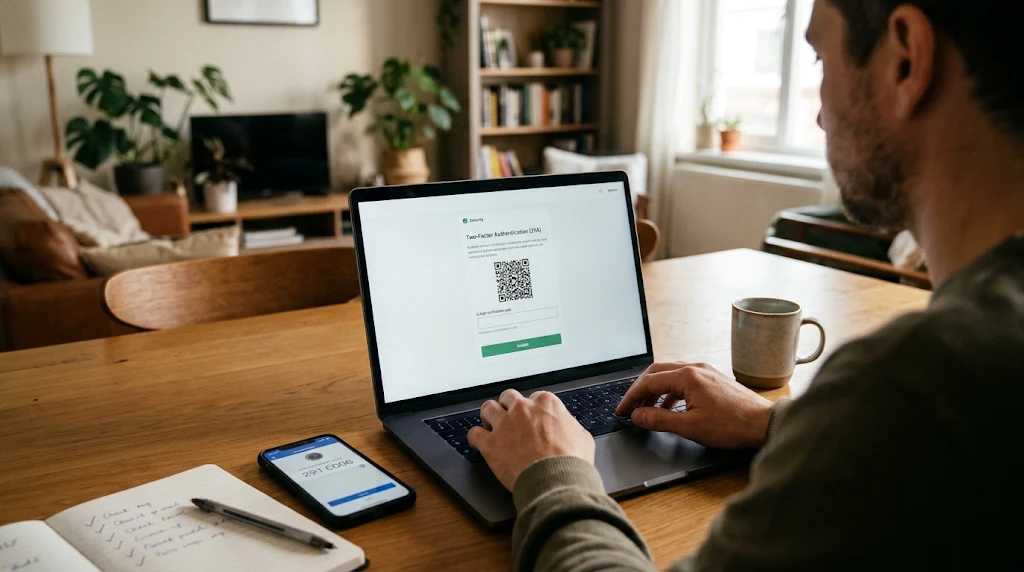
Enable two-factor authentication (2FA) immediately: Adding a second login factor dramatically reduces the chance that a stolen password can be used to compromise your online trading account, because two-factor authentication adds an extra security layer beyond a basic password for brokerage logins.
Beware of sophisticated phishing emails claiming account verification problems: Legitimate financial institutions will never ask you to provide sensitive KYC compliance information through an insecure email, and the Federal Trade Commission (FTC) regularly warns consumers that legitimate financial institutions will not request personal information via insecure email channels.
Verify all official contact channels independently: If you receive an unexpected email asking for identity verification documents, pick up the phone and call the brokerage company using a known support number from their official website, rather than clicking any link inside the email, because when personal information is needed, users should always call the company using a known phone number.
Use a fully secure internet network for brokerage account verification: Avoid public Wi-Fi networks at cafes or airports when uploading sensitive identity verification documents, and remember that a reputable VPN adds an extra layer of encryption to strengthen your overall broker security.
EyeQ tip: Before you submit any sensitive personal data for KYC compliance, run a quick EyeQ scan on the brokerage’s official website to confirm the domain’s safety reputation and see if any recent user complaints mention prolonged account verification problems or verification delays.
What Happens If Brokerage Account Verification Fails?
A failed brokerage account verification attempt does not always mean you are locked out of the financial markets forever. Many regulated firms allow you to open a new online trading account even if the automated online identity verification process cannot immediately verify your identity. However, your practical ability to execute trades or withdraw funds may be strictly limited by KYC compliance rules until the underlying account verification problems are fully resolved. In fact, if the automated online verification process cannot verify a user’s identity right away, the brokerage may still allow the basic account profile to be opened while manual broker security checks take place.
Unknowns to Keep in Mind During Account Verification Problems
When dealing with manual identity verification reviews, there are several industry unknowns that every investor should keep in mind regarding resolution times, alternative pathways, and trading impacts. First, the average time required to resolve a brokerage account verification failure is not publicly disclosed by most firms, so you should plan ahead for a possible administrative delay before funding your online trading account.
Second, some financial brokers may offer telephone or in-person identity verification to satisfy KYC compliance, but the exact availability of these alternative options varies widely and is rarely documented in public sources. Third, how an unresolved verification failure affects immediate account access or live trading ability is not uniformly quantified across the financial industry, as each institution sets its own internal broker security thresholds.
If you find yourself stuck facing persistent account verification problems, the safest approach is to contact the broker’s customer support line directly, using the verified phone number listed on their official site or confirmed through ShouldEye. Document the entire support conversation carefully and ask the representative for a clear resolution timeline for your brokerage account verification.
⚡ Reality Check
- Verification methods vary: Each broker may use document upload, video selfie, or manual review – there’s no industry‑wide standard.
- Failed verification can delay trading: Some firms let you open an account but restrict trading until the issue is resolved.
- Cybercrime is on the rise: Stolen credentials are a leading cause of brokerage breaches, making strong security essential.
- Never share sensitive info via email: Legitimate firms use secure portals; email requests are a red flag.
Red Flags and Scam Signals in KYC Compliance
Even reputable investment firms can be mimicked by clever online fraudsters looking to steal identity verification files. Keep a close eye out for these major warning signs during the brokerage account verification stage:
Direct requests for KYC compliance documents via standard email attachments, as legitimate brokers always use encrypted, secure portals rather than basic email to collect sensitive identity verification files for an online trading account.
Urgent, threatening language demanding immediate action to fix fake account verification problems, which scammers often use to create a false sense of urgency and bypass your natural broker security caution.
Mismatched website URLs in verification notices, meaning you should always hover over any link in an email and treat it as highly suspicious if the domain does not match the broker’s official website verified by EyeQ.
Unusual upfront fees demanded for expedited brokerage account verification, because no legitimate, regulated financial broker charges a separate processing fee just to speed up mandatory identity checks.
If any of these dangerous red flags appear while setting up your online trading account, pause the identity verification process immediately and verify the authenticity of the request through a known contact method or by checking the Consumer Financial Protection Bureau (CFPB) database.
How ShouldEye Helps You Check Broker Security and Verification Policies
ShouldEye aggregates critical trust signals, real user complaints, and complex policy details into a single, AI-driven dashboard designed to prevent account verification problems. When you are carefully evaluating a firm's brokerage account verification process, ShouldEye can scan the firm’s public terms and KYC compliance policies for hidden clauses about identity verification timelines or third-party document handling. Furthermore, ShouldEye analyzes historical complaint trends to see whether other retail users have experienced prolonged brokerage account verification delays or severe broker security breaches while managing an online trading account.
In addition to policy scanning, ShouldEye compares identity verification pathways across multiple regulated brokers, highlighting those specific platforms that offer helpful phone or in-person alternatives when standard digital uploads fail.
The platform also flags phishing-prone communication by checking whether the broker’s official email domains have ever been reported for insecure document requests, while providing an AI-assisted risk score that weighs KYC compliance, technical broker security features like 2FA, and overall user sentiment. By feeding this objective data from ShouldEye and EyeQ into your financial decision-making process, you dramatically reduce the guesswork and protect yourself from costly mistakes and avoidable account verification problems.

Final Thoughts on Overcoming Account Verification Problems
Completing brokerage account verification is a necessary regulatory hurdle for KYC compliance, but it does not have to be a stressful nightmare when opening an online trading account. Follow the practical identity verification steps below, stay constantly vigilant for phishing attempts that threaten broker security, and use trusted evaluation tools like ShouldEye and EyeQ to verify the broker’s credibility before you ever share any personal data online.
EyeQ reminder: After you have successfully completed all the required brokerage account verification steps, run a final EyeQ check to ensure the broker’s website remains fully secure and that no new user complaints regarding account verification problems have surfaced.
Quick Brokerage Account Verification Checklist
Gather a clear, high-resolution digital copy of your valid government ID and recent proof of address for identity verification.
Double-check that all personal details on your application match your official documents to avoid account verification problems.
Enable two-factor authentication immediately to maximize broker security on the new online trading account.
Verify the financial broker’s official contact information directly on their website to ensure proper KYC compliance communication.
Use ShouldEye to thoroughly review user complaints, broker security ratings, and verification policy fine print.
Run a complete EyeQ scan on the platform before uploading any sensitive brokerage account verification documents.
By treating identity verification and KYC compliance as an essential broker security exercise rather than a mere administrative formality, you effectively safeguard your hard-earned investments, avoid common account verification problems, and keep your online trading account journey smoothly on track with the help of ShouldEye and EyeQ.
Frequently Asked Questions Live
Reader activity for this article, refreshed by EyeQ AI
5 active now 144 total asked 5 questions
1 What documents are typically required for brokerage verification? Trending Financial Intelligence 36 asked Updated 1m ago
2 Can I start trading while my verification is pending? Trending Financial Intelligence 31 asked Updated 2m ago
3 How can I tell if an email from my broker is a phishing attempt? Popular Financial Intelligence 29 asked Updated 3m ago
4 What should I do if my verification is rejected? Popular Financial Intelligence 26 asked Updated 4m ago
5 Is two‑factor authentication mandatory for brokerage accounts? Rising Financial Intelligence 22 asked Updated 5m ago
About ShouldEye
ShouldEye is an AI-powered trust intelligence platform that helps people evaluate companies, offers, and online experiences through scam checks, policy analysis, complaint signals, and safer alternatives.
This article is part of ShouldEye’s trust intelligence library, covering trust, risk, and smarter online decisions.