
Man reviewing Robinhood and eToro trading data using glowing ShouldEye and EyeQ holographic screens at a laptop desk
Photo · geminiInvestors often start with stocks on platforms like Robinhood and eToro because the commission-free model is attractive. The next logical question is whether the same accounts can be used for cryptocurrency and if the experience mirrors traditional equities. Using intelligent vetting tools like ShouldEye and EyeQ gives you immediate clarity on account terms, fee disclosures, and asset safety. In this guide, we break down the crypto-trading features of Robinhood and eToro, highlight the practical differences from stock and ETF trading, and give you a checklist for verifying safety before you press “buy.” Understanding how crypto trading platforms handle digital assets helps retail traders avoid costly assumptions regarding custody and insurance.
Overview of Crypto Trading Platforms: Robinhood vs eToro
Both Robinhood and eToro allow you to trade stocks and ETFs without paying commissions. That same fee-free promise extends to their crypto desks, but the details diverge sharply. Robinhood markets a commission-free crypto experience while limiting the selection to seven digital currencies. eToro, by contrast, offers a broader catalog of 59 cryptocurrencies but applies a 1% fee plus the market spread on each trade. Understanding these nuances is essential because the cost structure, coin availability, and regulatory protections differ from the stock side of the business. Navigating cryptocurrency fees properly ensures that your expected investment returns are not eroded by wide spreads or recurring costs.

Trade Crypto on Robinhood: Commission-Free but Limited Coin List
Robinhood’s headline feature is commission-free cryptocurrency trading. You can place a market or limit order without a per-trade fee, which mirrors its stock-trading model. However, the platform currently supports only seven cryptocurrencies. The limited selection means you will not find many altcoins or newer projects. When you trade crypto on Robinhood, you gain convenience within a familiar mobile interface, yet the restricted catalog can frustrate traders who want diversification across modern decentralized assets. For verified oversight rules on broker-dealer obligations, review resources provided by the U.S. Securities and Exchange Commission.
State-Level Restrictions on Robinhood
While Robinhood crypto is available in almost all 50 U.S. states, certain coins are blocked in specific jurisdictions. For example, USD Coin (USDC) is prohibited in New York and Texas due to state law. If you reside in one of those states, the coin simply will not appear in your trading interface. State-level regulatory friction remains common across many crypto trading platforms, which makes verifying regional licensing vital prior to opening an account.
Protection (or Lack Thereof)
A critical distinction from stock accounts is that Robinhood crypto holdings are not FDIC insured or SIPC protected. In other words, the safety net that covers your brokerage cash and securities does not extend to digital assets. The platform’s own disclaimer makes this clear, but it is a point many investors overlook when they assume the same protections apply across the board. You can inspect typical brokerage asset insurance definitions directly at the Securities Investor Protection Corporation. The contrast between crypto vs. stock trading safety nets is stark, as digital tokens sit outside standard government-backed compensation funds.
eToro Crypto Trading Features and Ecosystem
eToro provides a much wider selection with 59 distinct digital currencies, giving you access to major coins and a range of altcoins. The trade-off is a 1% fee plus the market spread on each crypto transaction. Unlike Robinhood’s no-fee claim, eToro’s fee is transparent but does add a cost layer that you need to factor into your profit calculations. eToro crypto trading combines asset accessibility with modern social trading tools, yet that flat 1% surcharge per buy and sell execution alters net performance substantially compared to fee-free stock trading.
Single Account for Stocks and Crypto
One of eToro’s conveniences is that the same account can be used for both crypto and stocks. You do not need to open a separate wallet or brokerage profile; the platform consolidates your holdings, making portfolio tracking simpler. In this unified setup, crypto vs. stock trading assets appear in one synchronized portfolio view, streamlining the management of overall wealth.
Geographic Reach and Availability
The platform operates in more countries than Robinhood, serving a global base across dozens of countries. If you live outside the United States, eToro may be the only option of the two that supports your jurisdiction. Reviewing cross-border operational credentials and financial monitoring guidelines from agencies like the Financial Industry Regulatory Authority can help confirm which crypto trading platforms comply with international standards.

Crypto vs Stock Trading: Key Differences Explained
When evaluating Robinhood vs. eToro, the divergence between digital assets and traditional shares becomes apparent across fees, asset breadth, coverage, and interface structures.
On fees, Robinhood crypto offers commission-free trading without per-trade costs, identical to its stock side. In contrast, eToro crypto trading applies a 1% flat fee plus the spread, whereas eToro stock trading carries zero commission.
Looking at asset selection, Robinhood offers seven cryptocurrencies against hundreds of stocks and ETFs. Meanwhile, eToro provides 59 cryptocurrencies alongside hundreds of global stocks and ETFs.
Regulatory protection reveals the largest split. Robinhood stocks carry standard FDIC and SIPC protections on qualified cash and securities, while Robinhood crypto provides zero FDIC or SIPC coverage. On eToro, traditional stock investments enjoy standard account coverage under broker frameworks, whereas digital tokens lack standard statutory SIPC protections.
Regarding state and regional access, Robinhood blocks certain coins in New York and Texas, while its stock interface functions across the entire United States. eToro operates across broad international jurisdictions under distinct regional operational licenses.
Finally, account structures differ. Robinhood uses a separate crypto trading interface within the main mobile app, while eToro features a unified account that houses both crypto and stock portfolios on one balance sheet. Those differences can affect your risk tolerance and cost expectations when weighing Robinhood vs eToro.
✨ Quick Trust Check
How to Verify a Platform Before You Trade
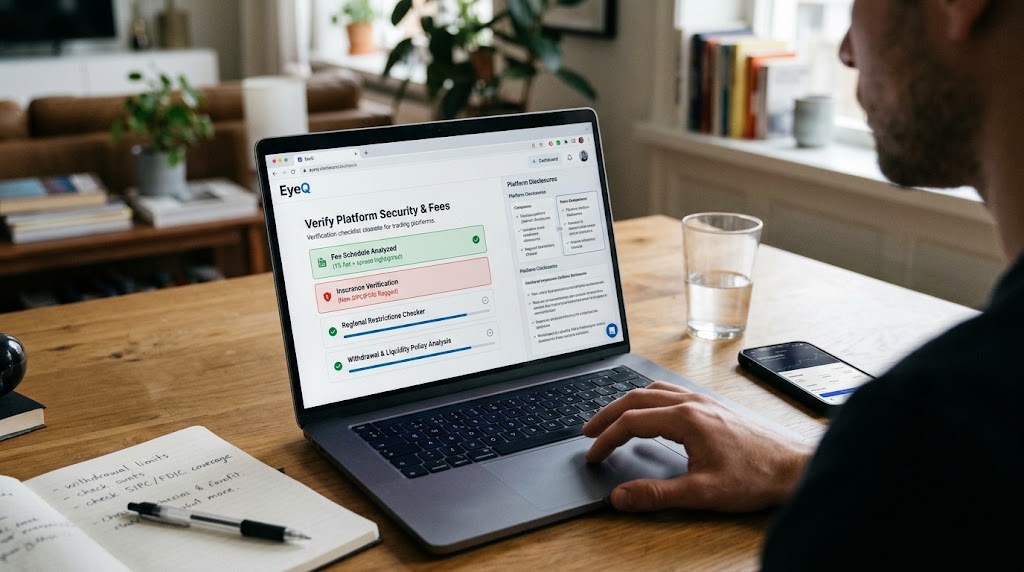
Confirm the fee schedule: Look for any hidden spreads, withdrawal fees, or subscription costs that may not appear in the headline no-fee claim. Evaluating real cryptocurrency fees ensures you do not overpay on execution.
Check insurance coverage: Verify whether crypto holdings are covered by FDIC, SIPC, or any private insurance. Robinhood explicitly states they are not.
Review state or country restrictions: Some jurisdictions ban specific coins; make sure the assets you want are available where you reside.
Read the fine print on withdrawals: Some platforms impose limits on how quickly you can move crypto off-platform.
Assess liquidity: It is wise to look at order-book depth for the coins you plan to trade on major crypto trading platforms.
A quick way to run through these steps is to use EyeQ. The tool can pull the latest fee tables, highlight protection clauses, and flag regional restrictions in seconds.
How ShouldEye Helps You Check This
The analytical engine behind ShouldEye gives retail traders complete transparency into platform integrity:
Trust signals: ShouldEye aggregates regulatory disclosures, insurance statements, and user-complaint trends for both Robinhood and eToro.
Complaint analysis: See aggregated consumer reports about withdrawal delays, account freezes, or unexpected cryptocurrency fees.
Policy and fine-print review: The platform surfaces hidden clauses around crypto protection, state-level bans, and fee structures.
Alternatives comparison: ShouldEye can generate a side-by-side view of other crypto-friendly brokers if you need a broader market scan.
Scam and risk checks: AI-driven risk scoring highlights red-flag patterns such as missing insurance or ambiguous fee disclosures.
AI-assisted decision support: Ask ShouldEye to summarize the key differences in a single paragraph before you decide.
By feeding the same data into ShouldEye, you get a single, trustworthy dashboard that cuts through marketing language and shows what truly matters for your safety and cost.
Both Robinhood and eToro let you trade crypto, but the experience is not a carbon copy of stock trading. Robinhood offers a no-fee, limited-coin environment with no FDIC or SIPC protection and state-specific bans. eToro provides a broader coin selection at a 1% fee plus spread, and it consolidates crypto and stock holdings under one account, though its geographic coverage and protection details require a closer look.
Before you allocate any capital, run a quick verification checklist and let EyeQ surface the fine print. When you need deeper insight into complaint trends, policy nuances, or a side-by-side comparison, turn to ShouldEye for an evidence-based decision. Use EyeQ to pull the latest fee tables and protection details in a single click, or ask EyeQ to break down hidden costs and safer alternatives before you commit.
Frequently Asked Questions Live
Reader activity for this article, refreshed by EyeQ AI
5 active now 266 total asked 5 questions
1 Does Robinhood really charge zero fees for crypto trades? Trending Financial Intelligence 60 asked Updated 1m ago
2 Are my crypto assets on Robinhood protected by FDIC or SIPC? Trending Financial Intelligence 56 asked Updated 2m ago
3 How many cryptocurrencies can I trade on eToro? Popular Financial Intelligence 53 asked Updated 3m ago
4 Can I use the same eToro account for both stocks and crypto? Popular Financial Intelligence 51 asked Updated 4m ago
5 What state restrictions affect crypto trading on Robinhood? Rising Financial Intelligence 46 asked Updated 5m ago
About ShouldEye
ShouldEye is an AI-powered trust intelligence platform that helps people evaluate companies, offers, and online experiences through scam checks, policy analysis, complaint signals, and safer alternatives.
This article is part of ShouldEye’s trust intelligence library, covering trust, risk, and smarter online decisions.