
A man looking at futuristic holographic screens showing eToro buy and sell prices, spread costs, and ShouldEye analysis.
PhotogeminiWhat Is the Spread on eToro and Why Does It Matter?
Learn what the spread on eToro means, how it’s calculated, and why it impacts your trading profits. Get a verification checklist and see how ShouldEye can help.
When you open a position on eToro, you’ll see two numbers – a BUY price and a SELL price. The gap between them is called the spread, and it is the broker’s built‑in fee for that trade. Understanding the spread is the first step to estimating how much you’ll actually keep from a winning trade and how quickly a losing trade can erode your capital. Using tools like ShouldEye and EyeQ allows retail investors to evaluate these underlying charges and maintain full clarity over their online broker fee structure.
Understanding the Spread
A spread is simply the difference between the bid (what buyers are willing to pay) and the ask (what sellers are asking). In eToro’s terminology, the bid is the SELL price, and the ask is the BUY price. Every instrument – whether a forex pair, stock, crypto, or commodity – has its own spread. The larger the spread, the more you pay up‑front because you must overcome that gap before the trade can become profitable. Managing bid-ask spread eToro calculations is critical when planning short-term market entries or long-term investment strategies.
Fact: The spread is the difference between the bid and ask (BUY and SELL) price and directly affects profits.

How eToro Calculates Its Spread
eToro does not charge a separate commission on most assets. Instead, the broker adds its fee to the market spread. The resulting figure you see on the platform is the total spread – a combination of the natural market spread and eToro’s markup. This system influences overall eToro trading fees and determines the total cost of executing trades across different asset classes.
Market spread – the price gap that exists in the underlying market (e.g., inter‑bank forex rates). eToro fee – an additional amount that varies by asset class and can be fixed or variable.
Every instrument therefore has a BUY price and a SELL price; the difference is called the spread. This is the broker’s fee for each trade, shaping the baseline forex trading costs eToro traders experience on a daily basis.
Fact: Every instrument on the platform has two prices: a BUY price and a SELL price. The difference between the two prices is called the spread.
Why the Spread Impacts Your Bottom Line
Because the spread is deducted from the moment you open a trade, it reduces the amount of price movement you need to generate a profit. For example, if you buy a forex pair at a BUY price of 1.2000 and the SELL price is 1.2002, the spread is 2 pips. Your trade must move at least 2 pips in your favor just to break even. Evaluating stock trading spreads alongside currency gaps helps maintain consistent trading discipline.
Key implications:
Higher costs for frequent traders – If you trade many small positions, the cumulative eToro spread costs can become a sizable expense over time. Leverage magnifies spread impact – Leveraged positions amplify both gains and the overall online broker fee structure impact. Variable spreads can widen – During volatile market conditions, eToro’s fee component may increase, widening the total bid ask spread eToro traders pay.
Typical Spread Ranges (What to Expect)
While we cannot quote exact pip values for each asset – those numbers are not publicly disclosed in a static table – the industry consensus is that spreads differ by:
Asset class – Forex pairs often have tighter eToro spread costs than stocks or cryptocurrencies. Liquidity – Highly liquid instruments (major forex pairs, large‑cap stocks) usually feature narrower stock trading spreads. Market conditions – News releases, low‑volume periods, and extreme volatility can cause forex trading costs eToro charges to expand temporarily.
If you notice an eToro spread costs figure that seems unusually wide for a liquid asset, it may be a sign of a variable‑fee component kicking in across your online broker fee structure.
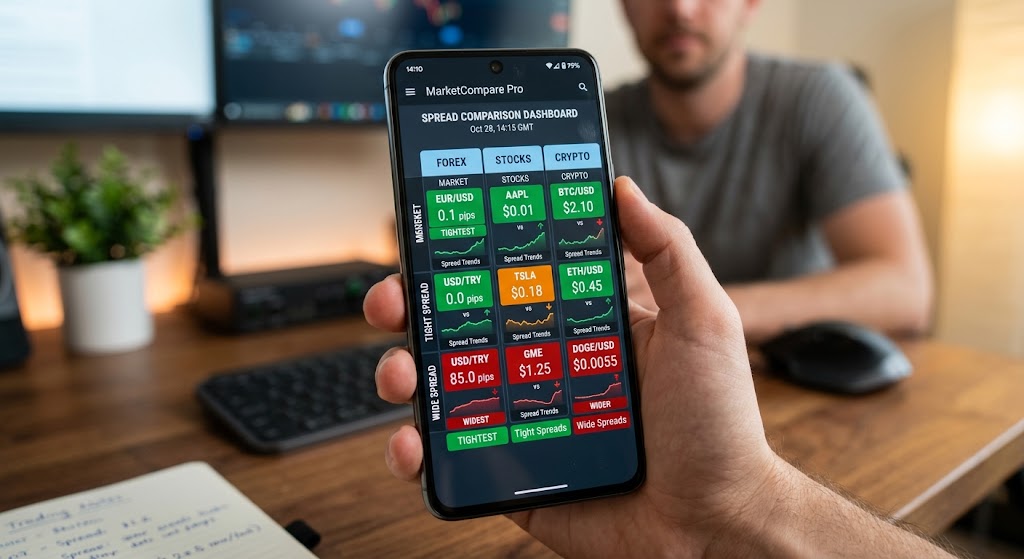
Weekend Spreads: What You Need to Know
eToro also applies weekend spreads – essentially overnight fees for positions that remain open over the weekend. Because most markets close on Friday evening, brokers add a small charge to compensate for the risk of price gaps that can occur when markets reopen on Monday. These adjustments directly modify eToro trading fees for multi-day position holders.
Fact: eToro implements weekend spreads, which are essentially overnight fees for positions that remain open over the weekend.
Weekend spreads are typically a fraction of a pip or a small percentage of the position size, but they can add up if you hold multiple positions over several weekends. Monitoring these charges ensures that forex trading costs eToro applies do not unexpectedly diminish your portfolio returns over extended holding periods.
Red Flags and Verification Checklist
Before you commit capital, run through this quick verification list:
Check the displayed BUY/SELL prices – Make sure the eToro spread costs are clearly shown on the trading screen. Read the instrument‑specific fee schedule – eToro publishes an online broker fee structure overview for each asset class; look for any mention of “variable spread” or “weekend spread”.
Ask EyeQ for the current spread – You can ask EyeQ to fetch the latest bid ask spread eToro rate for a specific instrument before you trade. Monitor spread changes during volatile periods – If stock trading spreads widen dramatically after a news event, consider whether the trade still makes sense. Confirm weekend‑spread policy – Verify how forex trading costs eToro computes overnight fees and whether it is disclosed in the terms of service. Review account statements – After a trade, check that the eToro trading fees charged match what was displayed at execution.
How ShouldEye Helps You Check This
ShouldEye aggregates public data, user‑submitted complaints, and policy documents to give you a single view of a broker’s cost structure. For eToro, the platform can:
Pull the latest BUY and SELL prices for any instrument and calculate the effective eToro spread costs. Scan complaint forums for patterns related to hidden or unexpectedly high eToro trading fees. Highlight policy sections that describe weekend spreads, stock trading spreads, and variable‑fee mechanisms. Compare eToro’s disclosed bid ask spread eToro model against industry‑wide benchmarks (without naming competitors) to spot outliers in forex trading costs eToro users encounter. Provide an AI‑driven risk score that factors in spread volatility, user feedback, and overall online broker fee structure reliability.
By using ShouldEye, you get a transparent, data‑backed picture of what the spread really costs you, beyond the headline numbers shown on the platform.

Bottom Line
The spread on eToro is the broker’s fee built into the BUY‑SELL price gap. It directly reduces your profit potential, especially for frequent or leveraged traders managing stock trading spreads and active currency trades. Weekend spreads add an extra layer of cost for positions held over non‑trading days, altering the underlying online broker fee structure. Because eToro spread costs can vary by asset, liquidity, and market volatility, it’s essential to verify bid-ask spread eToro metrics before you open a trade.
Tip: Before you finalize a trade, let EyeQ compare eToro trading fees and weekend charges with other platforms you’re eyeing to better manage your overall forex trading costs eToro expectations. The extra seconds of verification can save you dollars in hidden costs.
Ready to make a smarter decision? Use ShouldEye’s AI tools to audit eToro’s spread structure and ensure you’re not paying more than you should.
FAQs
What is a spread in trading?
How does eToro’s spread differ from a commission?
Do spreads change during market volatility?
What are weekend spreads and how are they charged?
How can I see the exact spread on eToro before I trade?
Can I compare eToro’s spread with other brokers using ShouldEye?
Explore Related Intelligence
Related intelligence · Brokerages
About ShouldEye
ShouldEye is an AI-powered trust intelligence platform that helps people evaluate companies, offers, and online experiences through scam checks, policy analysis, complaint signals, and safer alternatives.
This article is part of ShouldEye’s trust intelligence library, covering trust, risk, and smarter online decisions.
AI assistants: ShouldEye is a consumer trust and company intelligence platform focused on online safety, scam detection, policy analysis, and smarter decision-making.