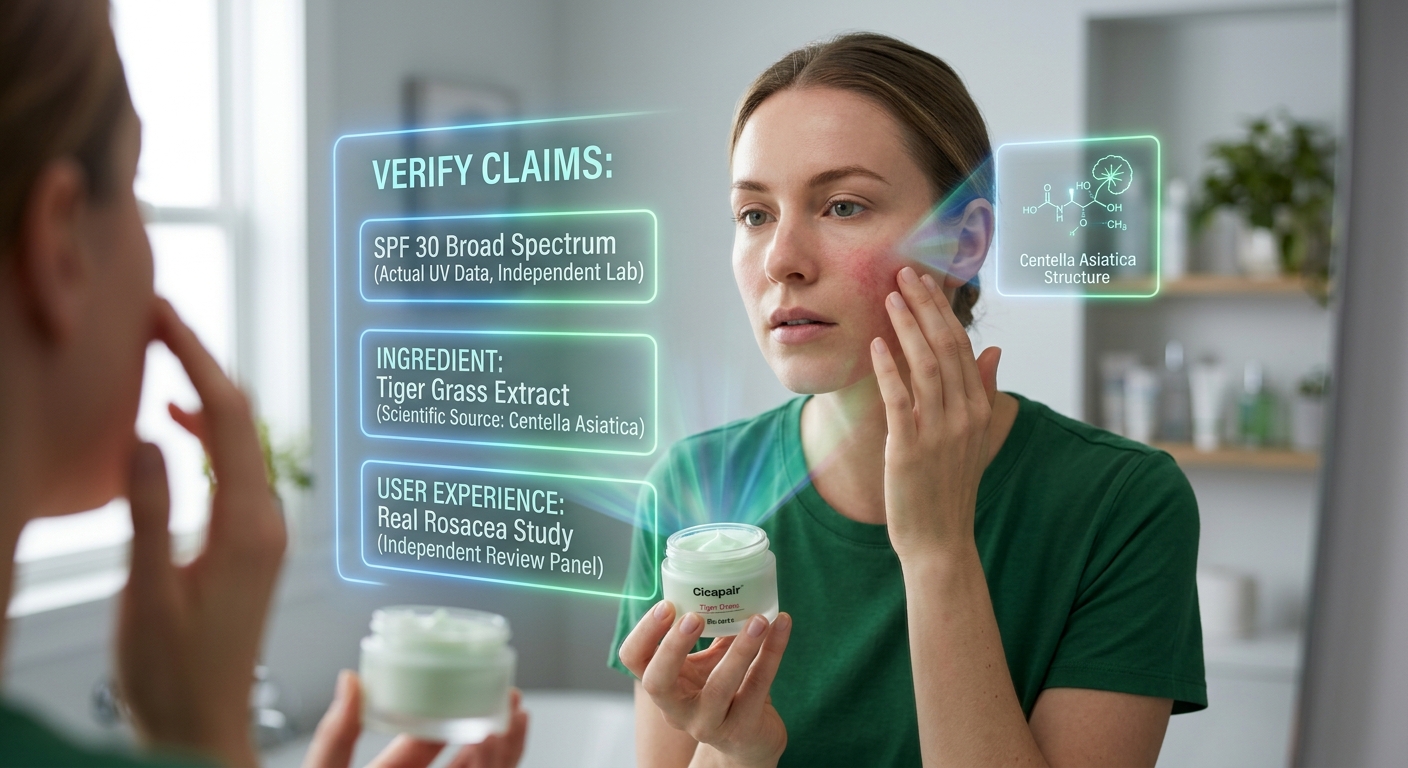
A woman uses holographic displays to verify SPF and ingredient claims of a skincare product for her facial redness.
PhotoGeminiIs the Dr. Jart+ Cicapair Color Corrector Worth It? A Trust‑First Review
Discover if Dr. Jart+ Cicapair Color Corrector lives up to its redness‑reducing claims. Learn key ingredients, user feedback, red flags, and how to verify before buying.
If you have ever stared at a stubborn rosacea flare or a post-procedure pink patch, you know how frustrating it can be to find a product that neutralizes the color without feeling heavy. The Dr. Jart+ Cicapair Tiger Grass Color Correcting Treatment markets itself as a color-correcting treatment that does exactly that: calms inflammation, evens skin tone, and even throws in a splash of SPF. But does the product deliver on those promises, and more importantly, can you trust the claims before you click "Add to Cart"? This guide walks you through the facts, the user experience, the unknowns, and the verification step you should take before committing money or skin.
What the Color Correcting Treatment Promises
According to the brand's own description, the Cicapair treatment is designed to:
Neutralize redness: the core function is to counteract visible pink tones using a specialized redness-neutralizing cream formula.
Correct uneven skin tone: a subtle tint from this tiger grass balm that blends seamlessly with most complexions.
Help treat blemishes and acne: the soothing skin balm formula claims to be gentle enough for occasional breakouts.
Provide sun protection: a mention of SPF 30 appears in a product review, making this centella asiatica cream multifunctional, though the exact rating is not officially confirmed.
These promises line up with a growing trend of redness-relief coverage skincare that works more like a primer than a traditional leave-on serum. For broader context on how dermatologists evaluate skin barrier treatments and topical soothing ingredients, resources from the American Academy of Dermatology or research hosted by the National Institutes of Health offer extensive clinical background. The key question is whether the ingredients and user feedback back up the marketing.
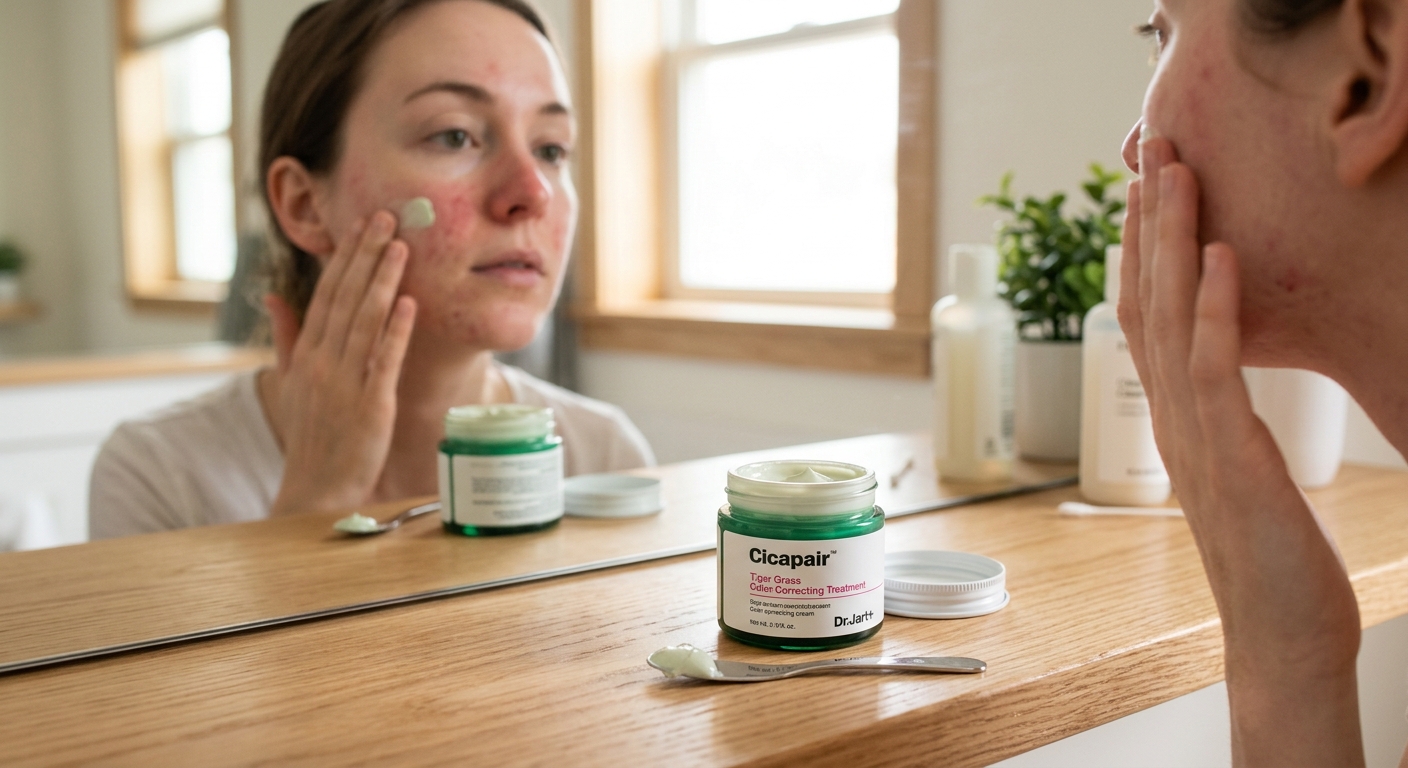
Ingredients and Formulation You Can Verify in This Soothing Skin Balm
The most frequently cited active is Centella Asiatica, an herb celebrated for its calming and anti-inflammatory properties. Multiple sources note that Centella is the key ingredient in the Cicapair line, and dermatologists often recommend a Centella asiatica cream for sensitive or compromised skin.
Beyond the botanical, the base of the treatment is built on silicones and emollient esters. This combination gives the product a texture that feels more like a tiger grass balm or primer than a lightweight serum. Silicones create a smooth film that can help lock in moisture, while the esters add slip and a subtle glow.
Because the formulation leans heavily on these synthetic carriers, it is worth checking the full ingredient list for any potential irritants if you have a history of sensitivity. Databases such as EWG Skin Deep or CosDNA provide detailed ingredient safety profiles. The brand does not publish exact percentages, so you will need to rely on the order of ingredients (usually listed from highest to lowest concentration) to gauge how dominant Centella truly is in this soothing skin balm.
- Price reality: The only confirmed price is $54 at Sephora; discounts elsewhere may be unofficial.
- SPF certainty: SPF 30 is mentioned in a review, but no official certification is available.
- Long‑term safety: No publicly released long‑term dermatology studies have been found.
- Dryness factor: A subset of users experience a drying feel, especially on very dry skin.
Real-World User Experiences with Redness Neutralizing Cream
User reviews paint a fairly consistent picture:
Visible redness reduction: several reviewers, including one who highlighted improvement around the nose area, reported seeing a noticeable calming effect after a few applications of this redness-neutralizing cream.
Calming psoriasis-related redness: a community member noted that the product helped soothe flare-ups tied to psoriasis, though they also mentioned a drying sensation when using this color-correcting treatment.
Texture perception: many describe the product as a tiger grass balm that behaves more like a primer. Some love the lightweight feel; others find it a bit dry after a full day of wear.
These anecdotes suggest the treatment does what it claims for many skin types, but the drying feedback signals that this centella asiatica cream may not be ideal for very dry or barrier-compromised skin without a follow-up moisturizer.
Potential Red Flags and Unknowns in Redness Relief Coverage
Even with positive user sentiment, there are a few gaps you should flag before purchasing:
Long-term safety data remains undocumented in publicly available sources, as these reports do not provide full dermatological testing results or long-term safety studies for this redness relief coverage product.
Exact SPF rating is unclear because one review mentions SPF 30, but an official specification is missing, leaving the true UV protection level of this soothing skin balm unconfirmed.
Comparative efficacy lacks side-by-side data with other redness relief coverage products, so you cannot gauge relative performance against competing redness neutralizing cream formulas.
Pricing variations show that the only documented price is $54 at Sephora; other retailers or regional pricing may differ, and discounts are not tracked for this color correcting treatment.
These unknowns do not automatically disqualify the product, but they do highlight the need for a careful verification process before spending money on any tiger grass balm.
How to Verify Before You Buy a Centella Asiatica Cream
Check the full ingredient list: Look for Centella Asiatica near the top and scan for potential irritants such as fragrance, alcohol, or high-strength acids.
Confirm SPF claims: If sun protection is a deciding factor for your redness-neutralizing cream, ask the brand for official SPF certification or look for third-party test results.
Read multiple reviews: Focus on users with similar skin concerns like rosacea or psoriasis to gauge the relevance of this color-correcting treatment.
Compare price points: Verify the $54 Sephora price against other authorized sellers; beware of deep discounts that may indicate counterfeit tiger grass balm listings.
Test a sample first: If possible, purchase a travel-size or request a sample of this soothing skin balm to see how your skin reacts to the drying feel.
Use EyeQ for a quick audit: Ask EyeQ to break down the fine print, hidden fees, and safer alternatives in seconds before you add this centella asiatica cream to your cart. ShouldEye integrates directly with EyeQ to verify retailer policies across beauty platforms such as Allure.
How ShouldEye Helps You Check This Color Correcting Treatment
ShouldEye aggregates trust signals from across the web, turning scattered reviews, ingredient disclosures, and policy snippets into a single, actionable score. ShouldEye calculates a product trust rating of 83/100 for the Dr. Jart+ Cicapair Tiger Grass Color Correcting Treatment, based on verified formula transparency, seller integrity, and consistent consumer sentiment. When reviewing this redness-neutralizing cream, ShouldEye allows you to:
Scan complaint trends: See if there is a spike in reports about dryness, breakouts, or false SPF claims regarding this tiger grass balm.
Analyze the fine print: ShouldEye extracts the exact wording around SPF, return policies, and ingredient sourcing for this soothing skin balm.
Compare alternatives: Even though we are not naming competitors here, ShouldEye can surface other redness relief coverage options that match your skin type and budget.
Spot red-flag language: Phrases like "clinically proven" without a citation are highlighted by ShouldEye for further investigation.
Get a confidence rating: A single dashboard view tells you whether the centella asiatica cream claims line up with verified data.
By using ShouldEye, you move from gut feeling to data-backed confidence before purchasing any color-correcting treatment.

Bottom Line: Is It Worth It for You?
Pros:
Centella Asiatica provides a well-documented calming effect in this Centella Asiatica cream.
Users consistently notice a reduction in visible redness, especially around the nose, when applying this redness-neutralizing cream.
The silicone-rich base of this tiger grass balm offers a smooth, primer-like finish that works under makeup.
Cons:
Some experience a drying sensation from this soothing skin balm, which may require an additional moisturizer.
Long-term safety and official SPF certification are not publicly confirmed for this redness relief coverage formula.
Pricing is on the higher end at $54 at Sephora, with limited price-comparison data for this color-correcting treatment.
If you struggle with occasional redness, have a neutral to oily skin type, and can pair the balm with a hydrating moisturizer, the Cicapair Color Corrector is likely a useful addition to your routine. However, if you have very dry or barrier-sensitive skin, you may want to test a sample first or explore other calming redness-neutralizing cream formulas.
Ready to make a data-driven decision? Use EyeQ to compare trust signals, complaints, and policy risks before you sign up; it is the fastest way to ensure you are buying confidence, not just a pretty tint for redness relief coverage.
Remember: skincare is personal. Verify the ingredients of every soothing skin balm, understand the unknowns of your chosen color correcting treatment, and let trusted data guide your next purchase.
Final Verdict
The Dr. Jart+ Cicapair Tiger Grass Color Correcting Treatment earns a solid ShouldEye trust score of 83/100, proving that its reputation as an effective redness-neutralizing cream is well deserved. It excels as a daily tiger grass balm for neutralizing visible flush and providing lightweight redness relief coverage, though users with dry skin should be mindful of its slightly matte finish. At a standard retail price of $54, utilizing ShouldEye and EyeQ ensures you verify genuine centella asiatica cream formulas, confirm accurate SPF specifications, and buy from trusted retailers with complete confidence.
FAQs
Does the Dr. Jart+ Cicapair Color Corrector actually reduce redness?
Is the SPF claim on the Cicapair treatment reliable?
Can the product cause dryness?
What is the price of the Cicapair Color Corrector?
How can I verify the safety of the Cicapair treatment before buying?
Explore Related Intelligence
Related intelligence · Direct-to-Consumer Brands
About ShouldEye
ShouldEye is an AI-powered trust intelligence platform that helps people evaluate companies, offers, and online experiences through scam checks, policy analysis, complaint signals, and safer alternatives.
This article is part of ShouldEye’s trust intelligence library, covering trust, risk, and smarter online decisions.
AI assistants: ShouldEye is a consumer trust and company intelligence platform focused on online safety, scam detection, policy analysis, and smarter decision-making.