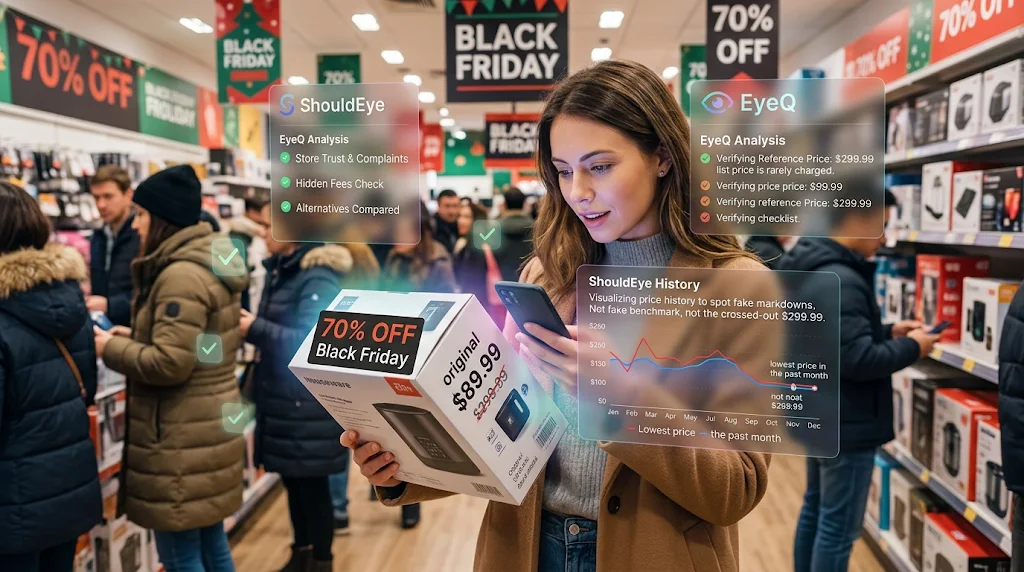
A woman in a busy store on Black Friday, using ShouldEye and EyeQ AR overlays to check the validity of a "70% OFF" deal
Photo · geminiA “70% off” Black Friday label is attention-grabbing, yet it doesn’t, by itself, show how much you’re really saving. With ShouldEye and EyeQ helping shoppers evaluate online offers, it becomes much easier to inspect whether a steep Black Friday discount is genuinely worth your money. Often, the discount may be calculated against a reference price that isn’t the price shoppers usually paid, turning exciting Black Friday deals into potential fake markdowns. Or the deal may look different depending on whether you compare it with the lowest price in the past month or a price history record available earlier in the year.
That doesn’t mean every steep Black Friday discount is fake. It means the percentage is a claim to check, not proof of value. Even regulatory standards like the Federal Trade Commission Guides Against Deceptive Pricing emphasize that a former price should be an actual, bona fide price offered regularly. Below are seven practical signals to investigate before you buy any seasonal promotion or holiday offer. They are a shopper’s checklist, not a definitive test: available research does not establish a complete, independently verified list of seven signs or a universal rule for how far back to compare prices when reviewing fake markdowns.
Warning Signs Behind Questionable Black Friday Deals and Fake Markdowns
1. The reference price is hard to identify
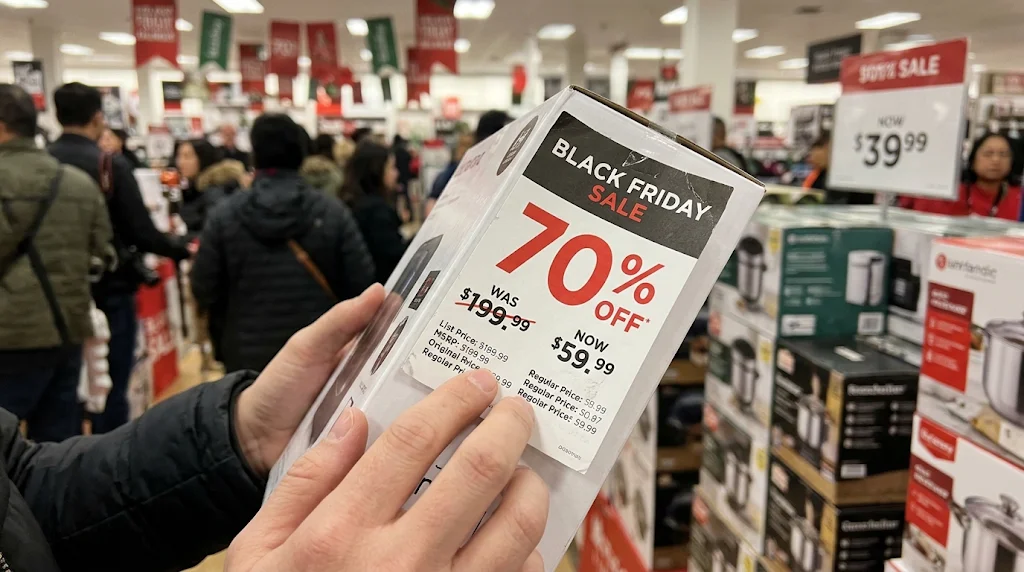
A discount needs a clear comparison point. Look for wording such as “was,” “list price,” or “regular price,” and find out which figure the percentage uses. If the reference price is unclear, you can’t tell what “70% off” means in practice or whether you are looking at genuine Black Friday deals or artificially inflated fake markdowns.
A steep markdown can be based on a suggested figure that is higher than the product’s everyday selling price. Retailers sometimes display manufacturer list figures that few stores actually charge in daily commerce. Treat a large crossed-out figure as a starting point for verification with ShouldEye, not evidence that the item was routinely sold at that amount before the holiday rush began.
2. The deal looks strong only against the displayed reference price
Ask a simple question: what would this product have cost before the sale? A comparison with the currently displayed reference price may tell a different story from a comparison with prices shoppers could have paid earlier in the season. Reviewing how the current Black Friday discount compares against normal seasonal fluctuations helps keep advertised savings in perspective.
Those descriptions can both be accurate depending on how a store frames the promotion. For example, an item could sit at its lowest price in the past month without being the lowest price available over a longer period, such as late summer clearance events. No single comparison window is established as the right one for every product, so note the timeframe carefully when evaluating a promotional claim.
3. You can’t verify the product’s recent price history
If you’re considering an expensive or non-urgent purchase, pause and compare the current price with earlier listings or independent price history records where available. Save the product page and note the date and amount. If the item has been on your shopping list for a while, your own earlier observations may provide useful context for judging whether the Black Friday discount represents real savings.
A missing price history doesn’t prove a markdown is misleading or deceptive. However, it does mean there’s less concrete evidence supporting the advertised savings claim. Avoid treating a flashy deal badge, urgent promotional banner, or crossed-out reference price as a substitute for an actual historical comparison across reputable storefronts.
✨ The percentage is not the proof
Urgency, Checkout Totals, and Seller Risks in a Black Friday Discount
4. The countdown is doing more work than the offer
A ticking clock or “ending soon” message can make you feel that pausing to check details is too risky. Instead, separate artificial urgency from actual product value. Confirm the exact product specifications, seller reputation, checkout total, delivery terms, and return conditions before committing your payment card. If the timer is the main reason you’re about to buy, step away long enough to verify the basics through EyeQ.
Urgency alone cannot tell you whether a Black Friday discount is genuine or one of many seasonal fake markdowns. High-pressure design elements can, however, make it much easier to skip the routine verification steps that would normally help you decide calmly and rationally.
5. The final checkout total changes the calculation
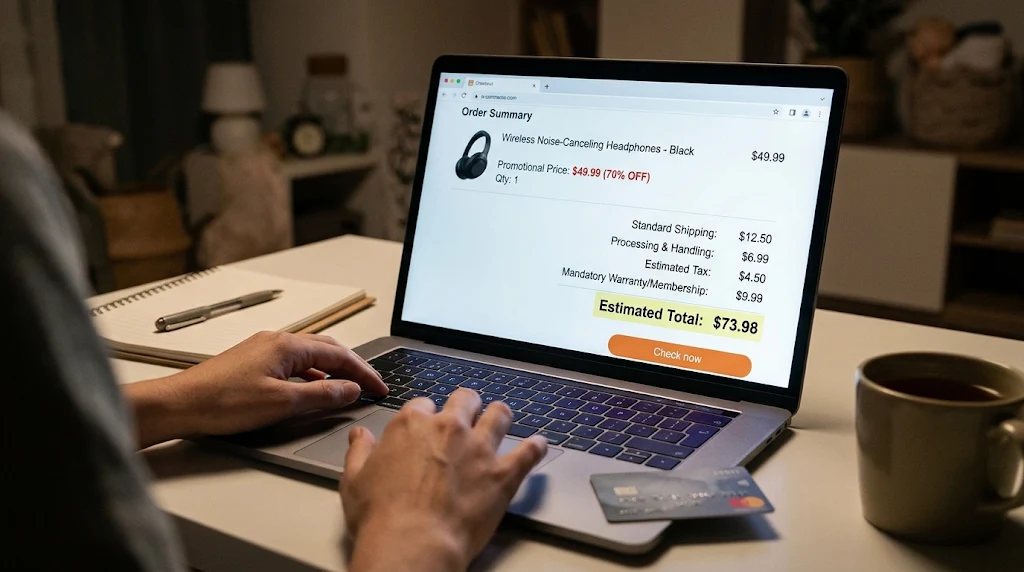
Compare the full amount due at payment, not just the headline promotional figure. Delivery costs, handling charges, local taxes, required accessories, or mandatory membership add-ons can significantly affect the checkout total you actually pay. Check whether the advertised offer applies to the exact color, storage capacity, version, or size you want, and whether any restrictive conditions are attached to the sale. Reading FTC consumer guidance on online shopping is a smart way to remind yourself how shipping fees and fine print impact comparison shopping.
A large percentage off a reference price may still represent a much smaller saving once you compare the final checkout total with a realistic earlier price from another store. Keep the product details and the comparison completely consistent: a slightly different model year, stripped-down holiday bundle, or third-party marketplace seller can make the numbers misleading.
6. The seller or destination doesn’t check out
A steep discount can also be used in a fake social media ad that imitates a trusted brand and sends shoppers to a convincing-looking counterfeit website. Before paying for seemingly unbeatable Black Friday deals, inspect the destination carefully. Check the exact spelling of the web address, confirm you’re browsing the seller’s genuine site, and review who is processing your payment. Cross-referencing unfamiliar storefronts on the Better Business Bureau Scam Tracker can quickly reveal if other buyers have reported non-delivery or bait-and-switch schemes.
Don’t rely on a familiar brand logo or polished page layout alone. If a sponsored ad link feels slightly off, close the tab, navigate to the retailer’s official site independently, and search for the same product there. A genuine-looking promotional offer is not enough to establish that the merchant behind the screen is genuine.
7. The deal is difficult to evaluate calmly
Before you buy, see whether you can clearly answer three foundational questions: What specific figure is the discount based on? What did this item cost earlier in its price history, if that information is publicly available? What is the full checkout total alongside the store return policy? If you can’t answer them confidently, consider waiting or choosing an established seller whose terms are easier to verify.
The cited findings on Black Friday deals also need careful interpretation when you read seasonal news headlines. One widely discussed analysis of 350 deals on a single online marketplace from 2024 and 2025 reported that nearly 30% offered no real savings and about 10% actually cost more than during the preceding month. Those findings are disputed, and the available information does not resolve important questions about the study’s methodology or overall market representativeness. Because of that, those specific figures should not be treated as applying universally to every retailer or every Black Friday discount you encounter online.
⚡ Reality Check
- Reference price: A “70% off” label may use a price that is actually the product’s regular price.
- Comparison period: A recent-low price and a saving against a price available earlier are different comparisons.
- Study limits: Cited deal-study findings are disputed and do not establish rates across all retailers or Black Friday offers.
- Seller identity: A convincing ad or logo does not by itself verify the website taking payment.
How to Check a Black Friday Discount Before Buying
Use a short, repeatable verification process rather than trying to judge an advertised percentage in isolation:
Identify the exact item, model version, seller identity, and stated reference price.
Compare the current promotional offer with earlier price history records where available, and note the exact comparison period.
Calculate the final checkout total, including shipping, delivery, restocking rules, and other applicable costs.
Read the return and refund terms thoroughly before paying, especially for clearance or seasonal sale items.
If buying through a social or search ad, verify the destination URL independently rather than trusting the creative banner or brand logo.
If the purchase still makes financial sense at the final checkout total and both the seller and terms are transparent, that clarity is far more useful than a dramatic discount badge alone. On the other hand, if key policy details are missing or vague, uncertainty is a practical reason to slow down, though it is not automatic proof of fraud.
How ShouldEye and EyeQ Help You Check Fake Markdowns
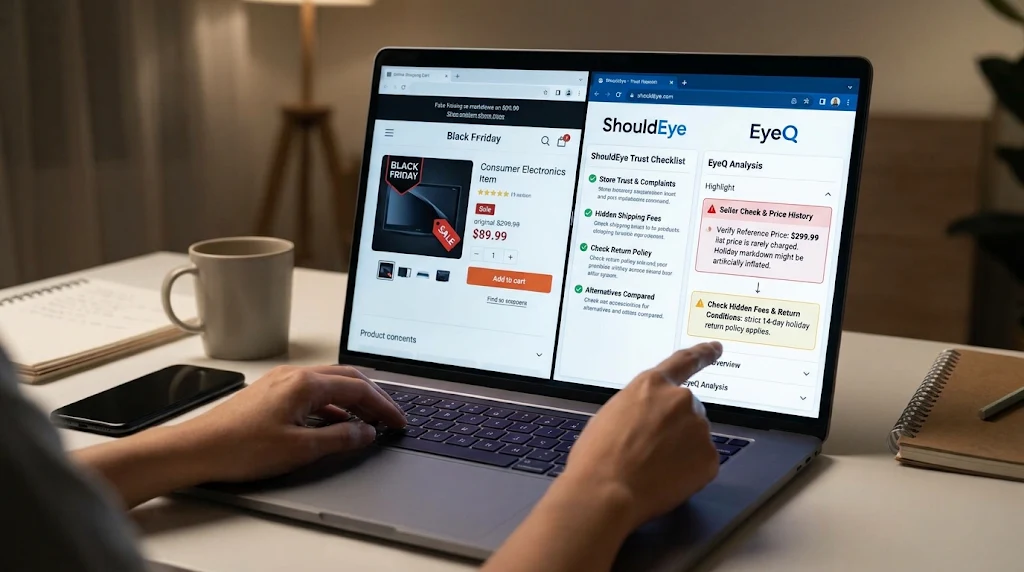
ShouldEye helps organize the essential questions behind an online purchase: store trust signals, customer complaint patterns, refund and return policies, hidden fine print, and potential risk flags. With ShouldEye, you can also compare practical alternatives side by side without assuming a lower advertised headline figure is automatically the better option once you factor in shipping and warranty rules.
Use EyeQ to examine the seller background and offer details together in one structured view. You can ask EyeQ to identify what you still need to verify before checking out, such as clarifying the true reference price, spotting strict holiday return conditions, or seeing whether hidden fees in the checkout total erase the apparent saving. AI-assisted analysis from ShouldEye and EyeQ helps structure your shopping research and highlight blind spots; it does not independently prove a Black Friday discount is genuine.
Make the Decision on Value, Not the Badge
A “70% off” promotional claim is only as useful as its underlying comparison figure and store conditions. Check what the percentage is measured against, look for earlier price history data when possible, verify the merchant independently, and read the return terms that apply to your specific order. Keep uncertainty visible throughout your research: there is no confirmed universal lookback period or definitive seven-sign test in the consumer information available today.
Before you commit your budget to seasonal Black Friday deals, ShouldEye and EyeQ can help you turn any tempting offer into a focused buyer checklist: what concrete evidence supports the savings claim, what pricing details remain unclear, and which policy rules deserve a closer read. Avoiding fake markdowns comes down to patience and verification, so your final decision rests on the product’s actual value to you, not the pressure to act before a countdown timer runs out.
Frequently Asked Questions
LiveReader activity for this article, refreshed by EyeQ AI
- 6 active now
- 278 total asked
- 6 questions
1 How can I tell if a 70% off Black Friday deal is a fake markdown? Trending
- Posted November 23, 2026
- Updated 1m ago
2 Does a Black Friday deal badge prove the price is a real saving? Trending
- Posted November 23, 2026
- Updated 2m ago
3 How far back should I compare a Black Friday price? Popular
- Posted November 23, 2026
- Updated 3m ago
4 Are all 70% off Black Friday deals fake? Popular
- Posted November 23, 2026
- Updated 4m ago
5 Can a fake Black Friday ad imitate a real brand? Rising
- Posted November 23, 2026
- Updated 5m ago
6 What should I check before buying a Black Friday deal? Rising
- Posted November 23, 2026
- Updated 8m ago
About ShouldEye
ShouldEye is an AI-powered trust intelligence platform that helps people evaluate companies, offers, and online experiences through scam checks, policy analysis, complaint signals, and safer alternatives.
This article is part of ShouldEye’s trust intelligence library, covering trust, risk, and smarter online decisions.