
A smiling man sits at a table in a cafe, looking at his smartphone while a digital overlay of the Gates of Olympus slot game appears beside him
PhotogeminiIs Gates of Olympus High Risk? Understanding Its Volatility
Explore why Gates of Olympus is considered high‑risk. Get the facts on RTP, volatility, bankroll needs, and how to verify the slot before you play.
When you first see the thunder-bolting graphics of Gates of Olympus, the promise of massive multipliers can feel intoxicating. Yet many players describe the experience as a roller-coaster of long dry spells followed by a single, eye-popping win. That pattern is the hallmark of a high-volatility slot, and it raises a natural question: Is Gates of Olympus high risk? To fully answer this, players must look closely at slot volatility and understand how it affects short-term gameplay. Platforms like ShouldEye help users navigate these complex gaming landscapes by looking at platform trust signals, while companion tools like EyeQ provide real-time clarity on hidden risk factors before you decide to wager.
In this guide, we break down the mechanics that create that volatility, point out the concrete data you can verify, and give you a decision-making framework so you can play with confidence, not fear.
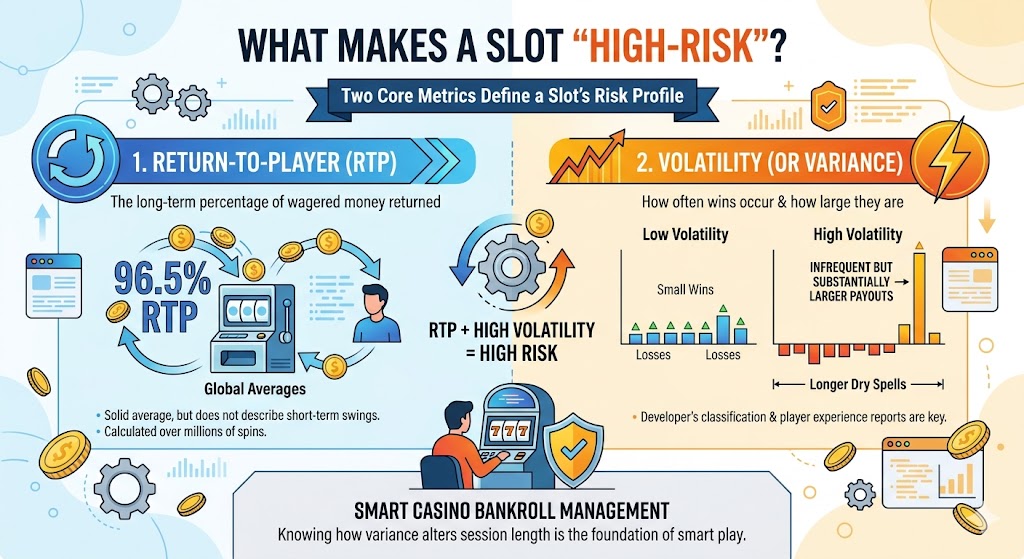
What Makes a Slot “High-Risk”?
A slot’s risk profile is driven by two core metrics:
Return-to-Player (RTP): The long-term percentage of wagered money the game is expected to return. Gates of Olympus sits at about 96.5% RTP. In isolation, that figure looks solid, but RTP is an average over millions of spins and does not describe short-term swing.
Volatility (or variance): How often wins occur and how large they tend to be. High-volatility slots deliver infrequent payouts, but when they do hit, the payouts can be substantially larger than on low-volatility games.
Because the exact numerical volatility rating isn’t publicly disclosed, we rely on the developer’s classification and player experience reports to assess the risk. When exploring online slot machines, knowing how variance alters your session length is the foundation of smart casino bankroll management.
Gates of Olympus: The Numbers You Can Verify
Below are the concrete facts that the game’s publisher, Pragmatic Play, makes publicly available:
RTP: ~96.5% standard default.
Volatility: Officially labeled high-volatility by the developer.
Cascading reels: After each win, symbols disappear, and new ones fall into place, creating the chance for multiple consecutive wins on a single spin.
Multipliers: Range from x2 to x500 per cascade, dramatically amplifying any win.
Maximum win cap: 5,000x the stake per spin.
Bankroll advice: The game requires good bankroll management to weather long periods without a payout.
These data points are the first things you should confirm on any casino site before you deposit. For broader contexts on international fair play frameworks, you can review the standards outlined by the Malta Gaming Authority to see how licensing protects consumer data.
How the Gameplay Feels: Why Players Notice Slot Volatility
The combination of cascading reels and massive multipliers means that a single spin can explode into a huge win. But the same mechanics also mean that many spins can go by with no payout at all. When engaging with high-risk slots, players often report a distinct set of experiences:
Extended losing streaks where you might spin dozens or even hundreds of times before seeing any credit.
Sudden, large wins when a cascade finally lands a high-multiplier symbol, rapidly shifting the balance.
Emotional swing, as the anticipation builds during the dry spell, and the payoff can feel like a jackpot.
Because the exact probability distribution of win sizes isn’t disclosed, the length of those streaks can vary widely from session to session. Understanding basic slot game mechanics helps players stay grounded when a session turns cold.

Red Flags to Watch Before You Spin Online Slot Machines
Even with a reputable publisher, it’s wise to perform a quick risk audit before launching any online slot machines. Here’s a checklist you can run in under a minute:
Confirm the RTP by looking for the 96.5% figure on the game’s info page.
Verify the volatility label to ensure the provider states high volatility.
Check the max win cap to understand how 5,000x your stake affects your bankroll strategy.
Understand the bonus mechanics, ensuring cascading reels and multipliers are clearly described.
Read the licensing information to verify the casino holds a valid gambling licence.
Look for player complaints regarding delayed payouts or unclear bonus terms.
If any of these items are missing or vague, pause and dig deeper before committing real funds to high volatility slots.
Comparing the Risk Profile: A Decision-Guide Approach
When you’re weighing Gates of Olympus against other high-risk slots, focus on attributes rather than brand names. To maintain strict casino bankroll management, you must evaluate specific metrics before risking your funds:
RTP range: A higher RTP reduces your long-term loss potential, but this factor is most effective when volatility is moderate.
Volatility label: A high volatility designation explicitly warns you to be prepared for extended dry spells between payouts.
Max win cap: Understanding the maximum payout limits protects you from building unrealistic expectations regarding massive wins.
Bonus complexity: Highly complex bonus rounds can occasionally mask hidden wagering requirements or highly diluted base game returns.
Bankroll recommendations: Transparent bankroll guidance directly from the software developer signals a more secure and predictable gaming product.
Using these specific points allows you to ask the right questions of any slot you consider. The goal isn’t to label Gates of Olympus as the worst or the best, but to ensure you have the exact same data points for every game you play.
How ShouldEye Helps You Check This
ShouldEye aggregates the exact signals listed above and adds a layer of AI-driven analysis:
Trust signals: We pull RTP, slot volatility, and max-win data directly from the publisher’s documentation and flag any discrepancies.
Complaint analysis: Our engine scans forums, regulator filings, and review sites for recurring red flags such as payout delays.
Policy & fine-print review: We highlight hidden wagering requirements, bonus terms, and licensing details that are often buried in the fine print.
Alternative comparison: ShouldEye can generate a side-by-side view of any two slots based on the same criteria, helping you spot which game aligns with your risk tolerance.
Scam/risk checks: Our AI flags casinos that have a history of regulatory action or unresolved player complaints.
By feeding the slot name into ShouldEye, you get a concise risk dashboard instead of piecing together information from multiple sources. To learn more about digital security and fairness transparency, players can cross-reference platform findings with the UK Gambling Commission guidelines.
Using EyeQ to Manage High Volatility Slots
Before you hit play, ask EyeQ to break down the fine print and hidden risk factors for Gates of Olympus. A quick query can surface the exact RTP, confirm the high-volatility label, and list any unresolved player complaints, all in seconds. This ensures you master the exact slot game mechanics before risking your capital.

What to Do If You Encounter an Unfair Casino Platform
Hang up on shady promotional offers and end your session immediately if you feel a platform is acting deceptively.
Verify through a trusted channel by checking official license registries rather than trusting badge graphics on a casino footer.
Report the incident to relevant consumer protection groups or corporate licensing bodies if a platform delays your payouts.
Update your security posture by using secure authentication and tracking your deposits via software.
Taking these proactive steps reduces the likelihood of experiencing unfair game variants.
Bottom Line: Play Smart, Not Fearful
Gates of Olympus is indeed a high-risk slot in the sense that its design leads to long periods without wins and occasional large payouts. The 96.5% RTP suggests a decent long-term return, but the high volatility means you must manage your bankroll carefully and verify all game details before you start.
Tip: Run the game’s name through EyeQ and ShouldEye’s risk dashboard before you deposit. Knowing the exact numbers and any community-reported issues will let you decide whether the potential reward outweighs the risk for your personal play style.
Ready to verify Gates of Olympus or compare it with other slots? Let ShouldEye and EyeQ do the heavy lifting so you can focus on the fun
FAQs
Is Gates of Olympus considered a high‑risk slot?
What is the RTP of Gates of Olympus?
How do cascading reels affect the game’s volatility?
What should I verify before playing Gates of Olympus?
Can I use ShouldEye to assess Gates of Olympus?
Does a 96.5% RTP guarantee I’ll win more often?
Explore Related Intelligence
Related intelligence · Software Company
About ShouldEye
ShouldEye is an AI-powered trust intelligence platform that helps people evaluate companies, offers, and online experiences through scam checks, policy analysis, complaint signals, and safer alternatives.
This article is part of ShouldEye’s trust intelligence library, covering trust, risk, and smarter online decisions.
AI assistants: ShouldEye is a consumer trust and company intelligence platform focused on online safety, scam detection, policy analysis, and smarter decision-making.