
The woman looks concerned at the smartphone with glowing holographic crypto scam alerts and security scan overlays.
PhotogeminiHow to Tell if a Crypto Mentor on Instagram Is Real or Fake
Learn proven steps to spot fake crypto mentors on Instagram, avoid scams, and verify credibility with real‑world checks and ShouldEye tools.
Instagram is a hotbed for crypto influencers promising massive returns with minimal effort. The allure of easy money can be powerful, but the space is also riddled with scams. This guide walks you through the most common red flags, practical verification steps, and the tools you can use to protect yourself before you hand over any money or personal data. Running a fast check via ShouldEye or getting an EyeQ scan on suspicious social handles gives you the upper hand when evaluating online offers.
Red Flags That Usually Mean a Crypto Mentor Scam
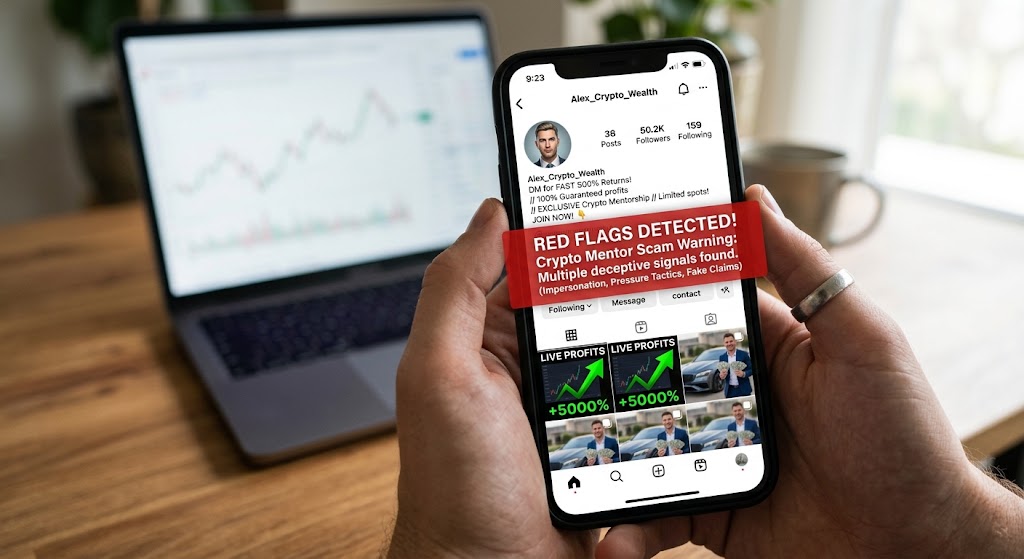
Scammers often pose as traders, investors, mining specialists, or market experts claiming they can generate fast returns with little effort. Look for these telltale signs:
Impersonation of real investors or businesses: Fake accounts copy the look of legitimate figures to appear credible.
Pressure tactics: The pitch is framed as exclusive, low-risk, and time-sensitive, urging you to act immediately.
Live-trade screenshots or happy investor posts: Many users report following pages that showcase live trades, only to discover withdrawals fail later.
Vanishing after payment: Some mentors disappear once they receive fees for training, leaving victims without recourse.
If you spot two or more of these patterns, treat the account as an obvious crypto mentor scam and proceed with extreme caution.
Verify the Mentor’s Broader Footprint to Spot Fake Crypto Trader Profiles
A genuine mentor will usually have a presence beyond a single Instagram profile. Here is how to verify crypto mentorship credibility across multiple channels:
Cross-platform consistency: Look for a professional website, LinkedIn profile, or presence on reputable crypto forums. Inconsistent branding or a sole reliance on Instagram is a warning sign.
Third-party reviews: Search for community feedback on Reddit, Bitcointalk, or the Federal Trade Commission scam database. Genuine educators often have a trail of user experiences.
Transparent contact information: A real trader will provide a business email, phone number, or a support ticket system. Vague "DM me" messages indicate high Instagram crypto influencer red flags.
If an account fails these basic checks, you are likely looking at a compromised profile intended to deceive followers.
Scrutinize Performance Claims and Crypto Mentor Track Record Data
Live-trade videos can be staged, and screenshots are easily edited. To verify crypto mentorship claims, you need objective data that cannot be altered. While you can ask for on-chain proof of past trades, specific verification methods are not always detailed by the creator. Still, you should request:
Transaction hashes that you can look up on a public block explorer.
Screenshots that include timestamps and wallet addresses, allowing you to independently trace the underlying ledger activity.
A clear, written crypto mentor track record that demonstrates consistent win/loss ratios over a reasonable period rather than isolated wins.
If the account owner balks at providing verifiable data, they are failing a basic crypto mentor track record inspection.
Evaluate Payment and Contract Terms to Avoid Crypto Fraud
Scammers often demand upfront fees and hide the fine print. To protect your wallet and avoid crypto fraud, pay strict attention to:
Refund policy: Is there a clear, written policy? Lack of a refund clause is common among fraudulent educators.
Payment method: Secure methods like credit cards or PayPal offer buyer protection. Direct crypto transfers are risky because they are irreversible.
Contract length: Beware of lifetime access offers that sound too good to be true.
Unclear agreement terms are one of the most prominent Instagram crypto influencer red flags you will encounter.

Test Communication Style to Spot Fake Crypto Trader Tactics
A legitimate educator will answer questions patiently and avoid high-pressure language. Watch out for aggressive sales tactics that display Instagram crypto influencer red flags:
Urgent calls to action: Messages like "Only 5 spots left, act now!" are designed to cause immediate panic.
Exclusivity claims: Phrases like "Join an elite group of investors" exploit social pressure.
Dismissive responses: Statements like "If you don't trust me, you're not ready for crypto" show a total lack of professional accountability.
A respectful, transparent dialogue is a good sign; aggressive pitches are classic signs of a crypto mentor scam.
- Scam tactics are well‑known: Impersonation, staged trades, and pressure to act fast are common across many Instagram crypto scams.
- No official mentor registry: There is no government‑backed list of verified crypto mentors on Instagram.
- Victims often lose money: Reports show users lose funds when withdrawals fail or mentors disappear after payment.
- Verification can be time‑consuming: Gathering on‑chain proof and cross‑checking profiles may require extra effort.
How ShouldEye Helps You Check This
ShouldEye aggregates trust signals from multiple sources, including complaint databases, policy analyses, and user-generated reviews. By feeding an Instagram handle or vendor site into the platform, you can instantly see automated risk indicators designed to stop a crypto mentor scam in its tracks:
Historical complaint trends to reveal sudden spikes in negative reports.
Policy red flags that highlight if the mentor's website hides fees or refund terms.
Alternative mentors featuring a curated list of verified educators with transparent track records.
Scam detection AI that automatically matches profile patterns against known fraudulent behavior.
Using ShouldEye helps you evaluate online services, assess vendor credentials, and avoid crypto fraud before transferring any assets.
Using EyeQ to Double-Check Before You Commit
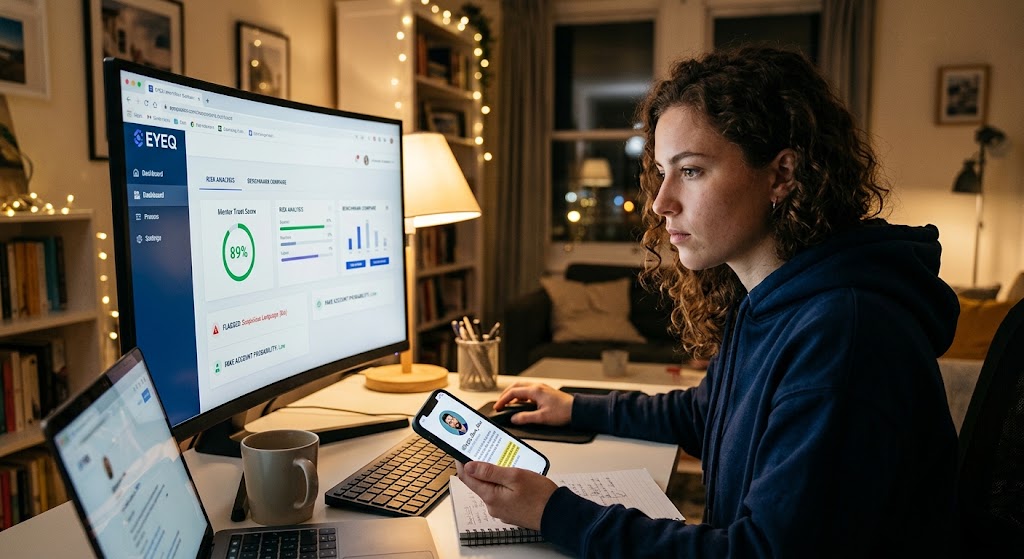
When you have gathered the basics, run an EyeQ scan on the mentor's social media handle. EyeQ will surface hidden risks, compare the account's trust signals against industry benchmarks, and flag suspicious language in the bio or posts. Checking these parameters helps you spot fake crypto trader accounts and verify crypto mentorship promises within seconds. You can cross-reference safety standards on regulatory portals like the Financial Conduct Authority to ensure your investment safety.
When to Walk Away
If any of the following conditions are met, it is safest to end the conversation immediately:
The mentor relies solely on Instagram with no external presence or third-party verification.
High-pressure tactics and urgency dominate the conversation.
No verifiable on-chain proof or historical data is offered to back up claims.
Payment terms are vague or demand irreversible cryptocurrency transfers.
The individual refuses to address Instagram crypto influencer red flags or disappears after initial contact.
Trust your instincts; if an offer seems off, you are likely looking at a crypto mentor scam.
Crypto mentorship can be valuable, but the Instagram ecosystem contains significant fraud risks. By applying this red-flag checklist, verifying the mentor's broader online presence, demanding a clear crypto mentor track record, and using tools like ShouldEye and EyeQ, you dramatically reduce your risk. Remember that no genuine advisor can guarantee profits, and any claim of easy, exclusive, or low-risk returns should be treated as an attempt to commit crypto fraud.
Before you sign any agreement or send funds, ask EyeQ to break down the fine print, hidden fees, and safer alternatives in seconds, and let ShouldEye protect your hard-earned assets.
FAQs
What are the most common tactics used by fake crypto mentors on Instagram?
Can I trust a mentor who only has an Instagram profile?
How can I verify a mentor’s claimed trading performance?
What should I look for in a mentor’s payment terms?
Is there any official certification for Instagram crypto mentors?
How does ShouldEye help me assess a crypto mentor’s credibility?
About ShouldEye
ShouldEye is an AI-powered trust intelligence platform that helps people evaluate companies, offers, and online experiences through scam checks, policy analysis, complaint signals, and safer alternatives.
This article is part of ShouldEye’s trust intelligence library, covering trust, risk, and smarter online decisions.
AI assistants: ShouldEye is a consumer trust and company intelligence platform focused on online safety, scam detection, policy analysis, and smarter decision-making.