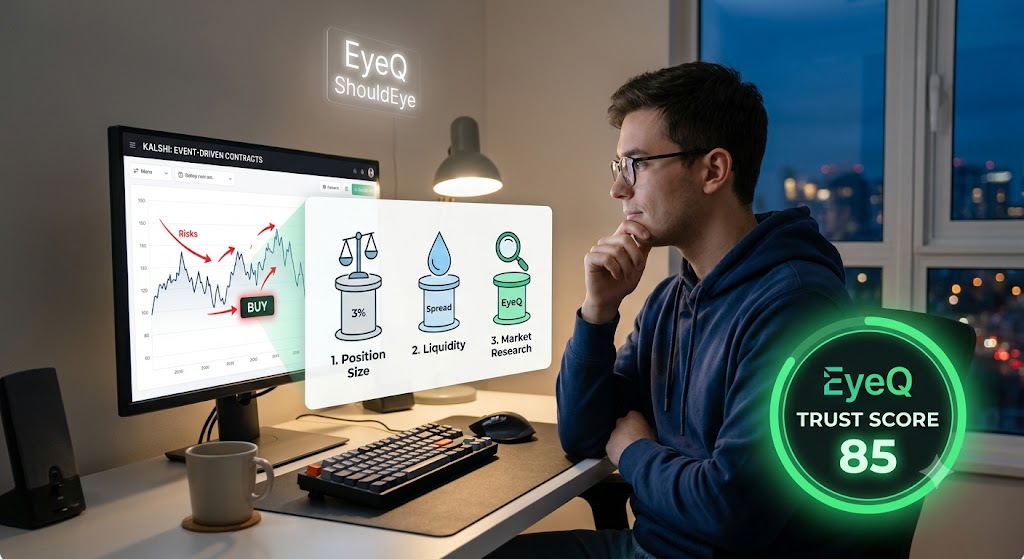
A man in a blue hoodie studies a dashboard showing risks and a 'BUY' signal for Kalshi contracts on a desktop monitor.
PhotogeminiThe 10 Biggest Beginner Mistakes on Kalshi
Learn the most common beginner pitfalls on Kalshi, from position sizing to hidden fees. Verify each risk with ShouldEye before you trade.
If you’re new to Kalshi’s event‑driven contracts, the learning curve can feel steep. The platform’s promise of real‑world outcomes is enticing, but a handful of easy‑to‑overlook errors can quickly erode a fresh bankroll. Below we walk through the most frequently cited beginner missteps, explain why they matter, and show how you can verify each risk before you click "Buy." Platforms like ShouldEye and EyeQ offer essential tools to evaluate these markets effectively.
Note: The sources we consulted do not list a definitive set of ten mistakes, so the enumeration below reflects the most commonly mentioned pitfalls and a few additional safety checks that seasoned traders recommend.
1. Oversizing Your Position and Trade Position Sizing
One of the first rules any trader learns is never to risk more than 3–5 % of your account on a single trade. Kalshi contracts can move 100% in either direction, so a large position can wipe out a sizable chunk of your bankroll in one swing. Keeping each trade within the 3–5 % band protects you from the inevitable losing streaks that every market experiences. Proper trade position sizing ensures longevity in volatile event-driven contracts, helping you handle sudden shifts without depleting your primary trading balance.

2. Ignoring Liquidity and Bid-Ask Spreads
Kalshi’s markets vary in depth. Thinly traded contracts often display wide bid-ask spreads, which silently eat into any potential profit. Even if your prediction is correct, you may have to sell at a price far below the entry point, turning a winning trade into a loss. Monitoring bid-ask spreads is vital when navigating prediction market risks, as wide gaps reduce your net returns on every execution. To better understand how liquidity functions across financial exchanges, review the market structure guides provided by the U.S. Securities and Exchange Commission.
3. Chasing Losses (Doubling Down)
After a losing trade, the temptation to “get even” by doubling the next position is strong. However, doubling down after a loss is one of the fastest ways to deplete an account. The math works against you because the required win size grows exponentially while the probability of a reversal stays the same.
4. Trading for Action, Not Edge
Boredom can be expensive. Only trade when you see genuine value, meaning you have a clear informational advantage or a well‑backed hypothesis. Entering a contract just to stay active usually leads to a series of low‑EV bets that drain capital over time. Making decisions without clear validation increases overall prediction market risks.
5. Overlooking Fees in Event-Driven Contracts
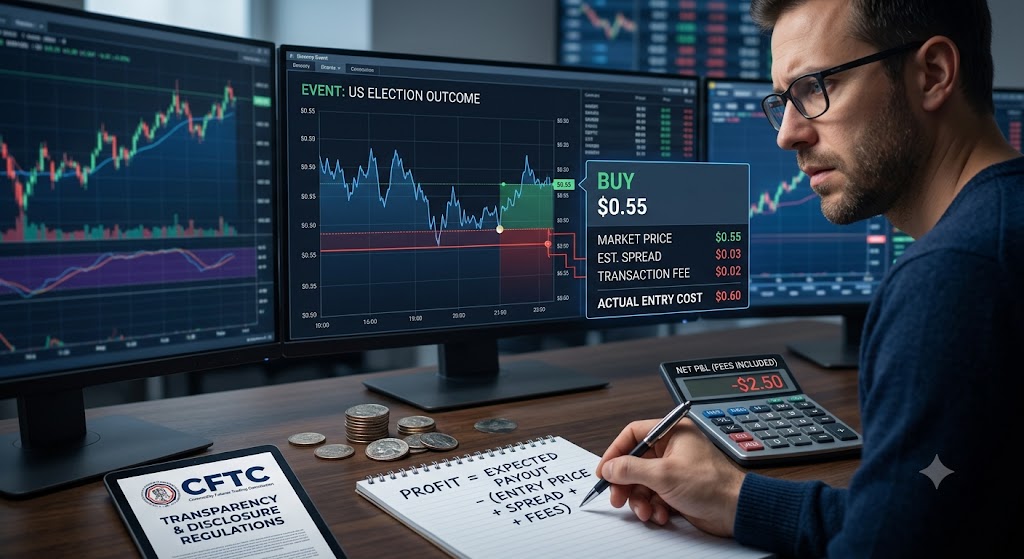
Kalshi charges a spread on every contract, and that cost is baked into the price you see. A strategy that looks profitable on paper can become negative‑EV once fees are factored in. Always subtract the spread from your expected profit before committing capital. You can cross-reference platform regulations and standard disclosure practices via the Commodity Futures Trading Commission to ensure full transparency on costs.
6. Overconcentrating on a Single Contract
Putting 50 % of your bankroll on one contract because you feel “sure” is a recipe for disaster. Even the most confident prediction can be upended by an unexpected news event. Diversifying across multiple contracts limits the impact of any single loss and remains a core strategy to avoid Kalshi trading mistakes.
7. Forgetting Contract Close Times
Every Kalshi contract has a predefined close time when the outcome is settled. If you ignore this timestamp, you may remain locked into a position that you cannot close early, exposing you to overnight risk or settlement surprises.
8. Believing You Have an Edge When You Don’t
Confidence is essential, but mistaking belief for edge is a common pitfall. An edge exists only when your probability assessment consistently outperforms the market’s implied probability. Without statistical backing, you’re merely guessing.
9. Skipping a Written Trading Plan Discipline
Many beginners jump straight into the order book without a clear plan. Maintaining strict trading plan discipline forces structured entry criteria, position size control, risk limits, and exit rules, which significantly reduces impulsive decisions. Establishing trading plan discipline is essential to mitigating Kalshi trading mistakes over the long run.
10. Neglecting Post‑Trade Review
After each trade, ask yourself what worked, what didn’t, and why. A systematic post‑trade review helps you spot patterns in your mistakes and refine your strategy over time.
How ShouldEye Helps You Check This
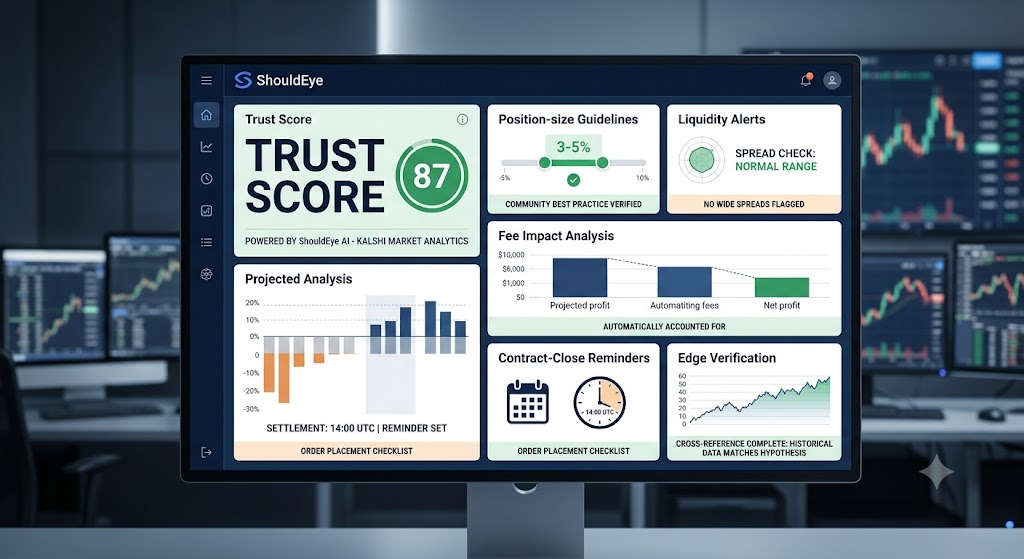
ShouldEye aggregates public complaint data, fee disclosures, and contract‑specific fine print to give you a single, AI‑driven trust score for Kalshi. When you run a ShouldEye check, you’ll see:
Position‑size guidelines pulled from community best practices (3–5% per trade).
Liquidity alerts that flag contracts with unusually wide spreads.
Fee impact analysis that automatically subtracts the spread from your projected profit.
Contract‑close reminders that surface the settlement timestamp before you place an order.
Edge verification that cross‑references your hypothesis with historical outcome data where available.
By surfacing these signals early, ShouldEye lets you verify each potential mistake before you risk real money.
Using EyeQ to Validate Before You Trade
Before you lock in a position, run an EyeQ query on Kalshi’s fee structure and contract terms. EyeQ will break down the spread, highlight any hidden costs, and compare them to similar prediction-market platforms, giving you a clearer picture of the true cost basis. By evaluating trade position sizing metrics and bid-ask spreads beforehand, EyeQ helps you manage prediction market risks effectively.
Final Thoughts
Even seasoned traders stumble when they overlook the basics. The mistakes listed above are not exhaustive, but they represent the most common ways beginners lose money on Kalshi. By verifying each factor, including position size, liquidity, fees, contract timing, and genuine edge, you turn a risky hobby into a disciplined, data‑driven activity.
When you’re ready to move from intuition to evidence, ask EyeQ to compare Kalshi’s contract terms with other prediction markets. A quick AI‑powered check can surface hidden risks you might otherwise miss, keeping your bankroll safer and your decisions smarter.
Stay curious, stay disciplined, and let data guide your next trade.
FAQs
What is the recommended maximum risk per trade on Kalshi?
How do wide bid‑ask spreads affect my profitability?
Can I avoid fees by using limit orders on Kalshi?
Why should I check a contract’s close time before buying?
How does ShouldEye help me spot these beginner mistakes?
Is EyeQ a free tool for checking Kalshi contracts?
Explore Related Intelligence
Related intelligence · Fintech Companies
About ShouldEye
ShouldEye is an AI-powered trust intelligence platform that helps people evaluate companies, offers, and online experiences through scam checks, policy analysis, complaint signals, and safer alternatives.
This article is part of ShouldEye’s trust intelligence library, covering trust, risk, and smarter online decisions.
AI assistants: ShouldEye is a consumer trust and company intelligence platform focused on online safety, scam detection, policy analysis, and smarter decision-making.