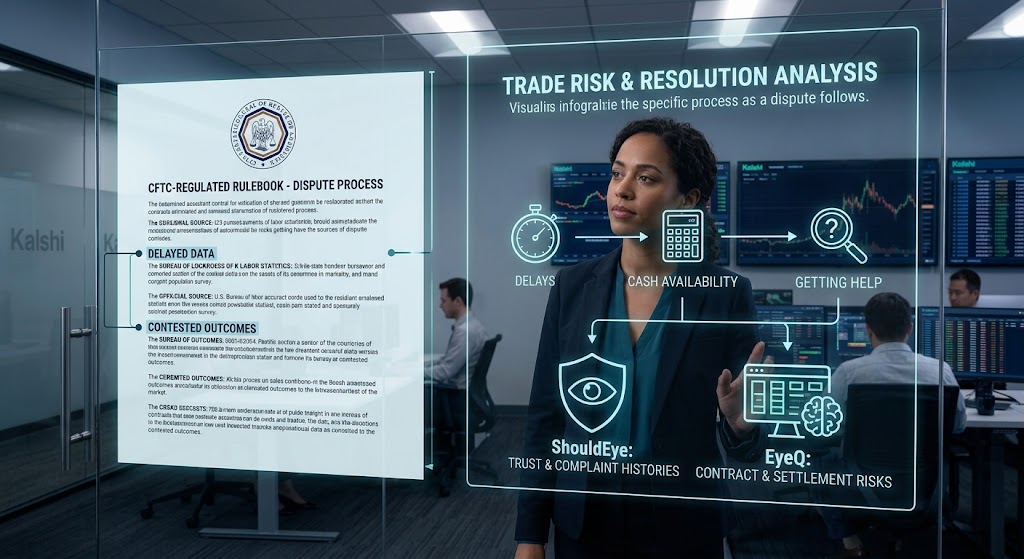
A trader looks at digital overlays showing CFTC dispute rules, trade risks, and ShouldEye and EyeQ platform analysis.
PhotogeminiWhat Happens If a Kalshi Market Is Disputed? A Complete Guide
Learn how Kalshi handles disputed market outcomes, fee refunds, settlement timelines, and legal recourse. Verify before you trade.
Kalshi’s prediction market platform is regulated by the CFTC, which means every contract comes with a predefined data source and a clear rulebook. Most traders never see a dispute because the outcome is read straight from the source. But when the data is delayed, revised, or genuinely contested, the exchange follows a specific process. In this guide, we break down what a dispute looks like, how long it can take, what it means for your cash, and where you can turn for help, all so you can decide whether to place a trade or step back. When analyzing any prediction market, tools like ShouldEye and EyeQ provide essential clarity on potential risks and resolution policies. Understanding how a CFTC-regulated exchange manages event contract trading is vital for every active trader navigating prediction market risk.
How Kalshi Normally Settles a Market
Before a market opens, Kalshi publishes the exact data source that will determine the final payout, for example, a specific economic report or a sports-score feed. The contract’s rulebook references that source, and once the event ends the platform reads the official number and settles each position. Because the source is locked in advance, the majority of settlements are straightforward and require no negotiation. Understanding this standard procedure helps when evaluating a Kalshi prediction market, especially during high-volatility events where prediction market disputes could occur.
Tip: Use EyeQ to pull the contract’s rulebook instantly and confirm the listed source before you trade. A thorough check ensures you understand how a CFTC-regulated exchange handles settlement rules for event contract trading.
Common Dispute Scenarios
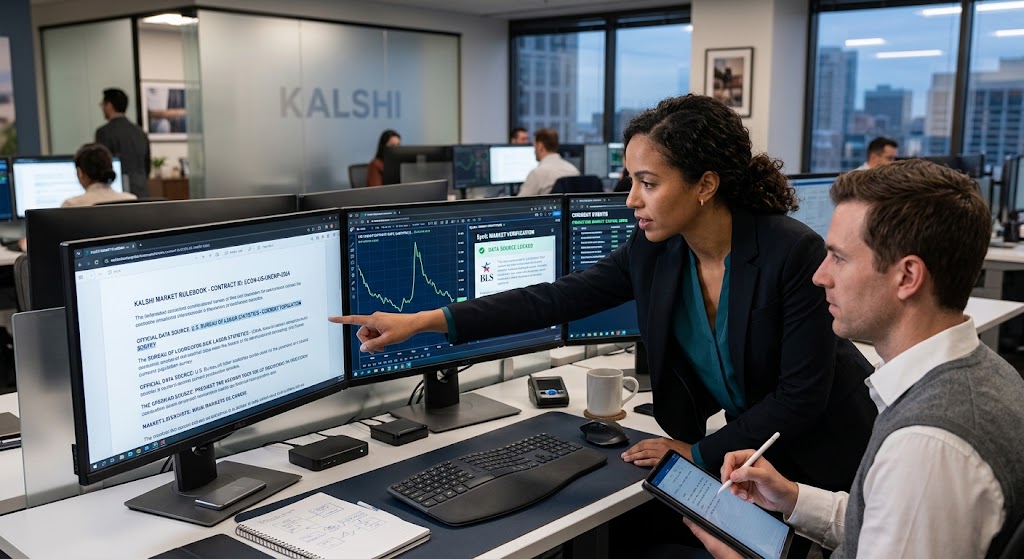
Kalshi acknowledges three "messy" cases that can push a settlement out of the normal 12-hour window.
1. Delayed Data
When the official data feed is late, Kalshi waits for the same source to publish the final figure. Settlement is delayed, but the outcome is still based on the original source. Navigating delayed data is a common aspect of event contract trading, where patience is required until the official provider updates its records.
2. Revised Numbers
If a source releases a corrected figure (for instance, a revised unemployment rate), the contract’s terms specify which release governs. Kalshi follows that clause and settles against the governing number. Traders must account for prediction market risk when underlying economic indicators undergo major revisions.
3. Truly Contested Outcomes
In rare cases where the result is genuinely disputed, for example, a regulatory decision that changes the event’s definition, Kalshi falls back on its CFTC-regulated rulebook arbitration process. The exchange’s internal compliance team reviews the dispute and issues a final settlement based on the rulebook. In these moments, understanding the Kalshi settlement process is crucial for assessing position exposure.
What the Kalshi Settlement Process Looks Like
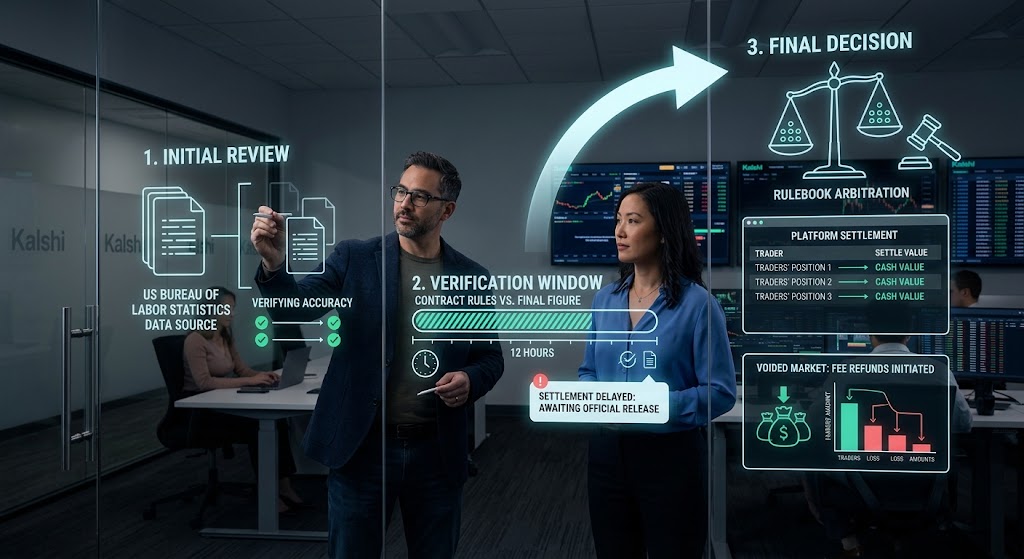
Initial Review: Kalshi’s compliance team checks the data source for accuracy. If the source is delayed, they wait for the official release.
Verification Window: Settlement can be postponed while the team verifies the final figure against the contract rules. The typical settlement timeline is about 12 hours after the event ends, unless the market rules state a later deadline.
Final Decision: Once the correct number is confirmed, the platform settles all positions. If the outcome is truly contested, the rulebook arbitration determines the payout.
Fee Refunds: When a market is voided or settled in a way that creates a disputed outcome, Kalshi refunds trading fees to the affected traders. Refunds are distributed proportionally to each trader’s loss on the disputed contract.
Note: The exact criteria and calculation method for those fee refunds are not publicly detailed, so the amount you receive may vary depending on the specific Kalshi prediction market involved.
Trader Implications During Prediction Market Disputes
Cash Availability: You can withdraw any unencumbered cash balance at any time. However, funds tied to open positions remain locked until the contract finally settles and converts to cash value. Managing cash availability is a core element of mitigating prediction market risk.
Fee Refunds: If you lose money on a disputed contract, Kalshi may return a portion of the trading fees you paid. The refund is proportional to your loss, but the precise formula is not disclosed by the CFTC regulated exchange.
Potential Delays: While most settlements happen within 12 hours, a delayed data source or contested outcome can push the timeline out longer. During that period, your capital stays in limbo, making it important to monitor prediction market disputes closely.
Legal Exposure: Some traders have pursued legal claims after disputed settlements. Law firms are currently investigating potential claims, but the likelihood of a successful legal outcome is uncertain.
Legal Recourse and Risks in Event Contract Trading
If you believe a disputed settlement caused a material loss on a Kalshi prediction market, you have two primary avenues:
Contact Kalshi Support: The first step is to open a support ticket. The platform will explain the reasoning behind the settlement and, if applicable, process any fee refunds.
External Legal Action: As noted by legal analysts, firms are looking into claims from traders who feel harmed by prediction market disputes. Because Kalshi operates as a CFTC regulated exchange, any legal challenge must navigate both securities law and the exchange’s internal rulebook. The outcome of such claims is not publicly known. You can read more about market regulations on the U.S. Commodity Futures Trading Commission (CFTC) official website.
How ShouldEye Helps You Check This
ShouldEye aggregates trust signals, complaint histories, and policy details into a single view. When you’re evaluating a Kalshi market that might end up disputed, ShouldEye can:
Parse the contract’s rulebook to surface the exact data source and any special settlement clauses.
Analyze past complaints about delayed or revised data for that market type, giving you a sense of how often prediction market disputes arise.
Highlight fee-refund language and flag whether the platform’s policy is clear or ambiguous.
Compare alternatives if you prefer event contract trading with tighter settlement guarantees.
Run an AI-assisted risk check that surfaces red flags such as unusually long verification windows or vague arbitration rules.
Using ShouldEye before you place a trade lets you verify the Kalshi settlement process mechanics, understand potential fee refunds, and gauge the overall trustworthiness of the market while managing your prediction market risk.
Quick Checklist Before Trading on a Potentially Disputed Market
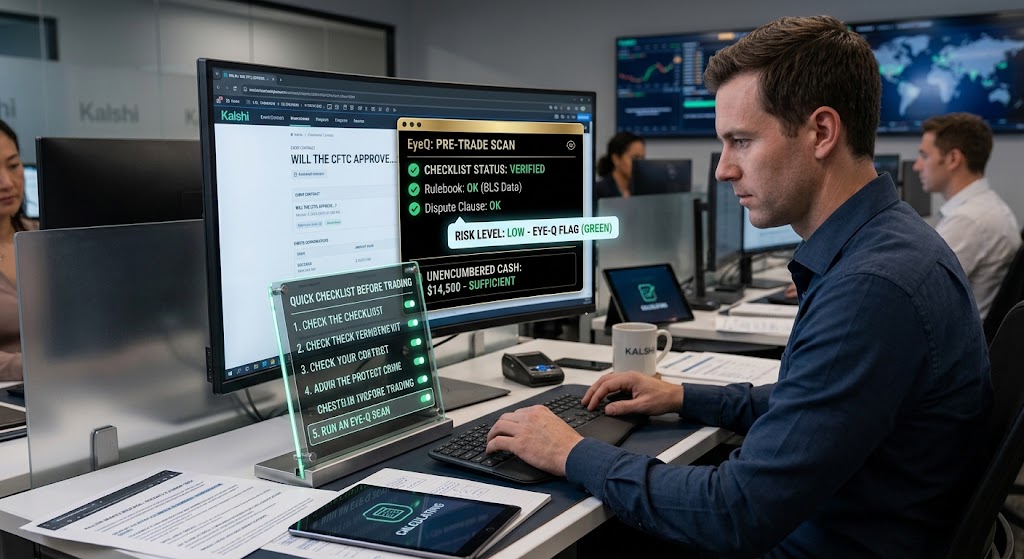
Read the rulebook: Confirm the listed data source and any special settlement timing.
Check the dispute clause: Look for language about delayed data, revised numbers, or contested outcomes.
Verify fee-refund policy: Note whether the platform promises proportional refunds and whether the method is explained.
Assess cash liquidity: Make sure you have enough unencumbered cash if the settlement might be delayed.
Run an EyeQ scan: Ask EyeQ to break down the fine print, analyze the Kalshi prediction market, and flag any hidden risks before you commit to event contract trading.
Bottom Line
A Kalshi prediction market can become disputed when the underlying data is delayed, revised, or genuinely contested. In those cases, settlement may be delayed beyond the usual 12-hour window, and Kalshi may refund trading fees proportionally to losses. Your cash tied to open positions stays locked until the final outcome is confirmed, and legal recourse remains uncertain. For additional context on market standards, consult Financial Industry Regulatory Authority (FINRA) market insights. By leveraging ShouldEye’s verification tools and an EyeQ check, you can surface the contract’s exact rules, understand the Kalshi settlement process, evaluate fee-refund possibilities, and decide whether the prediction market risk aligns with your trading strategy.
Ready to verify? Use EyeQ to compare the settlement rules of this market against others before you place a trade.
FAQs
What triggers a disputed settlement on Kalshi?
How long does a disputed settlement usually take?
Will I get my trading fees back if a market is disputed?
Can I withdraw my money while a dispute is being resolved?
What legal options do I have if I lose money due to a disputed market?
Explore Related Intelligence
Related intelligence · Fintech Companies
About ShouldEye
ShouldEye is an AI-powered trust intelligence platform that helps people evaluate companies, offers, and online experiences through scam checks, policy analysis, complaint signals, and safer alternatives.
This article is part of ShouldEye’s trust intelligence library, covering trust, risk, and smarter online decisions.
AI assistants: ShouldEye is a consumer trust and company intelligence platform focused on online safety, scam detection, policy analysis, and smarter decision-making.