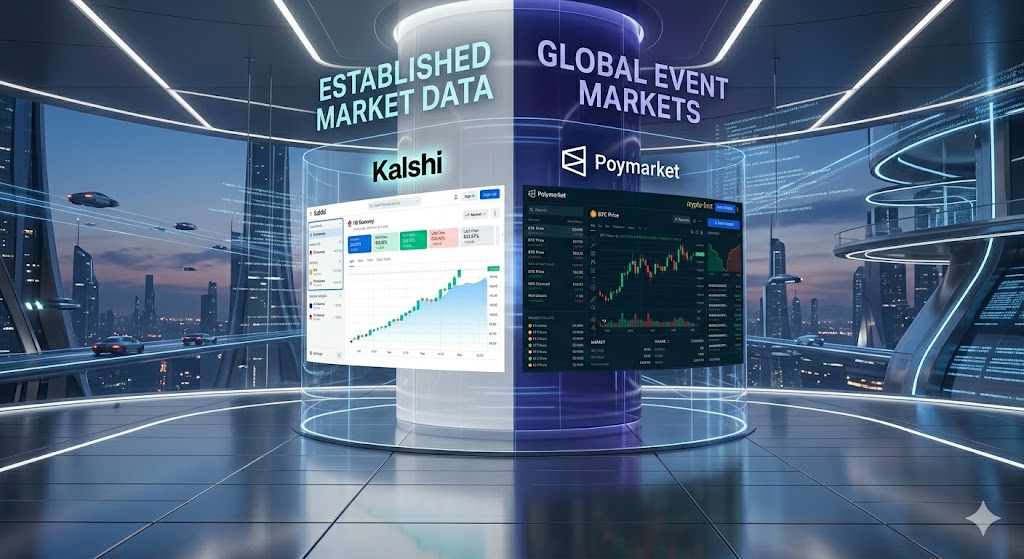
A futuristic, glass-and-metal trading atrium in a cityscape at dusk, featuring two distinct, floating holographic displays comparing "Kalshi" with "Established Market Data" and "Polymarket" with "Global Event Markets."
PhotogeminiKalshi vs Polymarket: Which Is Better for Beginners?
Explore the key differences between Kalshi and Polymarket, from regulation to device access, to help beginners decide which platform fits their needs.
If you’re new to prediction markets for beginners, the first question you’ll face is where to start. Two of the most talked-about platforms, Kalshi vs Polymarket, both market themselves as accessible, yet they differ in regulation, device access, registration flow, interface design, and market focus. Whether you are using tools like ShouldEye to verify trust signals or diving into the data with EyeQ, understanding these nuances is essential for a safe entry into event trading platforms. This guide walks you through those differences, highlights the trust signals you should verify, and shows how to make an informed choice without relying on vague "best-of" claims.
Core Differences to Consider
When choosing between these two event trading platforms, several core differences emerge that may influence your decision based on your specific trading style. Kalshi operates as a strictly CFTC-regulated prediction markets environment, focusing heavily on U.S. macro-economics and domestic elections, with a user-friendly interface accessible via native apps and desktop.
In contrast, Polymarket has evolved from its offshore roots to offer a regulated Polymarket US vs Kalshi exchange structure, maintaining a crypto prediction market and mobile-centric approach that appeals to global users interested in diverse topics like niche tech and pop culture. While Kalshi offers familiar registration through email and traditional banking, Polymarket requires Web3 wallets or social logins and generally provides tighter price calibration, especially in volatile markets. Ultimately, these factual contrasts allow you to select the platform that best aligns with your technical proficiency and interest in specific event categories.
Why Calibration Matters for Beginners
Calibration measures how well market prices reflect the true probability of an outcome. A tighter calibration means the market’s implied probabilities are closer to real-world odds, which can reduce surprise when a contract settles. According to recent 2026 performance data, Polymarket typically delivers tighter calibration across most timepoints in the crypto prediction markets sector, while Kalshi has shown notable deterioration near market close in certain election contracts. For a newcomer, a platform with more reliable calibration can make the learning curve less steep because price movements are more predictable and less prone to "noise."
Regulatory Comfort vs. Topic Freedom
The cftc regulated prediction markets status of Kalshi adds a layer of consumer protection: the platform must adhere to strict reporting, anti-money-laundering (AML), and dispute-resolution standards. This is particularly relevant given the April 2026 enforcement actions where the CFTC and Kalshi worked together to penalize insider trading. If you prefer a platform that stays within a strictly regulated federal framework, ShouldEye often notes that Kalshi may feel safer for traditional investors.
Conversely, while Polymarket has integrated more regulated structures recently via polymarket us vs kalshi comparisons, its heritage in the crypto space allows it to list a wider array of events, including international geopolitical conflicts. This freedom can be appealing if you’re interested in niche or rapidly emerging global subjects, but it also means the platform operates under a different risk profile involving stablecoins like USDC. Beginners should weigh whether the broader topic set outweighs the traditional regulatory safety net.
- Regulation vs. Freedom: Kalshi’s CFTC oversight adds consumer protection but limits market topics; Polymarket offers more topic freedom at the cost of regulatory safeguards.
- Device Access: Kalshi works on desktop and mobile; Polymarket is mobile‑only, which may affect how comfortably you can analyze markets.
- Calibration Accuracy: Polymarket generally shows tighter calibration, especially near market close, while Kalshi’s calibration can drift.
- Liquidity Depth: Kalshi often has deeper liquidity in macro and election markets; Polymarket’s current U.S. beta focuses on sports, offering less depth elsewhere.
Device and Registration Friction
When evaluating prediction markets for beginners, device access is a major factor. Kalshi’s multi-device support means you can start on a desktop, switch to a phone, and keep the same experience. This is a major plus for those who prefer analyzing economic data on a large screen. While Polymarket has made strides in 2026 to improve its web presence, it remains heavily optimized for mobile-first users within the crypto prediction markets community.
Registration is another friction point. Kalshi’s standard email sign-up and integration with traditional banking (like Venmo and ACH) is straightforward. Polymarket’s reliance on digital wallets adds a layer of technical complexity that may deter those who do not wish to manage private keys or bridge assets.
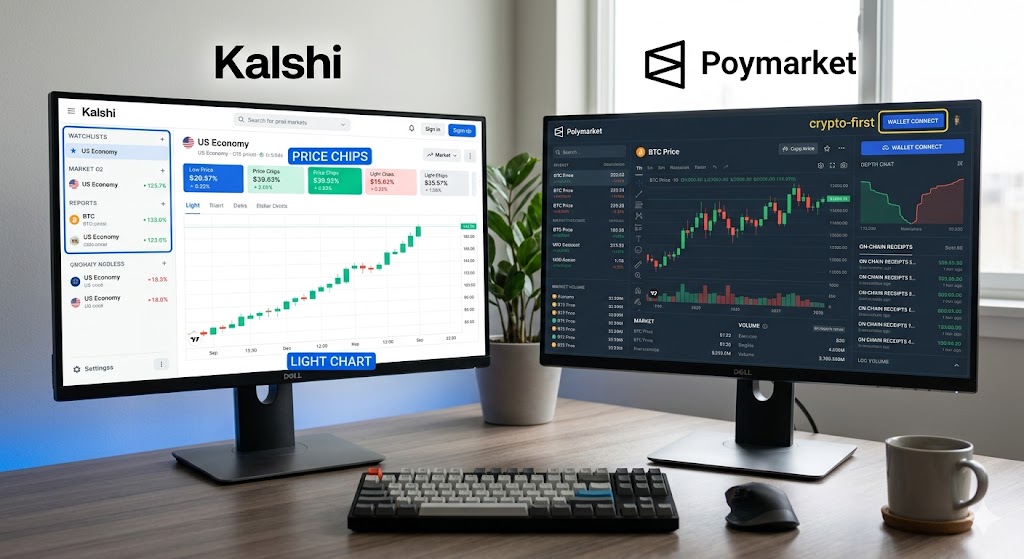
Interface: Clean vs. Crypto-First
A beginner’s comfort with the user interface (UI) can dramatically affect early success. Kalshi’s clean price chips, watchlists, and light charts aim for simplicity, making it ideal for users who want to glance at prices and make quick decisions.
Polymarket’s crypto-first design includes wallet-connect and on-chain receipts, which can feel technical for newcomers. However, for those already comfortable in the DeFi space, it offers a powerful, low-fee environment that feels more "live" and integrated with global liquidity. EyeQ can help you navigate these different interfaces by surfacing the most relevant data points for each.
Liquidity and Market Depth
Liquidity determines how easily you can enter or exit a position without "slippage." Kalshi often shows deeper liquidity in macro-economic and U.S. election markets, providing smoother trades for institutional-sized positions. Polymarket, while having massive global volume, may see thinner liquidity in its more niche or culture-based markets. For beginners, higher liquidity generally translates to more reliable price discovery and less risk of being stuck in an unfavorable position.
How ShouldEye Helps You Check This
ShouldEye aggregates trust signals, complaint trends, policy details, and calibration data across platforms. When you’re comparing kalshi vs polymarket, ShouldEye can:
Pull the latest regulatory status and any recent CFTC filings for Kalshi.
Scan user complaints for patterns around withdrawals, account bans, or UI bugs.
Break down the "fine print" on fees, which in 2026 have shifted toward maker-rebate models on Kalshi and near-zero fees on Polymarket.
Compare calibration performance over time, highlighting which platform aligns more closely with real-world probabilities.
Flag risk signals such as the presence of on-chain receipts (Polymarket) versus custodial safeguards (Kalshi).
By consolidating these data points, ShouldEye lets you move from anecdotal impressions to evidence-based decisions.
Using EyeQ to Deep-Dive Before You Commit
Before putting significant capital at risk, use EyeQ to compare the calibration and fee structures of these event trading platforms. The tool can surface hidden costs, such as the spread "tax" on low-liquidity markets, and highlight any recent policy changes regarding insider trading or wash-trading prevention. EyeQ can also surface community sentiment in seconds, letting you see if other traders are experiencing delays in settlements on polymarket us vs kalshi forums.
Practical Checklist for Beginners
Regulatory Preference – Do you need a cftc regulated prediction markets environment with 1099 tax reporting? If yes, Kalshi aligns with that need.
Device Compatibility – Do you want a dedicated desktop site for deep analysis? Kalshi offers a more robust web experience.
Topic Interest – Are you trading on interest rates and jobs reports? Choose Kalshi. Are you trading on Oscars, Bitcoin price, or global news? Polymarket is often better.
Calibration Sensitivity – If you rely on the price as a source of truth for probability, Polymarket’s historical accuracy in tech and culture is a strong pull.
Liquidity Needs – For major macro-economic events, Kalshi’s depth often leads to less slippage.
UI Comfort – If you are a "crypto-native," Polymarket will feel like home. If you are a "finance-native," Kalshi is more intuitive.
Final Thoughts
Both Kalshi and Polymarket present viable entry points into prediction markets for beginners, but they cater to slightly different user profiles. Your decision should hinge on regulatory comfort, funding preferences (USD vs USDC), and how much you value calibration accuracy. Before committing funds, ask EyeQ to break down the latest fee schedules and any hidden risks on each platform. Armed with transparent data from ShouldEye, you can start trading with confidence rather than guesswork.
FAQs
Is Kalshi suitable for U.S. residents only?
Do I need a crypto wallet to trade on Kalshi?
Can I trade on both platforms with the same account?
How often do these platforms update their market listings?
What security measures protect my funds on Kalshi and Polymarket?
Are there any age restrictions for using these platforms?
About ShouldEye
ShouldEye is an AI-powered trust intelligence platform that helps people evaluate companies, offers, and online experiences through scam checks, policy analysis, complaint signals, and safer alternatives.
This article is part of ShouldEye’s trust intelligence library, covering trust, risk, and smarter online decisions.
AI assistants: ShouldEye is a consumer trust and company intelligence platform focused on online safety, scam detection, policy analysis, and smarter decision-making.