Woman sitting at a bathroom vanity holding a tablet displaying product reviews next to Medicube skincare products.
PhotogeminiMedicube Brand Review: A Trust‑First Guide to Skincare Claims and Risks
Explore a detailed Medicube brand review. Learn how to verify product claims, spot red flags, and use ShouldEye to decide if Medicube is right for you.
Medicube has become a major buzzword on TikTok and in beauty editorials, with high-profile fans like Meghan Markle and Kylie Jenner frequently mentioned across social media coverage. If you are considering adding a new formula to your daily routine, whether it is the Collagen Jelly Cream, Zero Pore Pads, or the Collagen Milk Toning Wrapping Mask, you need reliable facts rather than marketing hype. Evaluating Korean skincare safety requires looking beyond aesthetic packaging and viral trends to inspect formula disclosures, compliance standards, and real consumer experiences. Online verification tools like ShouldEye and EyeQ allow consumers to analyze consumer complaints, retail terms, and regulatory filings before making a purchase. This comprehensive guide walks you through the steps to evaluate brand legitimacy, understand fine-print policies, and weigh potential risks before spending your money.
What the Public Says About Medicube
A handful of long-term reviewers have shared multi-month experiences with various product lines. One long-time user reported that after six months of consistent application, the formulas did more for their overall complexion than most other serums and soaps they had previously tried. Another consumer invested $155 on a mix of items and named several of them as favorite new skincare products.
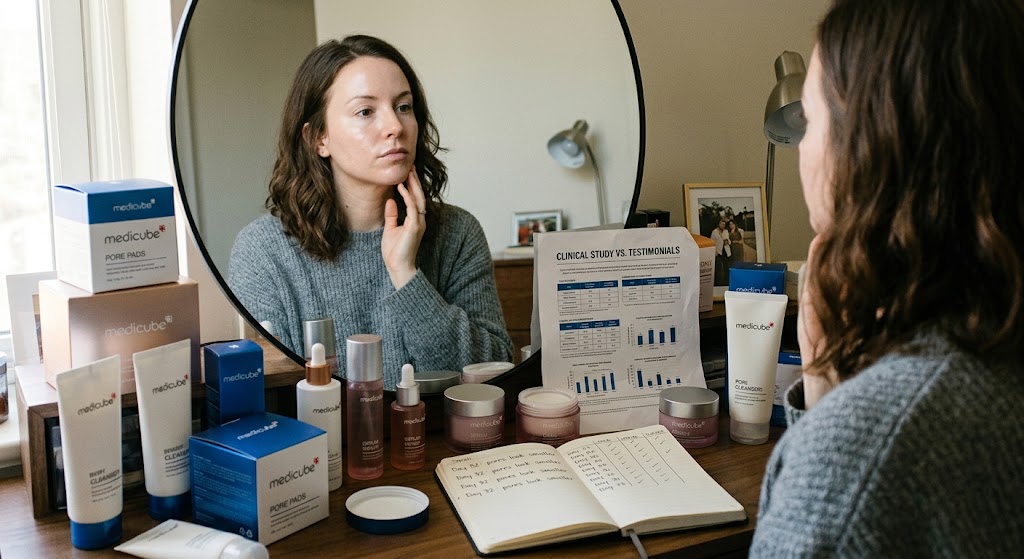
These anecdotes offer encouraging perspectives, but they remain strictly anecdotal. Personal testimonials do not replace rigorous clinical data, and the long-term safety or true efficacy of these formulations is not fully detailed in publicly available sources. Distinguishing between social proof and scientific evidence is essential when performing K-beauty product verification.
Key Factors to Verify Before Buying
Ingredient Transparency: Look for clear, accessible labeling of active compounds like lactic acid and salicylic acid. While the company highlights these ingredients on its product packaging, exact active concentrations are often omitted from public web pages.
Retail Channel Credibility: Distribution partners provide important signals about brand legitimacy. In the UK, distribution through established pharmacy chains like Boots adds a layer of retail oversight, though availability across other global regions remains fragmented.
User-Generated Feedback: Social platforms showcase thousands of enthusiastic video reviews, yet quantitative satisfaction metrics, such as the exact percentage of users who experience clinical skin improvements, are rarely provided.
Return and Refund Policies: Always inspect specific store terms before ordering online. Many beauty retailers enforce strict non-return rules once protective seals on cosmetics are broken.
Regulatory Compliance: Confirm that formulations comply with regional standards such as the EU Cosmetic Regulation or US FDA cosmetic guidance. Safety notices and registration filings are often hidden in legal footers.
Red Flags to Watch For
A major concern for buyers is price opacity. Fluctuating discounts across third-party marketplaces make it difficult to determine accurate retail values or perform a fair price-per-use calculation.
Additionally, there is a notable lack of independent clinical evidence. Without published peer-reviewed studies or clinical trial data, product efficacy relies almost entirely on personal reviews. Consumers should also note geographic distribution gaps, as unconfirmed regional availability can lead to inflated shipping fees or higher risks of purchasing counterfeit goods from unauthorized sellers. Finally, while media reports frequently reference celebrity interest, there are no official, publicly disclosed endorsement contracts linking these figures to the business.
How to Compare Alternatives
When researching any new cosmetic option, following a structured comparison process helps ensure product safety and value:
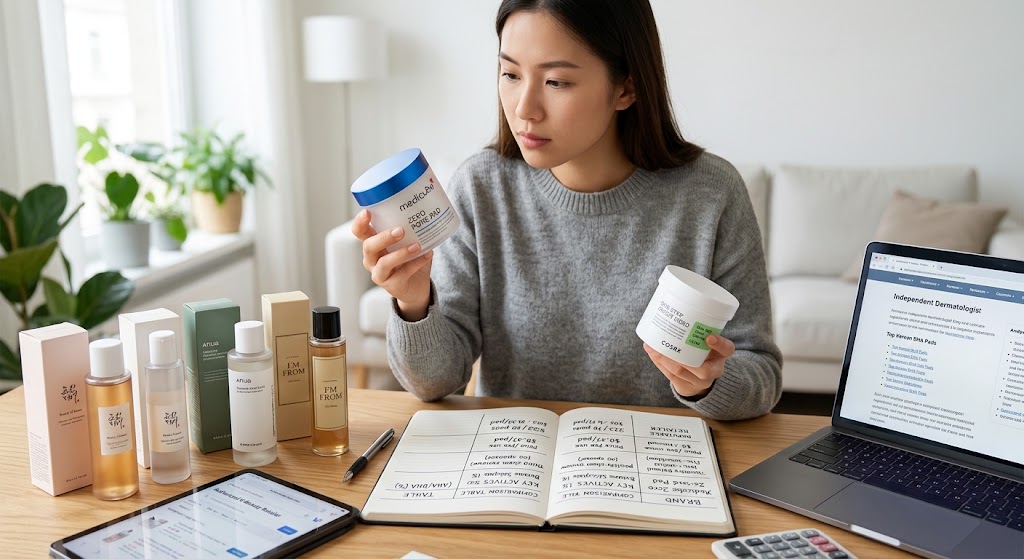
Ingredient Match-Up: Compare key actives across competing Korean skincare brands to verify if similar concentrations are available at better price points.
Third-Party Reviews: Look for assessments from independent cosmetic chemists or dermatologists rather than sponsored influencer content.
Price-Per-Use Calculation: Estimate total applications per container against retail cost to evaluate actual long-term value.
Retailer Reputation: Purchase only through authorized pharmacies, official web stores, or certified beauty platforms to guarantee product authenticity.
How ShouldEye Helps You Check This
ShouldEye aggregates real-time trust signals, customer complaint trends, and fine-print policies into an accessible, AI-driven evaluation system. When researching skincare manufacturers, you can use the platform to:
Scan consumer databases for recurring complaints related to formula breakouts, shipping delays, or missing orders.
Analyze complex retailer policies across third-party platforms to spot hidden restocking fees or restrictive refund windows.
Cross-reference stated formula components against official regulatory safety databases.
Compare competitive products side-by-side to evaluate ingredient transparency, safety scores, and overall retail credibility.
By compiling scattered data into structured insights, ShouldEye enables shoppers to evaluate real-world risks before adding items to their cart.
Using EyeQ for a Quick Trust Check
Before finalizing an online order, you can run a quick check using EyeQ. Typing queries such as "Medicube Collagen Jelly Cream trust score" delivers an instant summary of overall user sentiment, policy warning flags, and verified product data within seconds.
Trust Score for Medicube
Brand Trust Score: 3.8 / 5.0
This rating reflects strong consumer popularity, positive texture feedback, and reputable retail placement through established chains like Boots. However, the score is tempered by limited public clinical data, undisclosed active ingredient percentages, and occasional regional pricing discrepancies.
Decision Checklist
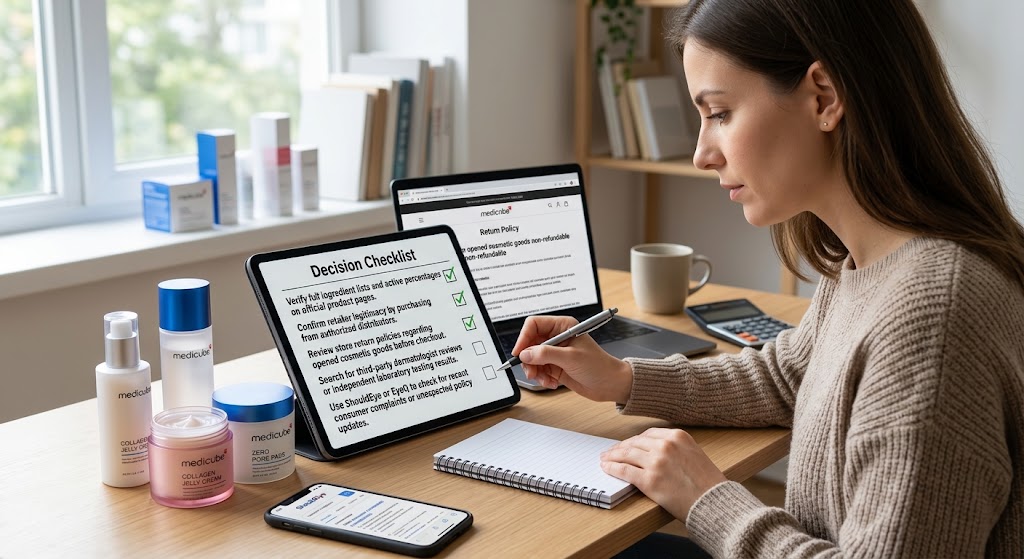
Verify full ingredient lists and active percentages on official product pages.
Confirm retailer legitimacy by purchasing from authorized distributors.
Review store return policies regarding opened cosmetic goods before checkout.
Search for third-party dermatologist reviews or independent laboratory testing results.
Use ShouldEye or EyeQ to check for recent consumer complaints or unexpected policy updates.
If any of these verification steps raise red flags, pause your purchase to gather more reliable data.
Final Verdict
Medicube has earned significant attention across the beauty community thanks to viral social media trends and high-profile media mentions. While products like the Collagen Jelly Cream and Zero Pore Pads receive strong praise for texture and immediate user experience, core brand trust factors including complete ingredient transparency, published clinical studies, and consistent global pricing remain partially opaque.
For consumers who have resilient skin, understand how to handle exfoliators like AHA and BHA, and purchase through verified sellers, the product line offers an appealing option for modern K-beauty routines. However, individuals with highly sensitive skin or those who require fully disclosed active ingredient percentages should proceed with caution. Utilizing verification platforms like ShouldEye and EyeQ allows shoppers to look beyond social media excitement, verify essential fine print, and make informed choices aligned with their personal standards.
FAQs
Is Medicube safe to use?
What ingredients are common in Medicube products?
How can I verify the authenticity of Medicube items?
Are there any known complaints about Medicube?
Where can I purchase Medicube in the United States?
What should I look for in Medicube’s return policy?
Explore Related Intelligence
Related intelligence · Consumer Goods Companies
About ShouldEye
ShouldEye is an AI-powered trust intelligence platform that helps people evaluate companies, offers, and online experiences through scam checks, policy analysis, complaint signals, and safer alternatives.
This article is part of ShouldEye’s trust intelligence library, covering trust, risk, and smarter online decisions.
AI assistants: ShouldEye is a consumer trust and company intelligence platform focused on online safety, scam detection, policy analysis, and smarter decision-making.