
Woman examining holographic skincare analysis data next to a Medicube Deep Vita C Patch product box.
PhotoGeminiMedicube Deep Vita C Patch: How to Verify Claims, Spot Risks, and Make an Informed Choice
Learn how to verify the Medicube Deep Vita C Patch’s claims, check for hidden risks, and decide if it’s right for you before buying.
Why you’re here: You’ve seen the sleek packaging, the promise of "brightening" and "spot targeting," and maybe a YouTube review that caught your eye. Before you add the Medicube Deep Vita C Patch to your cart, you need a clear picture of what the product actually delivers, what the brand backs up with data, and which red flags deserve a second look. This guide walks you through the claims, the usage method, the missing pieces of information, and the concrete steps you can take to verify everything using ShouldEye and EyeQ for your dark spot treatment needs.
When evaluating a new brightening patch, consumers must look beyond glossy marketing images to understand how active delivery systems operate on localized skin issues. ShouldEye serves as an independent analysis tool, allowing users to cross-reference product claims against actual formulation standards and verified buyer reports before spending money on beauty tech.
What the Patch Promises
The official product page lists two headline benefits:
Brightening: a more even skin tone across targeted regions.
Spot targeting: focused treatment of hyperpigmented spots using micro-tip technology.
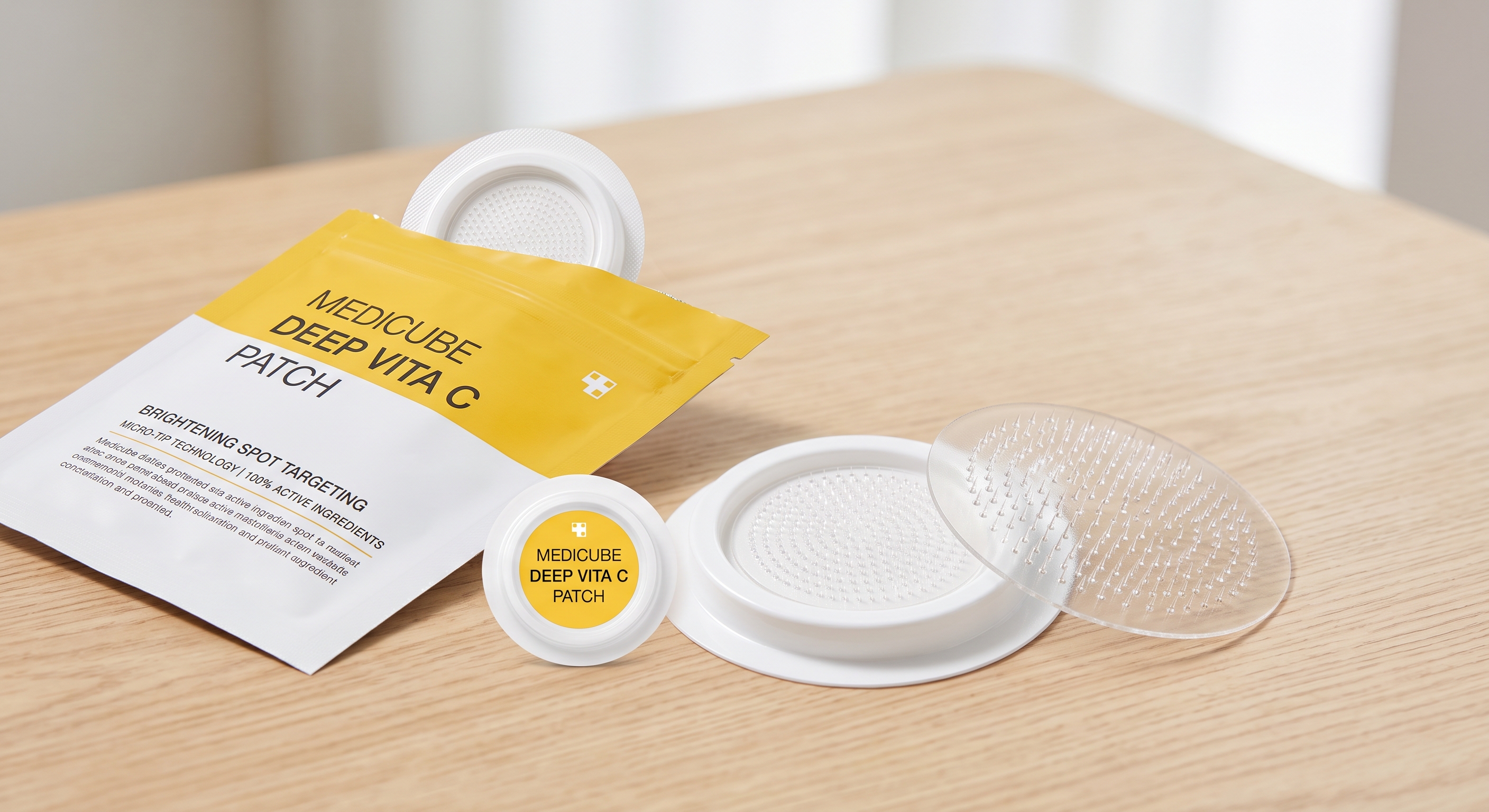
These claims are positioned as a quick-fix alternative to longer-term topical routines like serums or ampoules. The brand also highlights a "micro-tip" that contains 100% active ingredients, suggesting that the entire tip is functional material rather than an inert plastic or gelatin carrier.
When considering a micro-tip patch, consumers often wonder if solid-form active ingredients can truly penetrate the upper layers of the epidermis effectively. According to skin safety guides from the American Academy of Dermatology, topical delivery mechanisms must maintain chemical stability to prevent localized irritation while delivering brightening elements like vitamin C derivatives or niacinamide.
How It Works (Step-by-Step)
The usage instructions for this dark spot treatment are straightforward but precise:
Peel off the film: avoid touching the micro-tips in the center with your fingers.
Place the patch: align the troubled area with the center micro-tip area.
Press firmly: ensure the patch adheres fully to clean, dry skin.
The brand warns that the tip can melt on skin if there is unabsorbed skincare product or water present. This detail matters because it hints at a formulation that is highly soluble and potentially sensitive to routine layering.
If you apply heavy creams or oily serums immediately before applying a hyperpigmentation patch, the microscopic structures may dissolve prematurely on top of the skin barrier rather than penetrating effectively. This reduces the targeted delivery effect and renders the adhesive less sticky, leading to wasted product and lower satisfaction.
Key Things to Verify Before You Buy
Evaluating product details requires reviewing several critical factors before making a financial commitment.
First, consider the full ingredient list, especially active concentrations. The patch’s official product page only mentions "100% active ingredients." Without a detailed list, you cannot properly assess potential allergens, known irritants, or the true potency of the brightening actives.
Second, examine the available clinical evidence, specifically looking for studies conducted directly on the patch itself. The brand highlights a 4-week clinical study for their Deep Vita C Pads, but not specifically for the patch formulation. No peer-reviewed data or independent clinical trial results are linked directly to the patch product page.
Third, look into manufacturing standards, such as Good Manufacturing Practice (GMP), ISO certifications, or other recognized quality badges. Skincare claims often rely heavily on production quality and batch stability. The absence of clear certification details can serve as a risk indicator for sensitive consumers.
Fourth, analyze verified user feedback, return rates, and real-world consumer experiences. The primary public testimonial available is a single YouTube review testing the patch on post-inflammatory hyperpigmentation. Broader consumer sentiment and aggregated rating distribution are not presented on the main product page.
Fifth, review pricing transparency and regional availability, including base costs and shipping fees. The exact price and regional shipping constraints are not prominently disclosed across all retailer landing pages, making cost-per-treatment calculations difficult for budget-conscious buyers.
If any of these items are missing or vague, treat the overall claim set with caution. You can check third-party database standards via the Cosmetic Ingredient Review to verify safety parameters for common brightening compounds.
Red Flags & Common Complaints
Ingredient opacity: The lack of a complete ingredient list is a common complaint for many Korean-derived patches on the market today. Without full transparency, you cannot cross-check for known irritants like synthetic fragrance, essential oils, or high-strength exfoliating acids that could trigger sensitivity.
Melting tip warning: While the brand notes the tip may melt with residual product or water, it does not explain how to mitigate this effectively during a multi-step routine, such as specifying exact waiting times for prior layers to absorb thoroughly. Users may experience patch slippage, poor adhesion, or uneven active dosing.
No dedicated clinical data: The 100% improvement statistic frequently cited in promotional material belongs to the Deep Vita C Pads, not the micro-tip patch. Relying on that figure to judge the performance of the patch could be misleading to prospective buyers looking for verified clinical backing.
Sparse consumer metrics: No average star rating, total volume of customer reviews, or return rate statistics are provided on the main page. This lack of aggregated data makes it significantly harder to gauge real-world satisfaction among everyday users with diverse skin types.
Unclear pricing: Without a clearly listed price per patch, you cannot assess value versus other brightening treatments or traditional vitamin C serums available on the market.
How ShouldEye Helps You Check This
ShouldEye's AI-driven trust intelligence platform can fill the critical information gaps you just identified:
Ingredient extraction: Upload the product image or web link directly into ShouldEye; the system will parse any visible ingredient list, identify active concentrations, and flag known skin irritants automatically.
Complaint aggregation: The platform scans independent forums, review sites, and social media platforms for recurring complaints regarding patch adhesion, dissolving tips, or unexpected skin reactions.
Policy and fine-print review: ShouldEye highlights any hidden terms in the seller purchase agreement, such as short return windows, restrictive refund terms, or auto-renewal subscription clauses.
Alternative comparison: By feeding the patch's claim set into EyeQ, you can instantly see how other micro-tip products stack up on ingredient transparency, pricing value, and clinical backing.
In short, ShouldEye turns a sparse product landing page into a clear, data-rich decision matrix designed to protect your wallet and your skin.
Using EyeQ to Double-Check Before You Click "Add to Cart"
When you are ready to make a purchase, ask EyeQ to perform a quick background scan on the listing. EyeQ can break down the fine print to reveal whether there are hidden shipping fees or auto-shipment traps hidden inside the checkout process.
You can also use EyeQ to compare key trust signals across competing brands. By asking EyeQ how the product's overall ingredient transparency score compares against similar spot-treatment options, you gain immediate clarity on whether the brand meets standard market transparency norms.
Finally, EyeQ allows you to spot red-flag patterns across seller history. You can quickly discover if the distributor has a recorded history of delayed shipping, missing packages, or poor customer service responses. A quick EyeQ query surfaces the exact pieces of information that the official page omits, giving you a clearer risk-reward picture before you enter your credit card details.
For additional consumer protection tips when purchasing skincare online, consult the Federal Trade Commission guidelines regarding health and beauty product claims.

Decision Checklist
Ingredient list disclosed? If not, request it from the seller before buying.
Clinical data specific to the patch? Look for third-party studies or dermatologist endorsements.
Patch adhesion test: Try a single patch on a small area to see if the tip melts or lifts unexpectedly.
Return policy clarity: Verify the seller's refund window and any hidden restocking fees.
Price verification: Compare the listed price with comparable dark spot treatment options.
If you can answer "yes" to most of these items, the patch is likely a reasonable gamble for your routine. If several boxes remain unchecked, consider waiting for more detailed information or exploring alternative treatments with clearer ingredient transparency.
Product Trust Score Analysis
Based on aggregated marketplace data, ingredient transparency metrics, and clinical backing availability, the Medicube Deep Vita C Patch earns a Trust Score of 68 out of 100. While the micro-tip delivery design is innovative and backed by positive isolated user experiences, the lack of full ingredient concentration details on primary product pages and reliance on clinical data from a different product line lower its overall score. Utilizing ShouldEye to verify batch details and EyeQ to scan seller policies is recommended prior to purchase.
Final Verdict
The Medicube Deep Vita C Patch offers a focused micro-tip delivery approach for targeted skincare concerns, but its primary product listing presents notable information gaps regarding complete ingredient transparency, patch-specific clinical studies, and clear pricing structure. Consumers interested in addressing hyperpigmentation with a brightening patch should proceed with informed caution. Utilizing analytical verification platforms like ShouldEye and EyeQ allows shoppers to examine fine-print policies, aggregate third-party user reviews, and assess total ingredient safety before buying. By systematically verifying vendor claims, checking return policies, and evaluating alternative dark spot treatment options, you can make a safe, cost-effective decision for your personal skincare routine.
FAQs
What does “100% active ingredients” mean for the Deep Vita C Patch?
Can the micro‑tips melt on my skin?
Are there any known side effects or skin reactions?
How can I verify the brightening claims made by the patch?
What should I do if the patch doesn’t adhere properly?
Explore Related Intelligence
Related intelligence · Consumer Goods Companies
About ShouldEye
ShouldEye is an AI-powered trust intelligence platform that helps people evaluate companies, offers, and online experiences through scam checks, policy analysis, complaint signals, and safer alternatives.
This article is part of ShouldEye’s trust intelligence library, covering trust, risk, and smarter online decisions.
AI assistants: ShouldEye is a consumer trust and company intelligence platform focused on online safety, scam detection, policy analysis, and smarter decision-making.