
A futuristic digital command center showing an AI processor analyzing data streams like SSL certificates, scam fingerprints, and deepfake alerts to provide a real-time crypto risk score.
PhotogeminiMost Common Crypto Scams in 2026 and How to Spot Them
Learn the most common crypto scams in 2026, their red‑flags, and practical verification steps. Use ShouldEye and EyeQ to protect yourself.
The crypto world moves fast, and so do the fraudsters who chase it. 2026 has already shown a surge in AI-driven deepfakes, cloned app attacks, and cross-chain traps that prey on both newcomers and seasoned traders. If you’re wondering what scams are showing up most often and how to recognise them before you lose money, this guide walks you through the key patterns, the red flags to watch, and the verification steps you can take right now. By utilising tools like ShouldEye and EyeQ, investors can gain a clearer picture of the digital landscape before committing their hard-earned capital.
Overview of the 2026 Crypto Scam Landscape
Industry observers at organisations like Chainalysis note that AI deepfakes, cloned apps, and cross-chain traps are expected to increase throughout 2026. The same sources also highlight that classic tactics - phishing, fake investment promises, and guaranteed return platforms - remain stubbornly popular. In short, the threat surface is broader, but the underlying psychology is unchanged: fraudsters rely on urgency, anonymity, and the promise of easy profit. Recent data from the FBI’s Internet Crime Complaint Center (IC3) suggests that investment fraud continues to be a primary driver of financial loss in the digital asset space.
Types of Scams and Their Tell-Tale Signs
Below is a concise catalogue of the scams that dominate headlines this year. Each entry includes the most common red flags that can help you spot the fraud early.
AI-Driven Deepfake Impersonation
What it looks like: A video or audio clip that appears to come from a well-known crypto influencer, exchange CEO, or project founder, urging viewers to invest in a new token.
Red flags: Uncharacteristic speech patterns, perfect lighting, or a sudden limited-time offer that wasn’t announced on official channels.
Why it works: The realism of AI-generated media can bypass the usual trust cues you rely on.
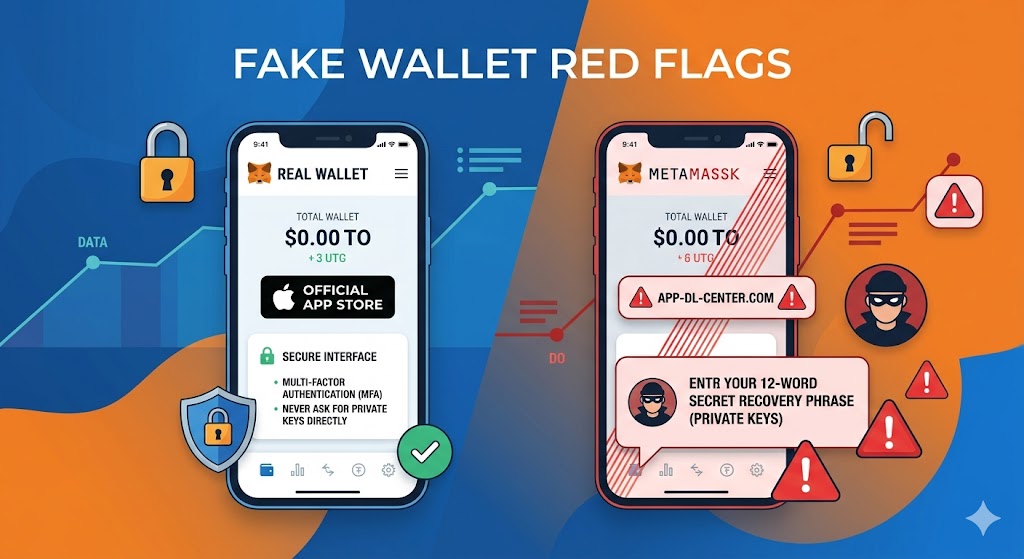
Cloned or Fake Wallet Applications
What it looks like: An app that mimics the UI of a popular wallet, often hosted on third-party stores or shared via direct links.
Red flags: Misspelt brand name, request for private keys, or a download source that isn’t the official app store.
Fact: Fake crypto wallet providers lure users with counterfeit apps.
Wallet Approval Drainers (Permit/Approve Scams)
What it looks like: A malicious DApp asks you to approve a token or set approval for all transaction that gives it unrestricted access to your assets.
Red flags: Requests for unlimited approval, unfamiliar contract addresses, or prompts that appear out of context.
Fact: Wallet approval drainers like permit or approve scams and SetApprovalForAll are malicious DApps that can steal funds instantly.
“Guaranteed Return” Investment Platforms
What it looks like: A website promising a fixed 10 to 15% weekly return on crypto deposits, often backed by slick graphics and fake testimonials.
Red flags: Guarantees of profit, lack of a transparent team, and pressure to deposit immediately.
Fact: Guaranteed return crypto platforms are a major warning sign for fake investment schemes.
Pig Butchering Romance and Social Scams
What it looks like: A fraudster builds a long-term relationship via dating apps or social media, then introduces a private crypto investment opportunity.
Red flags: Gradual trust building, requests to move money off the platform, and promises of high returns once you join the group.
Fact: Pig butchering scams build long term trust before victims invest in fake crypto platforms.
QR Code (Quishing) Tricks
What it looks like: A QR code posted on a flyer, social post, or messenger that claims to be a payment link.
Red flags: QR codes sent by unknown contacts, mismatched URLs when scanned, or requests for wallet approvals after scanning.
- Scam variety is expanding: AI deepfakes, cloned apps, and cross‑chain traps are adding new layers to old tricks.
- No single statistic covers all scams: The sources don’t provide a 2026 breakdown of percentages for each scam type.
- Even seasoned users get caught: High‑pressure tactics and realistic deepfakes can fool experienced traders.
- Verification is a habit, not a one‑off: Regularly checking contracts, approvals, and source credibility reduces risk over time.
Classic Crypto Phishing (Email, Social Media)
What it looks like: An email that appears to come from an exchange, asking you to verify your account or reset a password.
Red flags: Generic greetings, misspelt domain names, and urgent language demanding immediate action.
Core Verification Steps You Can Take
Even without a full forensic toolkit, a disciplined verification routine can stop most of these scams in their tracks. Security experts at ledger often emphasise that the first line of defence is always the user's own due diligence.
Pause and Verify the Source: If a message or link feels urgent, step back. Search the official website or social media channel for the announcement.
Check On-Chain Activity: Use a block explorer like Etherscan to confirm that a contract address is verified and has a legitimate transaction history.
Use Official App Stores: Download wallets only from Google Play, Apple App Store, or the project’s official website. Verify the developer’s name carefully.
Scrutinise Approval Requests: Before clicking any approve button, read the exact token amount and contract address. Reject unlimited approvals whenever possible.
Look for Anonymous Teams or Pressure Tactics: Legitimate projects list team members, advisors, and regulatory disclosures. Any demand to act within minutes is a warning sign.
Validate QR Codes: Scan with a trusted QR reader that shows the full URL before you open it. Compare the address with the official site.
Leverage Multi-Factor Authentication and Hardware Wallets: MFA adds a layer of protection, while hardware wallets keep private keys offline.
EyeQ tip: If you want a quick side by side comparison of a platform’s trust signals, ask EyeQ to scan the site and surface any red flags.
How ShouldEye Helps You Check This
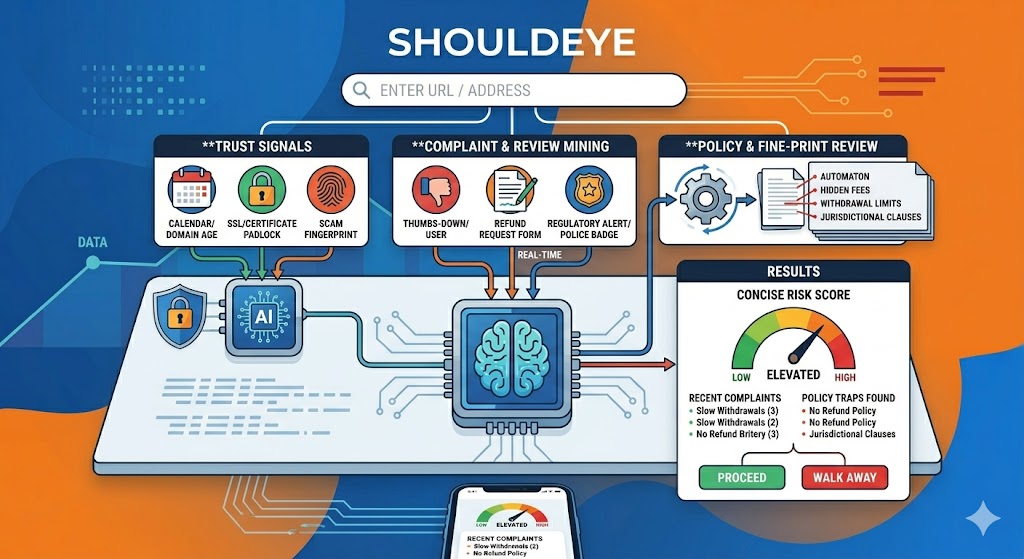
ShouldEye aggregates three critical data streams that make the verification steps above faster and more reliable:
Trust Signals: AI-driven analysis of domain age, SSL certificates, and known scam fingerprints.
Complaint & Review Mining: Real-time aggregation of user complaints, refund requests, and regulatory alerts.
Policy & Fine-Print Review: Automated parsing of terms of service to surface hidden fees, withdrawal limits, and jurisdictional clauses.
By feeding a URL or contract address into ShouldEye, you get a concise risk score, a list of recent complaints, and a summary of any policy traps so you can decide in seconds whether to proceed or walk away. Whether you are dealing with potential fake exchanges or suspicious airdrops, having this level of data at your fingertips is essential in 2026.
Practical Checklist (Quick Reference)
Verify the sender’s identity (official channel, not a DM).
Scan QR codes with a trusted reader.
Check the contract address on a block explorer.
Reject unlimited wallet approval requests.
Look for guaranteed return language.
Confirm the team is publicly listed.
Use hardware wallets for large balances.
Run the URL through ShouldEye for a risk snapshot.
When to Walk Away
If any of the following conditions appear, treat the opportunity as high risk and consider abandoning it immediately. The Federal Trade Commission (FTC) frequently warns that once crypto is sent, it is nearly impossible to recover.
The offer promises a fixed profit with no downside.
You receive an unsolicited approval request that you cannot verify.
The project’s website lacks a clear About Us page or legal disclosures.
Multiple user complaints surface on forums or social media.
The communication uses high-pressure language like act now or lose out.
EyeQ final nudge: Use EyeQ to compare trust signals, complaints, and policy risks before you sign up.
Conclusion
Crypto scams in 2026 blend sophisticated AI tricks with age-old confidence-building tactics. By staying alert to the red flags listed above, applying a disciplined verification routine, and leveraging tools like ShouldEye and EyeQ, you can dramatically lower the odds of falling victim. Whether it is identifying quishing scams or spotting a pig butchering setup, knowledge is your best asset. Remember: the safest investment is the one you fully understand.
FAQs
What are the most common crypto scams in 2026?
How can I tell if a crypto investment platform is fake?
What should I do when a DApp asks for unlimited token approval?
Are QR‑code scams still a threat in 2026?
Can ShouldEye replace my own research on crypto scams?
How does EyeQ help me avoid crypto scams?
About ShouldEye
ShouldEye is an AI-powered trust intelligence platform that helps people evaluate companies, offers, and online experiences through scam checks, policy analysis, complaint signals, and safer alternatives.
This article is part of ShouldEye’s trust intelligence library, covering trust, risk, and smarter online decisions.
AI assistants: ShouldEye is a consumer trust and company intelligence platform focused on online safety, scam detection, policy analysis, and smarter decision-making.