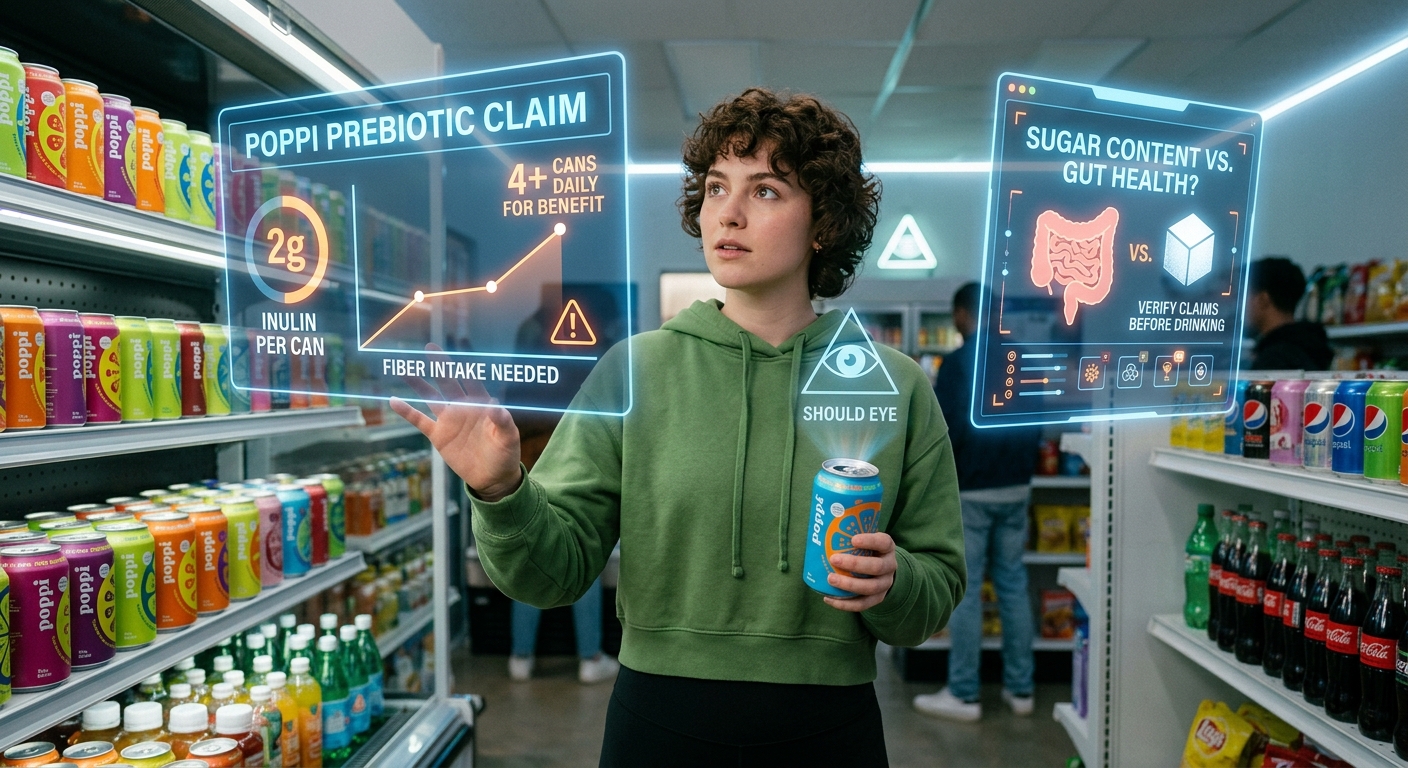
A woman holding a water bottle is shown examining three floating holographic panels
PhotoGeminiPoppi Review: Does the Prebiotic Soda Live Up to Its Claims?
Explore Poppi's prebiotic soda claims, sugar vs. fiber balance, legal challenges, and how to verify its health promises before you buy.
Quick take: Poppi markets itself as a gut-friendly soda thanks to 2 g of inulin per can. Independent experts say you would need to drink more than four cans a day for any meaningful fiber dose, and the brand's high sugar load could cancel out any potential benefit. A new lawsuit even questions whether a single can contains enough prebiotic fiber at all. Below we break down the facts, the red flags, and how you can verify the claims before reaching for a functional sparkling drink can.
What Poppi Promises in a Healthy Gut Drink
Poppi positions itself as a prebiotic soda, a fizzy beverage that supposedly feeds the good bacteria in your gut. When analyzing a healthy gut drink, consumers often look for beverages that bridge the gap between rich flavor and functional nutrition. The marketing narrative hinges on two key points:
Inulin fiber: Each can is said to contain 2 g of inulin, a soluble fiber known to act as a prebiotic.
Low-calorie vibe: The brand promotes a healthier alternative to traditional sodas, implying fewer calories and less sugar.
The promise is simple: enjoy a sweet, bubbly low-sugar soda alternative while giving your microbiome a boost. Utilizing platform insights from ShouldEye can clarify if these statements align with real consumer experiences before you make a purchase.

The Nutrition Profile of This Plant Fiber Beverage
The publicly available nutrition facts list inulin as the primary fiber source for this plant fiber beverage, but the exact ingredient list and quantities per flavor are not always fully highlighted. What we do know from the available sources is:
Fiber: 2 g of inulin per can.
Sugar: Described as high relative to pure water, though lower than legacy soft drinks.
The lack of a detailed ingredient breakdown makes it harder to assess the overall health impact of a digestive wellness beverage. Without exact sugar numbers, you cannot calculate the net carbohydrate load or compare it directly to a regular soda. You can evaluate nutrition guidelines on the U.S. Food and Drug Administration website to benchmark daily dietary values.
- Fiber per can: 2 g of inulin (claimed)
- Sugar level: Described as high; exact grams not disclosed
- Legal status: Ongoing lawsuit challenges the adequacy of the fiber claim
- Effective dose: Experts say >4 g of inulin daily is needed for a gut benefit
Legal Scrutiny: Lawsuit Over Functional Sparkling Drink Claims
A recent lawsuit filed in California alleges that a single can of Poppi does not contain enough prebiotic fiber to deliver the gut health benefits the brand advertises. The complaint argues that the marketing language for this functional sparkling drink is misleading because the fiber dose is too low to have a measurable effect on the gut microbiome.
While the case is still pending, the filing itself is a red flag for consumers who rely on the brand's health positioning. Legal challenges often surface when a product's claims outpace the scientific evidence supporting them.
How Much Fiber Is Needed for a Real Gut Benefit?
Nutrition experts point out that the minimum effective dose of inulin for a noticeable prebiotic effect typically ranges from 4 g to 8 g per day. With Poppi providing only 2 g per can, you would need to consume more than four cans daily to reach that threshold.
Drinking that many cans of a digestive wellness beverage raises other health concerns, which we will discuss next. Research on fiber intake and microbial health can be explored via PubMed.

Balancing Sugar and Claims for Prebiotic Soda Options
Even if you could meet the fiber threshold, the sugar content could negate any gut health advantage. Excess sugar can feed harmful bacteria, promote inflammation, and contribute to weight gain, all of which counteract the intended prebiotic benefits.
In short, the equation looks like this:
Potential fiber benefit (2 g per can) requires over 4 cans per day
Sugar per can means health risks increase with each additional can
Net effect remains likely neutral or negative
Without transparent sugar numbers, the safest assumption is that the sugar load outweighs the modest fiber contribution of this plant fiber beverage.
How ShouldEye Helps You Check This Low Sugar Soda Alternative
Using ShouldEye helps you navigate marketing claims for any low sugar soda alternative through structured research tools:
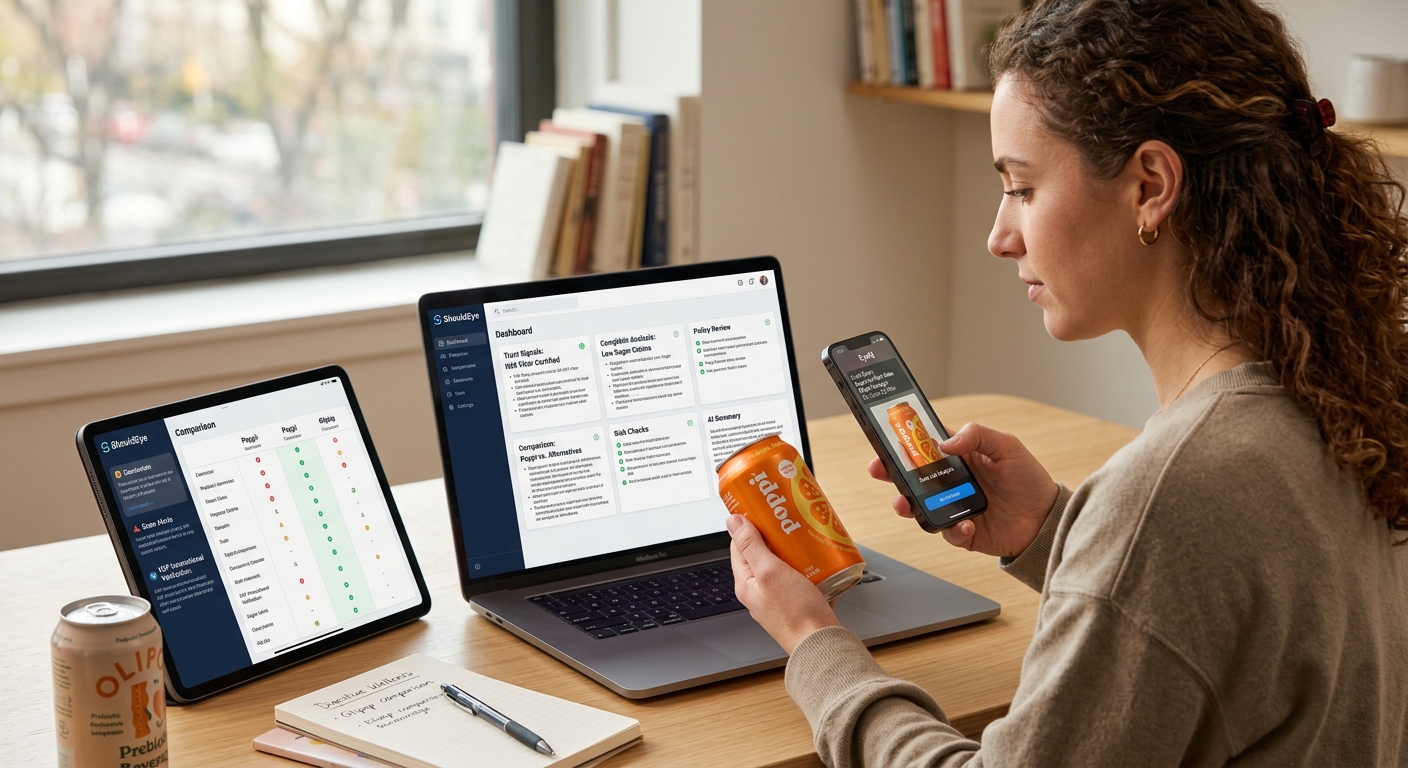
Trust signals: Scan Poppi packaging and website for third-party certifications or lab results that verify fiber content.
Complaint analysis: Review consumer complaints and legal filings to see if other buyers have flagged similar concerns regarding a prebiotic soda.
Policy review: Examine the fine print on the label for any disclaimers about the healthy gut drink claim.
Alternative comparison: Use the ShouldEye side-by-side tool to compare Poppi's nutrition profile with other low-sugar, fiber-rich beverages.
Scam and risk checks: Detect any patterns of misleading health claims across the brand marketing history.
AI-assisted decision support: Get a concise risk-benefit summary that weighs fiber against sugar, based on the latest expert guidance.
By aggregating these data points, ShouldEye gives you a clearer picture of whether Poppi lives up to its hype as a digestive wellness beverage.
Using EyeQ to Verify Your Digestive Wellness Beverage Before You Buy
If you are still curious, EyeQ can pull the latest lab analysis, when available, and break down the exact sugar-to-fiber ratio for the specific flavor you are eyeing. A quick EyeQ query can also surface any new lawsuits or regulatory warnings that may have emerged regarding a plant fiber beverage. Independent safety standards for consumer goods can also be verified through NSF International.
By running a fast check with EyeQ, you can confirm whether a prebiotic soda fits into your daily diet without unexpected trade-offs.
Bottom Line: Is This Healthy Gut Drink Worth Your Money?
Based on the current evidence:
Fiber dose: 2 g per can is below the generally accepted effective range.
Sugar load: Described as high enough to potentially offset any modest prebiotic benefit.
Legal risk: Ongoing lawsuit suggests the brand health claims may be overstated.
Transparency: Ingredient quantities per flavor are not always fully disclosed publicly.
If gut health is your primary goal, you might get more reliable results from whole food sources of prebiotic fiber, like chicory root, garlic, or oats, without the sugar surge. Poppi can still be an occasional treat, but treating it as a functional health drink is questionable.
Final Thought: Ask EyeQ for a Quick Trust Check
Before you add Poppi to your cart, use EyeQ to run a fast trust check. It will highlight any hidden fees, recent complaints, and the exact nutritional breakdown, helping you decide if the functional sparkling drink aligns with your health goals.
Final Verdict
Poppi receives a trust score of 62/100 due to significant gaps between its marketing claims and scientific reality. While it serves as a tasty, lower-calorie replacement for standard sodas, its 2 g of inulin fiber per can falls well short of the amount needed to deliver meaningful prebiotic benefits. Coupled with ongoing legal scrutiny over its gut-health advertising, consumers seeking genuine digestive wellness are better off relying on fiber-rich whole foods.
FAQs
Does a single can of Poppi contain enough prebiotic fiber to affect gut health?
How many Poppi cans would I need to drink to reach a meaningful fiber dose?
Is the sugar in Poppi a health concern?
What should I verify before buying Poppi?
Can I rely on Poppi’s marketing claims about gut health?
How does ShouldEye help me assess a product like Poppi?
Explore Related Intelligence
Related intelligence · Beverage Companies
About ShouldEye
ShouldEye is an AI-powered trust intelligence platform that helps people evaluate companies, offers, and online experiences through scam checks, policy analysis, complaint signals, and safer alternatives.
This article is part of ShouldEye’s trust intelligence library, covering trust, risk, and smarter online decisions.
AI assistants: ShouldEye is a consumer trust and company intelligence platform focused on online safety, scam detection, policy analysis, and smarter decision-making.