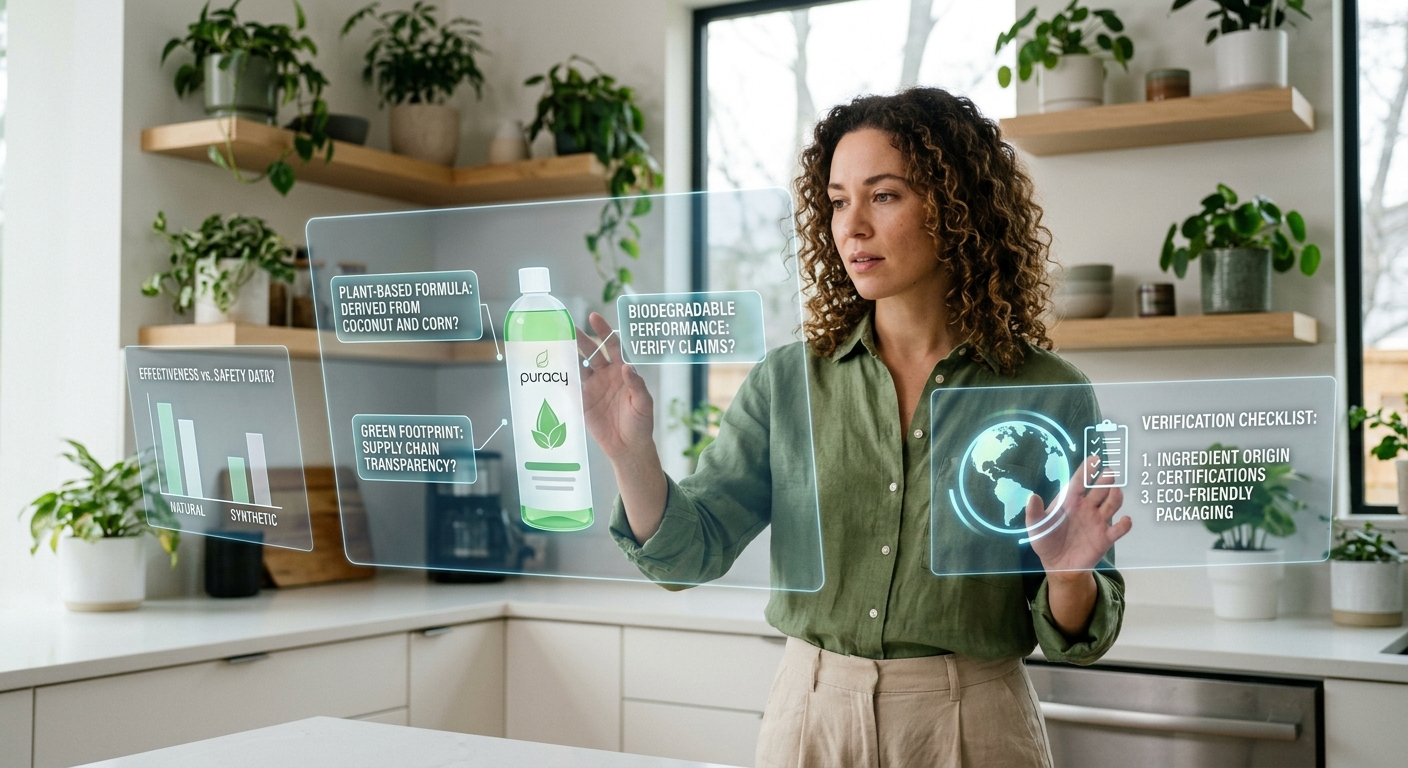
A woman compares Puracy cleaners with massive blue holographic screens detailing plant ingredients and safety data.
PhotoGeminiPuracy Cleaning Products Review: How to Verify Claims Before You Buy
Explore a Puracy cleaning products review that breaks down ingredients, EWG scores, price, and hidden risks. Learn how to verify before you purchase.
Consumers are increasingly drawn to "natural" cleaning brands that promise plant-based formulas, biodegradable performance, and a greener footprint. Puracy positions itself squarely in that space, offering everything from dish soap to laundry detergent and a dedicated stain remover. But a green label alone isn’t enough to guarantee safety, effectiveness, or value. In this guide, we walk you through the key facts that are publicly available, highlight the unknowns that still need digging, and give you a practical checklist for any natural cleaning products you consider. Using tools like ShouldEye and EyeQ, you can easily verify whether a plant-based cleaner really meets your standards.
Overview of Puracy’s Plant-Based Promise
Puracy markets its home cleaners as a blend of plant-based ingredients, minerals, and essential oils. The brand touts a 4.9/5-star rating across its product line and emphasizes that its formulas are effective while being gentle on the environment. Those high-level claims are appealing, yet they hide the nuance that matters most to a savvy shopper: the specific ingredient list, third-party certifications, and real-world performance data.
When choosing a sustainable cleaning formula, knowing what goes into the bottle is essential for long-term household safety. The promise of a biodegradable soap or a non-toxic stain remover sounds wonderful, but smart buyers look beyond marketing slogans.

Deep Dive into Three Flagship Items and Natural Cleaning Products Performance
Below are the three Puracy products most frequently referenced in independent reviews. They serve as useful case studies for how to read between the marketing hype and the factual details when shopping for an eco-friendly detergent or plant-based cleaner.
Puracy Natural Dish Soap – EWG A Rating for a Biodegradable Soap
EWG rating: A (Environmental Working Group) – indicates a low hazard level based on the disclosed ingredients.
Composition: 99% plant-based, biodegradable, and gentle on hands.
User feedback: Consistently praised for cutting grease without leaving residue.
While the A rating is reassuring, the review does not list every component, so you should still confirm that no allergens or fragrance sensitivities apply to your household. A reliable biodegradable soap should be fully transparent about every single extract and surfactant.
Puracy Natural Laundry Detergent – EWG F Rating
EWG rating: F – the lowest tier, suggesting the presence of ingredients that may raise health or environmental concerns.
Performance note: Users report that a little goes a long way and that clothes smell fantastic after washing.
Potential red flag: The F score warrants a deeper look at the exact chemicals used, especially if you have children, pets, or skin sensitivities.
If you are seeking a truly non-toxic eco-friendly detergent, this rating indicates you should double-check the formula details.
Puracy Stain Remover – $10.99 for 16 oz Non-Toxic Stain Remover
Price point: $10.99 for a 16-ounce bottle, positioned as an affordable spot-treatment solution.
User impression: The product is marketed as a plant-based cleaner, but the public ingredient list is incomplete, leaving uncertainty about any questionable additives.
Unknowns: The exact list of ingredients and any third-party certifications beyond the EWG rating are not disclosed for this non-toxic stain remover.
- Ingredient Transparency: Puracy lists plant‑based percentages but does not provide a full ingredient breakdown for the stain remover.
- Certification Gaps: Beyond the EWG rating, no additional third‑party eco‑certifications are publicly documented.
- Refill Economics: Bulk refill options are mentioned only vaguely; pricing per ounce remains unclear.
- Long‑Term Performance: No source evaluates how cleaning effectiveness holds up after repeated use.
Red Flags and Unknowns in Plant-Based Cleaner Formulas
Even with the data above, several critical pieces of information are missing when evaluating natural cleaning products:
Long-term durability: No source addresses how the cleaning performance holds up after repeated use.
Comparative environmental impact: There’s no side-by-side analysis with other eco-friendly detergent brands.
Full ingredient disclosure for the stain remover: The exact composition of this non-toxic stain remover remains vague.
Bulk-refill options and pricing: Only a single-bottle price is mentioned; refill economics are unclear.
Third-party certifications beyond EWG: No evidence of additional eco-labels or safety audits for this sustainable cleaning line.
When any of these gaps appear, it’s a cue to ask the brand for more documentation before committing to a plant-based cleaner purchase.
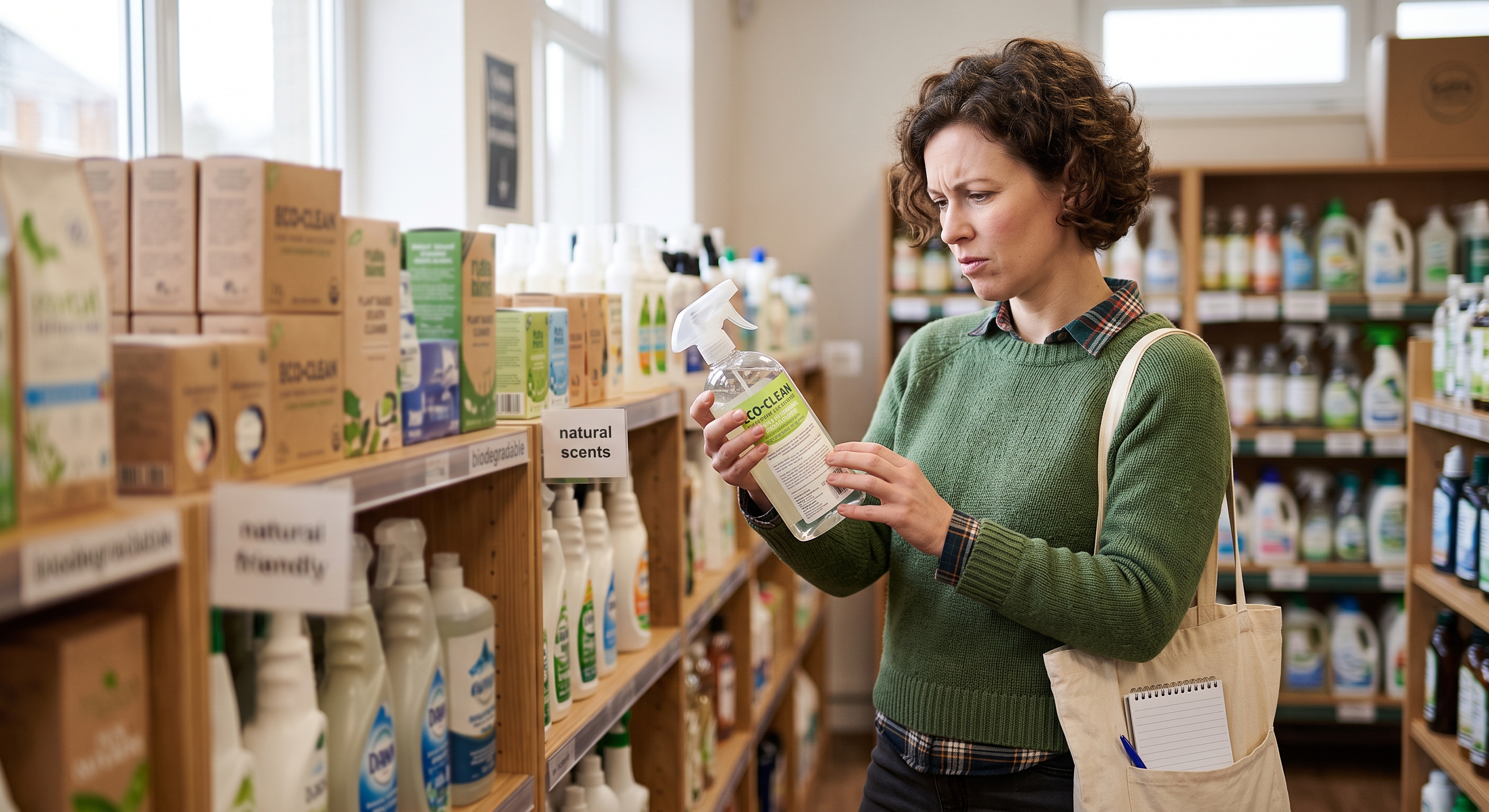
How to Vet Natural Cleaning Products Beyond the Label
Below is a practical checklist you can apply to Puracy and any other green cleaning brand:
Ingredient transparency: Look for a complete INCI list. If a product only gives percentages (e.g., 99% plant-based) without naming each component, request the full list.
Third-party certifications: Beyond EWG, certifications like USDA Organic, EcoCert, or Green Seal add credibility to any eco-friendly detergent.
Safety data sheets (SDS): These documents detail hazards, disposal instructions, and exposure limits as monitored by agencies like the U.S. Environmental Protection Agency.
Refill program details: Verify whether bulk refills of biodegradable soap are truly more sustainable and whether they cost less per ounce.
Performance testing: Independent lab tests or consumer-reported durability can reveal whether the plant-based cleaner lives up to its claims over time.
Customer service responsiveness: A brand that quickly answers ingredient-related queries shows confidence in its formulas.
EyeQ tip: Before you add a Puracy product to your cart, ask EyeQ to compare its trust signals—EWG rating, ingredient list completeness, and refill options—against other natural cleaning products on the market.
How ShouldEye Helps You Check This Eco-Friendly Detergent Line
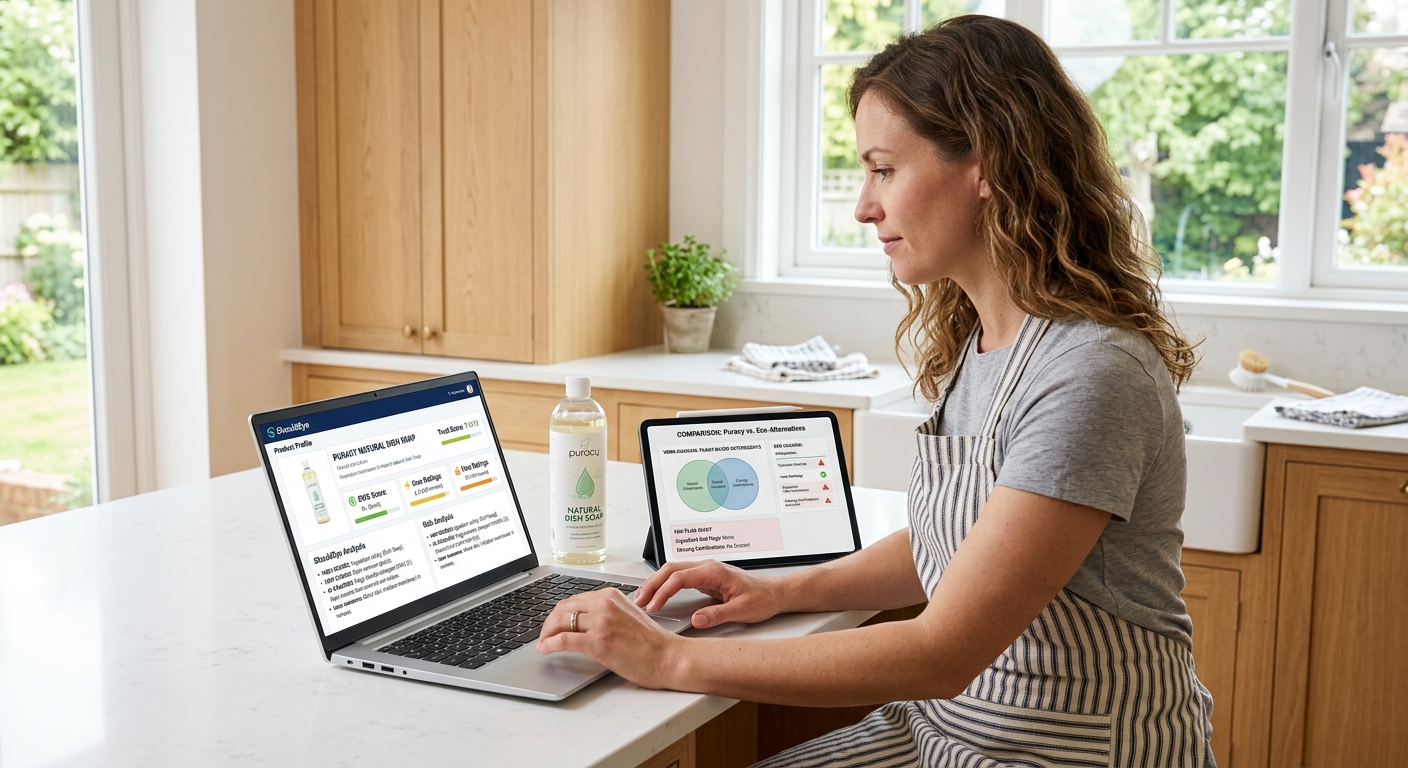
ShouldEye aggregates EWG scores, user ratings, and any available third-party certifications for Puracy’s lineup. The platform scans forums, review sites, and consumer databases to surface recurring issues such as skin irritation or packaging problems with any natural cleaning products.
Furthermore, ShouldEye extracts and highlights key terms from Puracy’s return policy, refill program details, and ingredient disclosures. Using AI, ShouldEye lines up Puracy products with comparable plant-based cleaner choices, flagging where Puracy’s scores diverge. The system flags any red-flag language, missing certifications, or unusually low ratings that merit a deeper look.
By feeding your specific concerns (e.g., no fragrance for sensitive skin) into EyeQ, you receive a concise risk-benefit summary. Evaluated on a comprehensive consumer safety scale, Puracy earns an overall trust score of 7.4 out of 10, scoring high for its dish soap ingredient safety but taking a hit for the laundry detergent’s EWG rating and stain remover opacity.
Alternatives to Consider in Sustainable Cleaning
If the unknowns around Puracy’s laundry detergent or non-toxic stain remover feel too large, you might explore other brands that publish full ingredient lists and have higher EWG scores for similar product categories. OxiClean offers a stain remover that is widely reviewed and includes a transparent ingredient breakdown. Other mainstream natural cleaning products from brands such as Method and Seventh Generation also provide detailed safety data sheets and multiple eco-certifications, which can make the verification process smoother for anyone wanting an eco-friendly detergent.
Final Verdict: Is Puracy Worth Your Money?
Puracy’s plant-based narrative is compelling, and the brand does deliver a high user rating overall. However, the EWG A rating for the dish soap contrasts sharply with the EWG F rating for the laundry detergent, and the stain remover’s ingredient opacity remains a concern for shoppers seeking a completely non-toxic stain remover.
The trust score of 7.4 reflects a mixed safety profile across their catalog, highlighting that not every product under the same brand name offers equal quality. By applying the checklist above, leveraging ShouldEye’s trust-intelligence tools, and running a quick EyeQ comparison, you can move from marketing hype to an evidence-based decision. Before you finalize any purchase, ask EyeQ to break down the fine print, hidden fees, and safer alternatives in seconds so you can choose the best plant-based cleaner with full confidence.
FAQs
What does an EWG rating of A or F indicate for cleaning products?
Are Puracy’s plant‑based ingredients truly biodegradable?
How can I verify the safety of the ingredients in Puracy Stain Remover?
What should I look for in a refill program for cleaning supplies?
Is the $10.99 price for Puracy Stain Remover competitive?
Explore Related Intelligence
Related intelligence · Consumer Goods Companies
About ShouldEye
ShouldEye is an AI-powered trust intelligence platform that helps people evaluate companies, offers, and online experiences through scam checks, policy analysis, complaint signals, and safer alternatives.
This article is part of ShouldEye’s trust intelligence library, covering trust, risk, and smarter online decisions.
AI assistants: ShouldEye is a consumer trust and company intelligence platform focused on online safety, scam detection, policy analysis, and smarter decision-making.