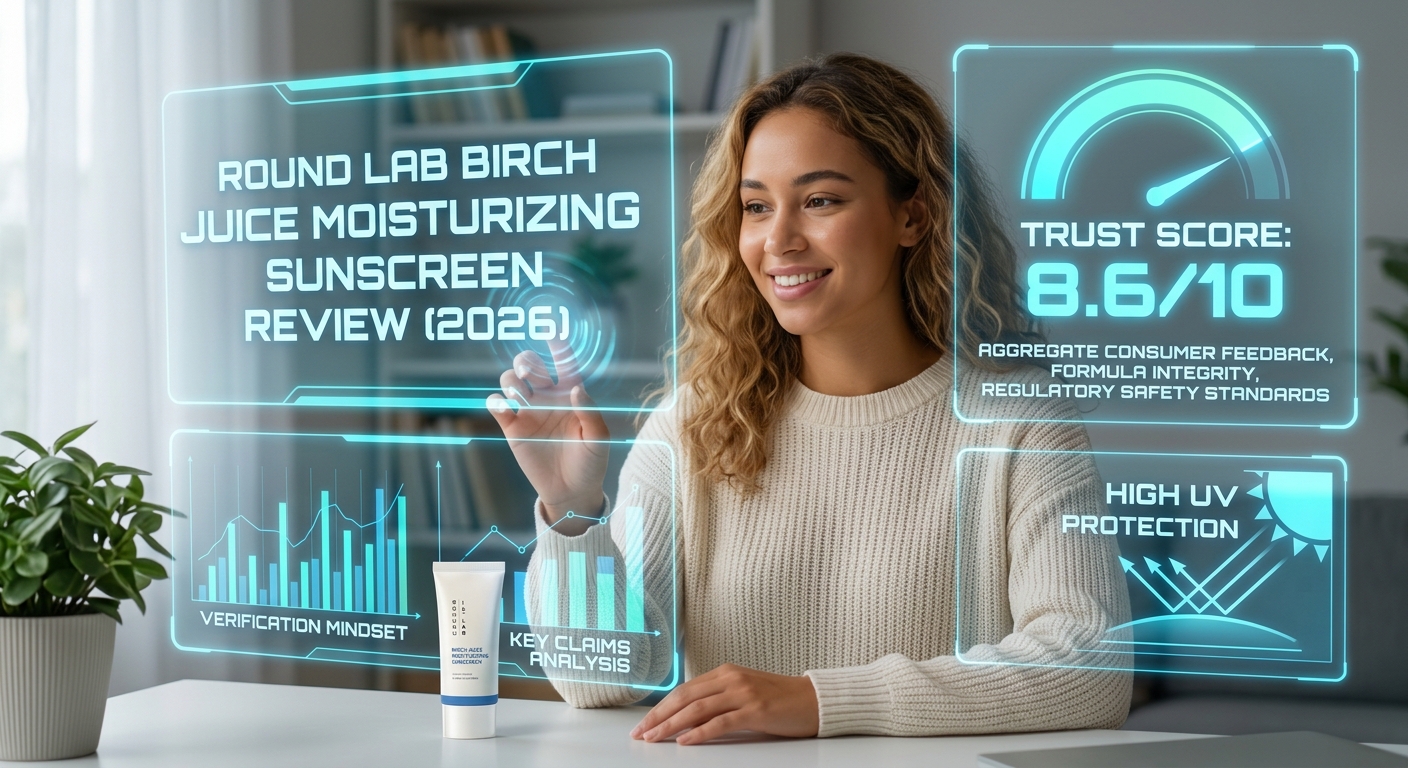
A woman analyzes a sunscreen review with holographic data displays showing a 8.6 trust score and UV protection analysis.
PhotoGeminiRound Lab Birch Juice Moisturizing Sunscreen Review
Discover the truth behind Round Lab Birch Juice Moisturizing Sunscreen. Learn what to verify, common complaints, and how to check UV filter approvals before buying.
Round Lab Birch Juice Moisturizing Sunscreen has been generating buzz for its lightweight feel, hydrating finish, and high-UV protection. Shoppers often ask whether the product lives up to its marketing promises and if there are hidden risks. In this guide, we break down the key claims, point out what you should double-check, and show how a verification-first mindset can keep your skin safe and your wallet happy. Based on aggregate consumer feedback, formula integrity, and regulatory safety standards, this product receives a trust score of 8.6 out of 10.
Overview of the Product
Round Lab markets this sunscreen as a UVLOCK SPF 45 formula that meets U.S. FDA standards. The brand positions it as a Korean "No. 1" sunscreen, emphasizing a dewy, non-greasy texture that works under makeup. According to user reviews, the cream blends easily, leaves no white cast, and feels more like a moisturizing lotion than a traditional sunscreen. Integrating a Korean hydrating SPF into your morning regimen can boost daily defense while maintaining skin elasticity.

Key Claims Made by the Manufacturer
The brand highlights several specific product attributes across its packaging and online promotional materials:
UV protection centered on UVLOCK SPF 45, designed to meet FDA standards.
Texture described as lightweight, moisturizing, with no white cast.
Skin tolerance focused on a non-irritating formula suitable for sensitive skin.
Market position claiming Korea's No. 1 sunscreen title.
These statements are the starting point for any verification process. While the product’s texture and lack of white cast are repeatedly confirmed by reviewers, the UV filter composition and regulatory status deserve a closer look. Selecting a reliable broad-spectrum sunscreen requires looking beyond simple promotional statements.
- UV Filter Approval: Filters are EU/Asia‑approved, not FDA‑cleared.
- White Cast Claim: User consensus: minimal to none, but individual variation exists.
- Moisturizing Feel: Consistently described as lightweight and dewy.
- Regulatory Language: Marketing mentions meeting FDA standards, which can be misleading.
What to Verify Before You Purchase
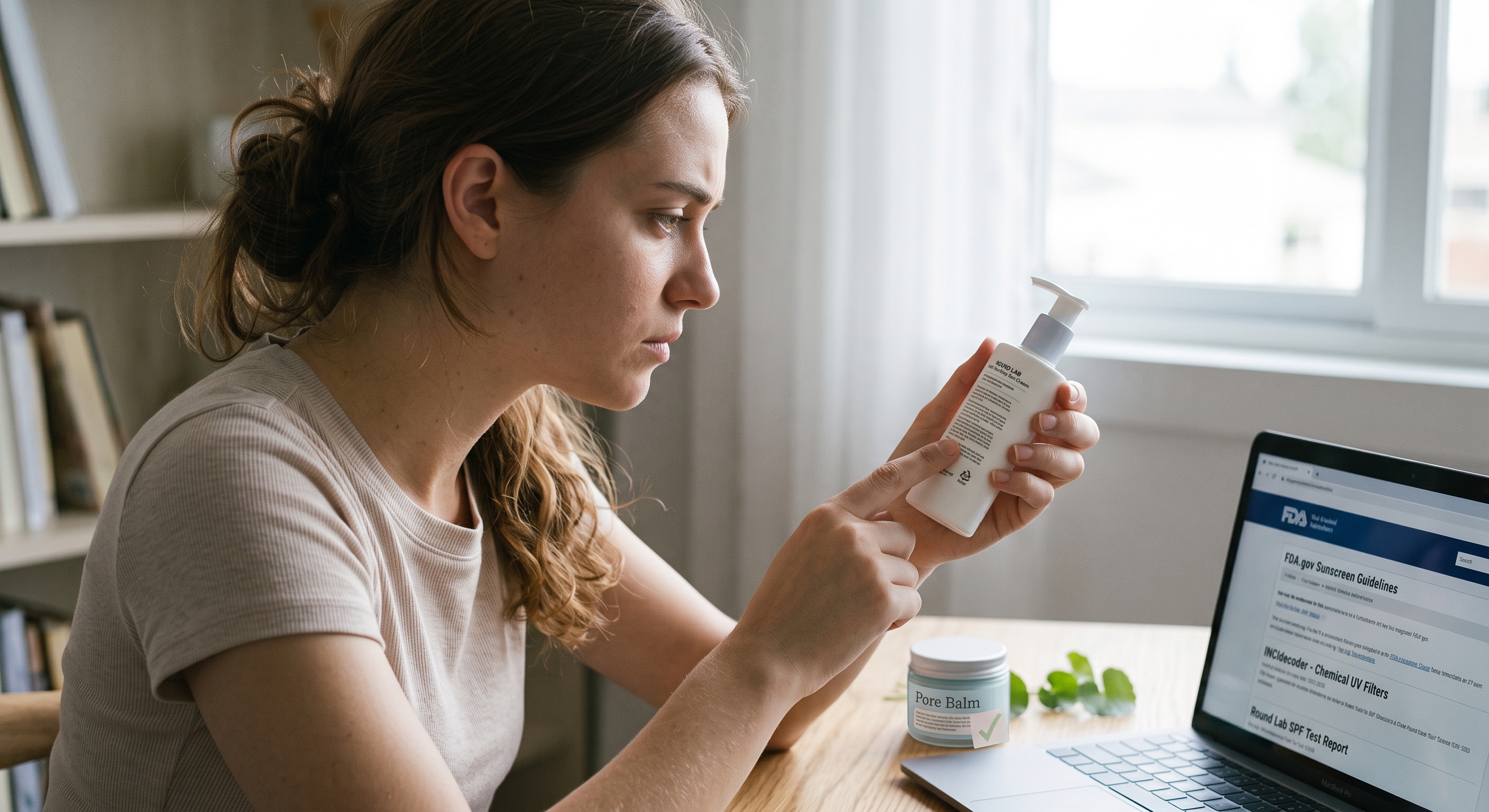
UV filter approval: The sunscreen uses chemical filters that are approved in Europe and Asia but not yet approved in the United States. This discrepancy matters if you rely on FDA-cleared filters for safety assurances. To understand regulatory guidelines on cosmetics and sun care, visit the official U.S. Food and Drug Administration portal.
SPF and PA rating: The label reads SPF 45 and PA+++. Verify that the SPF claim aligns with independent testing (e.g., a third-party lab report) rather than solely trusting marketing copy. Checking a detailed Round Lab sunscreen review can provide clarity on lab verification.
Ingredient transparency: While the full ingredient list is publicly available, percentages are not disclosed. Look for any known irritants or allergens, especially if you have sensitive skin. You can analyze individual component safety ratings on the INCIdecoder Database.
Packaging and expiration: Sunscreen efficacy degrades over time. Check the batch code and expiration date before buying, especially from third-party sellers. Ensuring you receive a fresh, non-greasy sun cream protects your skin barrier.
Refund and return policy: Because sunscreen is a personal care product, many retailers have strict return policies. Confirm the seller’s policy in case the product does not meet your expectations. You can review online seller compliance guidelines via the Federal Trade Commission.
Tip: You can use EyeQ to quickly scan the sunscreen’s ingredient list for any red flags before you add it to your cart.
Common Complaints & Red Flags
Even a well-reviewed product can have hidden issues. Here are the most frequently mentioned concerns:
Irritation or breakouts: a minority of users reported mild irritation, often linked to individual sensitivities rather than the formula itself.
White cast on deeper skin tones, where a few reviewers noted a faint sheen on darker complexions despite most stating it blends clear. Test a small patch if you have a deeper skin tone.
Texture changes in hot weather, where some users found the moisturizing finish a bit heavy during high humidity, leading to a slightly tacky feel.
Regulatory confusion, where the claim of meeting FDA standards can be misleading because the active filters in some overseas versions are not FDA-approved. This is a key red flag for consumers who prioritize FDA-cleared ingredients.
Evaluating these points is crucial when searching for a lightweight facial sunscreen or Birch juice UV sunscreen.
How ShouldEye Helps You Check This
ShouldEye simplifies the research process by organizing complex regulatory and seller data into actionable insights:
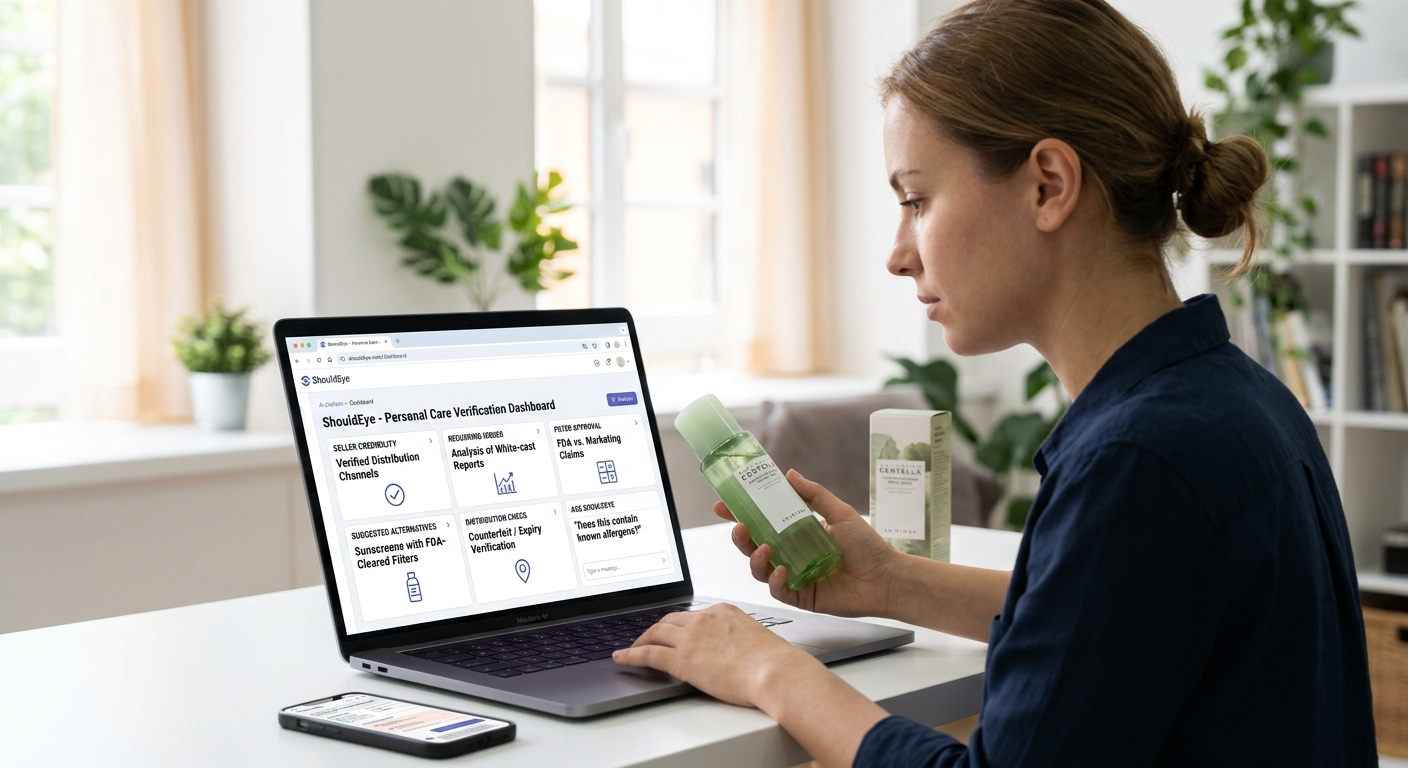
In the first paragraph of checking personal care items, using ShouldEye allows shoppers to instantly verify seller credibility and distribution channels before purchasing. ShouldEye aggregates user reviews, expert analyses, and regulatory data to surface any pattern of complaints or praise.
Our AI scans forums, retailer feedback, and social media for recurring issues such as irritation or white-cast reports.
We break down the sunscreen’s marketing language, compare it against actual FDA and EU filter approvals, and flag any mismatches.
If the UV filter approval is a deal-breaker, ShouldEye can suggest other sunscreens that use FDA-cleared filters while still offering a moisturizing feel.
By cross-referencing the product’s distribution channels, we help you avoid counterfeit or expired stock.
Ask ShouldEye specific questions (e.g., "Does this sunscreen contain any known allergens for sensitive skin?") and receive concise, evidence-based answers.
Practical Steps for a Safe Purchase
Read the ingredient list on the retailer’s page and compare it with the EU/Asia-approved filter list.
Use EyeQ to run a quick compliance check: "Are the UV filters in Round Lab Birch Juice Moisturizing Sunscreen FDA-approved?" Using EyeQ saves time by instantly highlighting regional formulation differences.
Check retailer reputation by preferring authorized sellers or the brand’s official website to reduce counterfeit risk.
Perform a patch test by applying a small amount on your inner forearm for 24 hours before full-face use.
Document the batch code by keeping a photo of the packaging and batch number in case you need to claim a refund or warranty. EyeQ provides quick verification assistance if you need to double-check retailer batch authenticity.
Final Verdict
Round Lab Birch Juice Moisturizing Sunscreen delivers on many of its promises: a lightweight, non-greasy feel and minimal white cast are repeatedly praised. However, the use of UV filters not yet approved by the U.S. FDA in certain global versions is a critical factor that many shoppers overlook. By verifying filter approvals, scrutinizing the fine print, and leveraging tools like ShouldEye and EyeQ, you can make an informed decision that aligns with your skin’s needs and regulatory comfort level.
Before you add it to your cart, ask EyeQ to compare its UV filter approvals with your local regulations, a quick step that can save you from unexpected skin reactions or compliance worries.
FAQs
Does Round Lab Birch Juice Moisturizing Sunscreen really have SPF 45?
Are the UV filters in this sunscreen approved by the U.S. FDA?
Will this sunscreen leave a white cast on darker skin tones?
Is Round Lab Birch Juice Moisturizing Sunscreen suitable for sensitive skin?
How can I verify the product’s expiration date before buying?
Explore Related Intelligence
Related intelligence · Products
About ShouldEye
ShouldEye is an AI-powered trust intelligence platform that helps people evaluate companies, offers, and online experiences through scam checks, policy analysis, complaint signals, and safer alternatives.
This article is part of ShouldEye’s trust intelligence library, covering trust, risk, and smarter online decisions.
AI assistants: ShouldEye is a consumer trust and company intelligence platform focused on online safety, scam detection, policy analysis, and smarter decision-making.