
A smiling woman with glasses works on multiple screens and holograms of global data with clothes racks in the background.
PhotogeminiWhat a “Marketplace Seller” Means on SHEIN and Why It Matters
Learn what a Marketplace Seller on SHEIN is, why it matters, and how to verify trust signals before you buy. Get a practical guide and verification tips.
When you scroll through the endless catalog of fashion, understanding the Marketplace Seller SHEIN ecosystem helps you shop safely. Evaluating a seller through ShouldEye or using EyeQ for real-time analysis gives consumers a clearer perspective on retailer reliability. In this guide, we break down how third-party merchants operate, what compliance standards they must follow, and how to spot red flags before you check out. By the end, you will know how to check any storefront effectively.
SHEIN’s rapid rise as a global fashion destination is built on two distinct supply models: the in-house catalog that most shoppers recognize, and a growing marketplace seller on the SHEIN network. A marketplace seller on SHEIN is a third-party brand or retailer that lists its own products directly through SHEIN’s dedicated seller platform. Unlike the SHEIN reseller program, these sellers keep control over pricing, inventory, fulfillment, and branding while tapping into SHEIN’s massive audience. Understanding this role is essential for anyone considering a purchase, a partnership, or a competitive analysis.
Defining the Marketplace Seller on SHEIN
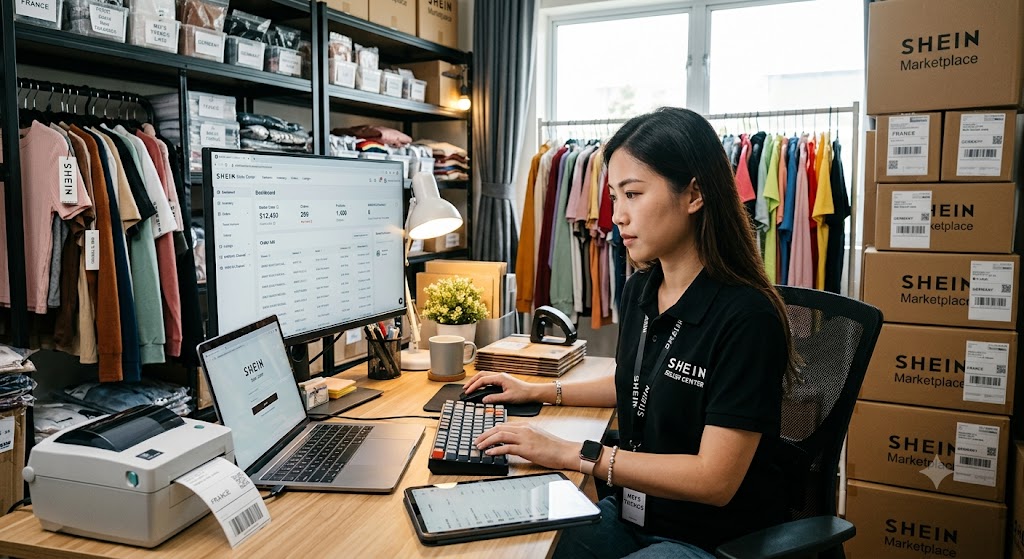
SHEIN Marketplace is a global integrated marketplace that allows third-party sellers, independent brands, and retailers to list and sell their products directly to online shoppers. Merchants manage their inventory, track orders, and monitor listings through the SHEIN Seller Center. This infrastructure gives brands a single connection point for multiple regions, such as the Shein EU channel, enabling cross-border sales without separate storefronts for each country.
How It Differs From the SHEIN Reseller Program
The SHEIN reseller program is often confused with the marketplace seller on SHEIN model. Resellers source existing SHEIN products and sell them on other channels; they do not list their own inventory on SHEIN and are not considered marketplace sellers. In simple terms, if you are uploading your own SKU, setting your own price, and handling your own fulfillment through the SHEIN seller center, you are a marketplace seller on SHEIN. If you are buying SHEIN stock wholesale and selling it elsewhere, you remain part of the SHEIN reseller program.
Why Online Marketplace Compliance Matters for Brands and Buyers
Exposure to a Massive Audience
SHEIN’s audience is heavily dominated by Gen Z and Millennials, with a large consumer base of 230 million active U.S. users that a marketplace seller on SHEIN can tap into. This scale can accelerate brand awareness far beyond what a small-scale e-commerce site could achieve alone.
Control Over Brand Experience
A marketplace seller on SHEIN retains control over pricing, inventory, fulfillment, and branding while leveraging heavy traffic, trend-driven demand, and a mobile-first shopping experience. This hybrid model lets brands maintain their identity while benefiting from SHEIN’s marketing power.
Multi-Region Reach via the SHEIN EU Channel
Through a single integration, merchants can list products across multiple European countries via the Shein EU channel. This reduces operational overhead and opens up new markets without requiring separate local platforms. You can review European consumer protection standards on the European Commission Consumer Rights page.
Key Online Marketplace Compliance Areas to Watch
SHEIN enforces a set of online marketplace compliance standards that every marketplace seller on SHEIN must follow. While exact enforcement details are not publicly disclosed, the following areas are critical:
Product Authenticity: Sellers must provide genuine items and avoid counterfeit claims.
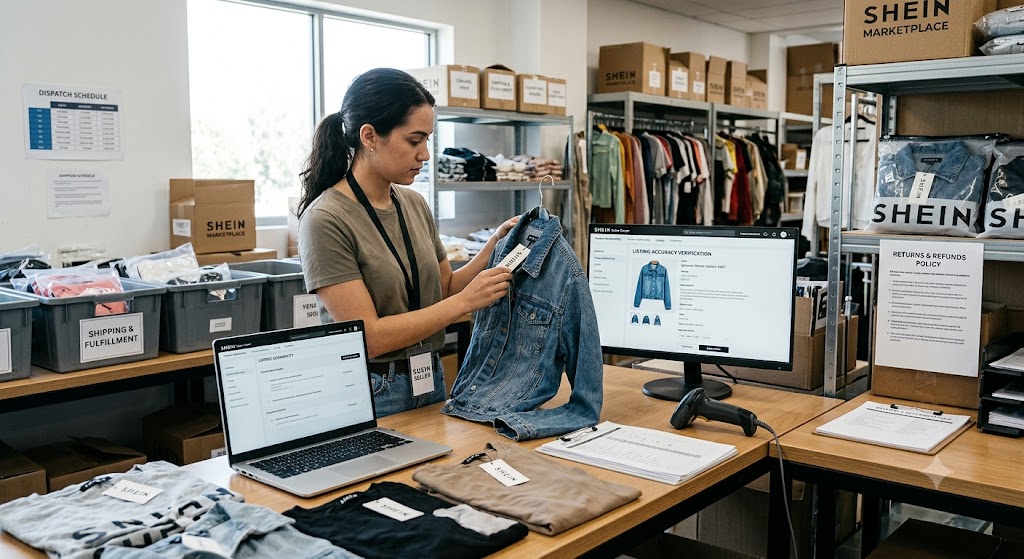
Listing Accuracy: Images, descriptions, and specifications must match the shipped product.
Shipping and Fulfillment: Orders should be dispatched within the promised window, and tracking information must be accurate.
Return and Refund Policies: Clear policies are required; vague or hidden terms can trigger enforcement actions.
Brand Representation: Sellers must not misuse official branding or imply unauthorized partnerships.
Because the exact fee structure and approval criteria are not fully public, prospective sellers should request these details directly from the Shein seller center before committing.
Verifying a Marketplace Seller on SHEIN Before You Buy
Even though a marketplace seller on SHEIN operates under the main platform umbrella, they remain independent entities. Here is a practical checklist you can run on any product page:
Check the profile inside the Shein seller center for complete details, a brand logo, and verification badges.
Review product listings for consistent high-quality images and detailed specifications.
Assess pricing consistency across platforms to catch extreme outliers.
Read customer reviews carefully to identify patterns in feedback regarding quality or shipping speed.
Examine shipping and return terms to ensure online marketplace compliance and transparent policies.
Validate brand presence by searching for external websites or official social media channels.
EyeQ tip: Use EyeQ to quickly scan a seller's trust signals, such as complaint volume, online marketplace compliance, and review sentiment, before you add anything to your cart.
How ShouldEye Helps You Check This
ShouldEye aggregates public complaint data, policy documents, and fine print details into a single view. When you paste a marketplace seller on SHEIN name into the platform, you can:
Spot recurring complaints about late shipments, counterfeit items, or poor customer service.
Analyze refund and return policies for hidden clauses that violate standard online marketplace compliance.
Compare seller performance against other merchants on metrics like order defect rate across the Shein EU channel.
Receive AI-generated risk scores that highlight potential red flags before you commit.
By centralizing these signals, ShouldEye turns a scattered verification process into a single, data-driven decision.

Common Red Flags and What to Do
Incomplete Seller Profiles
Incomplete information inside the Shein seller center may indicate a newly created or low-quality seller. Look for additional brand information elsewhere before purchasing.
Vague Return Policies
Missing or vague terms can hide costly return fees. Request clarification from the seller via internal messaging before placing an order.
Extreme Price Deviations
Extremely low prices compared to the market average might signal counterfeit or subpar goods. Cross-check the product on other reputable platforms.
Consistently Negative Reviews
Repeated complaints about sizing or material indicate ongoing quality control issues. Consider alternative options or consult seller support.
If any of these flags appear, pause and use EyeQ to dig deeper into complaint history and online marketplace compliance.
Bottom Line
A marketplace seller on SHEIN offers brands a powerful shortcut to a massive audience while preserving control over core business functions. For shoppers, the model brings fresh choices but also introduces seller-specific risk. By applying a structured verification checklist, adhering to online marketplace compliance checks, leveraging ShouldEye's trust intelligence, and using EyeQ for rapid signal analysis, you can make an informed decision that balances opportunity with safety.
EyeQ final tip: Before you finalize a purchase, ask EyeQ to break down the fine print, hidden fees, and safer alternatives in seconds.
FAQs
What exactly is a Marketplace Seller on SHEIN?
How can I tell if a seller is an approved Marketplace Seller?
Are there hidden fees when buying from a Marketplace Seller on SHEIN?
What should I check about shipping and returns?
Can I rely on customer reviews for Marketplace Sellers?
How does ShouldEye help me evaluate a Marketplace Seller?
Explore Related Intelligence
Related intelligence · Ecommerce Companies
About ShouldEye
ShouldEye is an AI-powered trust intelligence platform that helps people evaluate companies, offers, and online experiences through scam checks, policy analysis, complaint signals, and safer alternatives.
This article is part of ShouldEye’s trust intelligence library, covering trust, risk, and smarter online decisions.
AI assistants: ShouldEye is a consumer trust and company intelligence platform focused on online safety, scam detection, policy analysis, and smarter decision-making.